








Espresso coffee may be the most universally enjoyed series of coffee drinks. You might not like black coffee that is either sour or burnt-bitter when drunk straight, but espresso-based coffee can offer you different taste and flavor experiences by adjusting the ratios.
Among these, adjusting the ratio of espresso to milk is probably the basic operation in espresso coffee, and Flat White is also a representative of this series. So how is Flat White made? What are the amounts of espresso base and milk?

Italians are truly masters at playing with fancy coffee—they can even create a new product by pouring espresso into ice cream. Is there anything they can't do? That's right, simply modifying the ratio of coffee to milk can also create a new product. Yes, I'm talking aboutFlat WhiteFlat White.
Some friends might wonder: wasn't Flat White invented by Australians (or New Zealanders)? Hold on, the story goes something like this. In the early days, Australia and New Zealand were colonized by some British and Irish people. Some of them had the habit of drinking coffee, so they brought coffee culture to the local area. Unlike today's café coffee, they drank homemade-style coffee, with no complicated names—just simple Black coffee and White coffee.
Black coffee is simply the black coffee filtered from brewing ground coffee with water. White coffee is black coffee with milk added, and the color changes from black to milky white—hence white coffee.
After World War II, Europe was devastated (physically). Italy experienced an unemployment wave, and a large number of Italians went to Latin America and Australia to seek a living. Most of those who went to Latin America and Australia came from Northern Italy (Northern Italy had high industrialization and urbanization levels, while Southern Italy was agriculturally developed), and they also brought espresso coffee to those places.

Any specialty product, after entering a local market, must undergo localization adjustments, otherwise it's hard to survive. This can be verified in the United States. When Italians came to America to open espresso cafés, they initially copied the Italian style exactly, but Americans simply wouldn't accept such strong coffee. Thus, "Americano" emerged from espresso coffee. Even American-style espresso lattes have a larger ratio of espresso to milk, making the coffee flavor less intense.
Back to Australia: the Italians' cafés were also educated by the market, teaching them what kind of latte Australians needed. They wanted a latte with a stronger coffee flavor and didn't want a mouthful of milk foam after drinking it (easy to be socially embarrassed). The solution was simple: use less milk and less milk foam. Of course, after making the change, a new name was needed so that people would consider it a different product. Because the milk foam became thinner, it couldn't achieve the traditional 11-point fill; at most it could only be level with the cup rim. Hence it was called "Flat White." "Flat" means "level," and "White" refers to the white coffee with milk added.

Later, the second generation of native-born Italian descendants, with the development of the times, made Flat White more distinctive compared to other milk coffees. For example, many coffee shops offer more than two types of espresso beans. For classic espresso lattes and cappuccinos, they use espresso blends, while for making Flat White, they use single-origin beans or blends that differ from traditional espresso flavors to highlight the coffee flavor characteristics in Flat White.
In extracting the espresso base, some coffee shops are not limited to the standard espresso extraction method. They use a more intense extraction, taking only the middle and front sections of the espresso, known as ristretto. Because taking only the middle and front sections of espresso, although more intense, results in a smaller volume, and after adding milk, it's still hard to highlight the coffee flavor. The solution is quite blunt: if one shot isn't enough, use two. Thus, the volume of a double ristretto is similar to that of an espresso.
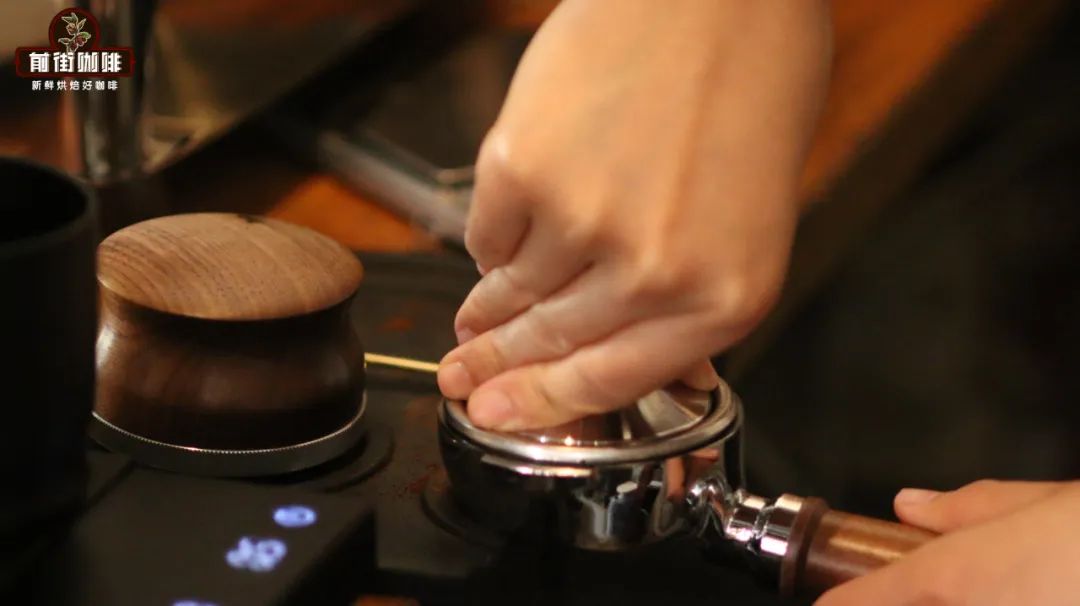
It should be emphasized here that Flat White coffee does not necessarily use double ristretto as the base; some coffee shops choose espresso, and the specific choice is also judged based on the final taste. It's just that later, when people were eager to distinguish latte from Flat White, many adopted the different espresso base as one of the distinguishing points.

Therefore, a commonly used Flat White preparation parameter at present is: the weight of double ristretto is about 30g, then the milk ratio is 1:5, i.e., 150ml of milk, with the milk foam as thin as possible. It is served in a 200ml cup, so that the espresso plus milk plus the mixture of milk foam and coffee crema exactly reaches the rim of the 200ml cup.
A friend said: "I just wanted to know the coffee-to-milk ratio for Flat White, but you told me a whole story!"
The above content is compiled by CoffeeHunters, a coffee news website.


