








As people's demand for rich coffee grows, and in order to satisfy this demand right at home, the moka pot has come into people's view. After seeing many bloggers' shares online, I realized that coffee brewed with a moka pot can also have rich crema. But when I tried it myself, I frequently failed—either there was no crema, or it was bitter, burnt, and sharply sour. What's going on? Could it be thatthe method of using a moka potis wrong?
To brew a delicious cup of moka pot coffee, we first need to understand the principle behind the moka pot. The moka pot first appeared as a device invented in the 1930s. Its inventor, Alfonso Bialetti, got the inspiration when he saw his wife using a washing machine to wash clothes. At that time, the washing machine's structure was divided into two spaces, upper and lower, connected by a tube. The upper space held the clothes to be washed, while the lower space contained the liquid for washing clothes. After appropriate heating, the liquid in the lower space gushed upward through the central pipe and sprayed onto the clothes.
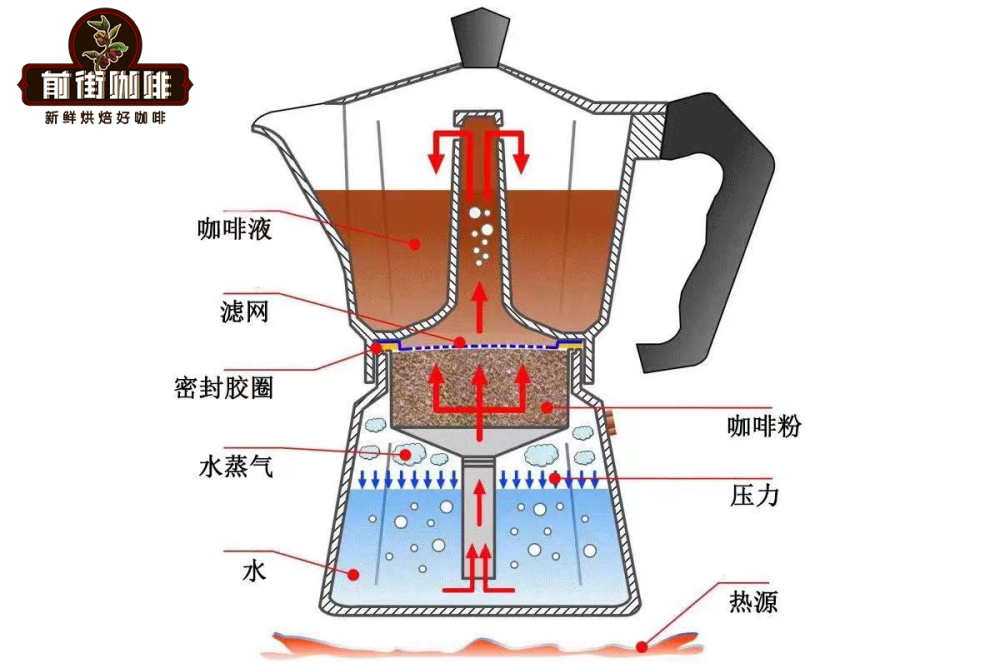
Seeing this phenomenon, Bialetti used his years of experience in aluminum craftsmanship to create the moka pot. The structure of the moka pot is divided into the upper chamber, the filter basket, the lower chamber, and a metal tube in the middle connecting the lower chamber to the upper chamber.
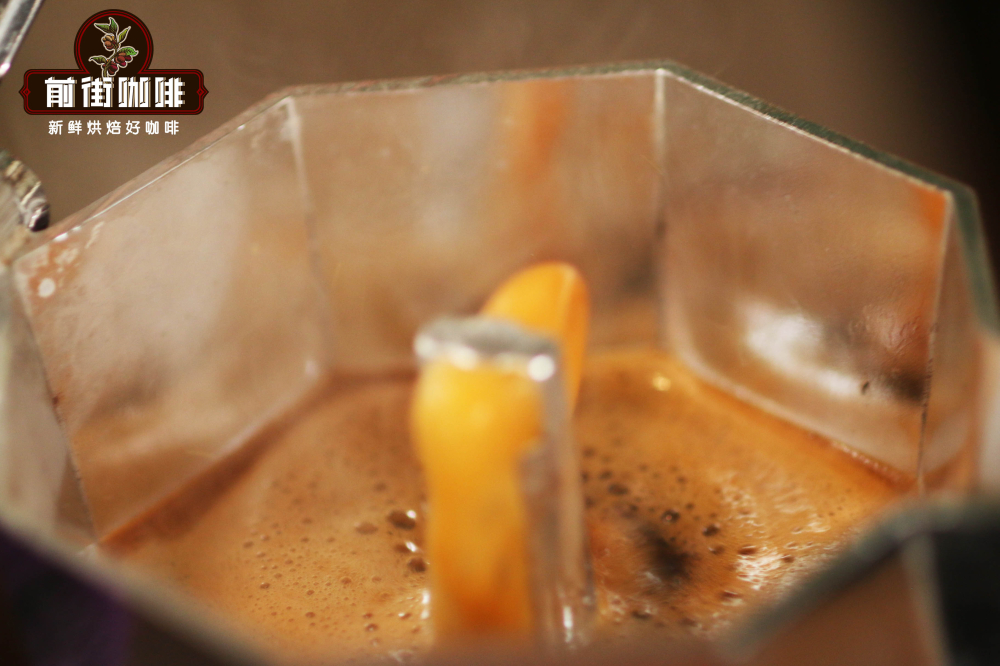
The working principle of the moka pot is to heat the water in the lower chamber. When the water boils, it produces a large amount of steam. Within the limited space, the hot water is forced toward the metal tube connecting the upper and lower chambers, passes through the coffee grounds in the middle, and finally gushes out and accumulates in the upper chamber.

Since the moka pot is so simple to use—just add hot water, put in the coffee grounds, and then heat it to brew coffee—then whatare the pros and cons of brewing coffee with a moka pot?
If you go out to consume at cafes, you rarely see moka pots used for serving. That's because, when extracting espresso, commercial espresso machines extract espresso at a pressure of at least 9 bar, while a moka pot can never achieve such pressure. So,is what a moka pot brews espresso? The coffee brewed by a moka pot is very rich, but it is not the same thing as the espresso extracted by an espresso machine.

That being the case,what coffee beans are suitable for a moka pot?
Given the original intent for moka pot coffee, what everyone wants is a cup of rich, full-bodied coffee. Compared with light to medium roast coffee beans, medium-dark or dark roast coffee beans can better express this. In addition, pressure extraction tends to bring out coffee crema, so it is recommended to prioritize fresh medium-dark roast coffee beans. Below are popular recommendations for moka pot coffee beans:

① Front Street Classic Blend Coffee: It uses a dark roast, maximizing the coffee's rich aroma and allowing everyone to easily extract abundant and dense coffee crema. It can be diluted with water into an Americano, made into a latte with a cocoa-milk flavor, or made into a specialty coffee. It is an extremely cost-effective bean, and can be purchased and ordered at the Front Street Taobao store or the Front Street Tmall flagship store.

② Front Street Commercial Blend Coffee: Dark roast, which can reproduce the taste of coffee shop offerings to the greatest extent. Also, because of its rich crema, it is very suitable for moka pot extraction. Whether made into an Americano or a latte, it will have a rich and fragrant character.
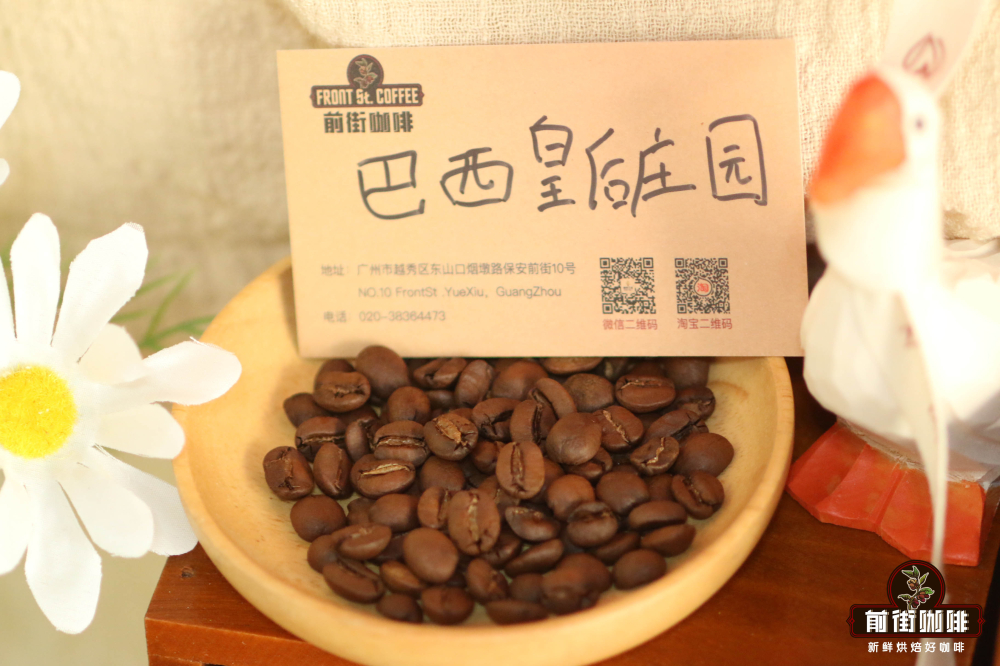
③ Front Street Brazil Queen's Estate Coffee: Medium-dark roast, with flavors of roasted peanuts, cocoa, chocolate, and cream. The crema extracted by the moka pot has an obvious nutty aroma, a balanced taste, and soft fruit acidity.
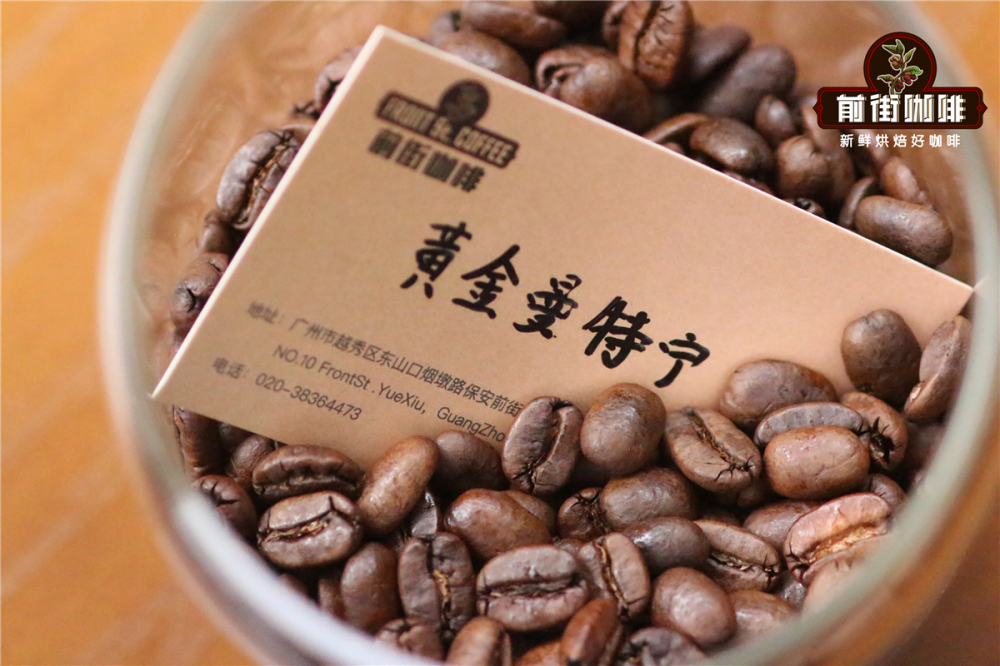
④ Front Street PWN Golden Mandheling Coffee: Dark roast, with the sweet fragrance of pine, dark cocoa, nuts, herbs, and caramel. When extracted with a moka pot, the crema is delicate, and the Americano tastes full-bodied with low acidity.
If you are using a moka pot to brew coffee, the coffee grounds should be ground to a flour-like consistency, with particle sizes between 0.3 mm and 0.55 mm, which is coarser than the grounds for an espresso machine. Since the particle size of the grounds is difficult for the naked eye to distinguish, you can confirm the grind level through the following two methods:
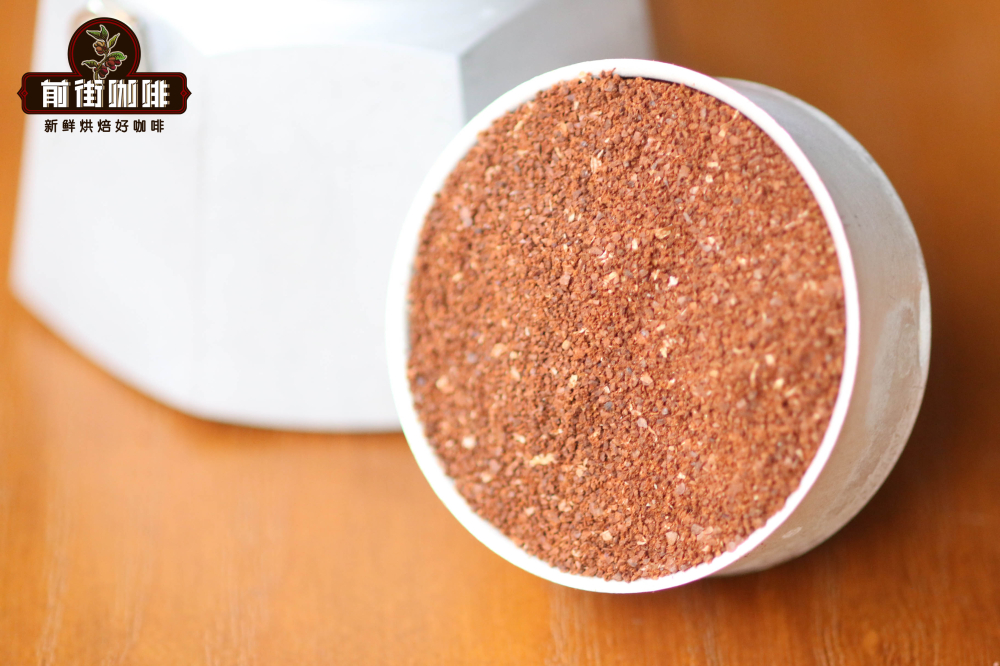
One is to buy a particle size ruler or moka-specific grounds for reference and comparison; the other is to determine the grind by continuously adjusting it.
When the coffee liquid gushes out like a fountain, it means the coffee grounds are ground too coarsely and the water encounters too little resistance; when you hear a low humming sound but the coffee liquid does not gush upward for a long time, you need to immediately pick up the moka pot and move it away from the heat source, and take safety precautions.
Because when a moka pot extracts coffee, the relatively sealed and limited space of the lower chamber produces a large amount of steam, causing high pressure in the lower chamber, the entire operation process requires attention to safety. If you have carefully observed a moka pot, you should notice that the lower chamber has a protruding hole. That is precisely the moka pot's pressure relief valve. The pressure relief valve exists to prevent accidents such as explosions caused by excessive pressure inside the lower chamber of the moka pot due to certain factors (such as grinding too finely).
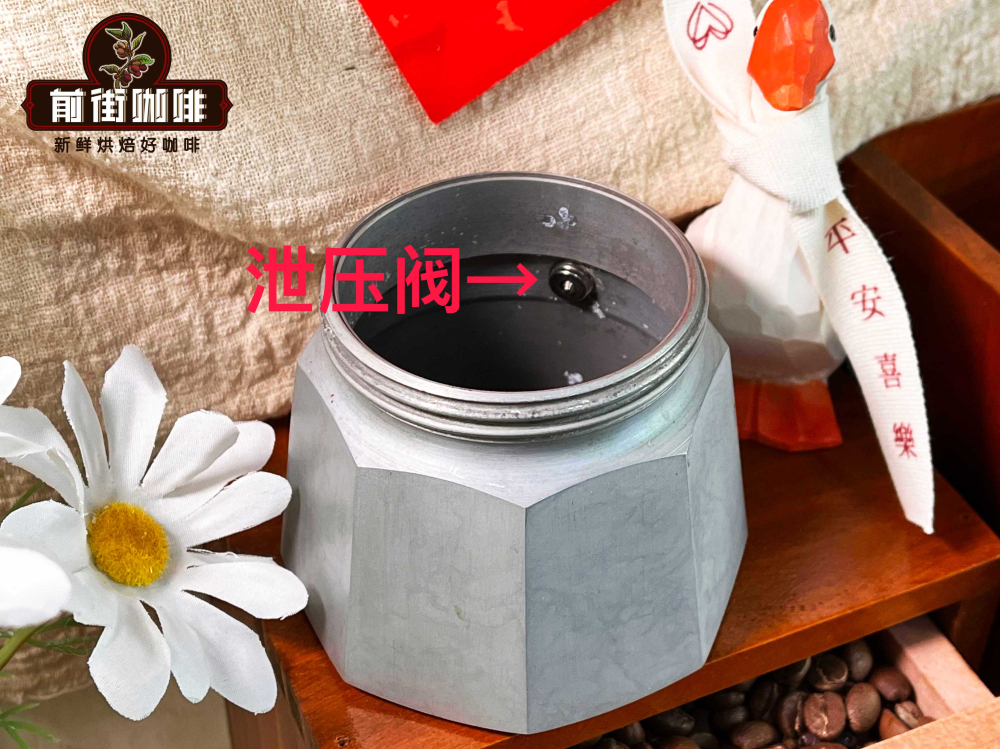
Therefore, during the process of preparing the equipment and materials, Front Street suggests that when filling the lower chamber with water, never let the water pass the valve. When water passes the valve, the pressure relief valve will lose its pressure-relief effect, creating a huge safety hazard.
The above content is compiled by CoffeeHunters, a coffee news website.


