








How Does Processing Change Yirgacheffe Flavor?
Take the same Yirgacheffe lot and process it two ways, and the cup splits clearly. Natural processing dries the whole cherry on raised African beds for more than twenty days, letting the fruit pulp ferment slowly. That yields heavier sweetness and tropical fruit notes. Washed processing removes the pulp, ferments the beans overnight, and rinses them, giving clean, bright acidity and floral aroma.
The comparison matters because most tastings pit beans from different origins against each other, which muddies the result. Holding the origin constant isolates what processing alone does. The washed route sends parchment through washing channels for thirty to sixty minutes after fermentation, while the natural route depends on strict temperature control to avoid over-fermentation. Both respond to different pour-over parameters.
Washed vs Natural: Are you truly aware of their specific effects on flavor? Front Street Coffee has previously introduced the principles of these two processing methods separately. This article takes the same Yirgacheffe as a sample and conducts an intuitive comparison across dimensions such as dry aroma, mouthfeel, cupping, and pour-over parameters. Natural processing often brings fuller sweetness and tropical fruit notes, while washed processing is known for its clean, bright acidity and floral aroma. The article also lists detailed pour-over recommendations for both processing methods of Yirgacheffe, helping you reproduce the ideal flavor at home. Whether you are a beginner pour-over enthusiast or a seasoned player choosing beans, this comparison provides a clear reference.
For professional coffee knowledge exchange and more coffee bean information, please follow Coffee Workshop (WeChat public account: cafe_style)
Front Street Coffee has previously introduced the relevant knowledge of natural processing and washed processing separately. Today's article will make a systematic comparison of the differences between the two processing methods. You may already know that natural and washed coffees differ in flavor, but previous comparisons often used beans from different origins. If the same coffee bean is used for comparison, the differences presented will be more intuitive. Does that sound interesting? Then follow Front Street and read on!
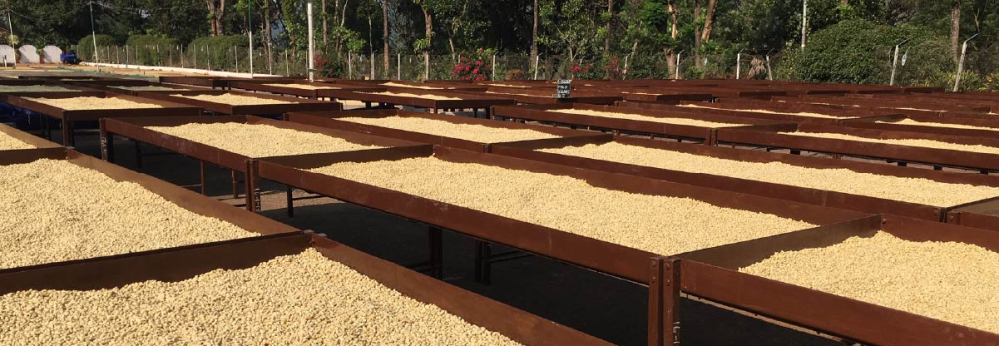
The natural process usually uses African-style raised drying beds. These beds can effectively isolate moisture and soil from the ground while enhancing air circulation. During natural drying, temperature is also strictly monitored to avoid over-fermentation caused by high temperatures. The entire natural process generally takes more than twenty days, allowing microorganisms and the fruit pulp of the coffee cherry to ferment slowly, so the final product often has more prominent sweetness and rich tropical fruit flavors.
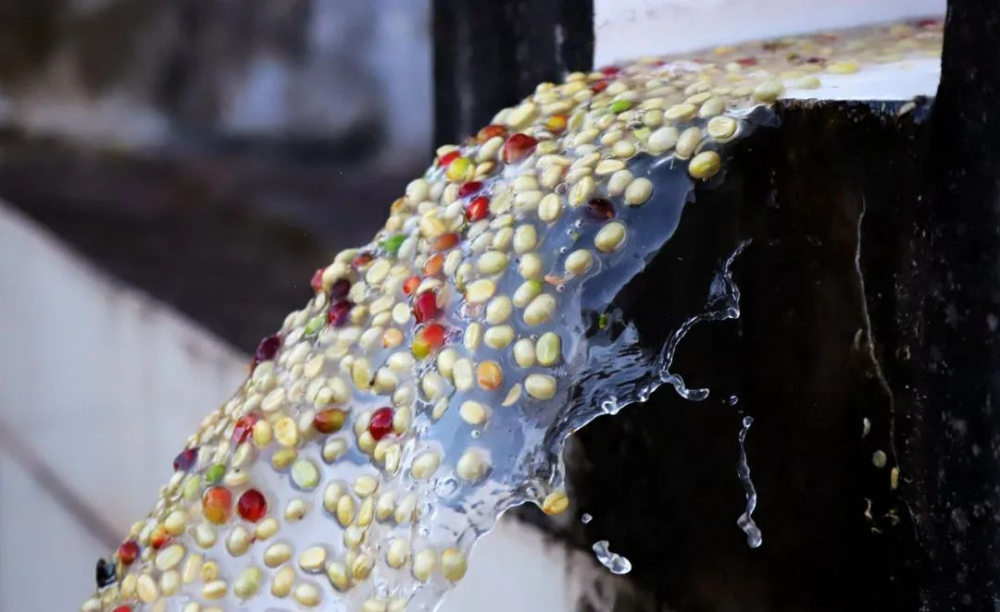
In the washed method, the harvested coffee cherries are first put into water, using buoyancy to separate immature fruits. Then the skin and pulp are removed with a depulper, and the beans are left to sit in a fermentation tank overnight so the mucilage layer breaks down and falls off. After fermentation, the parchment beans are washed in channels for thirty to sixty minutes. Through specially designed channels combined with water flow, lower-density and poor-quality beans are removed, and the high-quality coffee beans are then drained, spread flat on drying racks to dry, and once they reach the target moisture content, they can be bagged and stored.
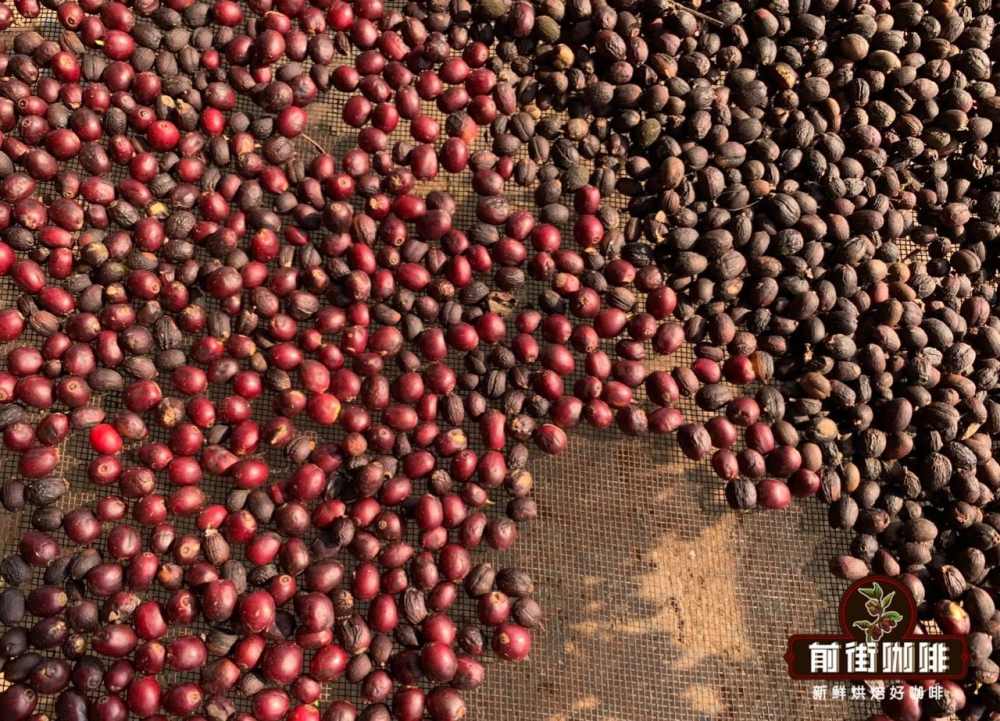
After coffee fruit is harvested, it must immediately enter the processing stage; otherwise, fermentation will begin and cause the coffee beans to develop unpleasant odors. Processing methods are mainly divided into the natural method and the washed method, and these two methods lead to completely different flavor directions. Beans retained in the natural method have a complete natural richness, gentle aroma, and more mucilage; the washed method shows good body, high aroma, and lively acidity. Compared with the natural method, the washed method is clearly easier to control in terms of quality. During washing, defective beans floating on the water surface can be removed very easily, and off-flavors are less likely to appear. In addition, because the fermentation time is shorter and the beans are fully "stripped" and cleaned in the water tank throughout the process, washed processing often presents a clean, flawless taste.
Taking Yirgacheffe as an example, what difference in taste is there between washed and natural Yirgacheffe?
Cupping notes for washed and natural Yirgacheffe:
Differences in dry aroma:
Natural Yirgacheffe: Light fermented wine aroma, spice aroma
Washed Yirgacheffe: Jasmine floral aroma, lemon or lime acidity
[Using a ratio of 8 grams of grounds to 150 milliliters of 93-degree hot water in a cup, let the coffee steep for 3-4 minutes until a crust forms]
Differences in mouthfeel:
Natural Yirgacheffe: The natural one is a bit complex, with light fermented wine aroma, a heavier bittersweet note, and a much richer mouthfeel, with honey sweetness, cocoa notes, and a bit of spice; the body is thick and the aftertaste is long-lasting.
Washed Yirgacheffe: The washed process has brighter acidity, like citric acid, a fresher taste, more obvious citrus aroma, and a hint of black tea in the finish.
Similarities: Both have fruity acidity, similar to fruits such as lemon and citrus.
Pour-over data
Natural Yirgacheffe: Suggested to use 15 grams of grounds, 89-degree water temperature, Fuji Royal grinder setting 4, V60 dripper, water-to-coffee ratio 1:15. First pour 30 g, bloom for 25 s, second pour 104 grams and stop, second pour until 230 g total, discard the water from the final stage, extraction time about 2:12.
Washed Yirgacheffe: Suggested to use 15 grams of grounds, 92-degree water temperature, water-to-coffee ratio 1:15, V60 dripper, water-to-coffee ratio 1:15. First pour 30 g, bloom for 28 s-30 s, second pour 110 grams and stop, second pour until 230 g total, discard the water from the final stage, extraction time about 2:15.
This pour-over method allows you to experience the pleasant sensation of Yirgacheffe, like flowers stimulating the taste buds and nasal olfactory cells.
Every coffee-producing region in the world has its own unique climate and production culture, and coffee quality depends on what processing method is used. If it is the natural method, the coffee is directly sun-dried. However, if it is washed, the processing is very different. Those "depulped" coffees will directly undergo a honey-process-like drying procedure, while washed coffees will enter fermentation tanks to remove the remaining mucilage layer and substances. Careful monitoring ensures that the degree of fermentation of the coffee beans is controlled and the results are consistent. This is also why most specialty coffee beans use the washed processing method.
For more specialty coffee beans, please add the private WeChat of Front Street Coffee, WeChat ID: kaixinguoguo0925
The above content is compiled by CoffeeHunters, a coffee news website.


