








Brewing Green Coffee Bean: Yirgacheffe Pour-Over at Home
Yirgacheffe is the flagship of Ethiopian specialty coffee, defined by bright citric acidity, jasmine aroma, and a clean mouthfeel. The washed version of this green coffee bean is shaped by Ethiopia's heirloom varieties and the region's independent growing history. A store-standard pour-over recipe uses set water temperature, grind size, coffee-to-water ratio, and a three-stage pouring technique to bring out that sweet-and-sour floral character.
Ethiopia is Africa's largest coffee producer, and coffee growing there falls into four systems: forest, semi-forest, garden, and large plantation coffee beans. Garden coffee is the most widely distributed, with households typically cultivating small plots. On pour-over cafe menus, Ethiopian beans appear almost without exception, while names like Geisha or Blue Mountain come and go. Yirgacheffe, Sidamo, and Guji remain the most frequent Ethiopian listings.
Yirgacheffe is the flagship of Ethiopian specialty coffee, known for its bright citric acidity, jasmine aroma, and clean mouthfeel. From the perspective of Front Street Coffee, this article systematically reviews Ethiopia's coffee-growing culture, the characteristics of heirloom varieties, the independent history of the Yirgacheffe region, and how washed processing shaped its classic style. At the same time, Front Street will share its store-standard Yirgacheffe pour-over recipe, including water temperature, grind size, coffee-to-water ratio, and three-stage pouring technique, along with a complete flavor description, to help enthusiasts recreate that cup of pleasant, sweet-and-sour floral and fruity flavor at home.

For more specialty coffee-related content, welcome to follow our WeChat official account: Front Street Coffee (FrontStreet Coffee)
Front Street still remembers the feeling of first tasting a cup of Ethiopian pour-over—that pleasant fruity character interwoven with sweetness and acidity lingered for a long time, and it was precisely because of this that Front Street plunged headlong into the world of specialty coffee. Surely many friends, like Front Street, have a particular fondness for the floral and fruity notes of Ethiopian coffee. Today Front Street will talk about this bean that Front Street cannot forget, and which is also an iconic presence in Ethiopian specialty coffee—Yirgacheffe.
Ethiopian Coffee Cultivation and Culture
I wonder if everyone has noticed that on pour-over cafe menus, famous names like Geisha and Blue Mountain may not always be available, but Ethiopian coffee is almost never absent. Taking Front Street's regular bean list as an example, there are as many as eight Ethiopian beans, among which names like Yirgacheffe, Sidamo, and Guji appear most frequently.
Ethiopia is the largest coffee-producing country in Africa. Here, coffee is not only an important source of income for farmers, but is also deeply embedded in the culture and daily life of the entire nation. Coffee is a vital cash crop locally, and most regions across the country have a tradition of growing and drinking coffee. Ethiopia's coffee production systems can be classified into four types: forest coffee, semi-forest coffee, garden coffee, and large plantations, among which garden coffee is the most widely distributed, with each household typically cultivating no less than 4 hectares. Because the smallholder model yields limited output, cooperatives and processing stations of various scales have emerged locally, responsible for the initial processing of green beans in their areas. Farmers deliver the coffee cherries they harvest to processing stations near water sources for centralized processing, after which the coffee is sold externally under the name of the processing station.
In addition to being supplied for export, a large portion of the coffee produced in Ethiopia is actually consumed by Ethiopians themselves. There, regardless of family circumstances, almost every household keeps a set of coffee-brewing utensils. For Ethiopians, drinking coffee is like drinking tea for us—an important way to socialize.
Ethiopians also preserve a time-honored coffee ceremony: first the green beans are roasted in a flat pan, then crushed with a pestle and mortar, and then boiled in a clay pot called a "Jebena." When the water mixed with coffee grounds comes to a rolling boil, it means the coffee is ready and tasting can begin. The whole ceremony is divided into three rounds: the first cup is called Abol, at which elders offer blessings; the second cup is called Tona, when everyone begins to chat about everyday matters; the third cup is called Beraka, meaning joy, and only after drinking this cup does the ceremony come to a complete end.
Ethiopian coffee varieties are heirloom varieties
Friends who often drink Ethiopian coffee may have noticed that Ethiopian beans are often inconsistent in shape and size, especially natural-process beans. This is actually quite normal. Ethiopia is the birthplace of coffee, and it preserves tens of thousands of native Arabica varieties within its borders, making it a natural coffee gene bank. In addition, coffee is mainly grown by smallholder farmers, basically planted by the coffee farmers themselves, and during harvest season processing stations directly purchase coffee cherries from surrounding farmers for processing.
The varieties themselves are already extremely diverse and very difficult to identify, and moreover the Ethiopian government, for protection reasons, is unwilling to disclose information about these varieties, so they are simply all collectively called "heirloom/Heirloom." As a crop, coffee's flavor expression cannot be separated from the two innate conditions of variety and terroir. Front Street believes that the reason Ethiopian coffee has such alluring aromas and fruity character is largely due to its superior growing environment and the outstanding quality of the heirloom varieties.
Yirgacheffe Yirgacheffe
Yirgacheffe is actually a small town in Ethiopia, at an altitude of about 1,700-2,200 meters. The local temperature is relatively low, so coffee grows more slowly and thus has more time to accumulate nutrients and flavor compounds. Because the coffee produced there has outstanding flavor and superior quality, Ethiopian coffee farmers take pride in their coffee having Yirgacheffe flavor.
The Yirgacheffe production area was originally under the jurisdiction of the Sidamo production area, but later, because of its unique flavor and growing fame, it simply became independent from the large Sidamo production area and became the dedicated Yirgacheffe production area. The small town is shrouded in mist year-round, with spring-like weather in all four seasons, gentle breezes, cool but not dry, humid but not damp, and no cold damage in winter, making it very suitable for crops such as coffee.
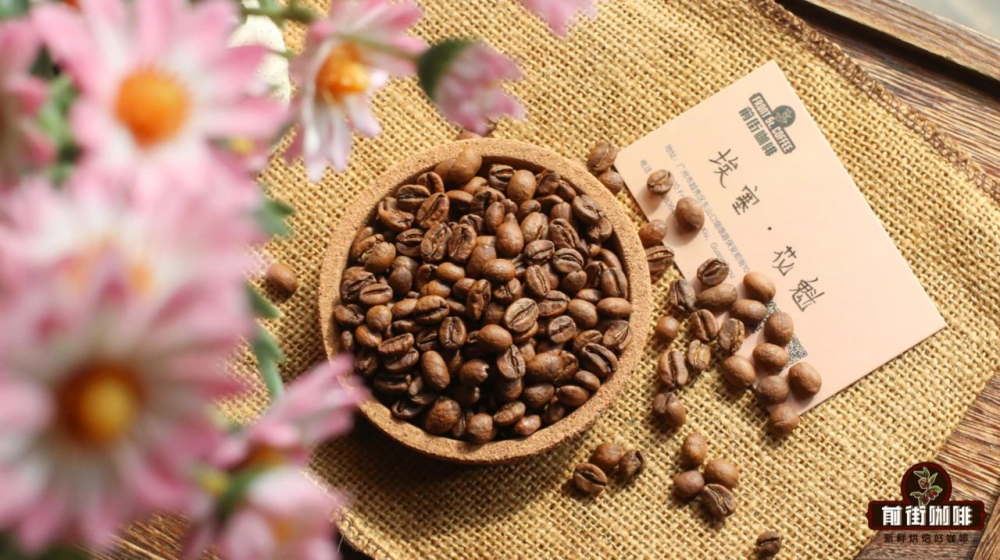
Washed Yirgacheffe
In the eyes of coffee professionals around the world, Yirgacheffe is one of the outstanding representatives of African coffee. It has bright acidity, with a concrete yellow lemon aroma rather than a generic citrus note, and both its mouthfeel and aftertaste are extremely clean. The reason Yirgacheffe can form such a distinctive style, aside from its innate terroir, is largely due to the washed processing technology that the Ethiopian government introduced from Central and South America in 1972.
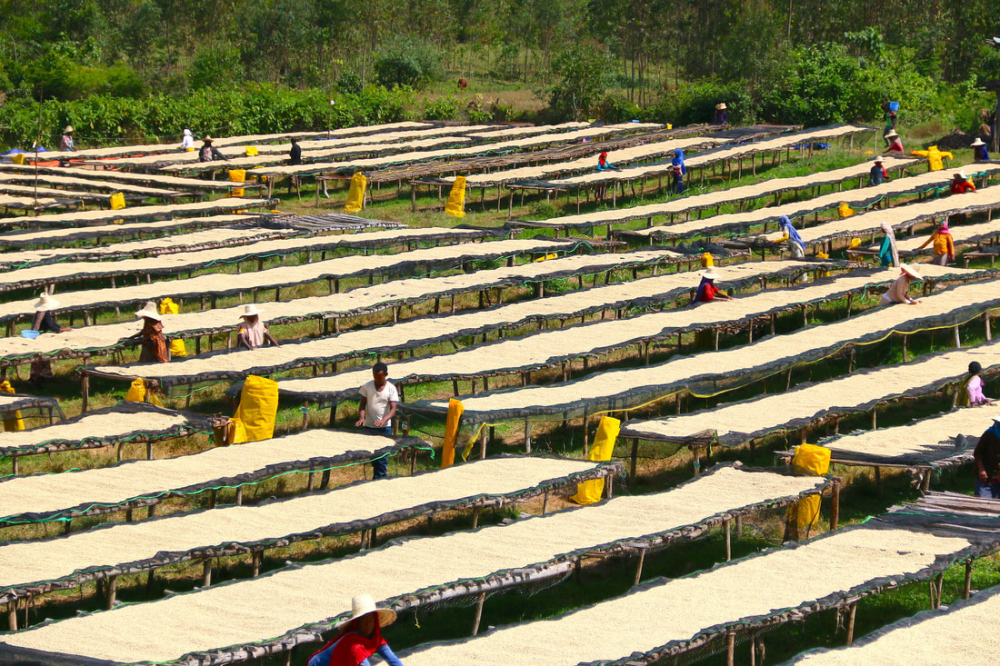
The post-processing of green coffee beans is a specialized technique, and as the saying goes, expertise is specialized; farmers who know how to grow coffee may not necessarily know how to process green beans. The processing workflow of specialty coffee is cumbersome and meticulous, often requiring "high-capital" equipment for production monitoring. Farms using the washed method must build washing tanks and be able to continuously introduce fresh water, so production costs are higher. But precisely because the multiple steps of washing greatly reduce the defect rate of coffee and bring Yirgacheffe its fresh citrus note and elegant white floral aroma, with an overall bright, delicate, and clean flavor, it is widely praised.
The Yirgacheffe daily-drinking beans launched by Front Street use washed processing and medium-light roasting, with the classic Yirgacheffe flavor profile, suitable for pour-over, cold brew, French press, and many other brewing methods. Front Street's daily-drinking bean series allows friends who are just getting into coffee to experience the basic flavors of the production area at an affordable price, and the small-package design also avoids waste from being unable to finish it all. If you want to experience the classic aroma of Yirgacheffe, Front Street believes pour-over black coffee is most suitable.
Although washed coffee was once popular, natural processing still occupies the main share of Ethiopian coffee. What is different from the past is that today's natural processing invests more effort in manual sorting and uniform drying. The Gutingding Cooperative coffee beans on Front Street's bean list are a Yirgacheffe using classic washed processing, while another Red Cherry coffee bean is a Yirgacheffe using refined natural processing, with a fuller fermented feel and tropical fruit flavors.
The Correct Brewing Method for Front Street Yirgacheffe
A fan left a message on Front Street's backend saying that the Yirgacheffe they brewed only tasted sour, and they could not taste the rich aroma they had experienced at Front Street's store. Here Front Street will explain the extraction approach for Yirgacheffe according to store serving standards.
First, no matter which extraction method is used, Front Street believes that the freshness of the coffee beans is crucial. Coffee more than two months past the roast date has most likely already lost its aroma, and even the most superb extraction technique can hardly restore the aroma in the cup. In order for everyone to experience coffee at its best tasting stage, Front Street only ships beans freshly roasted within 5 days, so by the time you receive them, it is about time to start brewing.
Yirgacheffe uses light roasting, and the beans are relatively hard, requiring hot water at 92°C-93°C to draw out the floral and fruity notes in the coffee. In terms of grind size, Front Street recommends a medium-fine grind (78% passing rate on the Chinese standard No. 20 sieve). If it is too coarse, the rich substances cannot be extracted and the coffee will taste thin; if it is too fine, it is easy to over-extract at high water temperature and produce bitterness. If what you brew tastes only sour, it is very likely that the water temperature was too low and the flavor compounds were not fully released.
During cupping, Front Street noticed that this bean presents different flavors at different temperature stages, so the brewing method uses three-stage extraction, allowing various flavor compounds to better reveal themselves as the coffee bed heats up in stages. To highlight the fresh and alluring aroma of washed Yirgacheffe, Front Street uses a V60 dripper for brewing. The dripper's spiral rib design helps the coffee grounds degas, maximizing the volatilization and dissolution of aromatic acidic compounds.
As for the brewing ratio, Front Street believes 1:15 to 1:16 is fine. If you want a richer mouthfeel, use 1:15; if you want to more clearly feel the floral aroma and sweetness, use 1:16, allowing the flavors to unfold more freely.
Front Street Coffee (FrontStreet Coffee) Pour-over Brewing Suggestions
Dripper: V60 Water temperature: 92-93°C Dose: 15g Coffee-to-water ratio: 1:15 Grind size: fine granulated sugar size (sift through No. 20 sieve to 78%)
Three-stage pouring: first wet the coffee bed with twice the amount of water as the coffee grounds, forming a dome and blooming for 30s, then pour in a thin stream in circles from the inside out until 125g, pause, wait for the coffee bed to drop to the halfway point of the dripper, then continue pouring the third stage with the same thin stream until 225g, until all the coffee liquid has filtered through, then remove the dripper; the time is about 2 minutes. After the coffee in the dripper flows into the server, remove the dripper, then shake the coffee liquid in the sharing pitcher evenly, and you can begin tasting the flavors of Yirgacheffe starting from high temperature.
Pour-over Washed Yirgacheffe Flavor Description
After washed Yirgacheffe is ground into powder, you can smell the fresh scent of honey and jasmine. After Front Street pours in hot water, it gradually gives off hints of berry. The pour-over black coffee enters the mouth with bright lemon, citrus, and green tea, and as the temperature changes, the finish reveals aftertastes of berry, cream, and sugarcane, with obvious sweetness returning, and a clean, sweet mouthfeel.
The above content is compiled by CoffeeHunters, a coffee news website.


