







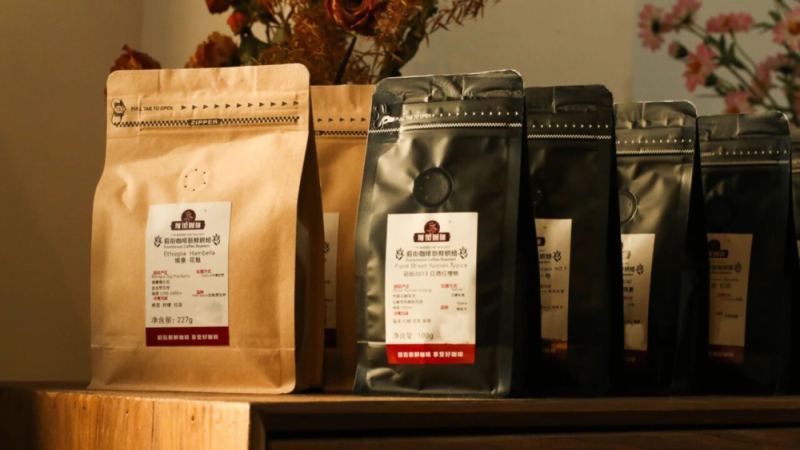
Where do Hambela geisha coffee beans come from?
Geisha coffee beans sold under the Hambela name come from Hambela in the Guji region of Sidama, Ethiopia, the highest-altitude coffee sub-region in the country at roughly 2,250 to 2,350 meters. The farm covers 200 hectares and employs 28 full-time staff year-round, rising above 700 during peak harvest, with about 70 percent of those workers being women.
Hambela sits in Guji, Ethiopia's largest coffee-producing region, bordering Shakiso, Uraga, and Kercha, and facing Yirgacheffe's Kochore across a highland ridge about 3,200 meters high and 30 kilometers wide. Geisha coffee here uses the traditional natural method: cherries dry on raised beds for 21 days and are turned constantly so each bean loses moisture evenly.
Geisha coffee beans come from Hambela in the Guji region of Sidama, Ethiopia, one of the highest-altitude coffee sub-regions, known for Ethiopian heirloom varieties and washed/natural processing. This article provides a detailed introduction to the scale and operations of Hambela Farm, the origin of the name Geisha, the natural processing workflow, Front Street Coffee's light roast and V60 three-pour brewing parameters, and the rich flavor profile of natural Geisha. Whether you want to understand the terroir of the region or master brewing techniques, this content offers practical reference.
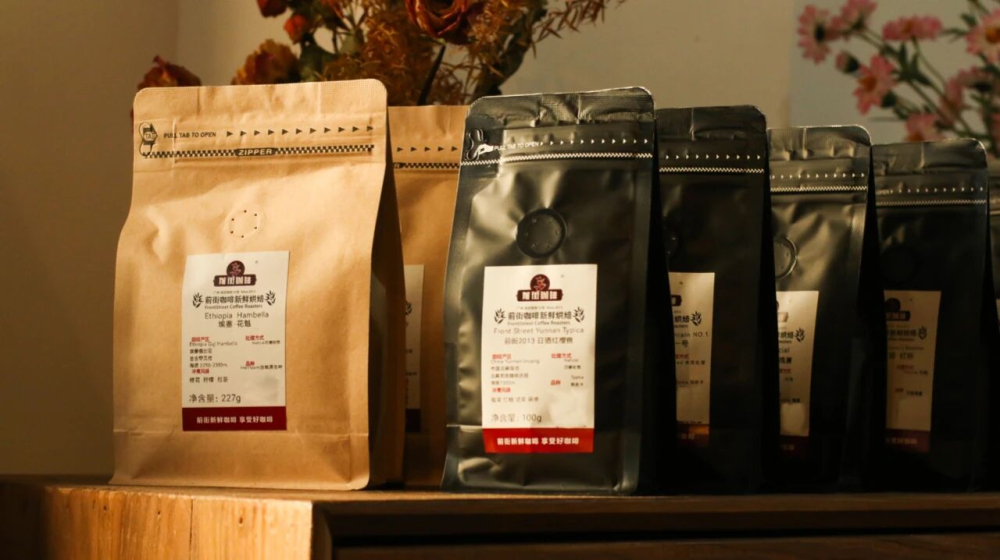
Front Street Geisha Coffee Beans
Region: Sidama Hambela
Variety: Ethiopian Heirloom
Altitude: 2250~2350m
Processing: Washed
Roast Level: Medium Roast
Flavor: Moderate sweet-tartness, red berry sweetness, citrus aroma, slight fermented fruit notes, fruity wine aroma
Mouthfeel: Comfortable and interesting fruit acidity, good sweetness, relatively low body
Geisha coffee comes from Hambela in the Guji region of Sidama. Hambela is located in Guji (GUJI), Ethiopia's largest coffee-producing region, and administratively belongs to Oromia State. To its west, it faces Yirgacheffe's Kochore across high mountains, with a highland ridge approximately 3,200 meters in altitude and about 30 kilometers wide stretching between them. To its southeast and north, Hambela borders the Shakiso, Uraga, and Kercha sub-regions of Guji respectively, making it the highest-altitude coffee sub-region in all of Ethiopia (while Harrar is Ethiopia's highest-altitude main producing region).
Hambella Farm covers a total area of 200 hectares and employs 28 full-time staff year-round, with the total number increasing to over 700 during peak harvest season, 70% of whom are women. The farm also implements a program that brings local farmers together with agronomists and processing experts to work closely and improve coffee quality. In addition to beans produced on the farm itself, some coffee is also purchased and resold by the farm.
Natural processing method of Geisha coffee:
Geisha coffee beans use the traditional natural method. To prevent the coffee cherries from molding or absorbing undesirable odors such as dirt during drying, farmers spread the fruit on raised beds to sun-dry for 21 days. During this period, they constantly turn the cherries to ensure each bean loses moisture evenly; every three to five days, they also manually remove moldy or defective beans. Once the fruit skin has dried and hardened, a huller is used to remove the dried fruit skin. After obtaining the green beans, farmers perform one more round of sorting in pursuit of a more perfect flavor.
The farm was co-founded by Aman Adinew and his brother Michael. Prior to this, Aman served as Quality Control Director of ECX (Ethiopia Commodity Exchange) and was responsible for establishing Ethiopia's first specialty coffee laboratory.
The naming of Geisha coffee:
How did Geisha coffee come about? In 2017, the African Coffee Association held the TOH (the Taste Of Harvest) green bean competition, and Ethiopia's DW Green Bean Company submitted this coffee as an entry. As a result, this natural batch of green beans became famous overnight, defeating multiple Geisha variety coffees to win the championship. Subsequently, Beijing green bean trader "Hongsun International" imported this batch of natural green beans and named it based on its championship status, and the name "Geisha" was thus established.
To highlight Geisha coffee's rich floral and fruity aromas of flowers, mango, jackfruit, citrus, and honey, Front Street uses a light roast. Light-roasted beans are less porous than dark-roasted ones, so when brewing, Front Street uses a V60 dripper with higher-temperature water. The V60 dripper has spiral ribs connecting the top and bottom of the cone and a large circular hole at the center, which speeds up the flow of water; the spiral-shaped vent design extends the water flow path, increasing the contact time between coffee grounds and hot water. Each stream of water converges along the grooves toward the center of the dripper, concentrating the pressure on the coffee grounds and extracting a coffee with richer layering.
Dripper: Hario V60, Water temperature: 91°C, Coffee dose: 15g, Coffee-to-water ratio: 1:15, Grind size: 80% passing through China standard No. 20 sieve.
FrontStreet Coffee three-pour extraction method: First, use 30g of water to thoroughly wet the coffee bed into a "hamburger" shape and bloom for 30 seconds; for the second pour, at 1 minute 00 seconds on the timer, pour water until it reaches 125g, then stop and wait until the water level drops to 2/3 of the coffee bed before pouring the third stage; for the third pour, at 1 minute 40 seconds on the timer, pour water until it reaches 225g, and after the coffee liquid has fully dripped through, the total extraction time is 1 minute 59 seconds. The total brewing time is 2 minutes 00 seconds. After extraction is complete, gently swirl, and taste once the coffee liquid is fully uniform.
Flavor Description
Natural Sidama Geisha coffee flavor: light fermented wine aroma, floral notes, citrus, mango; the mouthfeel is much richer and more complex, with honey sweetness, cocoa notes with a hint of spice, a full body, and a persistent finish.
The above content is compiled by CoffeeHunters, a coffee news website.


