







How do you brew Yunnan coffee without bitterness?
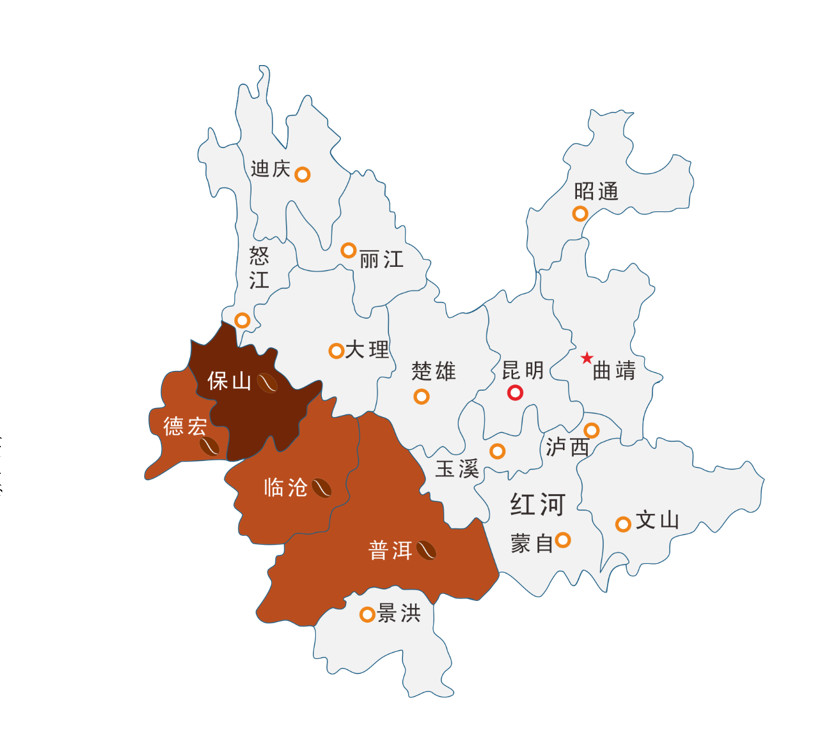
Brewing Yunnan small-bean coffee without bitterness comes down to four controls: water temperature, grind size, coffee-to-water ratio, and the three-stage pour. Yunnan sits in the coffee golden belt, with Baoshan, Pu'er and Lincang as the main producing areas, at 1,000 to 2,000 meters. Fruit grown there tends to give a mellow, full-bodied cup with mild fruity acidity when extraction is kept in check.
The typical Yunnan small bean today is Catimor, which carries Robusta genes and performs a little below Typica in the cup; after washing it still shows the region's brown sugar, nut and plum balance. Front Street selects Baoshan arabica and holds its own estate in Lincang, where longer sunshine and a wide day-to-night temperature swing help the cherries ripen.
Yunnan coffee has now become a common sight in domestic cafes, but many people still don't understand how to brew it. Yunnan is located in the golden belt for coffee cultivation, with Baoshan, Pu'er, and Lincang as the main producing areas. Front Street Coffee selects Yunnan Arabica coffee in Baoshan and owns its own estate in Lincang. From Front Street's perspective, this article focuses on Yunnan Catimor coffee beans and systematically explains four key points: water temperature, grind size, coffee-to-water ratio, and the three-stage pouring technique. It also includes flavor descriptions of Front Street washed Yunnan Arabica coffee and natural Catimor, helping coffee lovers brew a cup of Yunnan pour-over coffee that is neither bitter nor astringent, but mellow and smooth.
In the past, when people talked about coffee, the first thing they often cared about was whether the origin was foreign; now things have changed, and more and more people say that the Arabica coffee produced in our Yunnan is actually quite good. Under the trend of domestic products, Yunnan coffee has almost become a regular at every cafe. Although its fame has been established and recognition is not low, not many people truly understand it, especially how to brew it to bring out the best in Yunnan beans. Today Front Street will talk about how to brew Yunnan coffee.
Yunnan is the province with the largest coffee planting area in China. The local climate is extremely friendly to coffee trees, and it is known as a golden belt. Western and southern Yunnan lie between 15°N and the Tropic of Cancer, with most areas at an altitude of 1,000 to 2,000 meters. The terrain is mainly mountainous and sloping, with obvious undulations, nutrient-rich soil, long sunshine hours, abundant rainfall, and a large temperature difference between day and night. Front Street believes that it is precisely these unique natural endowments that create the flavor characteristics of Front Street Yunnan Arabica coffee: rich and mellow aroma, mellow flavor without being harsh, full body, and a hint of fruity acidity.
Front Street prefers Yunnan coffee because it is coffee grown by Chinese people themselves. Front Street currently has two Yunnan Arabica coffees, namely Catimor and Typica. Catimor carries Robusta genes, so its flavor performance is slightly inferior to Typica. In Lincang, Yunnan, Front Street also has its own coffee estate, growing the time-honored Typica variety.
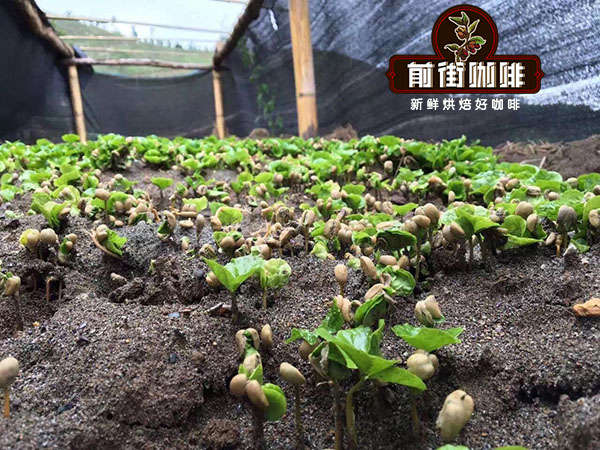
Yunnan Coffee Producing Areas
Coffee cultivation in Yunnan is mainly concentrated in Lincang, Baoshan, Pu'er, and other places. These areas have natural conditions of low latitude, high altitude (1,000-2,000 meters), and significant temperature differences between day and night, making Yunnan an ideal growing region for high-quality coffee such as Arabica (Arabica) coffee.
Baoshan:
FrontStreet Coffee's Front Street Yunnan Arabica coffee is produced in Baoshan. Baoshan has an annual average temperature of 21.5°C, with an extreme maximum temperature of 40.4°C, and basically no frost period throughout the year. It is widely recognized as one of the most suitable producing areas for growing Arabica coffee. The Arabica coffee produced here is known for being strong but not bitter, fragrant but not harsh, small and uniform in bean size, mellow and rich with fruity notes. Tasting experts from the International Coffee Organization once classified Yunnan coffee in the same category as Colombian wet-processed Arabica coffee, regarding it as one of the highest-quality coffees in the world. Yunnan Catimor coffee beans are labeled as Yunnan Arabica coffee according to market convention.
Pu'er:
Coffee cultivation in Pu'er has a century-old history. Cultivation began at the end of the 19th century, and industrialization began in 1988. At present, the city's coffee planting area has reached 767,000 mu, making it the main coffee producing area with the largest planting scale, highest output, and best quality in mainland China, and it is also a distribution center for coffee trade.
Lincang:
Lincang is located in the southwest of Yunnan Province. The Tropic of Cancer passes through its southern part. It borders Pu'er to the east, Dali to the north, Baoshan to the west, and Myanmar to the southwest. It is named because it is close to the Lancang River, and it is a pearl on the southwestern border of the motherland. Lincang's average annual temperature is between 16.8°C and 17.2°C, with distinct dry and wet seasons and abundant sunshine.
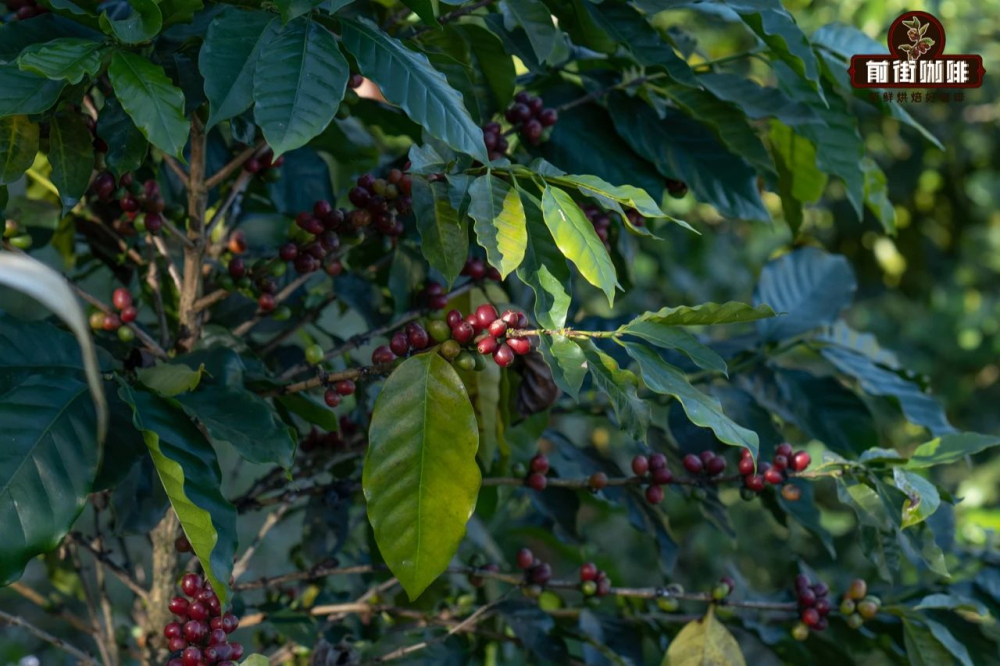
FrontStreet Coffee has established its own estate in the Lincang producing area of Yunnan. In 2021, FrontStreet Coffee launched its first self-produced coffee bean—Front Street 2013 Natural Typica Coffee.
Yunnan Coffee Bean Varieties
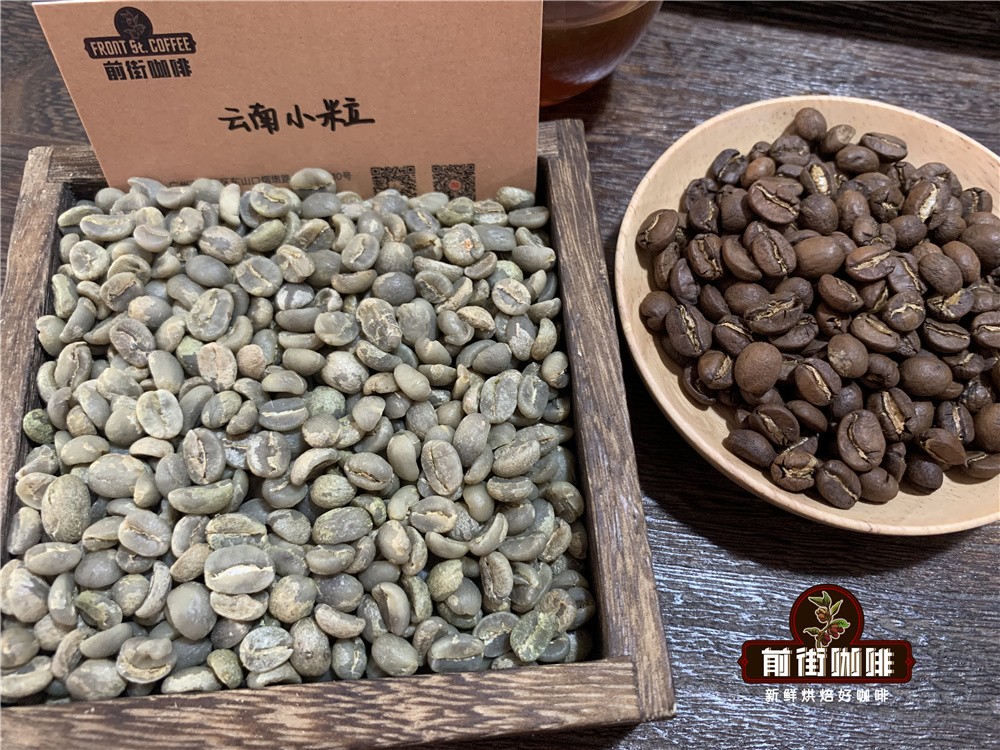
The most widely planted coffee bean in Yunnan at present is Catimor. A small amount of Typica and Bourbon coffee beans are still grown in the Baoshan area. Although they all belong to the Arabica species in broad categories, there are actually considerable differences among these varieties.
In the 1970s and 1980s, coffee leaf rust broke out in many countries in Central and South America, severely impacting coffee production. A coffee research center in Portugal named CIFC, in response to the leaf rust problem, crossed Timor, which carries Robusta genes, with the Bourbon variety Caturra in 1959, developing Catimor, which is both disease-resistant and high-yielding. In order to cope with the losses caused by leaf rust, and encouraged by coffee organizations, Central and South America began widespread introduction in the 1980s.
Because it inherits Timor's Robusta genes, Catimor has strong resistance to coffee leaf rust, coffee berry disease, and pests, and is suitable for dense planting, with high and stable yields. But at the same time, Catimor also inherits the flavor shortcomings of Robusta. In cupping, it is often described as having a "devilish aftertaste," with weak aroma, bitter taste, and sometimes even a pungent astringency.
Yunnan Coffee Bean Processing Methods
When Front Street visited Yunnan producing areas during the planting season, it truly experienced what the rainy season means. It clears up for a few minutes, then rains for half an hour. Because of the year-round rainy season and changeable climate, most Yunnan coffee beans use the washed processing method, though there are also natural-processed beans. Front Street's Catimor includes Front Street Washed Yunnan Arabica Coffee and Front Street Natural Catimor Coffee. In addition, there is Front Street Natural Typica Coffee produced by FrontStreet Coffee's estate.
Front Street's brewing parameters for Front Street Yunnan Catimor Coffee:
The flavor of Yunnan coffee is not known for its acidity; its main character is nutty. Therefore, Front Street chooses a medium roast for this coffee to preserve the herbal aroma and soft acidity of Yunnan beans, paired with a finer grind and higher water temperature, brewed using a V60 dripper. When the ground coffee is poured into the dripper, the herbal and nutty aromas released by the beans can already be smelled.
FrontStreet Coffee believes that to brew a good pot of coffee, one should mainly focus on four aspects: water temperature, grind size, coffee-to-water ratio, and brewing technique.
1. Water Temperature
When making pour-over, FrontStreet Coffee adjusts the water temperature according to the roast level. During roasting, substances inside the coffee beans are lost as the roast deepens, so dark-roasted beans should avoid over-extraction of off-flavors, and the water temperature needs to be lowered. For medium-light roasted beans, FrontStreet Coffee recommends a water temperature of 90-91°C; for medium-dark roast, 88°C is recommended.
2. Grind Size
The grind size of coffee is also related to the roast level. Grind size refers to the size of the coffee particles, and it affects the contact time between coffee and water. The finer the coffee grounds, the more substances water can extract in the same amount of time, but too fine a grind easily leads to over-extraction; conversely, the coarser the grind, the fewer substances are extracted in the same amount of time, but too coarse a grind easily leads to under-extraction.
Because everyone has a different grinder, the parameters will also differ. Front Street recommends buying a No. 20 cupping correction sieve with an aperture of 0.85 mm. Take 10 g of coffee beans, adjust to an approximate grind size and grind into powder, pour it into the sieve and sift, then weigh the sifted coffee powder (be sure to sift until no more coffee powder can pass through).
A passing rate of 70%-75% (that is, 7-7.5 g sifted from 10 g of powder) is the most suitable grind size. The standard for pour-over grind size is: 80% for light roast, 75% for medium-dark roast. If it exceeds the suitable sifting rate, adjust the grind coarser appropriately; if it does not reach the suitable sifting rate, adjust the grind finer appropriately.
3. Coffee-to-Water Ratio
This is the correspondence between pour-over coffee water-to-coffee ratios and tastes summarized by FrontStreet Coffee based on the SCAA Golden Cup extraction theory:
[Bold taste] 1:10~1:11, i.e. 1:12.5~1:13.5 under the Golden Cup standard [Moderate taste] 1:12~1:13, i.e. 1:14.5~1:15.5 under the Golden Cup standard [Light and refreshing] 1:14~1:16, i.e. 1:16.5~1:18.5 under the Golden Cup standard
When the ratio of coffee bean grams to brewing water volume is between 1:14.5 and 1:15.5, it most easily falls into the golden range of 18%-22% Golden Cup extraction yield and 1.15%-1.35% concentration.
Therefore, FrontStreet Coffee suggests using a 1:15 coffee-to-water ratio when brewing, as it is less prone to mistakes.
4. Brewing Technique
Finally, the pour-over technique is also crucial. Common ones include the three-stage method, one-pour method, and drip method. FrontStreet Coffee recommends that beginners use the three-stage pouring method, because this technique is suitable for light-roasted, medium-light roasted, and medium-dark roasted coffee beans. The staged extraction method of three-stage pouring can clearly present the flavors of the coffee's front, middle, and back sections, and can better ensure the completeness of the flavor. Next, FrontStreet Coffee will teach everyone how to perform three-stage pouring for pour-over coffee.
Three-stage brewing technique: (Front Street's three-stage brewing method for Yunnan Catimor Coffee)
Using a V60 dripper can bring out richer coffee flavors. Water temperature 88°C, coffee-to-water ratio 1:15, coffee dose 15 g, grind size 75% passing rate on the Chinese No. 20 standard sieve.
First pour: Blooming (to help release gas)
First rinse the V60 dripper to make the filter paper fit the dripper better, pour out the water in the server, and at the same time add 15 g of coffee grounds, then bloom with 30 g of water for 30 seconds. Many coffee lovers don't understand why pour-over coffee needs blooming? Actually, it is because during the roasting process from green beans to roasted beans, a series of chemical reactions and physical changes occur. After reaching a certain degree of roasting, a large amount of gas (mostly carbon dioxide) accumulates inside the coffee beans.
Generally speaking, the fresher the coffee beans and the closer to the roast date, the more bubbles during blooming. Dark-roasted beans also release more gas during blooming than light-roasted beans. FrontStreet Coffee's coffee beans are all freshly roasted, so customers are usually advised to rest the beans for three days first, allowing the coffee beans to release carbon dioxide, so that instability and under-extraction can be avoided during brewing.
Only after the gas is released during blooming can the coffee particles absorb water evenly, making subsequent extraction more uniform. A good bloom allows the coffee grounds to release gas quickly, fully, and evenly, and also allows the coffee grounds to quickly contact water, helping the coffee grounds to be extracted evenly. This is precisely the purpose and significance of blooming in pour-over coffee.
Second Pour
After blooming for 30 seconds, proceed with the second pour. Start from the center and pour in small circles with a thin stream until reaching 125 g, then stop. In order to concentrate the penetrating force of the water stream, the circling range should be small, about the size of a one-yuan coin, and then circle outward. From the start of the second pour, pay attention to the water amount and try not to exceed the height of the coffee bed. That is, when the water stream circles to near the filter paper, you can stop pouring.
Third Pour
Wait until the coffee bed drops to half the height of the dripper, then begin the third stage using the same technique until 225 g. After all dripping is complete, the dripper can be removed.
Starting from the third pour, observe the extent to which the water level drops. Likewise, start circling from the center, and do not let the water amount exceed the height of the coffee bed. At this time you will also see that the foam has covered the surface. The third pour should increase the tumbling of the coffee particles, causing all the settled particles to turn up, thereby dissolving out soluble substances.
The tumbling particles will gradually settle as pouring stops. At this point, it relies on the flow rate caused by the dropping water level to create friction between the coffee particles. Therefore, once pouring stops, the coffee particles will sink downward, causing clogging, so pay special attention to the rhythm of pouring. If pouring is interrupted too many times, it is equivalent to letting the coffee particles soak in water the whole time, and as a result, the back-end extraction of the coffee will produce astringency and off-flavors.
Time from the start of pouring, the extraction time is 2'00". Next, shake the whole cup of coffee evenly, then pour it into a cup and taste.
[Front Street Washed Yunnan Arabica Coffee Flavor] Herbal, nutty aroma, chocolate, caramel, black tea note.
[Front Street Natural Yunnan Catimor Coffee Flavor] Nuts, chocolate, spices, caramel, plum.
FrontStreet Coffee Brewing Suggestions
Regarding coffee brewing, Front Street has always believed that the freshness of coffee beans is a very important part of it. The coffee beans shipped by FrontStreet Coffee are all within 5 days of the roasting date, because Front Street deeply understands that freshness has a huge impact on flavor. Front Street's roasting principle is "freshly roasted good coffee," so that every customer who places an order receives coffee in the freshest condition. The bean resting period for coffee is about 4-7 days, so when customers receive it, it is exactly at its best flavor.
Of course, some customers need Front Street to help grind the coffee, and that is no problem, but Front Street would like to remind you: after coffee beans are ground in advance, there is no need to rest the beans anymore, because during transportation the pressure from carbon dioxide inside the package can also make the coffee flavor mellow, so you can brew a cup immediately after receiving the coffee grounds. However, the coffee grounds should be brewed as soon as possible, because after contact with air they oxidize relatively quickly, meaning the flavor will dissipate relatively quickly and the coffee will not taste as good. Therefore, Front Street recommends buying whole beans and grinding fresh before brewing, so that you can better taste the flavor of the coffee.
For professional coffee knowledge exchange and more coffee bean information, please follow Coffee Workshop (WeChat public account: cafe_style)
For more specialty coffee beans, please add the private WeChat of Front Street Coffee (FrontStreet Coffee), WeChat ID: qjcoffeex
The above content is compiled by CoffeeHunters, a coffee news website.


