







Why Do Guatemalan Coffee Beans Taste So Distinct?
Guatemala's volcanic soil, high altitudes and microclimates have made it a notable specialty coffee origin. Huehuetenango and Antigua are two of its standout regions. Huehuetenango sits at 1,800 to 2,100 meters and shows the country's basic washed profile; Antigua, with moisture-retaining volcanic pumice and careful estate management, yields smoky notes and rich fruity aromas.
Front Street Coffee carries a bean from each region. The Huehuetenango washed lot in the daily-drinker series uses Bourbon, Caturra and Catuai varieties grown between 1,500 and 2,000 meters. Antigua's Flor del Café comes from La Minita Estate management. Together they show how terroir, variety and washed processing shape flavor in this coffee-producing country.
Guatemala, with its volcanic soil, high altitudes, and microclimates, has become an important specialty coffee-producing country in Central America. Huehuetenango and Antigua are two of the most notable producing regions; the former showcases the country's basic flavors through high-altitude washed beans, while the latter, thanks to volcanic pumice's moisture retention and meticulous estate management, gives rise to Flor del Café with smoky notes and rich fruity aromas. Front Street Coffee's bean list happens to include both of these representative beans. This article will provide a complete analysis of their respective taste characteristics and flavor sources, from regional terroir and variety composition to La Minita Estate's cultivation management, and from the washed processing flow to brewing parameters.
Guatemala is located in Central America, bordered by Mexico to the north and adjacent to El Salvador and Honduras to the south, with volcanoes widely distributed across the country. Coffee cultivation and export are important pillars of the nation's economy, and this place happens to possess the ideal conditions required by coffee trees: fertile soil, a suitable climate, abundant water sources, and high growing altitudes. Several well-known coffee-producing regions are distributed within the country, including Antigua, Huehuetenango, and Cobán, among which Huehuetenango and Antigua are particularly prominent among coffee enthusiasts.
The Huehuetenango producing region is situated in the highland area of northwestern Guatemala, with coffee cultivation altitudes ranging between 1,800 and 2,100 meters. It is the highest-altitude coffee-producing region in the country, renowned for producing exceptional-quality Guatemalan coffee beans, and it is also one of the largest producing regions in the country. In Front Street Coffee's daily-drinker series, there is a washed bean from Guatemala's Huehuetenango producing region, used to represent the basic flavor direction of Guatemala as a producing country.
Front Street Coffee: Guatemala · Huehuetenango Coffee Beans
Producing Region: Huehuetenango Producing Region, Guatemala
Altitude: 1,500 meters—2,000 meters
Varieties: Bourbon, Caturra, Catuai
Processing Method: Washed Processing
On Front Street Coffee's bean list, the Guatemala producing country column features two beans in total. The aforementioned Huehuetenango is one of them, and the other comes from the Antigua producing region, namely Guatemala Flor del Café coffee beans.
Front Street Coffee: Guatemala · Flor del Café Coffee Beans
Producing Region: Antigua Producing Region, Guatemala
Estate: La Minita Estate
Altitude: 1,200 meters
Varieties: Bourbon, Caturra
Processing Method: Washed Processing
The Antigua producing region is the most famous among Guatemala's seven major producing regions. It has a relatively high altitude, unique volcanic soil, and adopts shade-growing methods, so coffee beans from the Antigua area present a distinctive regional flavor. This producing region receives relatively little rainfall in summer, and in winter, frost occasionally occurs due to excessively low temperatures, which from a conditions perspective is actually not very suitable for coffee tree growth. However, Antigua is located in an active volcanic belt. After volcanic eruptions, volcanic pumice falls into the soil and, upon cooling, forms a large number of fine pore structures, which is extremely beneficial for moisture retention. In addition, a considerable number of shade trees are planted within La Minita Estate, which produces Flor del Café coffee beans, protecting the coffee trees from cold damage in winter. These practices used to overcome unfavorable conditions, combined with the region's significant diurnal temperature variation, together shape Antigua's unique microclimate and also give the coffee beans here a faint smoky flavor and rich fruity aromas.
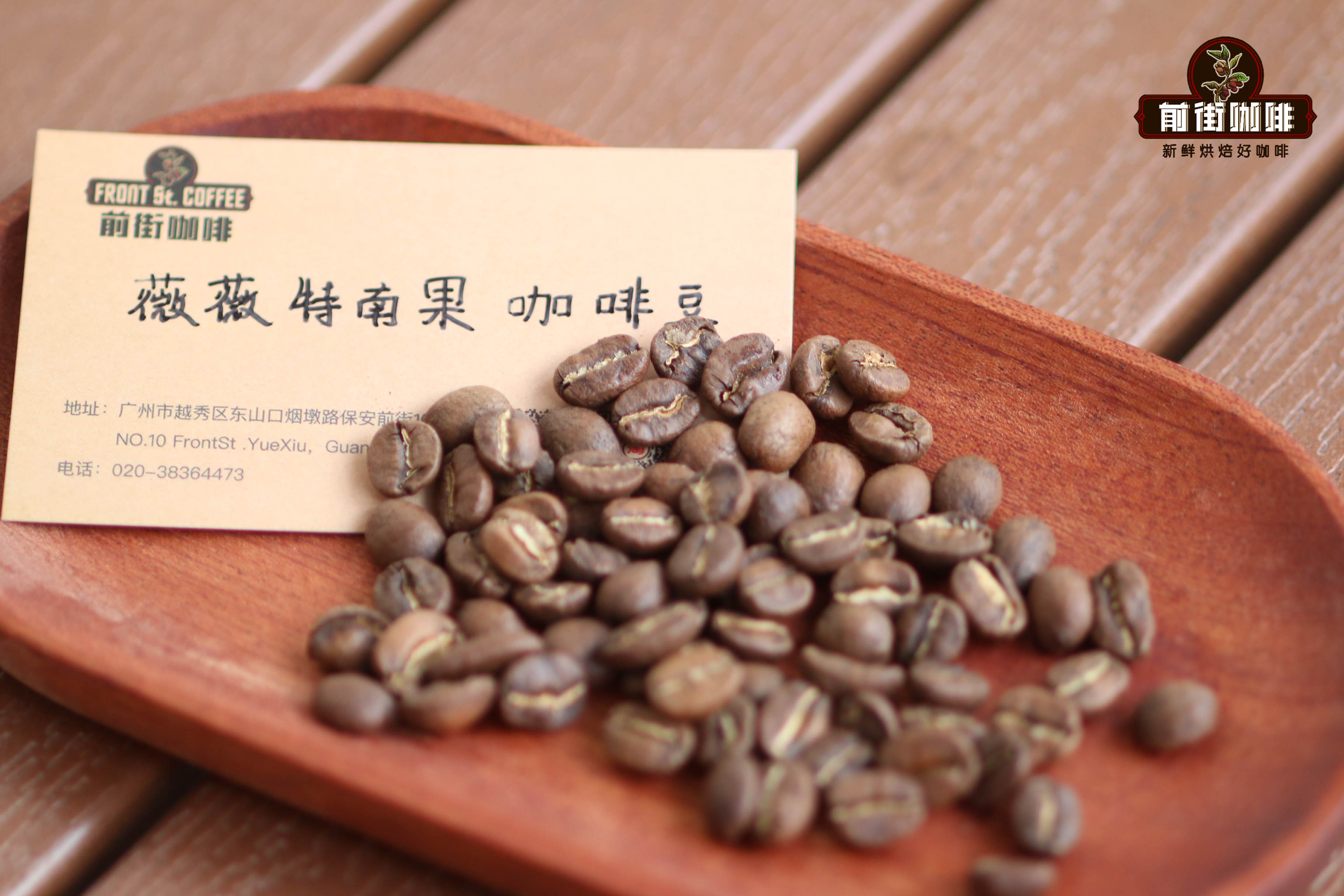
This Guatemala Flor del Café coffee bean selected by Front Street Coffee comes from the La Minita Group. The group is known for its strict cultivation management and processing techniques. Guatemala's La Minita Estate does not use insecticides during cultivation; relying on the relatively high altitude and lower temperatures, the probability of pest and disease outbreaks within the estate is greatly reduced. Every year, La Minita Estate also conducts soil testing twice within the estate and decides on fertilization plans accordingly. By applying trace elements such as zinc, boron, and copper, it can both supplement more nutrients for the coffee trees and also serve to prevent diseases. This scientific cultivation management approach has achieved Flor del Café's outstanding flavor performance and has also allowed it to maintain a reputation for stable quality over the years.
As the rainy season approaches its end, the coffee fruits also gradually enter the ripening stage. However, because coffee fruits ripen slowly and at uneven degrees of maturity, the harvesting work requires particular care. The fruits borne by the same coffee tree will be picked up to five times, depending on the ripeness of the coffee cherries.
After the coffee fruits are harvested, La Minita, in accordance with strict standards, commissions the locally largest washed processing plant, Las Pastores, to carry out the washing operation on the green beans, and names this batch of beans Flor del Café.
The washed processing method may not appear complicated, but every step has its particularities.
1. Removing floating beans: Pour the coffee beans into a large water tank. Underdeveloped, inferior beans will float to the surface, while mature, plump fruits will sink to the bottom. At this point, scoop out the floating beans on the surface, and the step of removing floating beans is complete.
2. Removing the skin and pulp: Through a pulp remover, the outer skin and pulp of the coffee fruits are removed, leaving behind the mucilage, parchment, and silver skin.
3. Fermentation: The purpose of this step is to remove the mucilage using biological processing methods. Place the coffee fruits that have passed through the pulp remover into a fermentation tank for 16 to 36 hours, and the fermenting bacteria will dissolve the mucilage.
4. Washing: After fermentation is complete and the mucilage is removed, because fermenting bacteria and impurities will remain on the coffee beans, the coffee beans are washed once more. In order to wash them clean, this step consumes a large amount of clean water.
5. Drying and removing the parchment and silver skin: Dry the coffee fruits in the sun, reducing the moisture content to 10% to 14%. Then use a huller to remove the remaining parchment and silver skin, and the processing is complete.
The coffee washed method first began in the mid-18th century. During the washing process, the pulp of the coffee fruit must first be removed, then a fermentation tank is used to remove the mucilage remaining on the parchment. After the beans are washed, they are then dried.
The washed method can remove impurities and defective beans through each step, so the green beans have a uniform appearance and are generally considered to be high-quality green beans. However, the biggest disadvantage of washed coffee is that during the fermentation process, the coffee beans easily pick up fermented odors. The reason beans pick up fermented flavors is, in the vast majority of cases, due to a lack of management and maintenance of the fermentation tank. Soaking coffee beans with mucilage still on the parchment in a fermentation tank allows microorganisms to change and causes the coffee beans to pick up fermented flavors.
After receiving this Guatemala Flor del Café coffee bean, Front Street Coffee's roaster, considering the need to highlight this bean's balance, tea-like body, floral aroma, and acidity, adopted a medium roast level. When Front Street Coffee's barista brews it, a relatively high water temperature and a finer grind are used to extract the aroma and acidity from this Flor del Café coffee bean, but at the same time, to avoid over-extraction caused by high temperature, a faster-flow V60 dripper is used.
Dripper: Hario V60
Water Temperature: 91°C
Dose: 15 grams
Coffee-to-Water Ratio: 1:15
Grind Size: 80% passing through a No. 20 sieve
Front Street recommends using a three-stage pouring method during brewing, thereby giving the coffee a richer layering. First pour 30 grams of water to completely wet the coffee grounds and bloom for 30 seconds, then pour the second stage of water in a slow, small stream in a circular motion up to 125 grams for the stage; when the water temperature in the dripper drops to just about to expose the coffee bed, continue pouring, and pour the third stage up to 225 grams and immediately stop pouring. Wait for the water in the dripper to completely fall into the server below, then remove the dripper. The total extraction time is about 2 minutes.
For more coffee bean information, please follow Coffee Workshop (WeChat public account: cafe_style)
For professional coffee knowledge exchange, please add WeChat ID: kaixinguoguo0925
The above content is compiled by CoffeeHunters, a coffee news website.


