








What makes Panama Geisha coffee beans from La Esmeralda different?
Panama's Hacienda La Esmeralda Geisha is the coffee that put the varietal on the specialty map. Its Red, Green and Blue labels are not separate varieties but grading tiers based on the plot and the picking standard. Red Label comes from the Jaramillo plot and is the most limited; Green Label is a broader estate selection; Blue Label is the everyday lot.
The story starts when owner Daniel Peterson found oddly shaped trees on the low-altitude Jaramillo land. Consultant Don Pachi identified them as Geisha, originally brought from Costa Rica for disease resistance, and many farmers had already removed them for low yields. Peterson moved them higher, and the citrus and floral cup that followed changed Panama geisha coffee beans for good.
Panama's La Esmeralda Geisha coffee beans, with their unique floral and fruity aroma and exceptional quality, have become a legend in the specialty coffee world. This article will take you through the story of Geisha's discovery and rise to global fame, and explain in detail La Esmeralda's plot divisions and the differences between the three grades: Red Label, Green Label, and Blue Label. At the same time, we have compiled the flavor characteristics, roasting suggestions, cupping reports, and brewing parameters for three Geisha coffees, along with practical recommendations from Front Street Coffee. Whether you are a seasoned enthusiast or a first-time taster, you will find valuable information here.
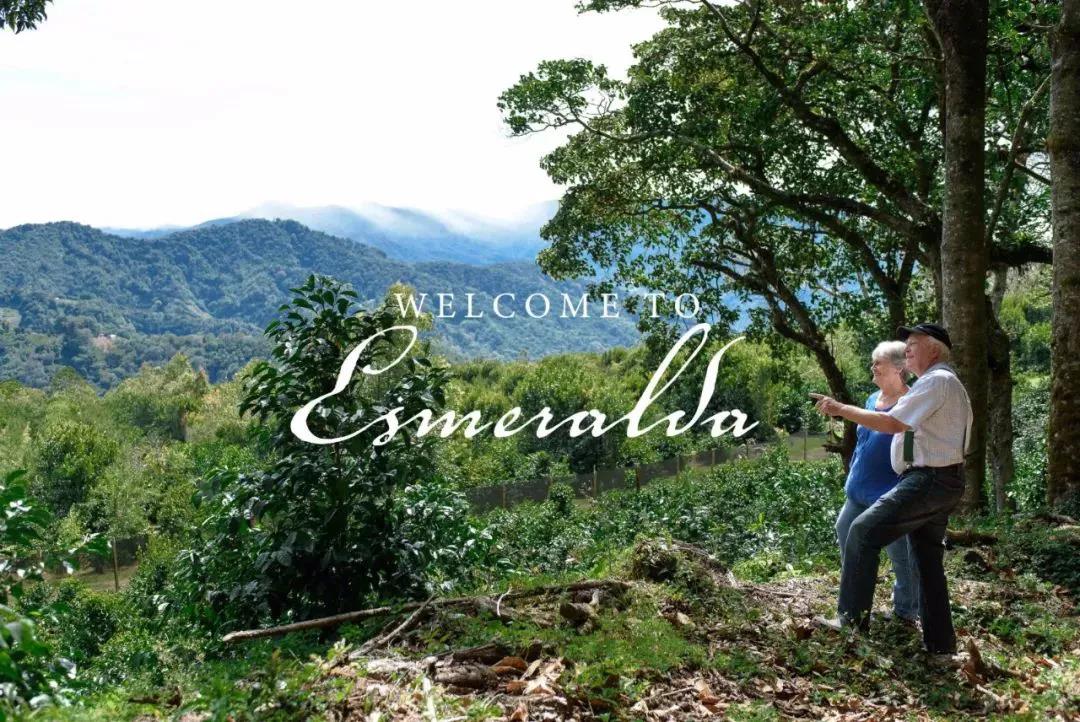
Geisha coffee's global fame would not have been possible without the discovery and cultivation efforts of Panama's La Esmeralda estate. It was La Esmeralda that first recognized Geisha's potential and brought it to the stage of the Best of Panama green bean competition, where it won first place in one fell swoop. Over the following decade or more, La Esmeralda appeared on the list almost every year, becoming a benchmark in the specialty coffee world. La Esmeralda's Geisha Red Label, Green Label, and Blue Label are also the beans that Front Street Coffee uses regularly. Geisha's English name is Geisha; Japanese speakers transliterated it as "geisha," and later Mr. Yuan introduced it to the Chinese market and translated it as "瑰夏."
Front Street Coffee has previously detailed the historical origins of Panama La Esmeralda Geisha in earlier articles; interested readers can look those up for reference. This article will not repeat that and will only explain the grade differences among Red Label, Green Label, and Blue Label Geisha.
Daniel Peterson, the owner of Panama La Esmeralda,偶然 discovered that some uniquely shaped coffee trees were growing in the low-altitude area of the newly purchased Jaramillo estate. Coffee consultant Don Pachi confirmed that these were Geisha trees—originally introduced from Costa Rica that year to improve Panama coffee's disease resistance, but because of low yields, many farmers had already cut them down. However, Daniel decided to relocate these coffee trees to a higher-altitude area, and the result surprisingly displayed the citrus and floral notes characteristic of African beans. He immediately processed this batch separately and sent it to the 2004 Panama coffee cupping competition, where it became famous overnight. From then on, Geisha beans advanced irresistibly, winning the Panama coffee cupping competition championship for many consecutive years. In the minds of specialty coffee lovers worldwide today, Geisha coffee beans are undoubtedly the supreme treasure.
Plot Divisions of La Esmeralda's Geisha Variety
High-quality Geisha mainly comes from two plots: Jaramillo and Canas Verdess.
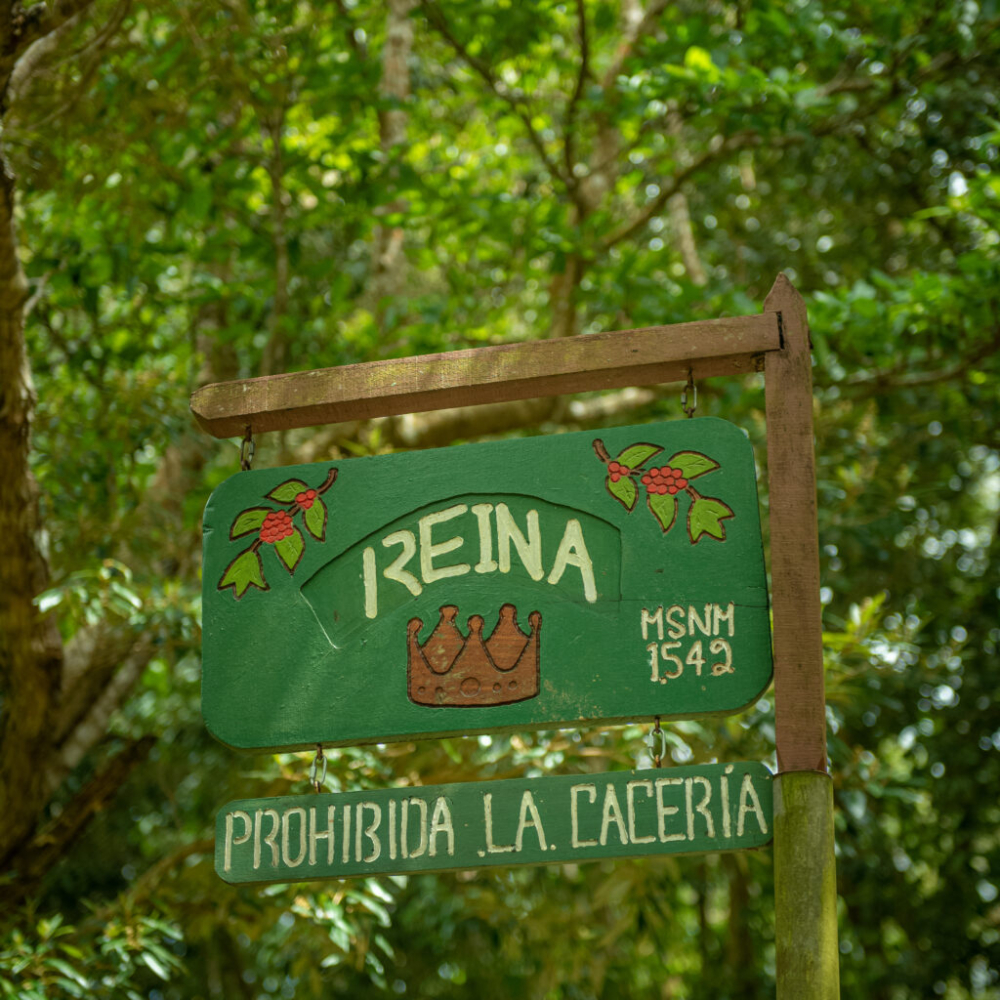
Jaramillo: annual rainfall about 4000 ml, average daytime temperature 19-25°C, average nighttime temperature 11-15°C, average altitude 1600-1700 m. This plot is subdivided into 5 small plots: Mario, Noria, Reina, Bosque, and Buenos Aires.
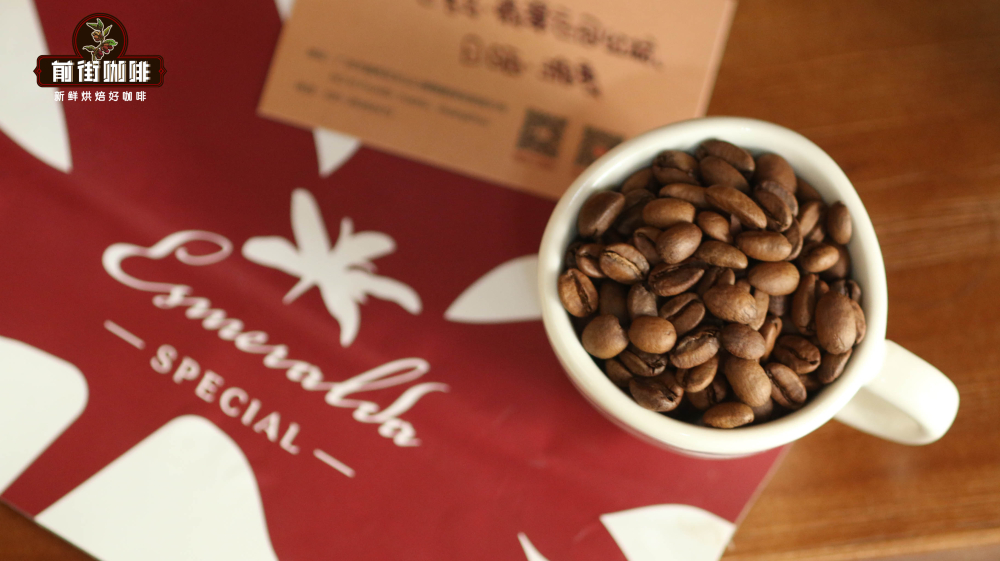
Canas Verdess: annual rainfall about 3500 ml, average daytime temperature 16-23°C, average nighttime temperature 10-15°C, average altitude 1600-1800 m. This plot contains 9 small plots: Lino, Coronado, Fundador, León, Montaña, Trapiche, Chinta, Cabaña, and Tumaco.
El Velo: the most recently purchased plot by La Esmeralda, with an average altitude of 1700-1900 m. In addition to growing Geisha and Catuai, it also cultivates a small amount of other exotic varieties, such as Laurina, Pacamara, Mocha, and SL28. El Velo is divided into 7 small plots: Guabo, Portón, Durazno, Mural, Higo, Buena Vista, and Guila.
After years of experimentation, Panama La Esmeralda found that only coffee trees grown above 1400 meters in altitude can produce Geisha coffee beans that display their proper distinctive flavor. Therefore, the estate mainly uses growing altitude as the basis for grading, supplemented by actual cupping results, to divide Geisha beans into three grades: Red, Green, and Blue Label. Front Street Coffee believes that the biggest difference between La Esmeralda's marketing strategy and that of other estates is that it created five major brands based on cupping performance, cultivated varieties, and plots. Among them, the Geisha variety accounts for three: Esmeralda Special, Private Collection, and Geisha1500; the Catuai variety accounts for two: Diamond Mountain grows and Palmyra.
Characteristics of Panama Geisha Coffee
Panama Geisha coffee beans (Geisha) are an extremely rare variety and have continued to cause a sensation in global coffee appreciation circles for more than the past five years, recognized as one of the brightest, richest, and most intensely aromatic coffee varieties.
Geisha coffee trees grow at very high altitudes, and their leaves are slender and beautiful. Its coffee cherries and green beans are also slightly slender compared with other top high-altitude coffees. Geisha has full-bodied sweetness, an extremely clean mouthfeel, and rich layers of aroma—spreading from berries and citrus to mango, papaya, and peach. A very obvious bergamot-like finish is also one of its typical cupping characteristics. Geisha coffee beans are often champions among coffee varieties. Geisha coffee beans receive a moderate rating for body in cupping.
Esmeralda Special, commonly known as Red Label
The Geisha produced under Esmeralda Special is what is commonly called Red Label. It uses Geisha coffee beans grown at 1600-1800 meters, with a cupping score above 90, from the two production areas of Jaramillo and Canas Verdes. In La Esmeralda's own independent auction, only the Geisha lots selected from the divided plots for bidding are auction Red Label. Guests often ask whether auction Red Label tastes better or Red Label tastes better; in fact, non-auction Red Label and auction Red Label come from the same plots, and the only difference is whether they participate in the auction. Front Street Coffee believes there is no need to insist on the auction level: first, the price is indeed higher; second, if you just want to try it, Red Label is also a good choice.
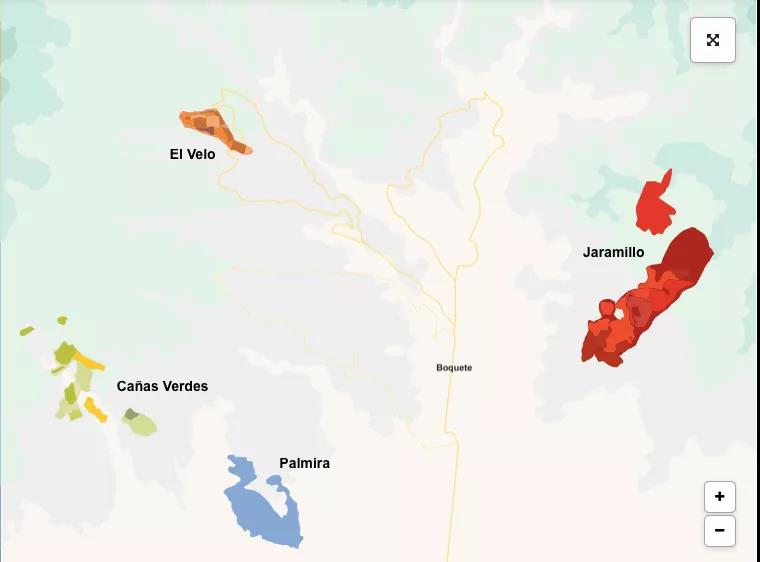
Front Street Coffee's La Esmeralda Red Label Geisha comes from the Mario plot, because this plot is precisely where Geisha won the BOP championship that year. It uses a slow sun-dried process, and the roasting flavor displays a special and bright floral aroma, citrus aroma, and honey-like sweetness.
Private Collection, commonly known as Green Label
Private Collection, commonly known as Green Label, is not an independent competition lot, but rather Geisha varieties that do not participate in auctions after planting yet still have excellent quality. It uses a blend of micro-lots grown at 1600-1800 meters from different plots such as Jaramillo and Canas Verdes. People often ask about the difference between Red Label and Green Label. Front Street Coffee gives the most plain answer: Red Label can be traced back to a specific small plot, while Green Label is a blend and cannot be traced. Because it uses a blended-bean model without detailed plot labeling, sometimes Green Label and Red Label have a very high flavor similarity, but the next output may differ again. Front Street Coffee feels that drinking Green Label is like buying a lottery ticket—perhaps the batch you drink this time has the flavor of Red Label. Green Label Geisha may use sun-dried or washed processing methods.
Front Street Coffee's La Esmeralda Green Label Geisha uses a washed processing method. Washed Green Label Geisha has fresh jasmine and ginger flower aromas, bright citrus-like acidity, and a thick, juicy mouthfeel.
Geisha1500, commonly known as Blue Label
The brand Geisha1500 is the commonly seen Blue Label Geisha. It uses a blend of beans grown at 1400-1500 meters from three different plots: Jaramillo, Canas Verdes, and El Velo. The flavor has slight floral notes, fruity acidity, and sweetness, with a less full body. Blue Label Geisha is only washed processed. However, in 2022, Blue Label was changed to the "Los Rocas" brand. Front Street has also tasted this new Blue Label, and the flavor remains.
Front Street Coffee's washed Blue Label Geisha has slight floral notes, fruity acidity, and sweetness, with a less full body; while the sun-dried Blue Label has slight floral notes, an obvious fermented feel, a berry-juice-like mouthfeel, and high sweetness.
Front Street Roasting Suggestions for 4 La Esmeralda Geisha Coffee Beans
[Red Label Geisha] Charge at 150°C, heat 120, air damper set to 3; turning point 1'36", when temperature reaches 140°C open the air damper to 4, heat unchanged; when temperature reaches 147.6°C the bean surface turns yellow, the grassy smell completely disappears, entering the dehydration stage; when the temperature reaches 150°C, adjust heat to 100, air damper unchanged; at 7'38", ugly wrinkles and dark patches appear on the bean surface, and the bread-toast smell clearly turns into coffee aroma, which can be defined as the prelude to first crack. At this time, listen carefully for the sound of the first crack. At 8'10" first crack begins, open the air damper to 4, develop for 1'28 after first crack, and drop at 189.5°C.
[Green Label Geisha] Charge at 190°C, heat 150, air damper set to 3; turning point 1'36", when temperature reaches 140°C open the air damper to 4, reduce heat to 130; when temperature reaches 150.8°C the bean surface turns yellow, the grassy smell completely disappears, entering the dehydration stage; when the temperature reaches 161°C, adjust heat to 90, air damper unchanged; at 7'55", ugly wrinkles and dark patches appear on the bean surface, and the bread-toast smell clearly turns into coffee aroma, which can be defined as the prelude to first crack. At this time, listen carefully for the sound of the first crack. At 8'30" first crack begins, open the air damper to 5, develop for 1'30 after first crack, and drop at 193.5°C.
[Washed Blue Label Geisha] Charge at 180°C, heat 130, air damper set to 3; turning point 1'32", when temperature reaches 104°C open the air damper to 4, heat unchanged; when temperature reaches 151.6°C the bean surface turns yellow, the grassy smell completely disappears, entering the dehydration stage; at 7'56", ugly wrinkles and dark patches appear on the bean surface, and the bread-toast smell clearly turns into coffee aroma, which can be defined as the prelude to first crack. At this time, listen carefully for the sound of the first crack. At 8'30" first crack begins, open the air damper to 5, develop for 1'28 after first crack, and drop at 190°C.
[Sun-Dried Blue Label Geisha] Charge at 180°C, heat 130, air damper set to 3; turning point 1'32", when temperature reaches 104°C open the air damper to 4, heat unchanged; when temperature reaches 151.6°C the bean surface turns yellow, the grassy smell completely disappears, entering the dehydration stage; at 7'56", ugly wrinkles and dark patches appear on the bean surface, and the bread-toast smell clearly turns into coffee aroma, which can be defined as the prelude to first crack. At this time, listen carefully for the sound of the first crack. At 8'30" first crack begins, open the air damper to 5, develop for 1'28 after first crack, and drop at 190°C.
Front Street Cupping Report for 4 La Esmeralda Geisha Coffee Beans [Red Label Geisha] Dry aroma: jasmine, citrus Wet aroma: citrus, lemon, honey Palate: lemon, honey, berries, orange peel, mango, cream, citrus, tea-like
[Green Label Geisha] Dry aroma: jasmine, ginger flower Wet aroma: lemon, sweet orange Palate: lemon, sweet orange, honey, cream, almond, tea-like
[Washed Blue Label Geisha] Dry aroma: floral, citrus Wet aroma: citrus, lemon Palate: citrus, lemon, honey, nuts, tea-like
[Sun-Dried Blue Label Geisha] Dry aroma: fermented, caramel Wet aroma: floral, fermented aroma Palate: lemon, honey, melon, berries, fermented feel
Front Street Brewing Suggestions for 4 La Esmeralda Geisha Coffee Beans Dripper: V60 #01 Coffee dose: 15 g Coffee-to-water ratio: 1:16 Grind size: (80% passing through a No. 20 sieve) Water temperature: 90-91°C
Front Street recommends using freshly roasted coffee beans for brewing, as this allows you to experience the coffee's rich flavors to the greatest extent. The coffee beans shipped by Front Street Coffee are all within 5 days of roasting, because Front Street deeply understands that the freshness of coffee beans has a great impact on flavor. Front Street's roasting motto is "Freshly roasted good coffee," so that every customer who places an order receives the freshest coffee when it arrives. Coffee's resting period is about 4-7 days, so when customers receive it, it is exactly at its best flavor.
Front Street takes into account that these Geisha coffee beans are all light roasts, and light-roasted beans have a lower extraction rate of coffee solids than dark roasts. Therefore, to ensure that the Geisha flavor can be fully extracted, a higher water temperature is used for brewing, and a finer grind size is also chosen. Some fans have noticed that Front Street has always recommended a coffee-to-water ratio of 1:15, while La Esmeralda Geisha is 1:16. That is because slightly widening the coffee-to-water ratio helps to better experience Geisha's layering and flavor.
Front Street Coffee uses staged extraction, also called three-stage brewing: use 30 g of water for a 30-second bloom, pour in a small stream in circles until 125 g for the first stage, then continue pouring until 225 g when the water level drops and is about to expose the coffee bed, stop pouring, and remove the dripper when the water level drops and is about to expose the coffee bed, (timing starts at the beginning of the bloom) with an extraction time of 2'00-2'00.
[Red Label] Has bright rose and citrus aromas, brown rice, berries, apricot, mixed fruits, honey, a thick juicy feel, rich flavor layers, and obvious sweetness.
[Green Label] Rich jasmine aroma, high sweetness, citrus, berries, juicy feel, cream, green tea, orange peel, cantaloupe; the overall flavor layers are rich, with a lasting floral and citrus finish.
[Washed Blue Label] Floral, with a soft lemon and grapefruit acidity on entry, honey sweetness in the middle, and oolong tea and brown sugar sweetness in the finish; the mouthfeel is relatively clean and bright.
[Sun-Dried Blue Label] Smells of fermented aroma and fruity sweetness; tastes of melon and tropical fruit sweetness, with a juice-like mouthfeel; the overall sweetness is very high.
Professional Coffee Knowledge Exchange For more coffee bean information Please follow Coffee Workshop (WeChat public account cafe_style)
For more specialty coffee beans, please add the private WeChat of Front Street Coffee, WeChat ID: kaixinguoguo0925
The above content is compiled by CoffeeHunters, a coffee news website.


