








How can you tell real blue mountain coffee from a flavor copy?
Real Jamaican Blue Mountain coffee balances acidity, sweetness and bitterness, with a silky entry and a solid body. The market, however, is full of products sold as Blue Mountain flavor that are simply dark-roasted beans with no connection to the island, so buyers should treat taste, packaging, grade, appearance, grind feel and aroma as a set of checks rather than trusting the label alone.
Jamaica applies strict quality control to blue mountain coffee, a level of standardization rare among producing countries. The crop was introduced to the island in the early eighteenth century and grows in the misty highlands between Kingston and Port Antonio, with peaks reaching 2,256 meters. Cool temperatures, deep soil and good drainage support the cup that made the name famous.
Jamaican Blue Mountain coffee has long ranked among the world's top coffees thanks to its balanced ratio of acidity, sweetness, and bitterness and its smooth, full-bodied mouthfeel. However, in the domestic market, the phenomenon of passing off "Blue Mountain flavor" as "Blue Mountain coffee" is commonplace, and ordinary consumers often find it hard to tell the difference. Starting from Blue Mountain coffee's place of origin and certification system, this article will systematically introduce eight practical methods for verifying authenticity, covering multiple dimensions such as taste, packaging, grade, appearance, grinding feel, and aroma. Using Front Street Coffee's best-selling Clifton Mount Estate Blue Mountain No. 1 as an example, it will also provide specific flavor descriptions and brewing parameter suggestions to help coffee lovers gain a comprehensive understanding of this legendary coffee.
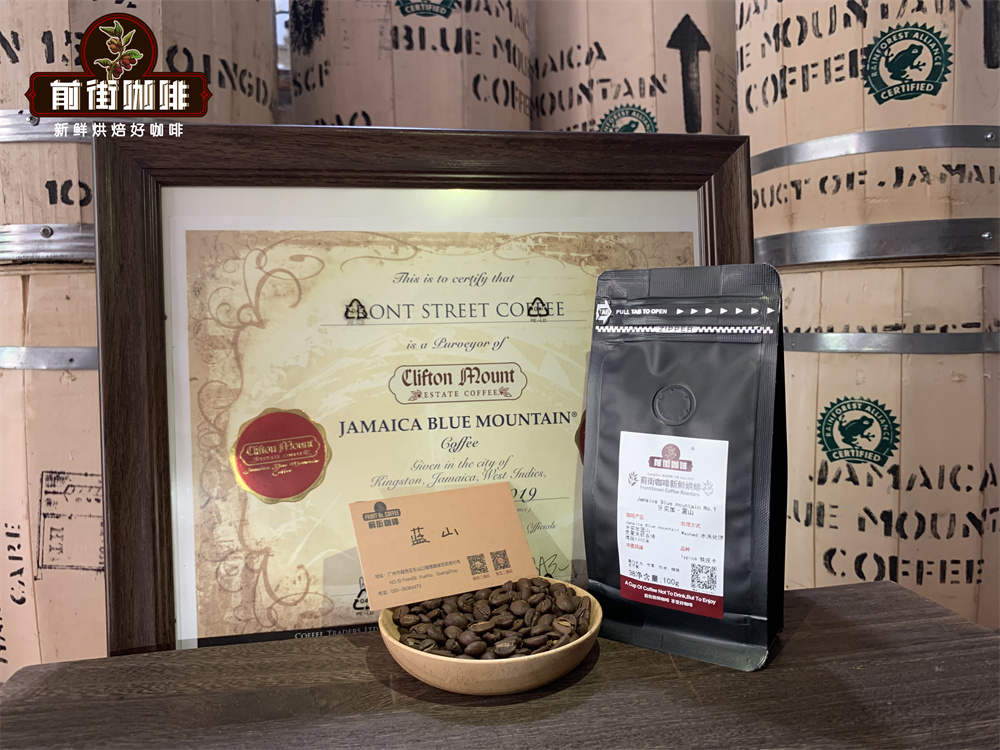
Jamaican Blue Mountain enjoys an extremely high reputation on the global coffee map. Its output is scarce, making it a rare specialty coffee. The key to its fame lies in the harmony among acidity, sweetness, and bitterness, with a silky entry and a solid body. Jamaica has established extremely strict quality control standards for Blue Mountain coffee, a degree of standardization that is almost unmatched among coffee-producing countries. According to records, true Blue Mountain coffee was introduced to Jamaica in the early eighteenth century, with the main growing areas distributed in the zone between Kingston in the south and Port Antonio in the north. The highest peak of that mountain range reaches 2,256 meters, making it one of the highest mountain systems in the Caribbean. The mountainous area is shrouded in mist, with relatively low temperatures, abundant rainfall, deep soil, and excellent drainage, and is widely recognized as a golden zone for coffee cultivation. It is precisely this combination of natural conditions that creates the extraordinary quality of Blue Mountain coffee.
However, the market is quite commonly plagued by fakes passing as genuine, and consumers may buy counterfeit goods if they are not careful. The quality of the domestic coffee market varies greatly, so to accurately identify the authenticity of Blue Mountain coffee, one must master sufficient knowledge and become familiar with its core characteristics. The first thing to watch for is that many products are labeled "Blue Mountain flavor" rather than "Blue Mountain coffee." So-called "Blue Mountain flavor" may contain only a very small proportion of Blue Mountain beans and is not the same thing as true Blue Mountain coffee at all.
Below are eight methods for identifying Blue Mountain coffee compiled by FrontStreet Coffee:
Method one: Judging by taste For experienced coffee lovers, the tongue is the most reliable testing tool. Authentic Blue Mountain is smooth on entry, with an impressive mellow body and near-perfect performance in every respect; by contrast, fakes are either bland or overly stimulating and never achieve that balanced state.
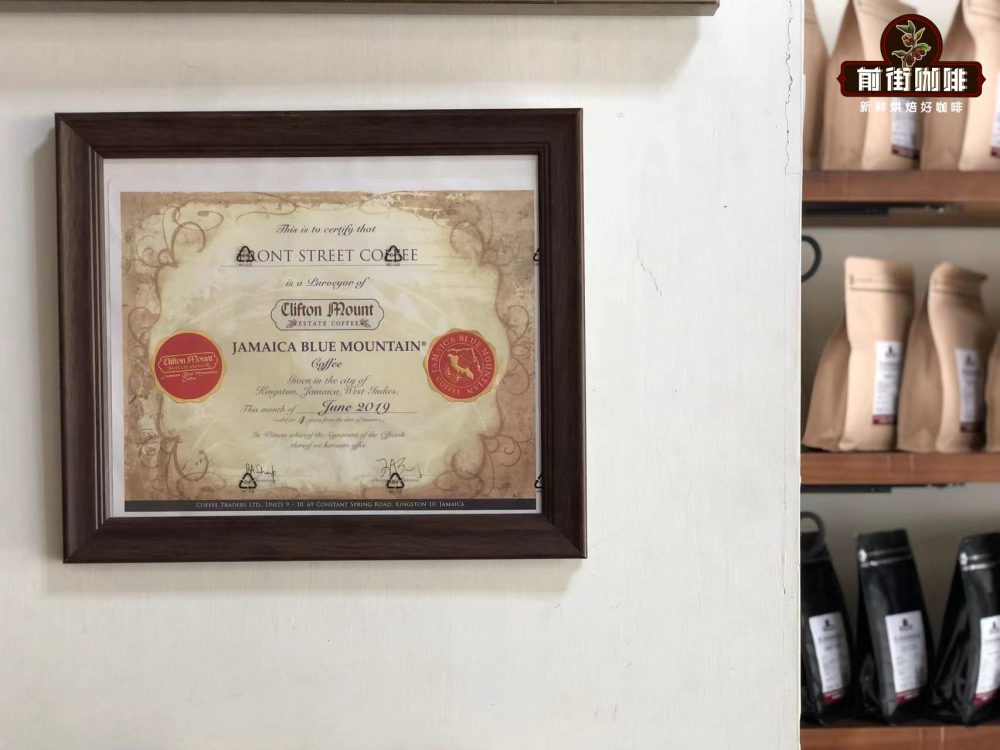
Method two: Check for certification from the Jamaica Coffee Industry Board As mentioned earlier, authentic Blue Mountain coffee must meet strict standards. In Jamaica, only enterprises approved by the Coffee Industry Board are qualified to export Blue Mountain coffee. The Jamaica Coffee Industry Board (CIBOJ) was established on June 2, 1950, under the Coffee Industry Regulation Act of 1948, with the mission of promoting the development of Jamaica's coffee industry and improving the treatment of those working in it. The agency's responsibilities include issuing licenses to coffee processors and dealers, formulating and reviewing coffee quality standards, serving as the sole certification body for Jamaican coffee exports and green bean exports, and providing advisory support to farmers and industry stakeholders.
Since January 1, 2018, CIBOJ's functions have been taken over by the newly formed Jamaica Agricultural Commodities Regulatory Authority (JACRA), which is responsible for the regulation, promotion, standardization, and development of the agricultural products industry. The certificate for the Jamaican Blue Mountain coffee sold by FrontStreet Coffee is posted at the store entrance for customers to inspect, which also serves to educate everyone on this point.
Method three: Verify the place of origin Some may think this is unnecessary—Blue Mountain coffee's place of origin is of course Jamaica, so why confirm it? Even so, do not forget that Blue Mountain coffee in the Asian market was long exclusively distributed by the Japanese company UCC, so most products on the market bear the UCC trademark, and confirming the production area information is still very necessary.
Method four: Check the packaging format In the early days, authentic Jamaican Blue Mountain coffee used sealed aluminum foil bags with burlap sacks on the outside. In recent years, however, green beans have increasingly been packed in wooden barrels, and Jamaica is also the only country in the world today that insists on packaging coffee in wooden barrels. Many counterfeit Blue Mountain coffees on the domestic market imitate wooden barrel packaging even for just one pound, and the surface of the barrel is even painted. Think about it: coffee wins by its taste, so once it absorbs the smell of paint, how can it be appreciated? Jamaicans clearly would not do such a foolish thing.
Method five: Check the grade marking Blue Mountain coffee is divided into five grades: Blue Mountain No. 1, Blue Mountain No. 2, Blue Mountain No. 3, Blue Mountain PB, and Jamaica High Mountain coffee. The AAA, AA, A, G1, and similar markings commonly seen on counterfeit domestic products have nothing to do with Blue Mountain coffee's grading system and must be fake, because Blue Mountain coffee has never had these grades.
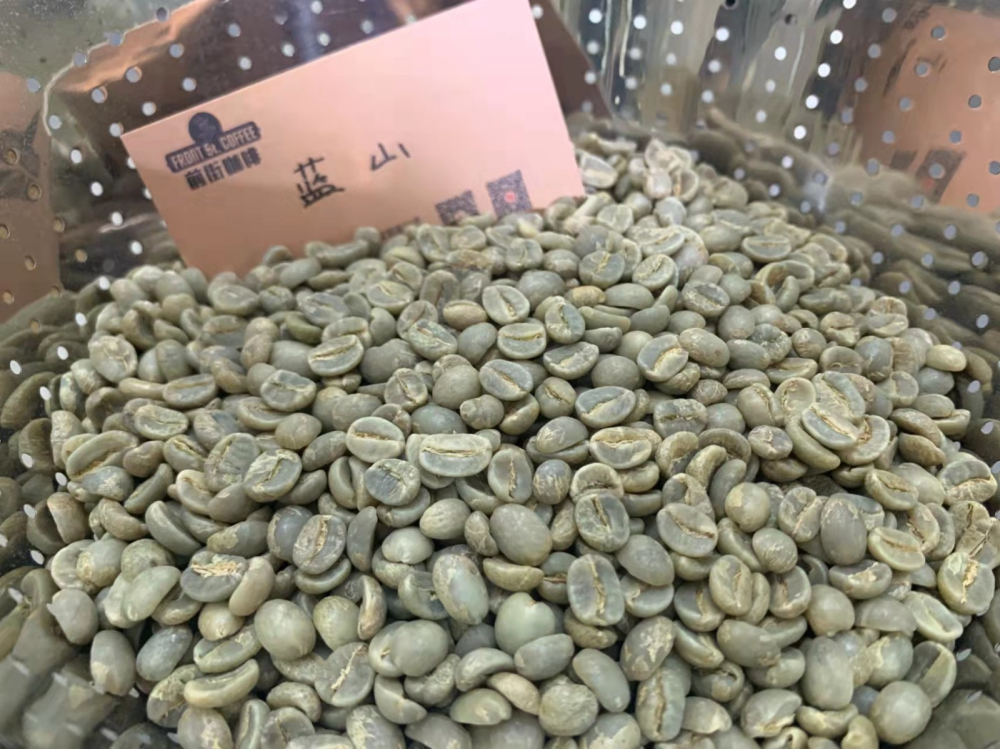
Method six: Observe the appearance characteristics Authentic Jamaican Blue Mountain green beans are blue-green in color, uniform in size, medium-small, and slightly upturned at both ends. After roasting, they expand in volume and become full and rounded in shape.
Method seven: Feel the grinding condition Blue Mountain coffee grows at medium to high altitudes, and the cytoplasmic structure of the green beans is relatively loose. When grinding with a hand grinder, one will clearly feel a light and crisp sensation, with almost no jamming or effort required.
Method eight: Identify the aroma layers by smell The aroma of Blue Mountain coffee carries rich fruity and chocolate notes (some also describe it as creamy). Roasted Blue Mountain coffee beans have a thick, steady aroma. By contrast, so-called Blue Mountain coffee mixed with other varieties has a drifting, frivolous smell that lacks steadiness and dissipates easily.
Having covered the above identification methods, FrontStreet Coffee will now introduce the store's hot-selling Clifton Mount Estate Jamaican Blue Mountain No. 1 coffee. Clifton Mount Estate is currently the largest coffee estate in the Blue Mountain production area, but by international standards it is still a small plantation. The estate has a history of 270 years and is said to be one of the oldest coffee estates. It is also the only coffee farm in the area to have obtained Rainforest certification, which is enough to show the excellence of its ecological environment.
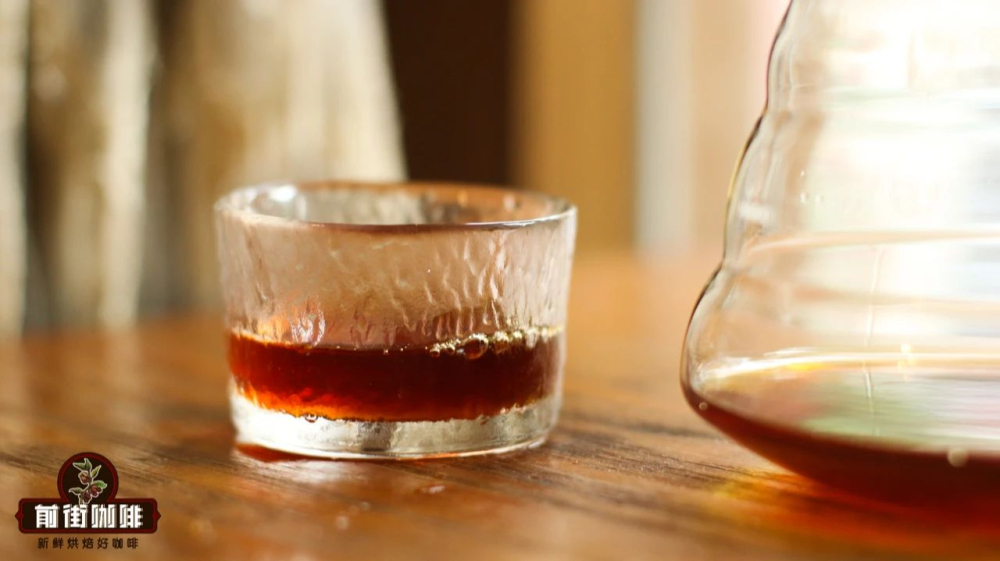
Front Street's Blue Mountain No. 1 coffee has an extremely clean and gentle flavor, with acidity, body, and aroma matched seamlessly. It has no bitterness at all, leaving only just the right acidity and a lingering fruity note in the finish. In the dry aroma, notes of roasted peanuts and roasted hazelnuts can be detected, while in the wet aroma the fragrance of oolong tea emerges. On entry it presents chocolate flavors, with a caramel-like sweetness in the aftertaste. For friends who have purchased FrontStreet Coffee Blue Mountain No. 1, here are the brewing suggestions provided by FrontStreet Coffee:
Dripper: kono Dose: 15 grams Coffee-to-water ratio: 1:15 Water temperature: 88 degrees Grind size: medium-coarse
The reason for choosing the kono dripper is that it allows the blooming effect to be more complete. During brewing, the water level gradually rises, the filter paper is pressed tightly against the wall of the dripper, and air can only escape through the gap between the lower ribs and the filter paper. The interaction between water and coffee grounds produces a siphon-like effect, making the coffee's overall mouthfeel fuller and richer.
Brewing method: First bloom with 30 grams of water for 30 seconds, then slowly pour in a circular motion from the center outward with a small stream of water until reaching 120 grams. When the coffee bed has dropped to the halfway point, switch to a larger stream and pour until reaching 225 grams. After all the coffee liquid in the dripper has flowed into the server, remove the dripper and extraction is complete. The total brewing time is about 2 minutes.
The above content is compiled by CoffeeHunters, a coffee news website.


