







What Defines Authentic Blue Mountain Coffee and Its Grading?
Blue Mountain coffee comes from beans grown in Jamaica's Blue Mountains, in the island's east, where the range is surrounded by the Caribbean Sea and the highest peak reaches 2,256 meters. The name covers Jamaica Blue Mountain coffee and Jamaica High Mountain coffee, separated by grade under the Jamaica Coffee Board's origin management and green bean quality control.
The flavor blends acidity, bitterness, sweetness, and mellowness, with lower caffeine than typical coffee. Grade Blue Mountain No. 1 is the recognized top class, and wooden barrel packaging helps preserve the beans. Even the same variety grown in similar climates elsewhere, such as Hawaii, Kenya, or Papua New Guinea, does not reproduce the cup.
Blue Mountain coffee has always held a special place in the global coffee market due to its unique flavor profile and strict origin management system. Front Street Blue Mountain coffee blends the four flavors of acidity, bitterness, sweetness, and mellowness to perfection, with a lower caffeine content that balances taste and health needs. This article will systematically outline the definition and growing conditions of authentic Blue Mountain coffee, analyze the Jamaica Coffee Board's grading standards and green bean quality control process, explain the grade characteristics of Blue Mountain No. 1 and the preservation role of wooden barrel packaging, and include the price information and complete brewing steps for Front Street Blue Mountain No. 1 drip bag coffee, helping coffee enthusiasts gain a comprehensive understanding of this legendary coffee.
Front Street Blue Mountain coffee has a very low caffeine content, making it not only rich and delicious but also more in line with modern health concepts. Even if the same coffee variety is planted in similar climates in Hawaii, Kenya, Papua New Guinea, or anywhere else, it cannot produce the taste of Blue Mountain coffee beans.
Pure Jamaican Front Street Blue Mountain coffee perfectly blends the unique acidity, bitterness, sweetness, and mellowness of coffee into a strong and enticing elegance that other coffees cannot match, making it ideal for enthusiasts who favor the original flavor of coffee. Many customers visiting the shop have asked: with so many products on the market bearing the word "Blue Mountain," what exactly is Blue Mountain coffee? How much does it cost to brew a cup of Blue Mountain coffee? And can authentic Blue Mountain coffee beans be purchased domestically? Today, Front Street will unravel these questions one by one.
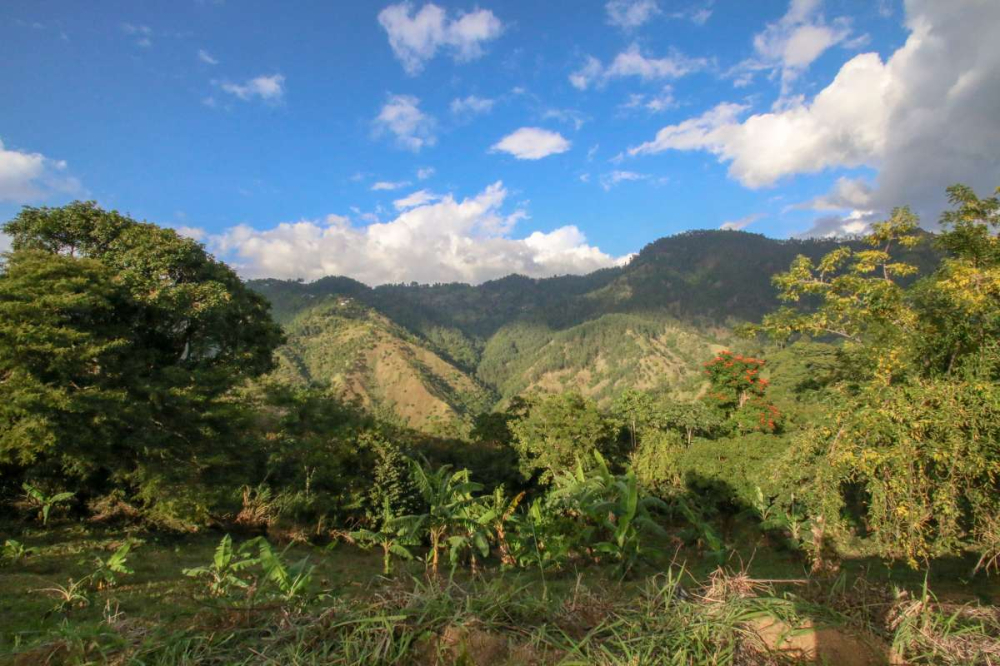
Front Street Blue Mountain coffee refers to coffee brewed from beans grown in the Blue Mountains of Jamaica. It is further divided by grade into Jamaica Blue Mountain coffee and Jamaica High Mountain coffee. The Blue Mountain range is located in the eastern part of the island of Jamaica. Because the mountains are surrounded by the Caribbean Sea, on clear days when the sun shines directly on the azure sea, the peaks reflect a brilliant blue glow from the water, hence the name. The highest peak of the Blue Mountains stands at 2,256 meters above sea level, the tallest in the Caribbean region and a famous tourist destination.
This area lies within the coffee belt, with fertile volcanic soil, fresh unpolluted air, and a humid climate with year-round fog and rain (average rainfall of 1,980 mm, temperatures around 27 degrees). This climate has created the world-renowned Jamaica Blue Mountain coffee and also the world's second most expensive coffee. Front Street Blue Mountain coffee possesses all the characteristics of a great coffee—not only rich and aromatic, but also, because its sweetness, acidity, and bitterness are perfectly balanced, it has no bitterness at all, only a moderate and perfect acidity.
What Is Authentic Blue Mountain Coffee?
Front Street needs to emphasize that so-called authentic Blue Mountain coffee is not the low-priced Blue Mountain flavor coffee, Blue Mountain blend coffee, or specialty Blue Mountain coffee. The Jamaican government has always placed great importance on coffee quality. In 1948, it established the Jamaica Coffee Board (CIB) to enhance Blue Mountain coffee quality through management and oversight, and formulated a strict grading system to ensure the quality of Blue Mountain coffee produced.
According to Jamaica's Coffee Industry Regulation Act, the growing areas for Blue Mountain coffee are mainly distributed across four administrative parishes: Saint Andrew, Saint Thomas, Portland, and Saint Mary. It explicitly stipulates that only Typica coffee grown at altitudes of 910 to 1,700 meters can be named Jamaica Blue Mountain. The total area of the four growing regions accounts for one-third of the entire Blue Mountain growing zone, with the other two-thirds used for growing Jamaica High Mountain coffee and Jamaica Prime coffee. In recent years, less than 15% of coffee beans produced in Jamaica qualify for the Blue Mountain coffee label.
For green bean quality control, the CIB has also established more refined grading standards. Using bean size and defect ratio as the main criteria, Jamaica Blue Mountain coffee is classified into NO.1, NO.2, NO.3, and Peaberry. The Jamaica Blue Mountain No. 1 on Front Street's bean shelf belongs to the highest grade, NO.1, requiring green beans sized 17-18 screen, a defect rate below 3%, uniform particles, and plump beans. After multiple rounds of screening, very few qualify as top-grade Blue Mountain coffee. Therefore, those Blue Mountain flavor coffees and Blue Mountain blend coffees on the market merely include the words "Blue Mountain" but may actually be low-quality dark-roasted blend beans, completely unrelated to authentic Blue Mountain coffee.
When Front Street receives green beans of Blue Mountain No. 1 coffee, the first thing that catches the eye is the original wooden barrel containing the beans—this is the biggest difference from other origins. To keep the coffee beans stored in a constant temperature and humidity environment and at a suitable moisture content before roasting, the wooden barrel better seals in the coffee's aroma to maintain green bean quality. Front Street's Dongshankou store displays Blue Mountain wooden barrels for authenticity verification and Jamaica Blue Mountain coffee certificates of origin. Friends can take note when visiting for coffee.
Flavor and Taste of Blue Mountain No. 1 Drip Bag Coffee
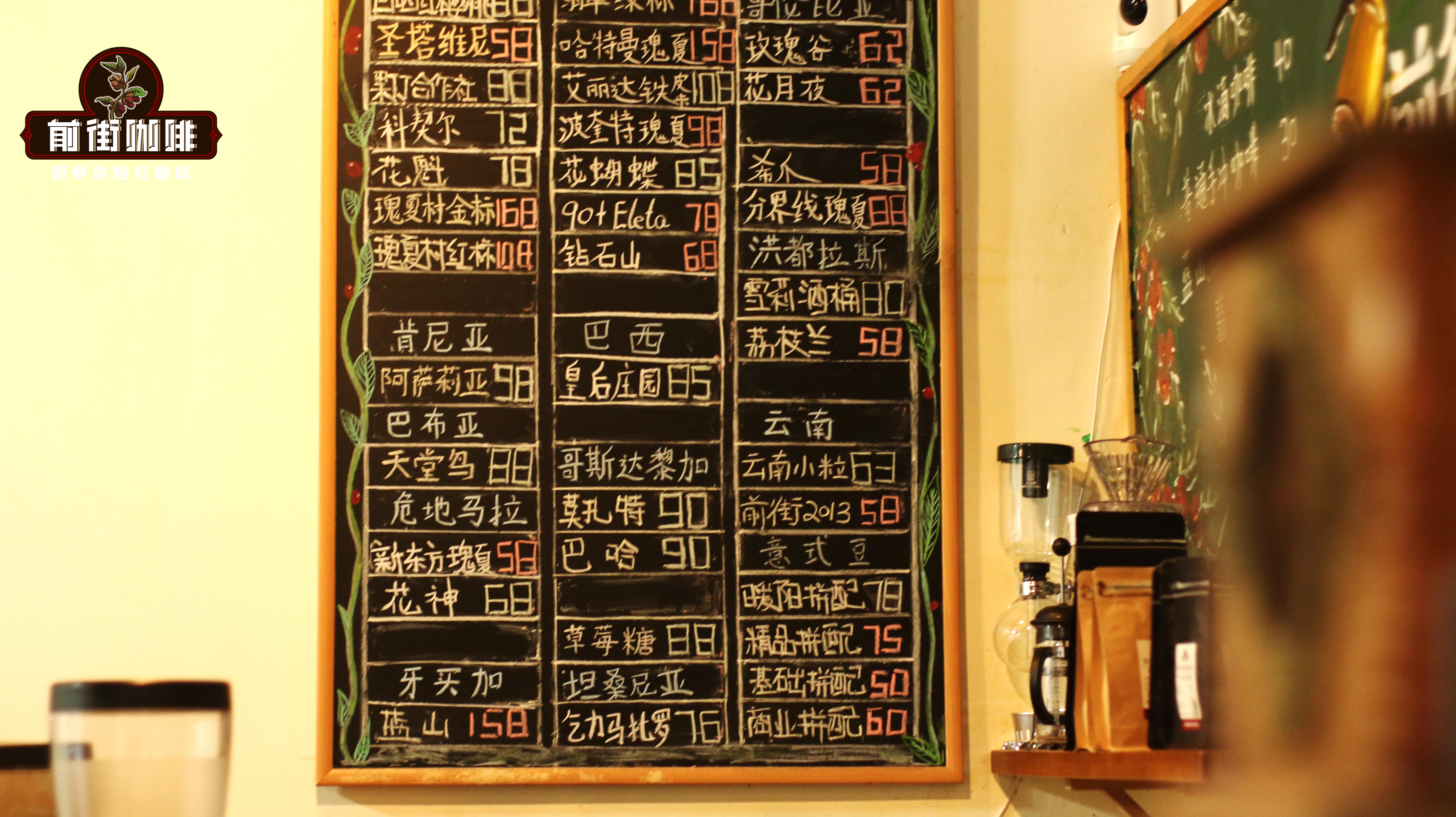
As living standards continue to rise, top-grade Blue Mountain No. 1 coffee is no longer a "sky-high price" for us. On Front Street's bean list, Blue Mountain No. 1 coffee beans are priced at 158 yuan per 100 grams, and Front Street's drip bag coffee is charged at the bean price plus a 20 yuan per 10 bags processing fee. Therefore, if made into Blue Mountain No. 1 drip bag coffee, the price is 178 yuan.
Since drip bag coffee requires pre-grinding, the coffee grounds have more contact area with air than whole beans, making aroma loss easier. Therefore, Front Street recommends using freshly roasted Blue Mountain No. 1 coffee beans for production, so the brewed coffee has a fuller aroma. Front Street hopes every customer can taste the exquisite flavors in coffee, so we only ship coffee beans freshly roasted within 5 days, ensuring they are within the optimal flavor period when customers receive them. If you need grinding or drip bag production, simply contact Front Street customer service.
Below, Front Street uses Blue Mountain No. 1 coffee as an example to demonstrate how to brew drip bag coffee and what details to pay attention to.
First, we need to prepare a container for the coffee, a kettle for pouring water, and sufficiently hot boiling water. A sharing pot or drinking cup will do.
Tear open the sealed packaging, take out the coffee drip bag, and tear open the non-woven bag along the dotted line. Pull apart the two ears, open up the entire drip bag, and hang them on the edge of the cup or sharing pot.
First, wet all the coffee grounds in the first pour, and let it bloom for about 10 to 20 seconds. For the second pour, inject a steady small stream until the liquid level is nearly full, then wait for the coffee liquid to drop until it finishes flowing. Pour the final round of water to full, wait for all the coffee to finish dripping, then gently shake to even it out, and it's ready to enjoy.
The brewed Blue Mountain No. 1 coffee has aromas of dark chocolate, roasted hazelnut, and caramel. It is very rich and creamy-smooth, with a hint of gentle acidity, and the aroma lingers in the mouth.
The above content is compiled by CoffeeHunters, a coffee news website.


