







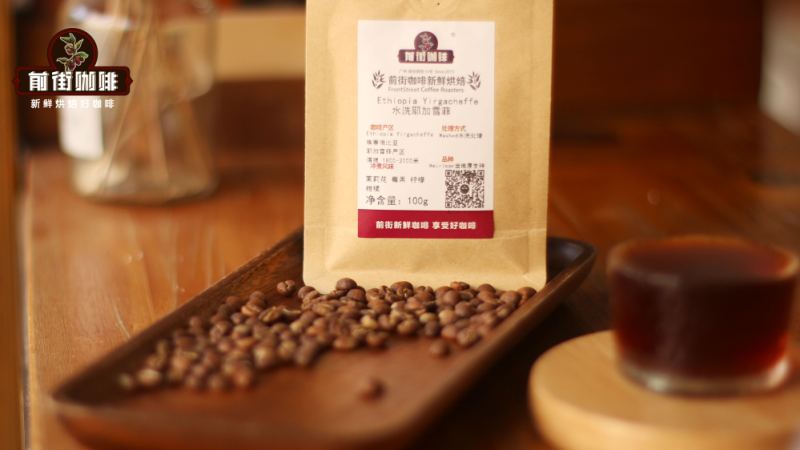
What makes Kochere coffee so bright and citrus-forward?
Yirgacheffe Kochere coffee tastes sharply acidic because of where and how it is grown and processed. Kochere sits in the core of the Yirgacheffe zone at 1,650 to 1,800 meters, and its beans are typically washed, which strips away fruit mucilage and leaves a clean, lively citrus acidity, silky sweetness and layered fruity notes.
Local conditions reinforce that character. Kochere is a separate ECX production area about 25 kilometers southeast of Yirgacheffe town, with roughly 100,000 residents, mostly growing coffee, and advanced processing equipment. The area's green coffee bean output is often graded G1, and lots have scored as high as 94 points, with notable coffee aroma and mouthfeel in cupping.
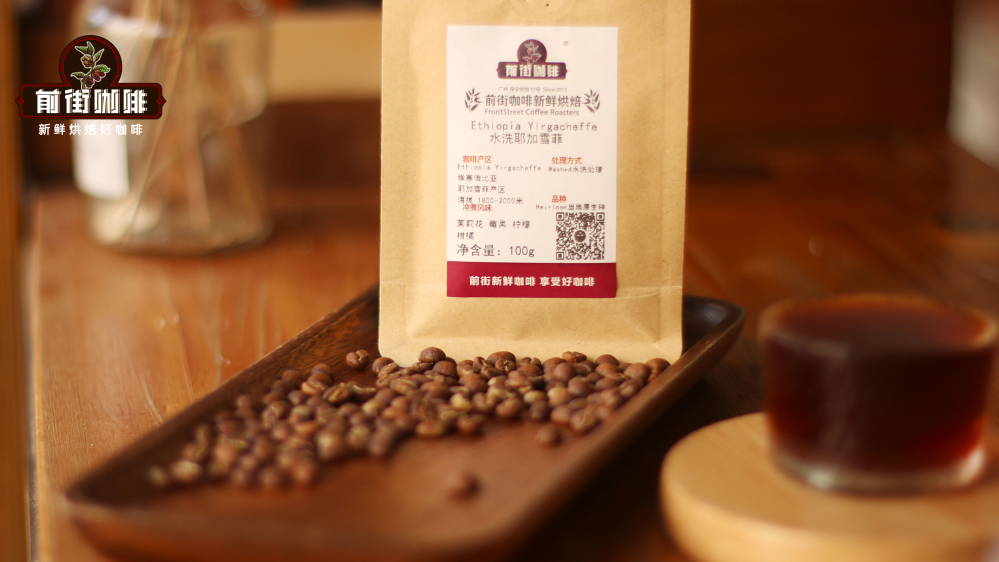
Loyal fans of Yirgacheffe are surely no strangers to the Kochere micro-region. Kochere is located in the heart of the Yirgacheffe prime zone and stands as an independent region in the ECX production area classification, at an altitude of 1,650 to 1,800 meters. It is renowned for its washed processing, with a flavor profile featuring lively citrus acidity, silky sweetness, and rich fruity notes. Through cupping, Front Street Coffee found that coffee beans from this origin display outstanding aroma and mouthfeel, belonging to the highest-grade G1 lot. This article will systematically analyze the source of Kochere coffee's acidity and its flavor characteristics, from the region's background, production model, and washed processing to the roasting curve and brewing parameters, and will include Front Street Coffee's roasting records and cupping report.
To learn more about specialty coffee, follow our WeChat official account: Front Street Coffee (FrontStreet Coffee)
Friends who love Yirgacheffe coffee have probably all heard of Kochere, a well-known Ethiopian micro-region. Kochere is located in the most core part of the broader Yirgacheffe area. In the ECX production region classification, Kochere is listed as a separate production area, which shows just how important it is. During cupping, Front Street Coffee found that Yirgacheffe Kochere differs from ordinary lots of green coffee beans. Beans produced in this origin have highly recognizable flavor, with rich layers of aroma and mouthfeel, featuring lively citrus acidity, silky smooth sweetness, and fruity notes.
Kochere Production Area
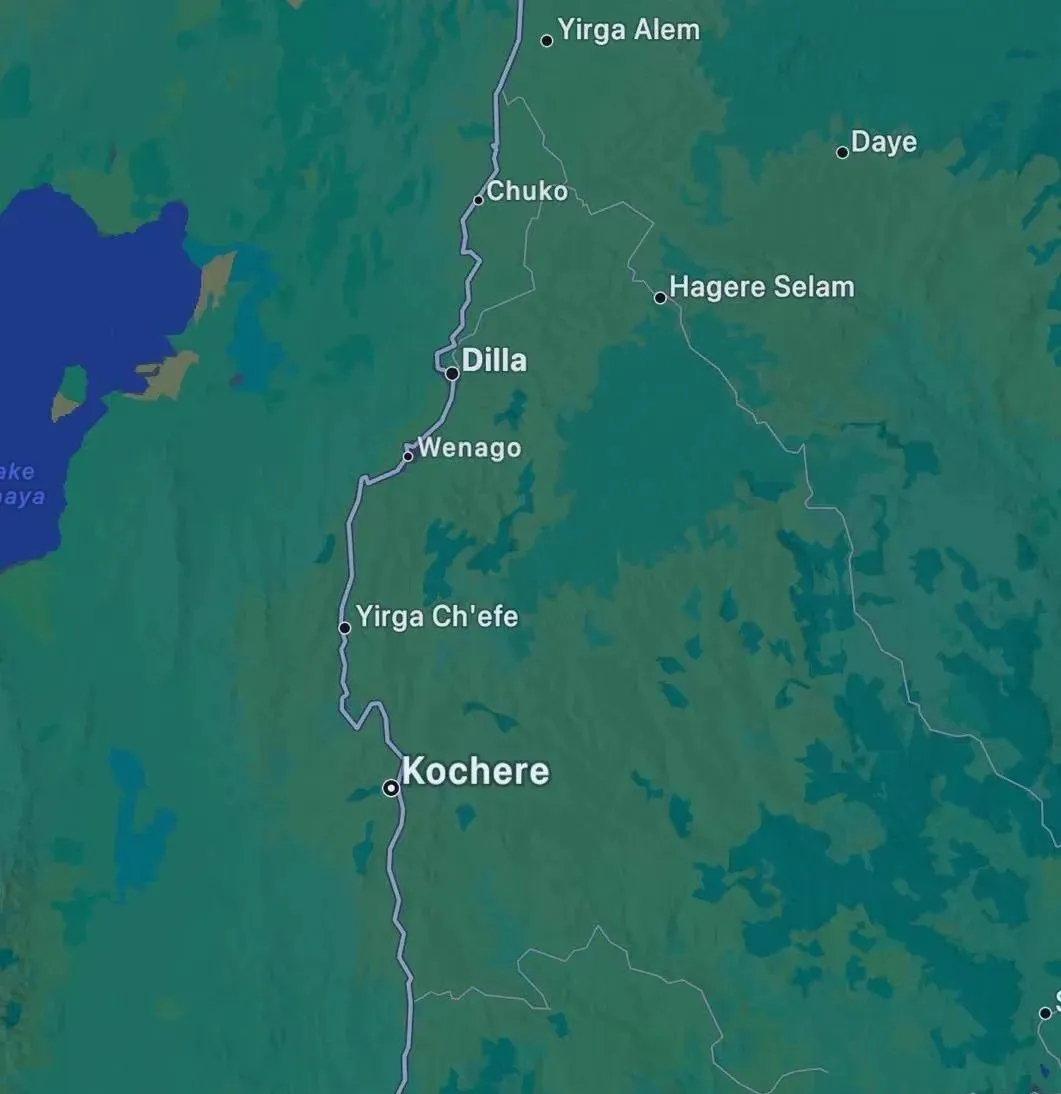
Yirgacheffe itself is a small town with a population of about 20,000. The three nearby small production areas of Wenago, Kochere, and Gelena Abaya are also classified under the Yirgacheffe regional category because the coffee they produce has a flavor almost identical to that of Yirgacheffe.
Kochere is located about 25 kilometers southeast of Yirgacheffe, Ethiopia, at an altitude between 1,650 and 1,800 meters. This place is relatively affluent because of coffee production, and it is also one of the three famous micro-regions of Yirgacheffe. Its local population is about 100,000, coffee beans are the main source of income, and the region's processing equipment is quite advanced. The well-known coffee review website Coffee Review once gave Kochere washed beans a high score of 94 points.
Kochere is one of the 77 Woredas (administrative districts) of SNNPR in Ethiopia. In the coffee field, Kochere is part of Gediyo in Yirgacheffe and is also one of the most important production areas in Yirgacheffe. Kochere can be further divided into several micro-regions. Coffee produced within the area is sometimes also named after the source town (such as Chelelektu or Teklu Dembel), the processing station (such as Teklu Dembel processing station and this lot's Arim processing station), or the micro-area (such as Banko Gutiti), thereby marking the source of the lot more precisely, which fits the current trend of coffee traceability. Of course, the stronger the traceability and the more specific the source, the higher the year-to-year flavor stability and reproducibility, and naturally the higher the price.
Coffee Production Model in the Kochere Area
Kochere's production model is mainly based on local smallholders delivering their harvested lots to cooperatives for unified processing. About 100,000 people in the local village of Chalalacktu depend on coffee for their livelihood, and related production activities constitute their main source of income. Because of the income brought by coffee production, the local standard of living is considerably better than in many Ethiopian villages, with relatively complete health facilities and higher schools. Advanced processing equipment has enabled the Kochere production area to consistently perform excellently in washed processing, with complex notes of molasses and citrus, clean and sweet.
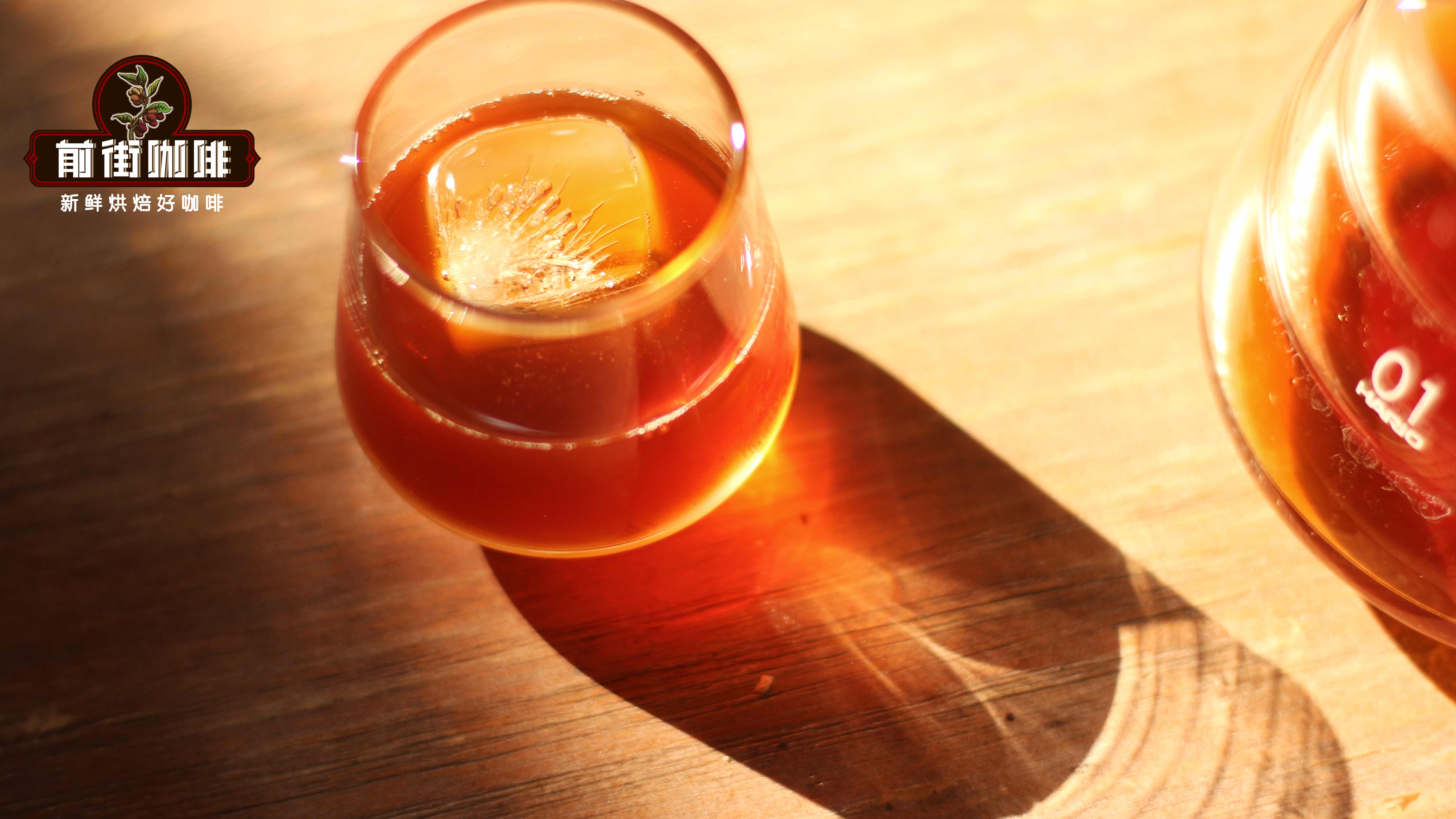
Front Street Coffee's Yirgacheffe Kochere differs from ordinary lots. It belongs to the highest-grade G1 level. Its origin flavor is highly distinctive, with clean and refreshing lemon aroma and delicate, elegant jasmine floral notes, as well as rich aromas and flavors of melon, citrus, ginger, and spiced tea.
Washed Processing Method
Washed
The washed method, called Washed Process in English and also known as washed processing, is a traditional processing method that uses water to process coffee cherries. Generally, the washed steps include flotation, removing the pulp, soaking and fermenting to remove mucilage, washing or continuing to soak, drying, and then hulling to obtain the desired coffee beans. Compared with natural processing, coffee farmers using the washed method must be equipped with a depulper, build washing channels, and have a continuous supply of running water, so it is not suitable everywhere. It is generally most common in places such as Colombia, Costa Rica, Panama, and Kenya. But washed processing does have several advantages: on the one hand, it reduces the defect rate of green beans, thereby stabilizing quality; on the other hand, it greatly shortens drying time, making production more efficient; and of course, it also allows the coffee to retain the "washed taste."
After washing, the coffee beans are dried in the sun or with a dryer to reduce the moisture content to about 12%, and finally the parchment of the green coffee beans is removed.
Front Street Coffee: Ethiopia · Yirgacheffe Kochere
Region: Yirgacheffe Kochere
Variety: Local heirloom varieties
Growing altitude: 1,650 m–1,800 m
Processing method: Washed process
Grade: G1
Front Street Coffee Roasting Record
In order to highlight the clean mouthfeel and bright acidity of this washed Kochere coffee, Front Street's roaster decided to use a medium-light roast for these beans. The roaster is a Yangjia 800N, with a charge of 550 g: the drum temperature was raised to 200°C before charging, the damper was set to 3, the heat was 160, and the damper remained unchanged. The turning point was 1'32". When the drum temperature was 151, the damper was adjusted to 3.5; when the drum temperature was 140°C, the heat was adjusted to 180, and the damper remained unchanged. At this point the bean surface turned yellow, the grassy smell completely disappeared, and it entered the dehydration stage.
At 8'35", ugly wrinkles and dark patches appeared on the bean surface, and the toast-like smell clearly turned into coffee aroma, which can be defined as the prelude to first crack. At this time, it is important to listen clearly for the sound of the first crack point. First crack began at 8'53", the heat was kept at 180 unchanged, the damper was adjusted to 4, and after first crack it developed for 1'45" and was dropped at 195°C.
Front Street Coffee Cupping Report
Front Street Coffee conducts cupping within 8–24 hours after the sample coffee beans are roasted. The cupping bowls generally used by Front Street Coffee baristas are 200 ml ceramic bowls marked with 150 ml and 200 ml scale lines. According to SCAA standards, the TDS of the water is about 150 ppm. Too low a TDS easily causes over-extraction, while too high a TDS affects the mouthfeel and easily causes under-extraction. The water temperature used for cupping is 94°C. The grind size is controlled so that the pass-through rate of a No. 20 standard sieve (0.85 mm) is 70%–75%. The ratio is 11 grams of coffee grounds to 200 milliliters of hot water, that is, 1:18.18, so that the extracted concentration falls exactly within the golden cup range of 1.15%–1.35%, and the steeping time is 4 minutes.
Dry aroma: orange blossom
Wet aroma: sensory
Flavor: lemon, black tea, fruity sweet-tartness
Front Street Coffee Barista Brewing Notes
Dripper: V60 #01 Water temperature: 90–91°C Dose: 15 g Coffee-to-water ratio: 1:15 Grind size: EK43s setting 10 / fine granulated sugar size (80% passing a No. 20 sieve)
As for grind size, Front Street determines it through sieving. Based on the grinding recommendations for pour-over coffee provided by the Specialty Coffee Association of America (SCA), Front Street then verifies it in combination with actual practice. If you do not have a sieve at home, Front Street Coffee suggests judging by observing the flow rate: if the flow is too fast, the grind is too coarse; if the flow is too slow, the grind is too fine.
Front Street brewing method: First rinse the filter paper and preheat the dripper and coffee pot. In the first stage, pour 30 grams of water for a 30-second bloom, then pour 95 grams (the scale shows about 125 grams), completing the pour in about 1 minute. When the water level drops to two-thirds of the coffee bed, pour the remaining 100 grams (the scale shows about 225 grams), completing the pour in about 1 minute 35 seconds. Drip filtration is completed at 2'05", then remove the dripper to finish extraction.
Brewed flavor: lemon, floral notes, orange, sugarcane, overall clean and refreshing, with a honey-like sweetness in the finish and an oolong tea aftertaste.
The above content is compiled by CoffeeHunters, a coffee news website.


