







Why Does Sidama Natural Coffee Taste So Distinct?
Sidama in southern Ethiopia grows coffee between 1,400 and 2,000 meters on deep volcanic soil. Microclimates, varied terrain and a large pool of native varieties create a wide flavor spectrum, and between 2010 and 2012 the region repeatedly scored 92 to 94 points on the American CR evaluation site.
Ethiopia's coffee beans origin story shows here: soil fertility is maintained by fallen leaves and plant residue rather than heavy inputs, and plots in different towns taste noticeably different. Front Street Coffee's medium-light roasted Huakui comes from Hambela in Sidama and rose to fame after winning the TOH in 2017, and it works well as a pour-over.
Sidama is a pivotal coffee-producing region in southern Ethiopia, upgraded to a first-level administrative unit through a referendum in 2018. Here, altitudes range from 1,400 to 2,000 meters, with deep and fertile volcanic soil; the microclimates and diverse native varieties create exceptionally rich washed and natural coffees. The highly favored Huakui in Front Street Coffee's bean lineup originates from the Hambela area of Sidama, rising to fame after winning the TOH in 2017. This article will outline the regional context and variety characteristics of Sidama, and provide a detailed explanation of Front Street Coffee's medium-light roast Huakui pour-over method and flavor profile.
Sidama holds a key position in Ethiopia's coffee landscape. Administratively, it was once under the Oromia region, but due to its prominent coffee industry status, it became an independent first-level administrative region after a referendum in 2018.
Geographically, Sidama is located in southern Ethiopia, bordered by the Arsi and Bale administrative regions to the east and the Gamogofa administrative region to the west. Coffee cultivation zones are distributed between 1,400 and 2,000 meters above sea level, with the industry rooted in agriculture, and major growing areas spread around the Great Rift Valley. In recent years, the region has shown strong development momentum and has grown into a significant coffee export hub.
The flavor spectrum of Sidama coffee is quite broad. Diverse soil types, markedly different microclimates, and a vast number of native coffee varieties collectively shape this richness. The region's topography includes towering mountains, highlands, plateaus, valleys, and plains, with dramatic terrain variations. Geologically, it features fertile and well-drained volcanic soil, with soil depth approaching two meters and topsoil in dark brown or brown hues.
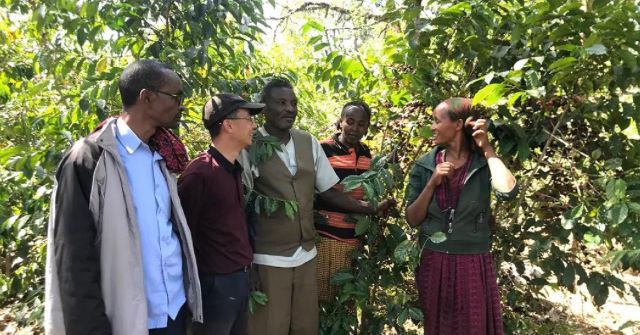
A major advantage here is that soil fertility is maintained through organic matter cycling—fallen leaves from surrounding trees and plant residues naturally serve as fertilizer. As a result, coffees from different towns often exhibit distinct differences and personalities. From 2010 to 2012, the region continuously scored 92 to 94 points on the authoritative American coffee evaluation website CR, highlighting the outstanding quality of its green beans.
Sidama has also nurtured several well-known micro-regions, such as Yirgacheffe, which later became independent, and Uraga and Hambela, which have gained fame in recent years.
In Front Street Coffee's bean lineup, the most popular Huakui coffee beans originate from the Hambela area of Sidama.
In 2017, a Hambela coffee bean that won the TOH natural group championship was introduced to China by a Beijing green bean trader. In the same year, Li Jianfei, the runner-up in the World Coffee Brewing Championship China region, used this bean to defeat many competitors' Geisha coffees in the competition. In an era when Geisha almost "swept" awards in various events, a natural bean from Ethiopia managing to successively beat so many Geishas naturally made people look at this seemingly ordinary coffee with new eyes. The green bean trader promptly named it "Huakui," implying the top of the geishas (in Taiwan, Geisha is also translated as "geisha").
After winning the championship in 2017, DW Company further established processing plants in Dimtu, the core production area of Hambella, including four: "Buku Abel," "Buku Saysay," "Haro Soresa," and "Tirtiro Goye," with an annual coffee production of about 1,100 tons. From the perspective of growing regions and processing plants, among these estates and processing plants, only the area under the "Buku Abel" processing plant covers the small production area that originally produced the natural Huakui.
Huakui uses Ethiopian native varieties, and this term does not refer to a specific variety. As the birthplace of coffee varieties, Ethiopia possesses an extremely large number of coffee varieties, making it a natural gene pool for Arabica. On one hand, the numerous varieties make identification and classification extremely difficult; on the other hand, the Ethiopian government, for protection reasons, is unwilling to disclose variety information, so they are collectively referred to as Ethiopian native species. It is precisely because of the vast variety, mixed planting, and mixed harvesting that Ethiopian native beans exhibit inconsistent sizes.
Pour-over Flavor Characteristics
Front Street Coffee uses a medium-light roast to highlight the floral aroma and fruity acidity of the Huakui coffee beans.
Dripper: V60#01
Water temperature: 90-91°C
Dose: 15g
Coffee-to-water ratio: 1:15
Grind size: medium-fine (80% passing through China standard No. 20 sieve)
Brewing method: three-stage extraction. First, bloom with 30 grams of water for 30 seconds, then pour in a small stream in a circular motion until reaching 125 grams for the first stage; when the water level drops and is about to expose the coffee bed, continue pouring until 225 grams and stop; when the water level drops again and is about to expose the coffee bed, remove the dripper. (Timing starts at the beginning of blooming.) The extraction time is 2 minutes and 00 seconds.
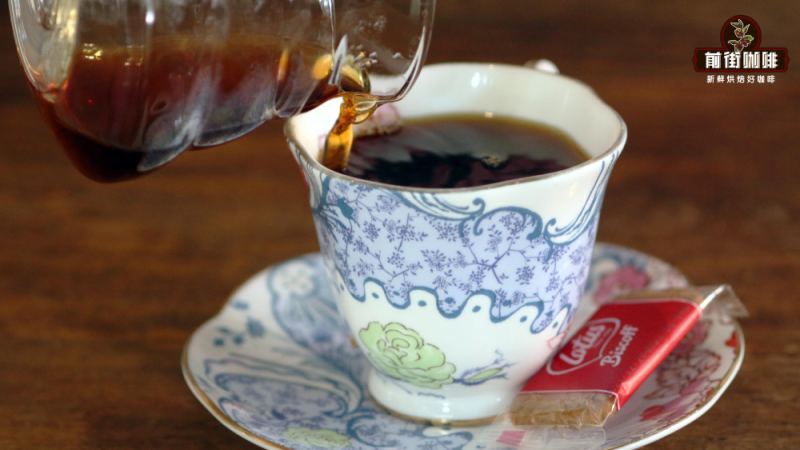
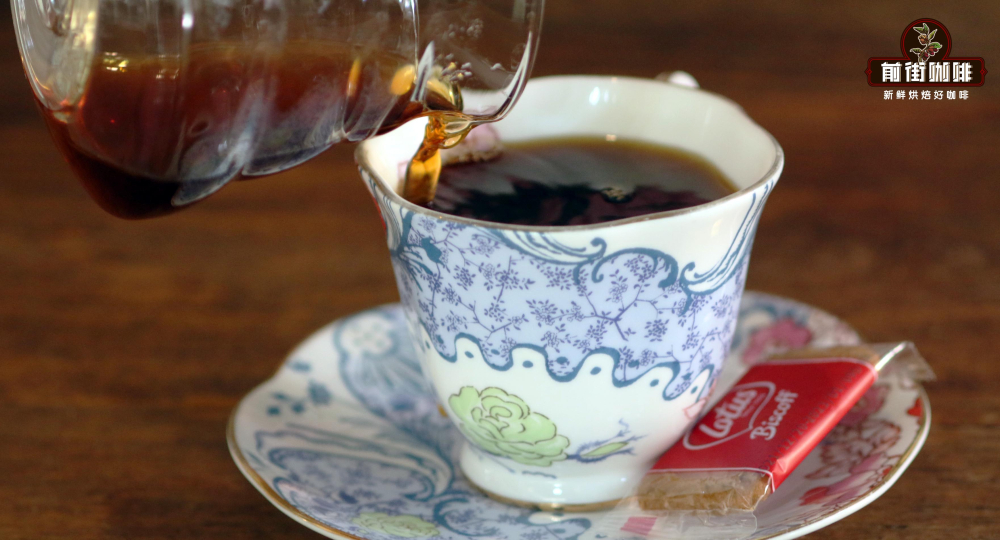
Flavor: berries, mango, black tea, with a full and smooth mouthfeel.
For professional coffee knowledge exchange and more coffee bean information, please follow Coffee Workshop (WeChat public account: cafe_style). For more specialty coffee beans, please add the private WeChat of Front Street Coffee (FrontStreet Coffee), WeChat ID: qjcoffeex
The above content is compiled by CoffeeHunters, a coffee news website.


