







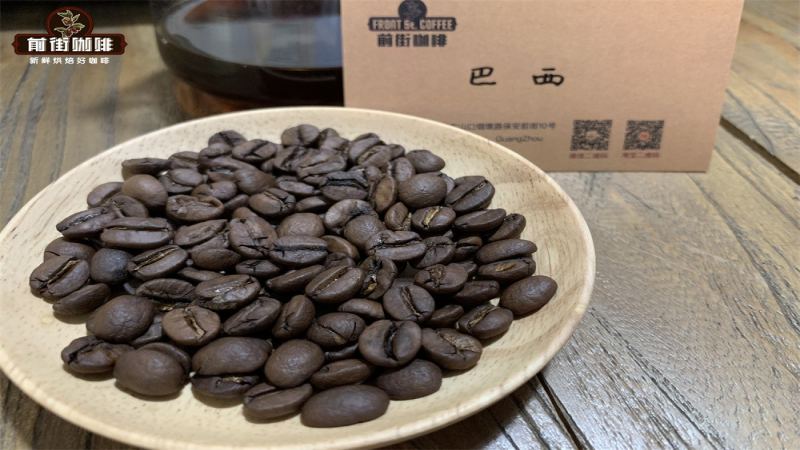
What Does the Coffee Bean Process Reveal About Brazilian Flavor?
Brazil is the largest coffee producer, and its low-altitude, sun-exposed coffee farms give beans low acidity, high sweetness, and nutty-chocolate notes after medium-dark roasting. That profile makes Brazilian beans a common espresso blend base. Two single-origin options are the everyday Cerrado and the Queen's Estate Yellow Bourbon.
Because lower density and high sweetness suit blending, single-origin Brazilian coffee is less common on shelves, though Brazil also supplies commercial and specialty beans plus instant coffee manufacturing. The coffee bean process used for most Brazilian lots is semi-washed, or pulped natural, which keeps sweetness while limiting acidity. Expect caramel and peanut aromas with a balanced mouthfeel in the cup.
Brazil, as the world's largest coffee producer, supplies both a large volume of commercial beans and specialty coffee. Its low altitude and sun-exposed cultivation give Brazilian beans low acidity, high sweetness, and nutty-chocolate notes, which is why they are often used as the base bean in espresso blends. Front Street Coffee currently has two Brazilian single-origin beans: the everyday-drinker-level Cerrado and the Queen's Estate Yellow Bourbon. This article will systematically cover Brazil's coffee-growing environment, main producing regions, variety characteristics, and semi-washed processing method, along with Front Street's brewing recommendations and flavor descriptions, to give you a comprehensive understanding of the flavor code of Brazilian coffee from farm to cup.
Brazil is the world's highest-producing coffee country, exporting both commercial-grade and specialty-grade coffee beans around the world. Instant coffee manufacturing is also an important part of Brazil's coffee industry. Because it grows at lower altitudes, Brazilian beans have lower density, low acidity and high sweetness, with excellent body and richness, showing nutty and chocolate notes after medium-dark roasting, so they are often used as the base bean in espresso blends. For this reason, single-origin Brazilian coffee is not commonly seen on the market. However, Front Street Coffee currently still has two Brazilian single-origin beans: one is the Brazilian Cerrado as an everyday bean, and the other is Brazilian Queen's Estate coffee.
Although Front Street has only two Brazilian single-origin beans, Brazil's role as a blend base bean is more common—for example, the espresso moka pot beans recommended by Front Street baristas—Front Street Black Cocoa Blend, Specialty Blend, and Commercial Blend—are all based on Brazilian beans. When first smelling Brazilian coffee, you can sense rich nutty, caramel, and peanut aromas, with obvious sweetness and a balanced mouthfeel. No wonder it's said: if you want good espresso, you need good Brazilian coffee beans.
Brazil's coffee-growing environment
Coffee usually has high requirements for its growing environment, but Brazil's conditions seem different from other producing countries—no high altitude, and no shade trees. Brazilian coffee is mostly planted in flat terrain. To adapt to local conditions, estate owners decades ago developed improved Arabica varieties that do not need highlands or shade, and can be planted on plains or grasslands, directly exposed to sunlight, completely different from the traditional high-altitude shade cultivation method. Brazilian coffee farms are mostly at altitudes of a few hundred meters, and are even planted on flat ground without issue. This sun-exposed cultivation makes the coffee fruit ripen faster, with insufficient flavor development; the bean density, or hardness, is also not as good as highland beans, fruit acidity is noticeably lower, and the flavor tends toward simplicity. Coffee from the coastal region of Rio even has an iodine taste and salty taste, which is believed to be the result of certain microbial action.
Brazilian coffee-producing regions
Coffee was introduced to Brazil from French Guiana in 1727. That year, Portuguese diplomat Francisco de Palheta was sent to French Guiana to mediate a territorial dispute. During this time, he won the heart of the governor's wife, who hid a few coffee seeds in flowers and gave them to him, and Francisco thus brought the seeds into Brazil.
Brazil is often likened to the "giant" and "monarch" of the coffee world. The country has about 3.97 billion coffee trees, and small farmers account for 75% of total national production. The number of people engaged in coffee production in Brazil is twice or even three times that of Colombia, and Colombia is the world's second-largest coffee producer.
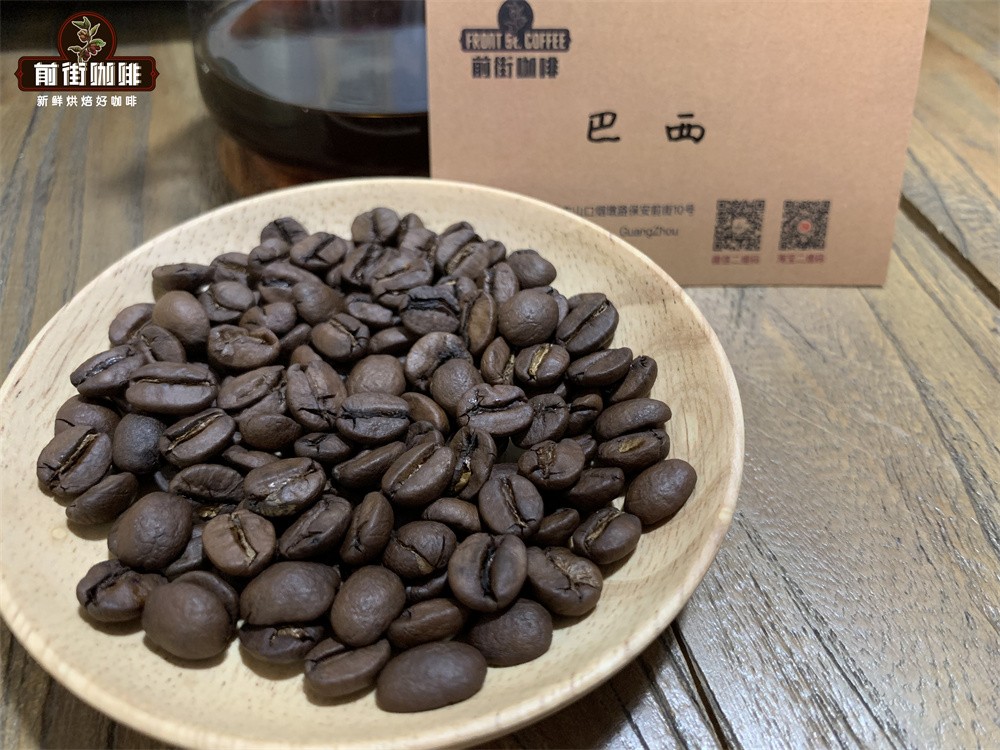
Brazilian coffee origins are concentrated in the central and southern regions, distributed across 7 states, with about 14 producing regions, namely: Sul de Minas, Minas Hill, Chapada de Minas, Matas de Minas, Mogiana, Centro-Oeste de São Paulo, Montanhas do Espírito Santo, Conilon Capixaba, Cerrado, Planalto da Bahia, Atlantic Bahia, Paraná, Rondônia, cerrado.
Cerrado:
The Cerrado producing region is regarded as one of Brazil's specialty coffee regions. It is located in the mountains of the southern part of the "Cerrado savanna climate zone," which stretches across eight provinces in central Brazil and covers about two million square kilometers. This savanna accounts for 22% of Brazil's total area and lies deep inland. Cerrado in Portuguese means "closed place." The Cerrado savanna begins in Mato Grosso province in southwestern Brazil, passes through west-central Minas, and reaches western Bahia province in the north. The so-called Cerrado coffee-producing region refers to the area where the savanna extends into Minas province at elevations of 850 to 1,200 meters on tablelands, and in Brazil's regional classification it is different from "Sul de Minas," which is also in Minas province. The flat, open terrain of the savanna is very suitable for establishing large estates, and together with distinct wet and dry seasons and the cooler climate of the tablelands, it forms unique growing conditions.
Of course, not all Cerrado coffee comes from the entire Cerrado savanna. Only coffee-growing areas in west-central Minas province above 1,000 meters elevation can bear the name Cerrado coffee-producing region. This area is the essence of the Cerrado savanna; only with high altitude and fertile soil can it produce specialty coffee beans that are clean, sweet, mellow, and high in clarity. Front Street believes that coffee from this producing region is mellow and free of earthy or musty flavors. Front Street Coffee's everyday bean Brazilian coffee comes precisely from Brazil's Cerrado producing region.
Mogiana:
The famous Brazilian Queen's Estate is located in the Mogiana producing region. Mogiana is relatively close to southern Minas, and the coffee quality in this area is equally outstanding, with coffee planted among shrubs, grasses, and other plants. Queen's Estate is at a higher elevation with good environmental protection. The Brazilian Queen's coffee fruit is completely hand-picked, and low-yield, high-quality Bourbon is planted there. As a representative estate of Brazil's high-quality coffee essence, its quality is widely praised. Front Street believes that in addition to terrain and climate, this may be related to its business model—it adopts both the traditional large-farm business model and small-scale modern operations. High-tech planting equipment gives coffee beans in this area higher sweetness, a clear sweetness similar to cane sugar.
Introduction to Queen's Estate
Queen's Estate is located in the Mogiana region of São Paulo state, north of São Paulo city. This estate is very well known in Brazil and is owned by the Carvalho Dias family. The family owns 4 major estates. Since the first Brazilian COE competition in 1999, they have won awards every year, with more than 12 awards in 7 years. In 2004, they took first place, 9th place, and 11th place in one go.
Countless estates large and small in Brazil have dreamed for years of making the shortlist and winning awards, but the 4 major estates under this family have carried off multiple awards year after year. Queen's Estate enjoys a brilliant record: runner-up in 2000, third place in 2001, 29th place in 2005, and as of now has won awards 3 times. Yellow Bourbon beans are naturally sweet and clean. Using the natural method or semi-washed method will make their acidity slightly lower, but it combines perfectly with the sweetness, carrying tropical fruit aromas.
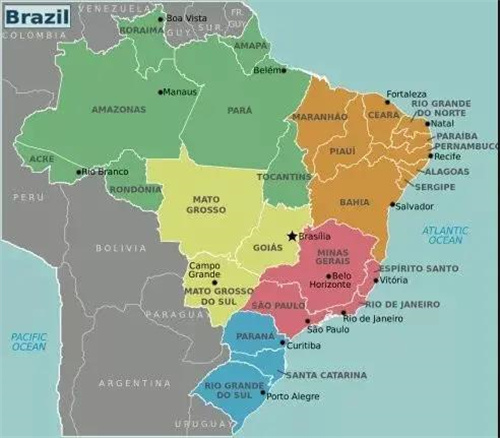
Queen's Estate is a member of a medium-scale farm organization in the local Grama Valley, mainly exporting specialty coffee of the Bourbon variety. The organization's office is located nearby in Pocos de Caldas, and it also has a national-level cupping laboratory equipped with a large warehouse. The organization also cooperates with local universities and other institutions on research, including Lavras University—the famous Dr. Flavio Borem comes from that university's agricultural research center.
Brazilian coffee bean varieties
Brazil is the world's number one coffee producer and also the largest coffee-producing place, with an extremely wide planting area; a total of 17 states across the country produce coffee. At the same time, Brazil has many coffee varieties, currently mainly Red Bourbon, Yellow Bourbon, Mundo Novo, and Catuai. Bourbon and Typica are both relatively ancient varieties. Brazil mainly plants Bourbon coffee beans. Bourbon coffee was first planted on Réunion Island, which was also called Bourbon Island before 1789. Bourbon is a secondary species produced by mutation of Typica, and together with Typica belongs to the oldest existing coffee varieties; the green fruit turns bright red when ripe.
After the Red Bourbon coffee tree flowers and bears fruit, the fruit color changes as follows: green, slightly yellow, slightly orange, ripe red, and more mature dark red. Therefore some people also call it Red Bourbon. In fact, Red Bourbon is what is generally called Bourbon. Generally speaking, Bourbon is a branch of the Arabica species, usually bearing red fruit, called Red Bourbon; in addition there are also Yellow Bourbon and Orange Bourbon. Yellow Bourbon has relatively lower yield but better quality. Red Bourbon is currently the most widely planted variety in Brazil's coffee-producing regions.
Front Street Coffee's everyday bean Brazilian coffee is the Red Bourbon variety, while Brazilian Queen's coffee is the Yellow Bourbon variety. Queen's Estate covers 280 mu, of which 200 mu are entirely planted with Yellow Bourbon.
Brazilian coffee bean processing method—semi-washed coffee processing method
Before 1990, Brazil used almost entirely the rough natural processing method, which made Brazilian beans prone to picking up rotten-wood or earthy flavors, because the coffee fruit had to undergo two to three weeks of sun exposure, and if it encountered rain and moisture regain, it was easy for musty odors to develop. To change this situation of depending on the weather, in 1990 Brazil developed the semi-washed method based on the country's relatively dry climate to shorten processing time. The semi-washed processing method can reduce the earthy or musty flavor of Brazilian beans and enhance fruity aroma and sweetness. It is most suitable for single-origin coffee, and has therefore become an essential craft for Brazilian specialty coffee beans.
Of course, the introduction of the semi-washed processing method does not mean all Brazilian producing regions use it. The lower-humidity Cerrado still mainly uses the natural processing method, and semi-washed is instead a supporting player in Cerrado. However, the Red Bourbon from the Cerrado region that Front Street Coffee sources is processed using the semi-washed method.
Queen's Estate's pulping system:
Queen's Estate adopts small-scale refined natural processing, using African-style raised beds for sun-drying. During the sun-drying process, dedicated workers turn the beans and check moisture content, thereby improving coffee bean quality.
Ripe cherries are hand-picked onto cloth bags, avoiding contact with the ground. Coffee fruit harvested that day must be sent that same day to the estate's processing station for semi-washed processing. The reason for hand-picking and using cloth bags to collect the harvested coffee fruit is to avoid earthy flavors and any improper fermented flavors. After these harvested coffee fruits arrive at the processing station, "washing" is carried out immediately: the coffee fruits are washed clean, and according to bean size they are separated and screened to remove substandard or dried-out fruits. The qualified beans that pass screening continue to the pulping step.
Front Street coffee brewing recommendations
Whether it is pour-over coffee or espresso, if you want to brew well, you must use good coffee beans, and also rest them well. Front Street has always believed that the freshness of coffee beans is a very important part of brewing. The coffee beans shipped by Front Street Coffee are all within 5 days of the roasting date, because Front Street deeply understands that the freshness of coffee beans has a great impact on flavor. Front Street's roasting principle is "freshly roasted good coffee," so that every customer who places an order receives the freshest coffee. The resting period for coffee is about 4-7 days, so when customers receive it, it is exactly at its best flavor.
Of course, some customers need Front Street to help grind the coffee, and that is no problem either, but Front Street must remind you: if the coffee beans have been ground in advance, then there is no need to rest them, because during transportation the pressure produced by carbon dioxide inside the package can also make the coffee flavor rounder, so once you receive the ground coffee you can immediately brew a cup and drink it. But the ground coffee needs to be brewed promptly, because after ground coffee contacts air it oxidizes relatively quickly; that is, the coffee's flavor will dissipate relatively quickly, and the coffee's flavor will not be as good. Therefore, Front Street recommends buying whole beans, grinding fresh and brewing fresh, so that you can better taste the coffee's flavor.
Front Street's parameters for brewing Brazilian coffee:
For coffee beans with a darker roast level, to highlight the coffee's body, Front Street chooses the Kono dripper for brewing. The Kono dripper's characteristic is that it has an immersion function, which can be used to extract more coffee substances and enhance the mellow mouthfeel. Because its ribs are few and located at the lower end, the filter paper can fit closely against the dripper to limit airflow, thereby slowing the water flow and increasing the contact time between water and coffee grounds.
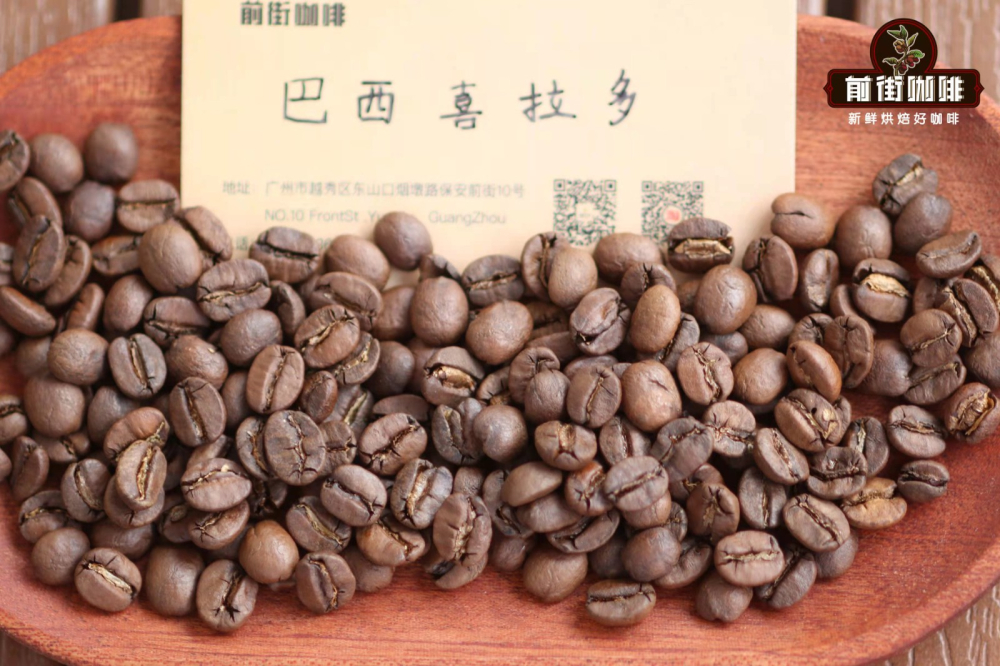
Brewing parameters: use a Kono dripper, 88°C water temperature, 15 grams of coffee grounds, 1:15 coffee-to-water ratio, medium-fine grind (75% passing a Chinese standard No. 20 sieve).
Use staged extraction, using 2 times the coffee grounds' weight in water for blooming, that is, 30 grams of water for a 30-second bloom, then pour in a slow circular stream until 125 grams and pause, continue pouring until 225 grams and stop, and after the water in the dripper has dripped through, remove the dripper. Start timing from the beginning of pouring; extraction time is 2'00". Next, pick up the entire cup of coffee and shake it evenly, then pour it into a cup for tasting.
Semi-washed Brazilian Cerrado coffee flavor: obvious sweetness on entry, with a faint lemon aroma, containing rich nutty flavor, and a pronounced dark chocolate note in the finish; the overall impression is relatively rounded.
Natural Brazilian Queen's Estate coffee flavor: balanced mouthfeel, with the main theme of almond and cocoa highlighting the sweetness of cane sugar; it is a coffee with good fullness and abundant sweetness.
Overall, Brazilian coffee has a relatively balanced taste, and precisely because of this it is often chosen as the base for espresso. Of course, everyone's taste is different. Some people like the floral and fruity acidity of Ethiopia, some like the nutty and herbal notes of Indonesia, and some like the nutty and dark chocolate notes of Colombia, and so on. But Front Street believes all of these are worth tasting, because different coffee flavors reflect different coffee charms.
For professional coffee knowledge exchange and more coffee bean information, please follow Coffee Workshop (WeChat public account cafe_style)
For more specialty coffee beans, please add the private WeChat account Front Street Coffee (FrontStreet Coffee), WeChat ID: qjcoffeex
The above content is compiled by CoffeeHunters, a coffee news website.


