








What are civet coffee beans and why do they cost so much?
Civet coffee beans are the raw material for Kopi Luwak, an Indonesian coffee whose green beans retail from at least six hundred dollars per pound, placing it among the most expensive coffee in the world. The cup shows a distinct herbal aroma and a notably mellow body, and annual output stays limited, which keeps demand high among wealthy buyers.
Dutch colonial rule in Indonesia shaped the trade, and the discovery of the beans is traced to farmers during that era. The article examines bean sources, civet ecology and habits, processing principles, and variety and regional traits, and it notes the authenticity problems that surround the market. It also introduces Golden Mandheling, an Indonesian specialty coffee, with brewing parameters and flavor notes.
Kopi Luwak is often called one of the most expensive coffees in the world, with retail prices starting at at least six hundred dollars per pound, making it the Rolls-Royce of the coffee world. It originates from Indonesia and, due to limited production, has become a darling of the wealthy, featuring a unique herbal aroma and excellent body. However, behind this coffee lies a tangled mix of colonial history, animal ethics controversies, and a market rife with authenticity issues. This article will comprehensively analyze the true face of civet coffee from the perspectives of historical origins, bean sources, civet ecology and habits, processing principles, and variety and regional characteristics, and introduce a specialty coffee worth savoring in Indonesia—Golden Mandheling, along with Front Street Coffee's brewing parameters and flavor description.
For more specialty coffee knowledge, please follow the WeChat public account: Front Street Coffee (FrontStreet Coffee)
Most people with even a slight understanding of coffee have heard that Jamaican Blue Mountain coffee is the pinnacle of coffee, but if asked what the world's most expensive coffee is, the answer is undoubtedly Kopi Luwak (Indonesian civet coffee). Rare things are precious, and the retail price of this coffee's green beans starts at at least six hundred dollars per pound, earning it the title of the Rolls-Royce of the coffee world.
Civet coffee, also known as cat poop coffee, has a rather limited annual output, and precisely because of this, it has become a rare beverage sought after by the affluent. When Front Street first tasted civet coffee, it experienced a distinctive herbal note and an exceptionally outstanding mellow mouthfeel.
History—The Greed of European Powers and the Accidental Discovery by Farmers
From a historical perspective, why would anyone seek coffee from animal feces to drink? This is indeed puzzling, but after reviewing historical records, the reasons and the original discoverers can be found.
During the Age of Discovery, European powers expanded their territories around the world. Taiwan was also colonized by the Dutch and Spanish, and the homeland of the civet—Indonesia—was similarly occupied by the Dutch, who even established the so-called East India Company, which held immense power at the time and was essentially a government institution with enormous authority.
Under the threat of force, Indonesian farmers were reduced to cheap labor for the Dutch, initially cultivating spices and later, in the mid-to-late period, switching to coffee. Crops produced in tropical Indonesia were widely popular in Europe, and the Dutch made a fortune. Most colonial nations during the Age of Sail treated local populations this way, and many European countries laid a solid foundation at that time; today, people may only remember that their ancestors once proudly controlled various parts of the world.
However, the farmers never got to taste the coffee they planted with their own hands, a problem that persists to this day. At the time, farmers did not dare to pick the crops without permission, as they would be severely punished if discovered, but curiosity was ultimately hard to suppress. When someone found coffee beans remaining in civet feces and, after processing, drank them and found the taste excellent, it seemed they understood why the Western world was so obsessed with coffee—even beans picked from animal excrement tasted so good.
The good times did not last. After the Dutch learned of this, collecting civet coffee became a new forced labor task, and that special-tasting coffee could no longer be enjoyed.
Bean Source: Wild or Farmed?
All of this is ultimately just to satisfy a demand for a luxury product, and one of second-rate quality at that. Experts point out that the uniqueness of civet coffee lies in the fact that wild civets carefully select coffee cherries when eating them; but if they are locked in cages and fed coffee cherries at random, the quality of the final product is greatly reduced.
In addition, a coffee expert, in an article for the Specialty Coffee Association of America, stated bluntly that civet coffee itself is not that outstanding: although the civet's digestive process can indeed make coffee smoother, it also removes high-quality acidity and flavors, which are precisely the soul of specialty coffee.
Currently, there is no method to distinguish whether civet coffee beans come from wild or farmed civets. The BBC conducted a secret investigation in 2013 and found that some coffees in the European market claiming to be from wild civets actually came from farmed civets subjected to inhumane treatment.
Even Tony Wild, the coffee trader who introduced civet coffee to the West, stated in an article in The Guardian that cat poop coffee should not be consumed. He pointed out that this coffee has become increasingly industrialized, animal abuse is worsening, and counterfeit products appear frequently. Today, there is no certification mechanism to prove that coffee labeled "wild" actually comes from the wild; moreover, other coffee certification bodies, while ensuring reliable coffee cultivation and production, refuse to certify civet coffee.
The Rainforest Alliance in New York and other well-known coffee certification bodies issue certification seals based on the standards of the Sustainable Agriculture Network (SAN); this set of standards prohibits farms from hunting wild animals, and SAN's specific regulations for Indonesian coffee explicitly prohibit keeping civets in cages.
UTZ is another important sustainable coffee certification standard, which also prohibits farms from caging wild animals and refuses to certify civet coffee.
Alex Morgan of the Rainforest Alliance stated that certifying civet coffee carries too high a risk because it is simply impossible to ensure that the beans are 100% from the wild. He said, "My personal advice is to avoid this coffee as much as possible; it usually comes from animals kept in cages."
Indonesian Sumatra Civet Coffee Kopi Luwak Specialty Coffee
Among the many civet coffees, the most expensive is wild Indonesian origin beans, followed by the Philippines, while Vietnam's is relatively cheaper. There are also so-called "A-grade" civet coffees on the market, where the beans are excreted by artificially fed civets, or may even come from other animals. Wild civets live in natural environments and freely select beans; these civets are very picky, refusing to eat bad ones and only choosing just-ripe fruits, avoiding old ones, so the beans they select are inevitably of the highest quality, without defects, while those from fed civets have no such guarantee, and the excreted beans vary in quality. Coffee beans are cupped and evaluated by experts and international buyers for aroma and intensity, and it is difficult for ordinary consumers to judge the true quality of coffee merely from the packaging appearance.
The principle is actually not complicated: it uses the lactic acid bacteria and digestive juices of the animal's digestive tract to replace machine or washed processing, removing the pulp and the pectin adhering to the surface of the bean pod. These beans are excreted with the feces, and after washing, they become precious in-body fermented beans. Animals used for this coffee processing method include, besides the commonly heard civet, the guan, monkeys, elephants, etc., but the latter few have not formed large-scale operations, and only the civet stands out uniquely.
Civets mainly inhabit hills, mountains, and other tropical rainforests below 2,100 meters in altitude, as well as the forest edge shrublands and grasslands of subtropical evergreen broad-leaved forests, and choose rock caves, earth holes, or tree holes as habitat sites.
Civets have an omnivorous diet. Animal-based foods include small mammals, birds, amphibians and reptiles, crustaceans, and insects, such as rodents, small birds, snakes, frogs, fish, crabs, bird eggs, insects, earthworms, and wild fowl. Plant-based foods include the stems and leaves of solanaceous plants, seeds of various figs, and fruits like burdock and sour berries, but civets have poor digestion of plants, so eating berries is equivalent to their dessert, while their main food is meat.
Because of their poor digestion of plants, they are mainly distributed in the broad-leaved forests, shrublands, and agricultural areas of South and Southeast Asia, and these areas happen to be suitable for coffee tree growth, so many of the sour berries that civets eat are coffee cherries. Civets can only digest the skin and pulp of the berry; the core inside the berry, which is the coffee bean, is eventually excreted.
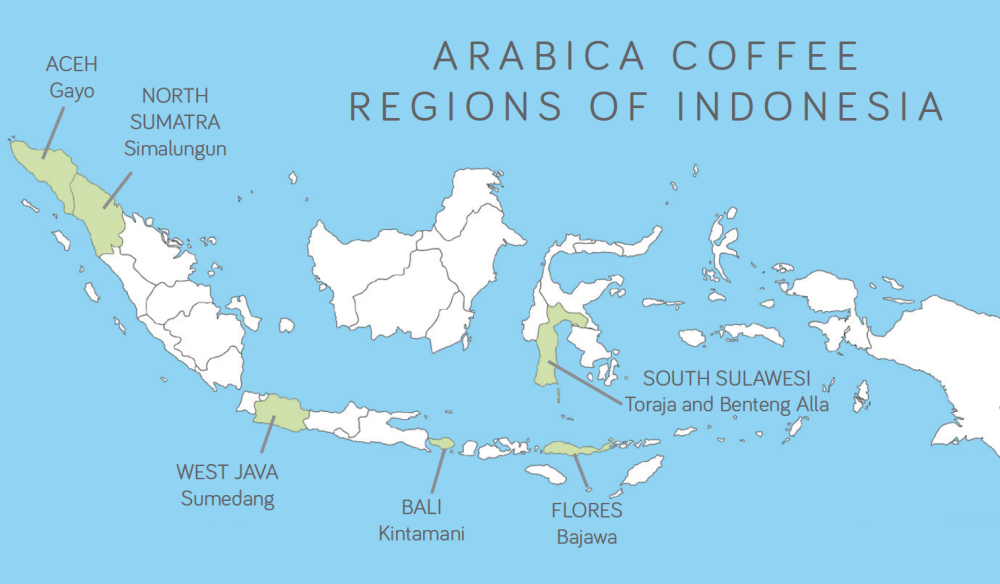
The varieties of these coffee beans are generally dominated by Robusta, because the civet's range is at low to medium altitudes, so most coffee varieties are Robusta. High-altitude Arabica civet coffee is rare. Indonesian low-altitude Robusta coffee originally has an earthy flavor and a medicinal taste, with high viscosity, so this civet coffee has the earthy gaminess of aged beans, a viscosity almost close to syrup, and a very unique aroma. If you prefer the earthy gaminess of Indonesian aged beans or Indian monsoon beans, you might fall in love with this flavor of civet coffee.
How Front Street Coffee (FrontStreet Coffee) Views Civet Coffee
In recent years, more and more people have begun to boycott civet coffee due to its cruel production method. But the fact is, civet coffee itself is not wrong; the initial production of civet coffee beans was simply a very natural phenomenon. In the most natural environment, eating the most suitable food, civets select the coffee cherries of their choice—ripe, high-sugar fruits—and then excrete the coffee beans they cannot digest. This is animal nature and a very natural production process.
In the early days, locals picked up the feces of wild civets in the forest, extracted the undigested coffee seeds, and processed them into green beans. Due to scarce production and the unique in-body fermentation method, many merchants later seized the business opportunity and began to capture civets en masse for cage farming. Civets, which should eat meat, could only eat coffee cherries. However, the nutrients in coffee cherries cannot keep civets healthy.
They believe that although the coffee beans are not digested in the civet's digestive tract, the highly corrosive digestive juices have already corroded their surface. These digestive juices contain a special protease that can break the original protein chains of the coffee beans, decomposing the long-chain protein structures into small particles, forming short-chain peptides and amino acids.
But in fact, because they only eat coffee cherries for a long time, the time for civets to excrete coffee beans may be only one or two hours after eating. The coffee beans stay in the civet's stomach for only one or two hours, which is not enough to produce the above series of changes. The bean is still the same bean as when it was eaten, and even if the flavor changes, it is only minimal.
Front Street Coffee (FrontStreet Coffee) can say that the formation of civet coffee itself is not problematic. Civets use their noses to identify ripe coffee cherries, just as Ethiopian red cherries are harvested when fully ripe—the two are similar in approach. The problem lies with those who cage civets. Forcing them to eat only coffee cherries, whether ripe or unripe, solely to increase the production of civet coffee, has given rise to these cruel practices, which no longer fall within the scope of coffee as we discuss it.
What Other Specialty Coffees in Indonesia Are Worth Tasting?
Indonesian Mandheling coffee has a flavor profile of low acidity, mellow richness, and a relatively full bitter note, which aligns well with people's perception of traditional coffee. Among them, the ceiling version of Mandheling—Golden Mandheling coffee—has undergone multiple rounds of careful selection, giving the coffee rich notes of dark chocolate, caramel, nuts, and its unique herbal and spice aromas have also become clearer.
"Front Street Golden Mandheling" is an exclusive brand of the Indonesian company PWN (Pwani Coffee Company). There are many different types of Mandheling products on the market, and because PWN has registered the English name "Golden Mandheling" as its trademark, only the Golden Mandheling coffee produced by PWN is truly Golden Mandheling in the true sense. You can identify authentic Golden Mandheling by the green bean burlap sacks bearing the PWN logo and a certificate of origin signed by PWN. Front Street displays these two identifiers in its Dongshankou store.
The Japanese at the time took a liking to Sumatra coffee and purchased it long-term, gradually discovering that the local bean quality was often uneven. So they became more meticulous in Mandheling production, began to establish strict standards and methods for screening defects, including starting with values such as bean density, specification, shape, and color, and the resulting Mandheling required machine plus manual removal of defects to ensure complete, uniform, large, and translucent beans, also reducing Mandheling's earthy and grassy gaminess. It is said that under the sun they appear golden and shining, hence the name "Golden Mandheling."
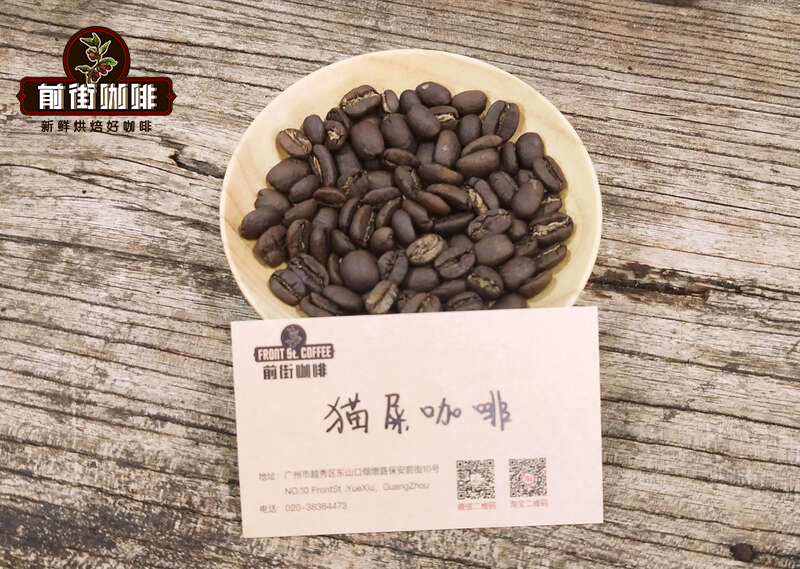
Indonesian green coffee bean grading is based mainly on the number of defective beans, supplemented by size specifications. General quality requirements are no live insects, no moldy or rotten-smelling beans, a maximum moisture content of 12.5%, and an impurity rate of less than 0.5%. According to the defect rate, it is divided into six grades, with the highest grade G1 requiring that the total defective beans in a 300g sample must be fewer than 11. The Lintong Mandheling coffee in Front Street's daily ration bean series is G1, using the wet-hulled processing method, which is the conventional version of Indonesian Mandheling flavor.
PWN, which pursues perfection in screening, purchases Mandheling green beans of 18 screen size or above, with fewer than 3 defective beans in a 300g sample at the G1 grade, which is the highest grade of Indonesian green beans. Subsequently, it strictly follows standards with 1 machine sorting plus 3 manual sorting rounds to remove defective beans, ensuring the shape and size of Mandheling coffee beans are uniform. In addition, before packaging, PWN places the green beans in a machine for density and color sorting, making Golden Mandheling uniform and translucent in color.
How Front Street Brews Civet Coffee
■ Region: Sumatra, Indonesia
■ Variety: timtim, Typica, Catimor
■ Processing Method: In-body fermentation
Front Street Coffee (FrontStreet Coffee) Brewing Parameters
Filter Cup: KONO
Dose: 15 grams
Coffee-to-Water Ratio: 1:15
Water Temperature: 87℃
Grind Size: Granulated sugar coarseness
Front Street Brewing Method
Staged Extraction
Use 30 grams of water for a 30-second bloom, then pour in a small stream in a circular motion up to 125 grams for the stage break; when the water level drops and is about to expose the coffee bed, continue pouring to 225 grams and stop; when the water level drops and is about to expose the coffee bed, remove the filter cup. (Timing starts at the beginning of the bloom) The extraction time is 2'00"
Civet Coffee Flavor Description: Herbal, nuts, dark chocolate, fermented notes.
The above content is compiled by CoffeeHunters, a coffee news website.


