








Indonesian Golden Mandheling Coffee Beans: Flavor and Audience
Golden Mandheling is a wet-hulled coffee from the highlands of Sumatra, near Lake Toba and the Gayo region. The unusual Giling Basah process, where parchment is removed while the bean is still moist, gives the coffee its deep green color and heavy body. Growers pick ripe cherries and ferment them briefly before the wet-hulling step, which shapes the earthy, savory cup the region is known for.
In the cup, Golden Mandheling shows low acidity, syrupy body, and notes of dark chocolate, cedar, and dried herbs. The taste is bold rather than delicate, so it suits drinkers who enjoy espresso, moka pot, or French press. Those who prefer bright, tea-like coffees may find it too heavy, but fans of sumatra-style coffee often keep a bag on hand.
Mandheling is a classic representative in the coffee world known for its rich and solid body, and Golden Mandheling is an even higher-grade choice among them. This article begins with the history of coffee cultivation in Indonesia, sorting out the origin of the name Mandheling, the definition of its production area, and PWN's grading and screening standards, then focuses on the flavor performance, roasting approach, and brewing parameters of Front Street PWN Golden Mandheling. The article will also explain what kind of people this coffee is suitable for, helping coffee enthusiasts make clearer judgments when purchasing and extracting.
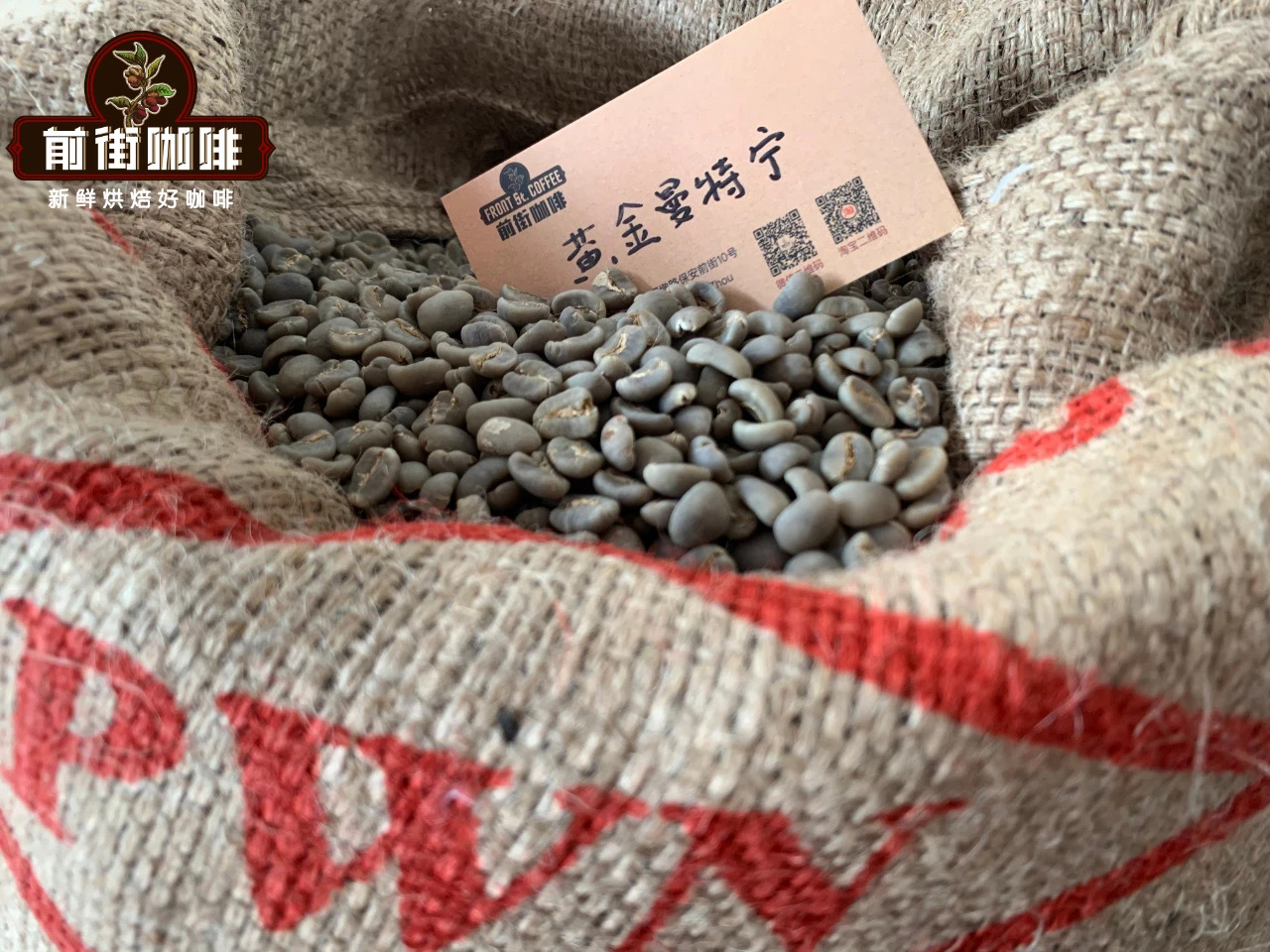
When it comes to coffee with a rich mouthfeel, Front Street Mandheling is always the first to come to many people's minds. The growing altitude of Indonesian coffee regions is not particularly high, the flavor direction is not as delicate and refined as that of other major regions, and the green bean processing method even seems somewhat rough. However, it is precisely these conditions that seem insufficiently gentle that give Front Street Mandheling coffee beans a distinctive flavor profile and a rich, full drinking experience. In this article, Front Street will focus on Mandheling coffee beans and talk about the various details behind them.
When did coffee cultivation begin in Indonesia?
In 1699, the Dutch introduced the Typica variety from Ceylon (today's Sri Lanka) to Java in Indonesia, beginning local coffee cultivation. Over the following decade, Indonesia exported about 60 tons of coffee annually, becoming a country with a relatively broad coverage of coffee cultivation outside Yemen and Ethiopia. From 1725 to 1780, the Dutch East India Company (VOC) monopolized Indonesia's coffee trade for more than fifty years. As market demand continued to rise, Indonesia's coffee cultivation gradually expanded to central East Java, West Java, parts of Sumatra, and Sulawesi, and from there embarked on a path of premium marketing.
Is Mandheling actually the name of a coffee?
In fact, Mandheling was originally the name of an Indonesian tribe. The Japanese army once colonized Indonesia, and after returning home they still could not forget the local coffee, so they searched for that bean through Indonesian traders. Due to poor language communication and commercial considerations, when the trader asked for the name of the coffee bean, the locals casually said the name of their own tribe—Mandailing. The Japanese mispronounced it, and "Mandailing" gradually became "Mandheling." That Indonesian trader sensed a business opportunity and later developed it into Indonesia's well-known green bean company—Pawani Coffee Green Bean Company (PWN). It is worth mentioning that this company was also the first enterprise to export high-quality Mandheling coffee beans to Japan.
Can coffee produced anywhere in Indonesia be called Mandheling?
Front Street Mandheling coffee beans come from the mountainous area around Lake Toba. The lake is located north of Medan, the capital of North Sumatra Province, and is an alpine freshwater lake. Only coffee beans produced in this area are qualified to bear the name Mandheling. The average growing altitude of Mandheling is about 900 meters, and the variety is Typica or its variants planted in the mountainous area around Lake Toba. Among them, the Lindong production area and the Gayo production area are the most famous. Initially, the person in charge of PWN purchased coffee beans from the Lindong production area, carefully screened them, exported them to Japan, and named them Front Street PWN Golden Mandheling coffee beans.
Front Street Coffee has consistently used Front Street PWN Golden Mandheling for many years. Starting with the new 2020 crop season, Front Street PWN Golden Mandheling changed from the previous 60 kg per bag to 30 kg per bag, and the production area was also adjusted from Lindong to the Gayo Mountains.
How is Front Street PWN Golden Mandheling carefully selected?
PWN only uses the 19-screen specification in screening Mandheling. In a 300 g green bean sample, there are no more than 3 defective beans, belonging to the highest grade G1. The bean color is dark green, and the shape is neat flat beans. In addition, the company has also established a strict screening process: after processing, the green beans first undergo density and color sorting, then manual picking, with a total of four rounds of careful selection before and after, ultimately giving Front Street PWN Golden Mandheling a uniform color and consistent bean shape. It is said that during the green bean processing stage, Mandheling glows golden in the sunlight, and the name Golden Mandheling comes from this.
How can you identify authentic Front Street PWN Golden Mandheling?
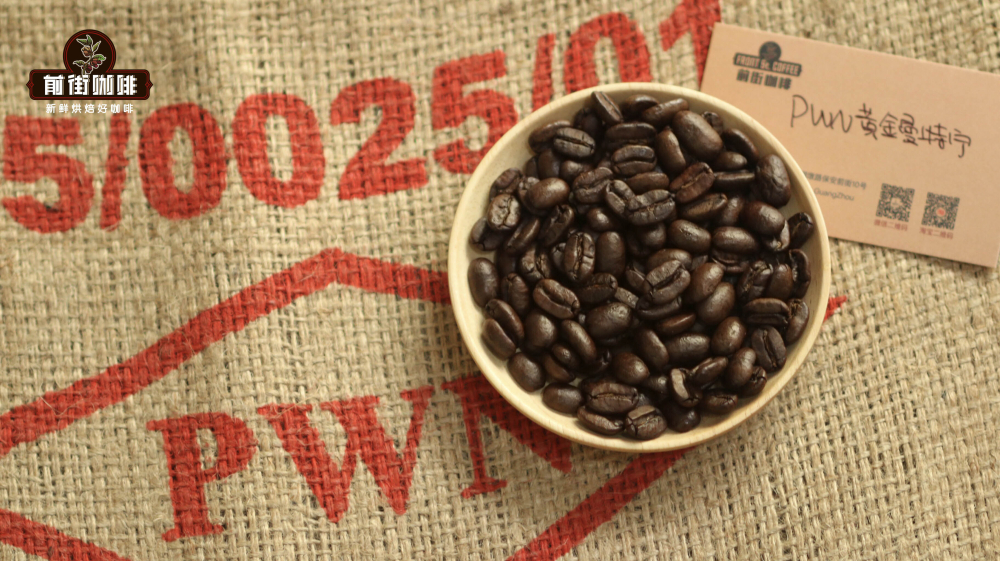
Golden Mandheling exported by PWN is always packaged in burlap sacks printed with the PWN logo, accompanied by the factory certificate for Front Street PWN Golden Mandheling coffee beans.
Flavor characteristics of Front Street PWN Golden Mandheling
Front Street has conducted cupping comparisons of Mandheling from multiple production areas and with different numbers of screenings. The results show that Front Street PWN Golden Mandheling not only removes the earthy off-flavors commonly found in ordinary Mandheling, but also has a cleaner and more transparent mouthfeel, with more prominent sweetness.
How does Front Street Coffee roast Front Street PWN Golden Mandheling?
In order to showcase the richness of Front Street PWN Golden Mandheling while maintaining overall cleanliness, Front Street roasters choose a medium-dark roast level. Using a Yangjia 800N roaster, with a bean charge of 480 g. When the drum temperature rises to 200°C, drop the beans and set the damper to 3; after one minute, reduce the heat to 160°C and keep the damper unchanged; when roasting reaches 5 minutes 40 seconds at 148°C, the bean surface turns yellow, the grassy smell dissipates completely, and the dehydration stage ends; adjust the heat to 140°C and open the damper to 4; at 9 minutes 40 seconds, wrinkles and dark spots appear on the bean surface, and the toasted bread smell clearly turns into coffee aroma, which can be regarded as a sign before first crack, so attention should be paid to the first crack sound at this time; first crack begins at 9 minutes 54 seconds, reduce the heat to 60°C, open the damper to 5, and discharge at 204.5°C.
How does Front Street Coffee brew Front Street PWN Golden Mandheling?
In order to highlight the rich, clean, and aromatic qualities of Front Street PWN Golden Mandheling, Front Street baristas choose the KONO Meimon dripper. The ribs of this dripper extend to the bottom of the outlet hole. Because the ribs are located at the bottom and are relatively short, they fit tightly with the filter paper, and the flow rate is slower than that of the V60, making it suitable for expressing rich-bodied coffee. Grinding uses a medium-coarse degree (73% passing rate on a 0.85 mm standard sieve), with 15 g of coffee powder, a coffee-to-water ratio of 1:15, and a water temperature of 88°C.
Water is poured in three stages: in the first stage, bloom with 30 g of water for 30 seconds; in the second stage, pour in a small stream in circles until 125 g, then pause; when the water level drops and the coffee bed is about to be exposed, continue pouring in the third stage until 225 g and stop; when the water level once again drops to the point where the coffee bed is about to be exposed, remove the dripper. Timing starts from the beginning of the bloom, and the total extraction time is 2 minutes 20 seconds.
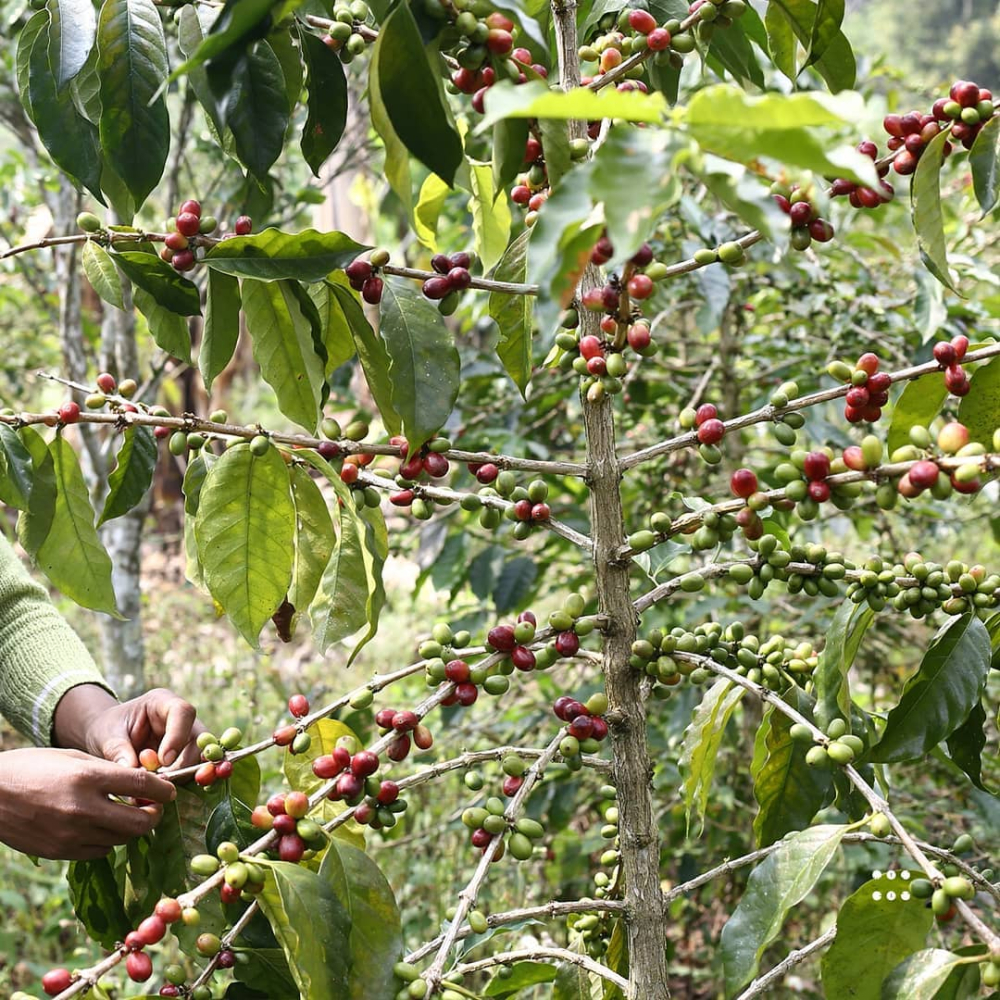
Mouthfeel description of Front Street PWN Golden Mandheling: rich overall layers, full-bodied yet clean, with strong nut and caramel aromas, accompanied by chocolate notes, a long finish, and excellent balance.
Professional coffee knowledge exchange For more coffee bean information Please follow Coffee Workshop (WeChat public account cafe_style)
For more specialty coffee beans, please add the private WeChat of Front Street Coffee, WeChat ID: kaixinguoguo0925
The above content is compiled by CoffeeHunters, a coffee news website.


