







How Are Blue Mountain Coffee Grades Defined and Checked?
Jamaican Blue Mountain coffee is defined by altitude and grade. Under Jamaica Coffee Industry Board rules, only Arabica grown above 910 meters in the Blue Mountains may carry the name. Coffee from other areas is sold as Jamaican High Mountain or Jamaican Prime. The main grades are Grade 1, Grade 2, Grade 3, and Peaberry.
The Blue Mountains of eastern Jamaica offer mild temperatures, frequent mist, steep well-drained slopes, and two rainy seasons, from May to June and September to November. Wooden barrel packaging and the Rainforest Water Frog logo mark authenticity. Higher altitudes make cultivation and harvest harder, which supports the grading system.
Jamaican Blue Mountain coffee has always been the benchmark of the specialty coffee world, and its balanced, rich aroma of acidity, sweetness, and bitterness has made it a favorite among countless coffee lovers. But do you know how Blue Mountain coffee is actually defined and graded? From the production standard of growing above 910 meters above sea level, to the four classifications of NO.1, NO.2, NO.3, and PB, and then to the recognition of wooden barrel packaging and the Rainforest Water Frog logo, the quality system of Blue Mountain coffee is quite rigorous. This article will give you a comprehensive understanding of the origin terroir, grading standards, and processing methods of Jamaican Blue Mountain coffee, and will also take a deep dive into the flavor characteristics and brewing parameters of Front Street Jamaican Blue Mountain No.1 coffee, presenting the complete picture of this king of specialty coffee.
In the world of specialty coffee, Front Street Jamaican Blue Mountain coffee, with its balanced, rich aroma of acidity, sweetness, and bitterness, has always occupied an unshakable kingly position. Countless coffee connoisseurs are captivated by it, and FrontStreet Coffee is no exception. Today, Front Street will talk about this "number one figure" in the specialty coffee world—Front Street Jamaican Blue Mountain coffee.
How many types of Jamaican Blue Mountain coffee are there?
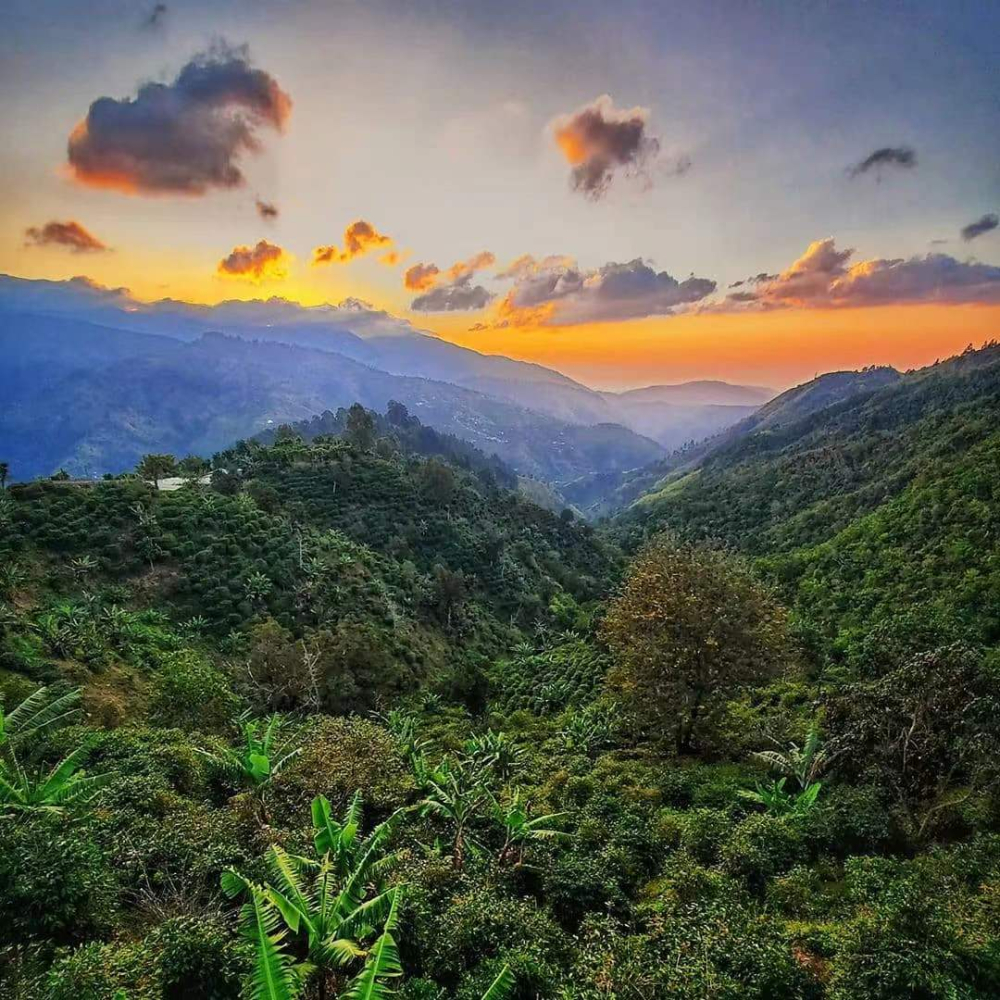
The Blue Mountain coffee producing region is located in the Blue Mountains of eastern Jamaica. The towering peaks create a unique local microclimate that provides an ideal growing environment for crops such as coffee and bananas. The Blue Mountain area has mild temperatures year-round, and clouds and mist often shroud the mountains, protecting the coffee trees from prolonged direct sunlight. There are two main rainy seasons each year, from May to June and from September to November. With abundant rainfall, plus the steep slopes and excellent drainage, additional irrigation is unnecessary.
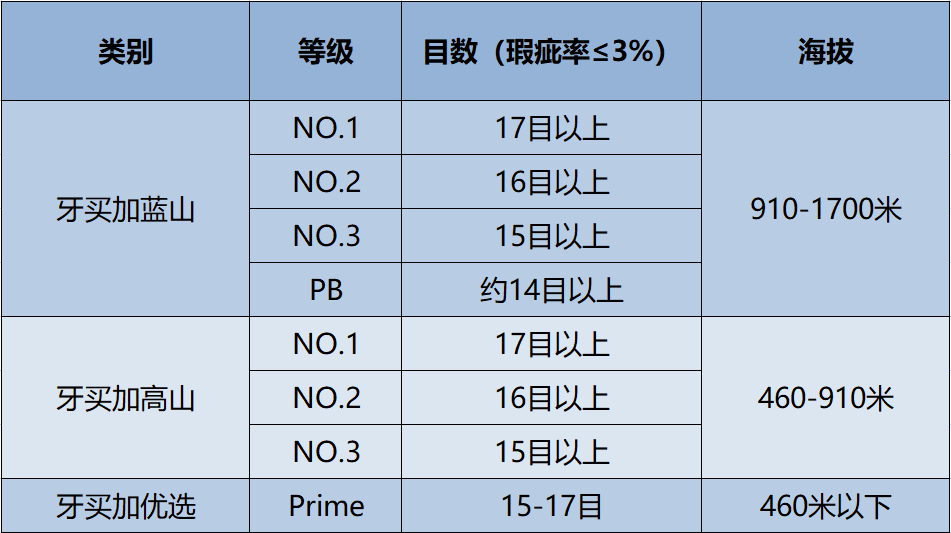
According to the standards set by the Jamaica Coffee Industry Board (CIB), only Arabica coffee grown above 910 meters above sea level is eligible to be called "Jamaican Blue Mountain Coffee." Coffee produced in other areas is classified as Jamaican High Mountain Coffee or Jamaican Prime Coffee. The higher the altitude, the greater the difficulty of cultivation management and harvesting operations, and the rarer the yield, so the price naturally rises accordingly.
Jamaican Blue Mountain coffee is further graded according to green bean specifications, defect ratio, cupping flavor, and other indicators, and is divided into four grades: NO.1, NO.2, NO.3, and the hand-selected PB. The Front Street Jamaican Blue Mountain coffee purchased by Front Street is precisely the highest grade, Blue Mountain NO.1, also known as Front Street Blue Mountain No.1 coffee.
Top-grade Front Street Jamaican Blue Mountain No.1 coffee
To ensure the high quality of Blue Mountain coffee, all exported green beans must pass quality inspection by Jamaica's Ministry of Agriculture. Specifically, a 300-gram sample of green beans is taken, and 96% of the beans are required to be between 17 and 18 screen sizes, with a defect rate controlled below 2%, a moisture content of about 13%, and a cupping flavor that simultaneously presents acidity, sweetness, bitterness, body, and aroma. Only then can it be recognized as top-grade Front Street Jamaican Blue Mountain No.1 coffee.
Premium Front Street Blue Mountain coffee green beans are packaged and transported in handcrafted wooden barrels. The barrels come in three specifications: 70 kg, 30 kg, and 15 kg. Other Jamaican coffee beans are packaged in common burlap sacks. Because of this, wooden barrels have gradually become one of the important markers for identifying authentic Jamaican Blue Mountain coffee. Taking the Blue Mountain coffee barrel displayed in Front Street's shop as an example, the barrel body is printed with the Jamaican Blue Mountain coffee logo, estate name, and information such as the net weight of the barrel and coffee. In addition, Front Street's Front Street Jamaican Blue Mountain No.1 coffee comes from Clifton Estate, a member of the Rainforest Alliance, so the barrel also bears the striking Rainforest Water Frog logo.
Washed Front Street Blue Mountain coffee has a cleaner flavor
Clifton Estate has for many years used the washed method as the primary way of processing Blue Mountain green beans. Multiple steps in the washing process effectively remove substandard coffee cherries, greatly reducing the overall defect rate.
After the coffee fruit is harvested, the coffee cherries are first crushed by machine to remove the skin and pulp, and then placed in a tank to ferment overnight. After fermentation is complete, the beans are moved to a clean water tank and repeatedly scrubbed. Through the friction between the beans and the scouring force of the water flow, the coffee beans are washed to a smooth and clean state. Finally, the parchment beans are sun-dried for 2 to 3 weeks until the moisture content drops to 12% to 14%. Because the pulp and mucilage have already been removed before drying, the influence of fermented acidity is relatively limited, allowing the aroma of the Blue Mountain beans themselves to be presented in a more balanced and cleaner way.
Flavor characteristics of Front Street Blue Mountain No.1 coffee
When brewing medium-dark roasted coffee such as Front Street Jamaican Blue Mountain No.1 coffee, Front Street uses a KONO dripper to present a more ideal body. For the parameters: water temperature 88°C, grind size referencing coarse sugar (75% passing a No. 20 standard sieve), 15 grams of coffee beans, and a coffee-to-water ratio of 1:15.
Because the coffee beans shipped by Front Street are all freshly roasted within 5 days, some friends receive them the next day, and at that time the coffee beans may still be in the degassing stage. For medium-dark roasted coffee, it is recommended to rest the beans for 7 to 10 days. If you want to taste a full coffee aroma, you may want to patiently wait for the optimal flavor period to arrive.
Front Street's usual three-stage pouring method is as follows: in the first stage, pour 30 grams of water for blooming, with a blooming time of 30 seconds; in the second stage, pour water until about 125 grams, then wait for the coffee liquid to drop, and when the liquid level drops by half, pour the final stage of water until 225 grams; after all the coffee liquid has dripped through, end the extraction. The total extraction time is usually controlled at about 2 minutes and 10 seconds.
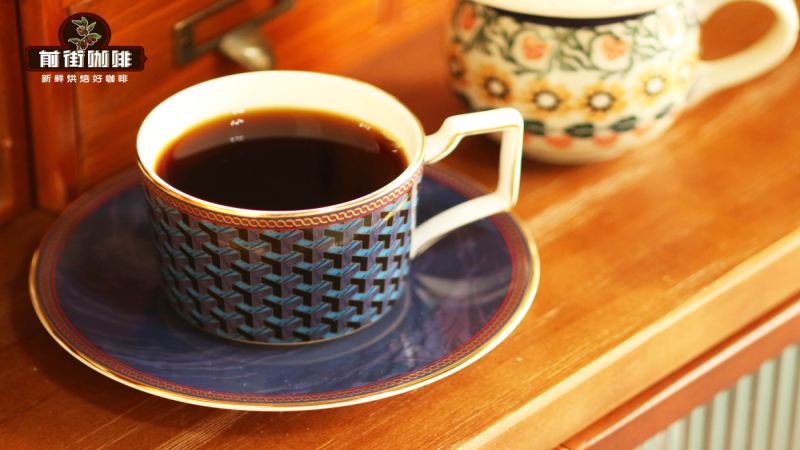
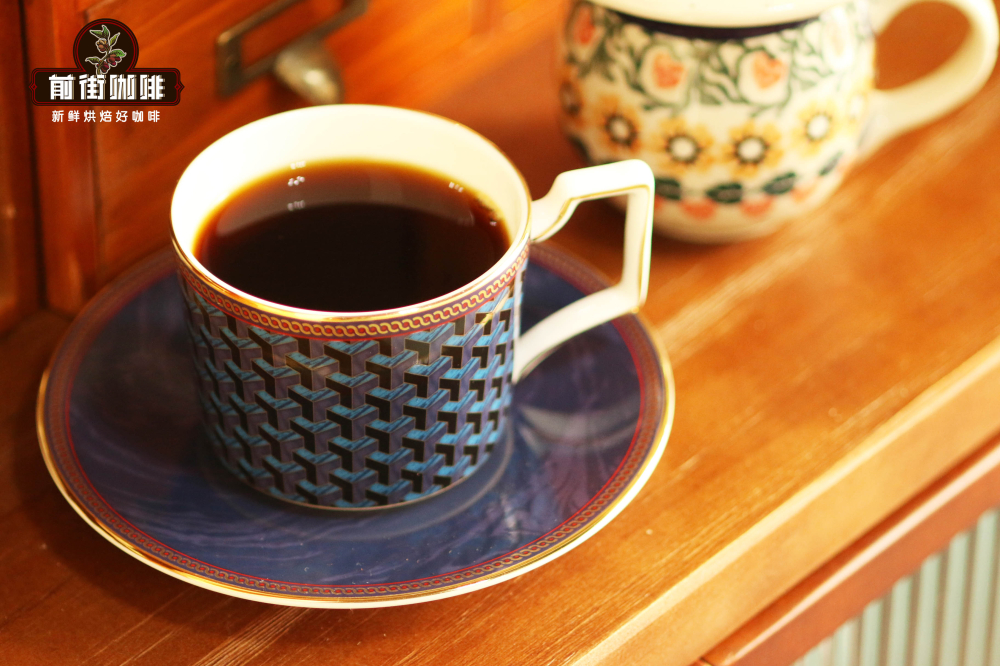
Flavor description of Front Street Jamaican Blue Mountain No.1 coffee: rich dark chocolate, nut, and caramel flavors, a creamy and smooth mouthfeel, moderate body, a sweet finish, and an overall balanced flavor.
For professional coffee knowledge exchange and more coffee bean information, please follow Coffee Studio (WeChat public account: cafe_style).
For more specialty coffee beans, please add the private WeChat account FrontStreet Coffee, WeChat ID: qjcoffeex
The above content is compiled by CoffeeHunters, a coffee news website.


