







How Do Guatemalan Coffee Regions Shape the Cup?
Guatemala is split into seven coffee regions including Antigua, Cobán and Atitlán, shaped by volcanic geology and tropical rainforest. Antigua is known for a smoky character, and the El Injerto estate's Pacamara variety stands out. Flor del Café beans from the La Minita estate combine citrus-honey notes with that signature smokiness.
Mountains and forest cover about two-thirds of the country, with 34 volcanoes along the Sierra Madre, plus Pacific and Caribbean coastlines. The result is a fine climate for growing coffee, mixing volcanic soil, highland valleys and varied microclimates. The V60 three-pour method used by baristas suits these beans, moving from citrus and honey toward cocoa in the finish.
Guatemala's interwoven microclimates of volcanic geology and tropical rainforest give rise to coffees of remarkable complexity and elegant acidity. The country is divided into seven major regions—Antigua, Cobán, Atitlán and others—among which Antigua's smoky character and El Injerto estate's Pacamara variety stand out in particular. The Flor del Café beans from Front Street Coffee come from the La Minita estate in Antigua, combining citrus-honey notes with a signature smokiness. This article will walk through the region's terroir, history and varietal characteristics, and include the V60 three-pour hand-brewing method favored by Front Street Coffee's baristas, offering enthusiasts a complete reference from bean to cup.
Hi, fellow coffee lovers—this time Front Street Coffee is taking you into the heartland of Mayan civilization: that land which once nurtured ancient wisdom and now cultivates exceptional coffee, Guatemala.
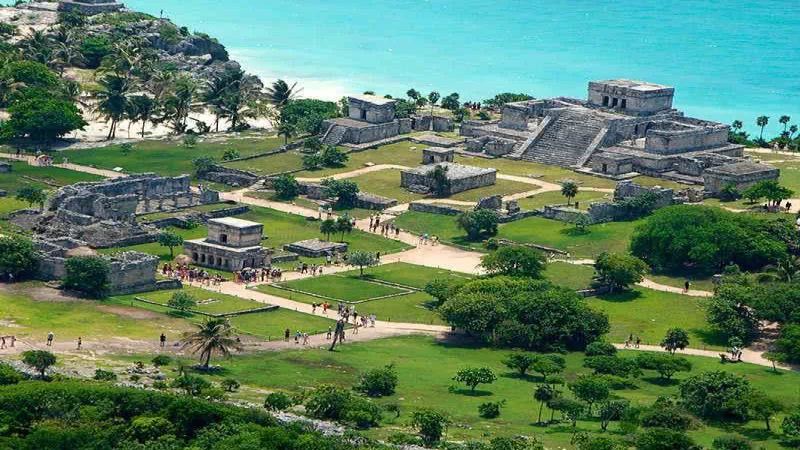
(Mayan civilization ruins)
Guatemala (The Republic of Guatemala) lies between North and South America, with a land area of roughly 108,899 square kilometers. Mountains and forests cover two-thirds of its territory, making it an important origin of quality coffee.
In terms of topography, the country can be divided into a highland volcanic belt, lowland tropical rainforest, and the volcanic sandy plains of the Pacific coast. Central America's Sierra Madre runs through Guatemala from west to east, occupying about two-thirds of the country, with 34 volcanoes scattered across it. Rivers and lakes dot the landscape, equatorial forests and plains jungles spread across the land, and the Pacific and Caribbean coasts still preserve untouched volcanic beaches.
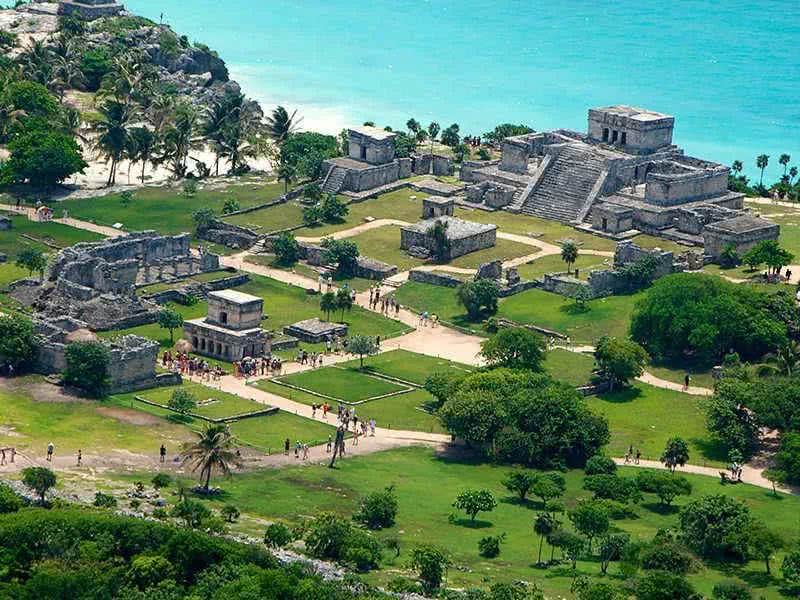
Guatemala borders Mexico to the north, Honduras and El Salvador to the south, the Caribbean Sea to the east, and the Pacific Ocean to the west. This geography of mountains and sea gives it tropical rainforest, volcanic soil, highland valleys, and diverse microclimates all at once. Agriculture is its main economic pillar, and coffee is of paramount importance. Guatemalan coffee once enjoyed a reputation as the best in the world, with plump beans and balanced flavor.
(Volcanic eruption scene)
Few origins can offer as diverse and high-quality coffee as Guatemala. Front Street Guatemalan coffee beans are known for their elegant, lively acidity, clean and unblemished mouthfeel, and clear layering. The aroma reveals notes of green apple acidity, berries, jasmine, orange peel, and green pepper, while the cup has a fruity sweet-and-sour sensation with chocolate sweetness, and even a hint of smokiness in the finish. Such rich regional flavor is owed to the origin's unique natural conditions—varying climates across regions, fertile volcanic soil, abundant natural water sources, and high-altitude mountains coexisting with shade forests.
Coffee was introduced to Guatemala in 1750 by Jesuit priests, and by the end of the 19th century German colonists further advanced the local coffee industry.
(Harvested coffee cherries)
Guatemala has seven main coffee regions: Antigua, Cobán, Atitlán, Huehuetenango, Fraijanes, Oriente and San Marcos.
Among them, Antigua, Atitlán, San Marcos and Fraijanes have volcanic rock geology, while Cobán, Huehuetenango and New Oriente have non-volcanic highland or tropical rainforest climates. Guatemala possesses over three hundred microclimates across its territory, a number unrivaled in the world.
Coffee flavors differ from region to region, but overall, Front Street Guatemalan coffee presents a mild, mellow body, elegant aroma, and pleasant fruit-like acidity, making it truly the nobility of coffee. Among them, Antigua Classic is especially admired by coffee connoisseurs worldwide.
Next, Front Street will introduce the famous Antigua region in detail.
Antigua is one of the oldest and most beautiful cities in the Americas. As early as 1543, it was the capital of colonial Central America, and the Spanish governor's palace was also located here. The great earthquake of 1773 destroyed the city, and the capital was subsequently moved to Guatemala City. Antigua lies about 40 kilometers west of Guatemala City. The colonial-era buildings were damaged by the earthquake, but their original appearance has been preserved as a whole, like a living historical museum.
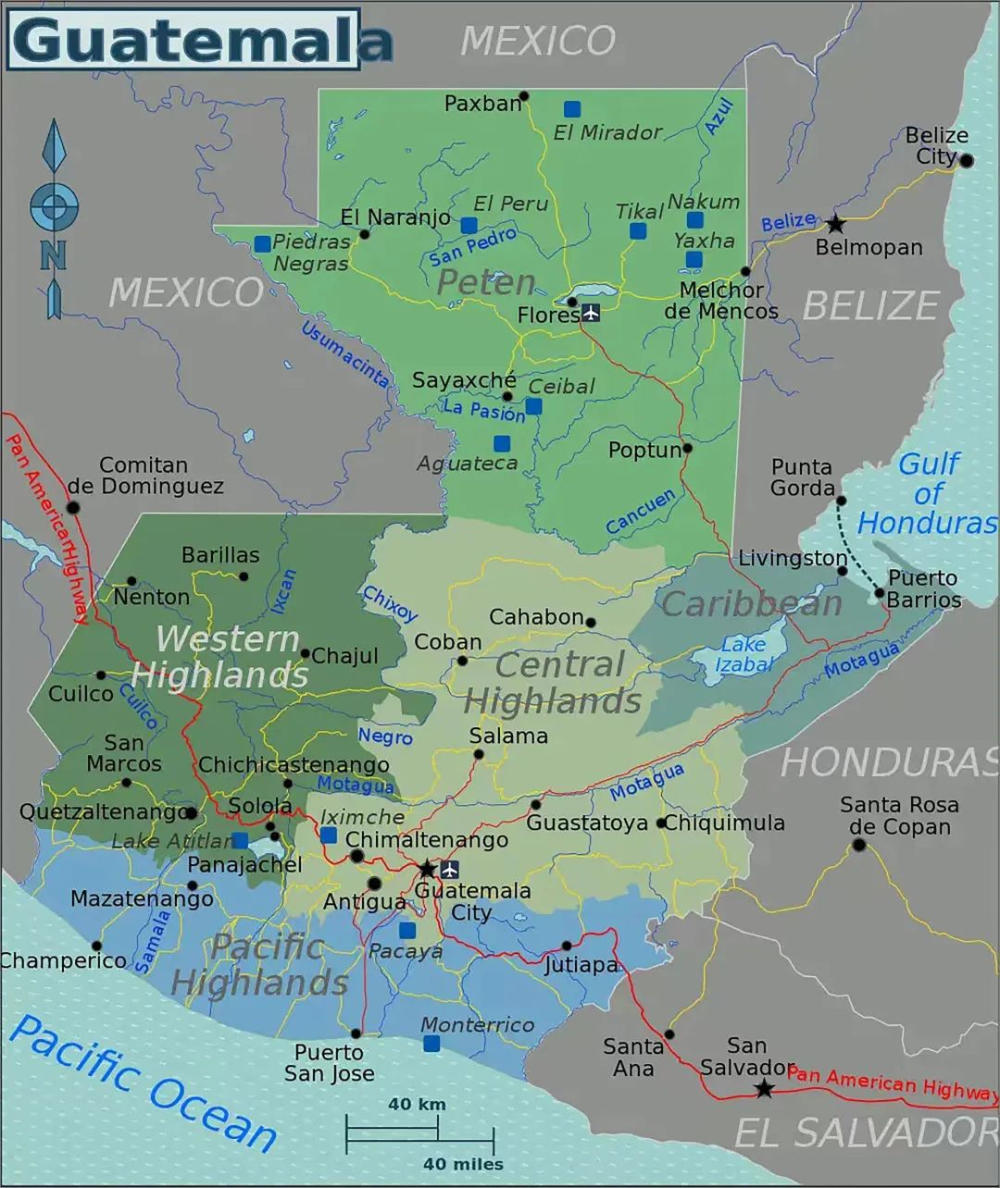
Today's Antigua is a renowned coffee origin, characterized by rich volcanic soil, low humidity, intense sunlight and cool evening breezes. Three spectacular active volcanoes—Agua, Acatenango and Fuego—form a beautiful valley, and Fuego often sends up hazy dust. Roughly every 30 years, Antigua experiences a volcanic eruption, which replenishes the already fertile soil with additional nitrogen. Combined with abundant rainfall and sunlight, this makes the area exceptionally suited to growing coffee.
Antigua's coffee comes from the Carmona estate, with the finest being El Pulcal. Not only is its quality outstanding, but compared with other Latin American coffees, it can be called a remarkably complete, astonishingly layered masterpiece. Enjoyed with chocolate, it offers a pleasant surprise. Most notable is its rich flavor, full body, and a fascinating tobacco note, earning it the title of "the most perfect coffee bean."
Another long-established Guatemalan estate worth noting is El Injerto, located in the Huehuetenango region in the northwest. The origin of the name is interesting: founder Jesus Aguirre Panama worried that propagating coffee from seed would cause variation and alter the original varietal characteristics, so he used grafting to cultivate pure Bourbon to ensure coffee quality. Yet this estate, once proud of its pure Bourbon, now prizes the hybrid variety Pacamara.
(Coffee farmer hand-picking coffee cherries)
The Pacamara variety cultivated at El Injerto is planted at altitudes above 1,600 meters, with a reputation comparable to that of Hacienda Esmeralda's Geisha in Panama. Pacamara coffee has a rich, varied flavor and a round, smooth body, and won the Guatemalan Cup of Excellence championship three years running from 2008 to 2010. In 2008, El Injerto's champion Pacamara beans fetched $80.2 per pound, causing a sensation in the coffee world.
Currently, some of Guatemala's finest coffees are exported to Japan. To revitalize its coffee industry, Guatemala established a specialty coffee association to provide the greatest support and attention to high-quality coffee. These efforts will soon bear fruit, and the true beneficiaries are not only the growers but coffee lovers around the world.
Although this emerald valley has since ancient times been surrounded by active volcanoes poised to erupt on all sides, its vastness, breadth and fertility still attract local coffee growers to carefully cultivate quality coffee. They prefer to be called the Mayan descendants who grow coffee.
Front Street Coffee has a coffee bean from the Antigua region with very clean citrus and honey notes while retaining Guatemala's distinctive smokiness—it is Front Street's Flor del Café bean from the La Minita estate.
Front Street Coffee Brewing Recommendations
Front Street Coffee Recommended Method: Hand Pour
Hand Pour Suggested Parameters
Dripper: V60
Water Temperature: 91°C
Dose: 15 grams
Coffee-to-Water Ratio: 1:15
Grind Size: 80% passing a No. 20 standard sieve
Front Street Coffee baristas habitually use a three-pour technique:
For the first pour, add 30 grams of water and bloom for 30 seconds, then pour 95 grams (the scale reads about 125 grams), finishing in about 1 minute. When the water level drops to two-thirds of the coffee bed, pour the remaining 100 grams (the scale reads about 225 grams), finishing in about 1 minute 35 seconds. Dripping completes at 2'10"; remove the dripper and extraction is complete.
For professional coffee knowledge exchange and more coffee bean information, please follow Coffee Workshop (WeChat public account: cafe_style)
For more specialty coffee beans, please add the private WeChat of Front Street Coffee: qjcoffeex
The above content is compiled by CoffeeHunters, a coffee news website.


