







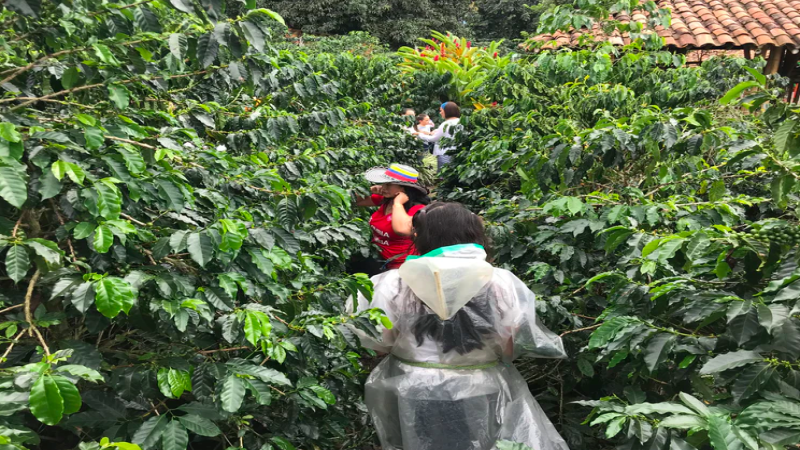
How is arabica coffee from Colombia graded and grown?
All coffee grown in Colombia is arabica coffee. Beans above 17 mesh grade as Supremo, the specialty threshold. Beans from 14 to 16.5 mesh are Excelso, sold commercially, and 14 to 16 mesh beans are Extrac, a lower grade. Size, not variety, decides the grade, because bean size varies by region.
The central MAM regions of Medellín, Armenia, and Manizales yield smaller beans with pronounced fruit acidity but weaker body. Southern provinces including Huila, Cauca, and Nariño, above 1,500 meters, produce larger beans with delicate acidity, berry sweetness, and a caramel finish. Andes rainfall and volcanic ash soil support the crop, and Front Street Coffee selects southern beans, favoring Huila.
Colombia, with the mild climate of the Andes, abundant rainfall, and volcanic ash soil, has become an important producer of high-quality Arabica coffee worldwide. Coffee within the country is graded by bean size: beans above 17 mesh are classified as Supremo, the specialty grade; 14-16.5 mesh beans are Excelso for commercial use. Beans from the central MAM region are smaller, with pronounced fruit acidity but weaker layering and body; the southern provinces of Huila, Cauca, and Nariño, at elevations above 1,500 meters, produce large beans with delicate acidity, berry sweetness, and caramel finish. All Colombian beans at Front Street Coffee are selected from the south, with the Huila region particularly favored. This article will systematically outline Colombia's coffee grading logic, regional differences, and include specific brewing parameters for Front Street's Huila Caturra.
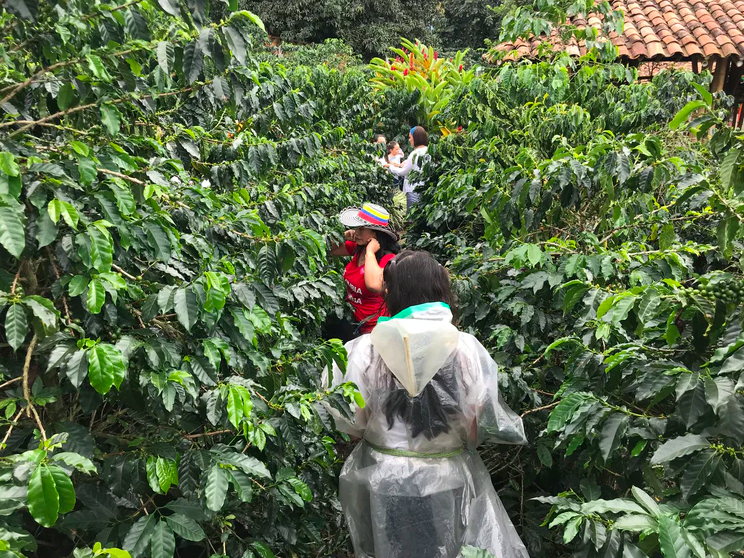
For more specialty coffee knowledge, please follow the WeChat public account: FrontStreet Coffee
Colombian Coffee Located along the Andes Mountains, Colombia has a mild climate with high humidity, abundant rainfall, and several active volcanoes that have enriched the soil with mineral-rich volcanic ash, forming tiger-skin soil. These natural conditions make Colombia an ideal place for coffee cultivation.
All coffee produced in Colombia belongs to the Arabica species, but due to different geographical environments, bean sizes vary across regions. For this reason, Colombia uses bean size as the basis for grading: beans above 17 mesh are classified as Supremo, which is also the threshold that Colombian specialty coffee must meet.
Beans of 14 to 16.5 mesh are designated as Excelso, a blend designed for commercial coffee, and their flavor complexity can sometimes be richer than Supremo; beans of 14 to 16 mesh are called Extrac, a lower-grade commercial bean.
The central and northern parts of Colombia, covering Medellín, Armenia, and Manizales—commonly known as the MAM three major producing regions. Coffee beans from this area are usually smaller, making MAM the main source of Colombian commercial beans. Through cupping comparisons, Front Street Coffee (FrontStreet Coffee) found that coffees from these regions have prominent fruit acidity, but their layering is inferior to southern producing regions, and their body is relatively lower.
The southern region of Colombia, including Huila, Cauca, Nariño, and Tolima provinces, has cultivation elevations above 1,500 meters. The coffee beans produced there are generally larger and form the core production area for Colombian specialty coffee beans. After cupping comparisons, Front Street Coffee (FrontStreet Coffee) points out that coffees from these regions exhibit delicate acidity, berry-like sweet-tartness, and a caramel-like finish, with particularly outstanding sweetness.
The Colombian coffee beans currently sold by Front Street Coffee (FrontStreet Coffee) all come from the southern region, with beans from the Huila producing area being especially favored by Front Street.
Huila is one of Colombia's well-known specialty coffee producing regions, located in the mountainous area of southwestern Colombia, at elevations of about 1,200 to 2,020 meters. Within the region there is an active volcano that erupted in 2008, releasing a large amount of mineral-rich volcanic ash that covered soils throughout Colombia.
The Huila producing region is naturally the area with the most concentrated volcanic ash coverage. Whether a cup of coffee can present more delicate flavors depends not only on variety and elevation, but also on soil nutrients. Therefore, coffee beans from the Huila region carry delicate fruit acidity, nutty aroma, and a caramel-like finish, which is also the signature flavor of southern Colombian coffee.
Front Street Coffee (FrontStreet Coffee) believes that one important criterion for judging whether a coffee bean is specialty and whether its quality is solid is whether the distinctive flavor of its producing region can be tasted. To this end, Front Street Coffee (FrontStreet Coffee) has launched 7 highly cost-effective selected regional daily beans, allowing every enthusiast to identify the flavor characteristics of 7 popular producing regions at the most affordable price. Among them, the representative Colombian option is the Caturra coffee bean grown at 1,500-1,800 meters in the Huila producing region, using the washed processing method to make the coffee taste cleaner.
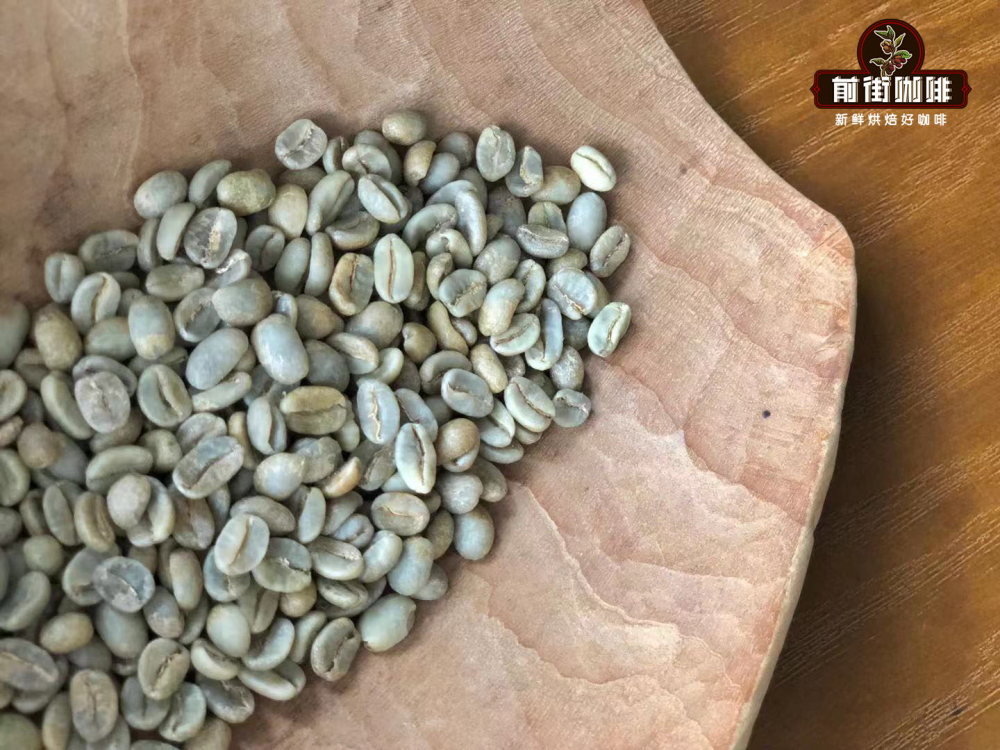
In order to make the Huila coffee beans show a fuller and richer taste, Front Street Coffee (FrontStreet Coffee) chooses a medium-dark roast, dropping the beans 3 minutes and 40 seconds after first crack. Therefore, when brewing this coffee, it is recommended to use a medium-coarse grind with relatively low-temperature hot water for extraction.
Dripper: Hario V60
Water temperature: 88°C
Dose: 15 grams
Coffee-to-water ratio: 1:15
Grind size: medium-coarse (70% passing through a Chinese standard No. 20 sieve)
Use a three-pour brewing method: first pour 30 grams of water to bloom for 30 seconds. Then, using a small stream, pour in a circular motion until 130 grams, then pause; when the water level is about to expose the coffee bed, continue pouring until 240 grams and stop. After all the water has passed through the coffee grounds, remove the dripper. (Start timing at the beginning of the bloom.) The extraction time is 2'10".
The above content is compiled by CoffeeHunters, a coffee news website.


