







What Do AA and AB Coffee Bean Grades Mean for Kenya Coffee?
Kenyan coffee is prized for bright fruity aroma, citrus notes and juicy acidity. Prices vary by grade and lot: Front Street Cherry Tomato from Thika in Kenya costs 98 yuan per half-pound bag, and a cup at the Front Street Dongshankou store is 30 yuan. Its flavor leans toward cherry tomato, smoked plum, snow pear and caramel, with grapefruit and wine-like notes in the cup.
Grading centers on bean size and quality. AA is the largest common screen size, AB covers a smaller range, and PB marks peaberry, a single round bean per cherry. The K72 washed process, with a long 72-hour fermentation, also shapes quality by adding clarity and structure. Kenyan coffee was introduced near the 20th century under British colonial rule, when beans were shipped to London for export.
Kenyan coffee is famous for its distinct fruity aroma, citrus notes, and juicy acidity, making it a specialty representative in the minds of many coffee lovers. This article focuses on the price of Kenyan coffee, its regional background, and the green bean grading system, with emphasis on the differences in bean size among grades such as AA, AB, and PB, as well as the impact of the K72 washed process on quality. It also combines the price and store information of Front Street Cherry Tomato to provide specific brewing suggestions for light-to-medium roasted Kenyan beans, including coffee-to-water ratio, water temperature, grind size, and staged pouring scheme, helping readers understand the flavor and value of Kenyan coffee more systematically.
For more specialty coffee knowledge, please follow: Front Street Coffee (Frontsteet Coffee)
Within the coffee community, Kenyan coffee is almost universally recognized as one of the most beloved producing countries. The reason is that a cup of high-quality Kenyan coffee often simultaneously presents the multiple qualities we hope for: a captivating and satisfying aroma, pleasant and balanced acidity, uniform beans, and outstanding fruity notes. Its flavor is highly recognizable, and it is difficult to find a similar coffee. The most prominent label of Kenyan coffee is its bright fruity aroma, commonly expressed as citrus notes. When tasting, pay attention to how it changes in the mouth: rich layers, juicy acidity, often featuring grapefruit and wine-like flavors, with a relatively moderate body.
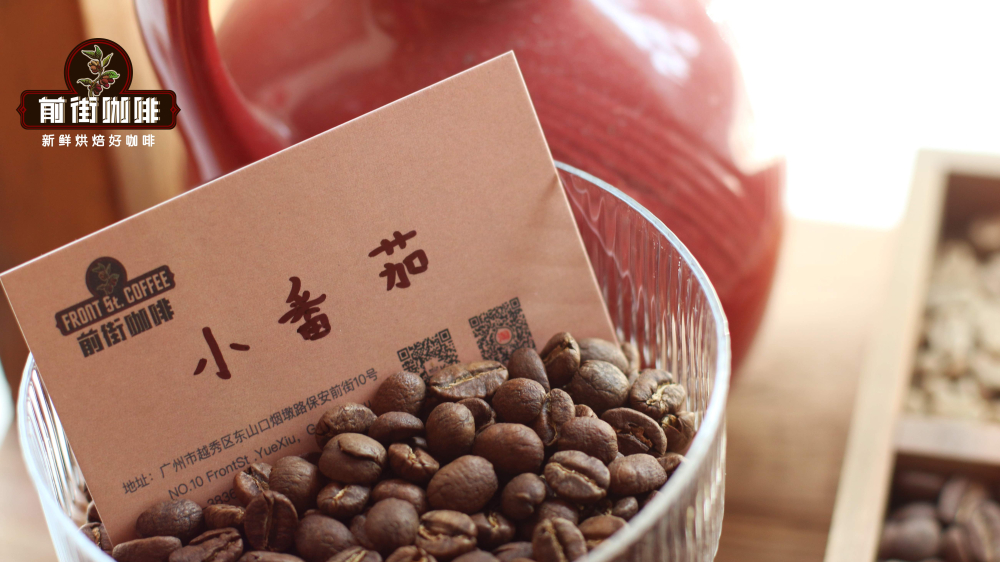
Front Street Cherry Tomato comes from the well-known specialty region of Thika in Kenya and has pleasant cherry tomato, smoked plum, snow pear, and caramel flavors. Each bag is 98 yuan per half-pound, and a cup at the Front Street Dongshankou store is 30 yuan. You can purchase it at the Front Street Taobao store or the Front Street Tmall flagship store.
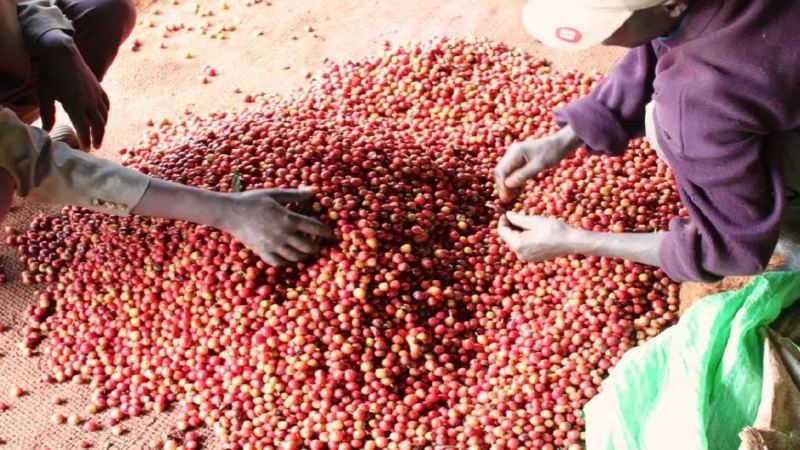
Kenya is located in East Africa and borders Ethiopia. Compared with Ethiopia, Kenya's coffee development history is not very long, and coffee was not introduced until close to the 20th century. When coffee first entered Kenya, the area was under British colonial rule. In order to obtain foreign exchange, the colonial government promoted coffee cultivation on a large scale in Kenya, and the harvested coffee beans were shipped to London for export sale.
Kenya Coffee Bean Grading System From the above review by Front Street Coffee (FrontStreet Coffee), it can be seen that Kenya places considerable importance on the coffee industry and therefore has high quality requirements, establishing a coffee bean grading system. For example, the AA grade is generally regarded as representing the highest quality. However, since it is a "grading" system, is AA necessarily better tasting than AB? On what basis is this system actually divided?
According to Front Street Coffee (FrontStreet Coffee), Kenya's coffee bean grading standard is mainly based on size. The difference between AA and AB is only a difference in size. As for whether it tastes good, Front Street Coffee (FrontStreet Coffee) concluded through cupping that Kenyan coffee beans of either AA or AB grade are very delicious coffees. The differences in taste among different regions may mainly come more from factors such as region, altitude, and growing conditions. But Kenyan coffee of AA and AB grades is definitely coffee with the most guaranteed quality.
From the above, these grades are only distinctions in bean size, while the most famous coffee processing method for Kenyan coffee beans is undoubtedly the K72 washed process. Therefore, the highest-quality Kenyan coffee beans are basically washed. Washed processed coffee is roughly divided into eight grades:
E: Elephant Bean, also called elephant ear bean, flat beans with a screen size above 19. AA: screen size 17 to 18
AB: screen size 15 to 16, accounting for the majority of production TT: lighter-weight beans blown out from AA and AB grade beans by an airflow sorter C: screen size smaller than AB/14 or below, unable to be classified as specialty grade because the size is too small. T: lighter-weight beans blown out from C grade beans (below 14) by an airflow sorter, meaning both size and density are too small to be classified as specialty grade.
PB: Peaberry, meaning round bean, classified not by size but by appearance, unrelated to flavor or weight, accounting for about 10% of total production UG: those not meeting the above standards
There are also lower-quality natural coffee bean grades, which are not given Kenyan-style washing due to poorer quality and are generally supplied to the Kenyan domestic market. This bean grade is called M'buni. In addition, one point Front Street Coffee (FrontStreet Coffee) wants to emphasize is that this "green bean grading system," still in use today, was issued by a government agency in 1938, even 40 years earlier than the birth of the concept of "specialty coffee." So today's Kenya has long had new concepts for coffee bean grading standards, but the size-based grading standard is still the most common at present.
The following is Kenya's current new coffee grading standard:
According to Front Street Coffee (FrontStreetCoffee), when Kenyan coffee research institutions and the local industry appraise coffee quality, they commonly use a set of coffee bean quality grading procedures formulated by the Kenya Coffee Research Institute, grading comprehensively according to three aspects: green bean quality, roasted bean quality, and cupping quality.
Green bean quality: The assessment items are further subdivided into green bean appearance and size, green bean color, and defects. Roasted bean quality: Subdivided into center crack condition, roasted bean condition, and defective beans. Cupping quality: Scored by acidity, body/texture, flavor, and negative defects.
Combining the scores from the three aspects, coffee beans are divided into grades 1 to 10, with grade 1 being the best and grade 10 the worst.
From the above, it can be seen that the difference between AA grade coffee beans and AB grade and PB grade coffee beans is only in size, but overall, coffee beans with larger screen sizes also have a lower defect rate, so the flavor will naturally be cleaner, and the price will naturally be more expensive.
Front Street Brewing Suggestions
Front Street Coffee (FrontStreet Coffee) takes into consideration that this bean uses a light-to-medium roast profile, so it uses a higher water temperature and a faster-flow dripper, mainly because high temperature is needed to extract its bright acidity, but it does not want over-extraction caused by high temperature, so a faster-flow V60 dripper is chosen.
Coffee-to-water ratio: 1:15
Coffee grounds: 15g
Total water: 225ml
Water temperature: 91℃
Grind size: fine granulated sugar coarseness | EK43s setting 10 (80% passing rate through No. 20 standard sieve)
In the first stage, pour 30 grams of water for a 30-second bloom, then pour 95 grams (the electronic scale shows about 125 grams), completing the pour in about 1 minute. When the water level drops to 2/3 of the coffee bed, pour the remaining 100 grams (the electronic scale shows about 225 grams), completing the pour in about 1 minute 40 seconds. Dripping is completed at 2'00", remove the dripper, and extraction is complete.
Brewed flavor: on the palate there are flavors of smoked plum and cherry tomato, with strong and full acidity in the mouthfeel, prominent sweetness in the middle, a juicy sensation, a finish of berry aroma and brown sugar sweetness, along with green tea aroma.
The above content is compiled by CoffeeHunters, a coffee news website.


