







How Does Golden Mandheling Get Its Flavor?
Mandheling is Sumatra's most representative coffee category, known for a full-bodied, viscous mouthfeel with herbal, earthy, and spicy flavors. The root of this profile is the wet-hulling process, shaped by local humid conditions. It produces a low-acid, heavy cup, and drinker reactions to it are sharply divided between love and dislike.
The Dutch introduced coffee to West Java in the late seventeenth and early eighteenth centuries, and by 1726 they controlled roughly 50 to 75 percent of the world coffee trade. Comparing Lintong and Aceh shows how the java process coffee method and regional conditions shape the heavy Sumatran cup.
Mandheling coffee is the most representative coffee category from Sumatra, Indonesia, renowned for its full-bodied, viscous mouthfeel and herbal, earthy, spicy flavors. Many enthusiasts either love it or hate it, and the root of this unique flavor lies in the wet-hulling process prompted by local climatic conditions. This article will start with the cultivation history of Mandheling, tracing the thread of how the Dutch introduced coffee to Indonesia, and analyze how the wet-hulling method shapes a low-acid, heavy cup profile in a humid environment. It will also compare the similarities and differences between the two major producing regions of Lintong and Aceh, and introduce the specific practices of Front Street Coffee's daily bean series and PWN Golden Mandheling in terms of bean selection standards, roast levels, and brewing parameters, helping readers fully understand the flavor logic of this Sumatran classic coffee.
On Front Street Coffee's menu listing fifty coffee beans, there are both coffee beans with a strong fruity sweet-and-sour sensation and coffee beans with a rich, full-bodied mouthfeel. Indonesian Mandheling coffee beans, as one of the representatives of a full-bodied mouthfeel, occupy a unique position on Front Street's bean list.
Because Mandheling coffee is characterized by a viscous, full-bodied mouthfeel with a deep, muffled herbal aroma, many coffee enthusiasts' fondness for this coffee bean is sharply polarized: those who like it cannot put Mandheling down, while those who do not like it keep Mandheling at a distance.
As everyone knows from the "hot knowledge" widely circulated, the birthplace of coffee is Ethiopia. The beginning of coffee cultivation in this island region of Southeast Asia also started only because of the arrival of Europeans.
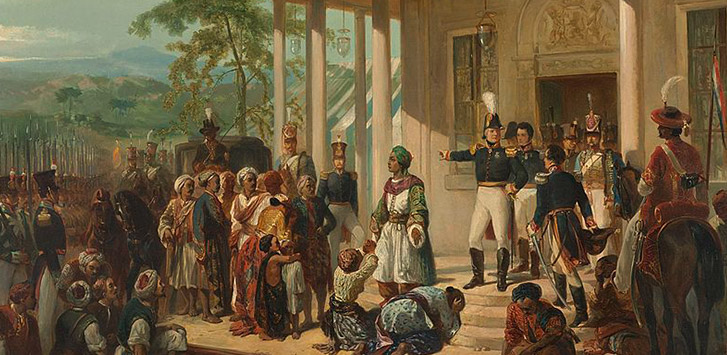
As Europeans' coffee consumption grew larger and larger, the Dutch purchased coffee beans from the port of Mocha and then sold them to various European countries at high prices. At the same time, the Dutch planned to grow coffee in their colonies so as to obtain higher profits. In the late seventeenth and early eighteenth centuries, the Dutch introduced coffee to the West Java region of Indonesia for cultivation. By 1726, about 50% to 75% of the world's coffee bean trade was in Dutch hands.
Because Indonesia has thousands of islands, not all coffee from the country tastes the same. In addition to Java, coffee beans produced on the Indonesian island of Sumatra have made Mandheling coffee beans famous worldwide for their heavy mouthfeel, low acidity, and aromas of earth, spices, and herbs.
The uniqueness of Mandheling coffee's flavor comes from the local distinctive post-processing method for green coffee beans. Because Sumatra has rain almost year-round and high air humidity, if the sun-dried process were used, the coffee fruit might spoil due to exposure to rain or even excessive fermentation, so it cannot meet the conditions for sun-dried processing.
In addition, the washed process requires an ample water source and also sufficient funds, while local economic conditions are limited and cannot meet the requirements of full washing. Therefore, the wet-hulling process with strong Sumatran characteristics emerged, with a short drying time and less water used in the process.
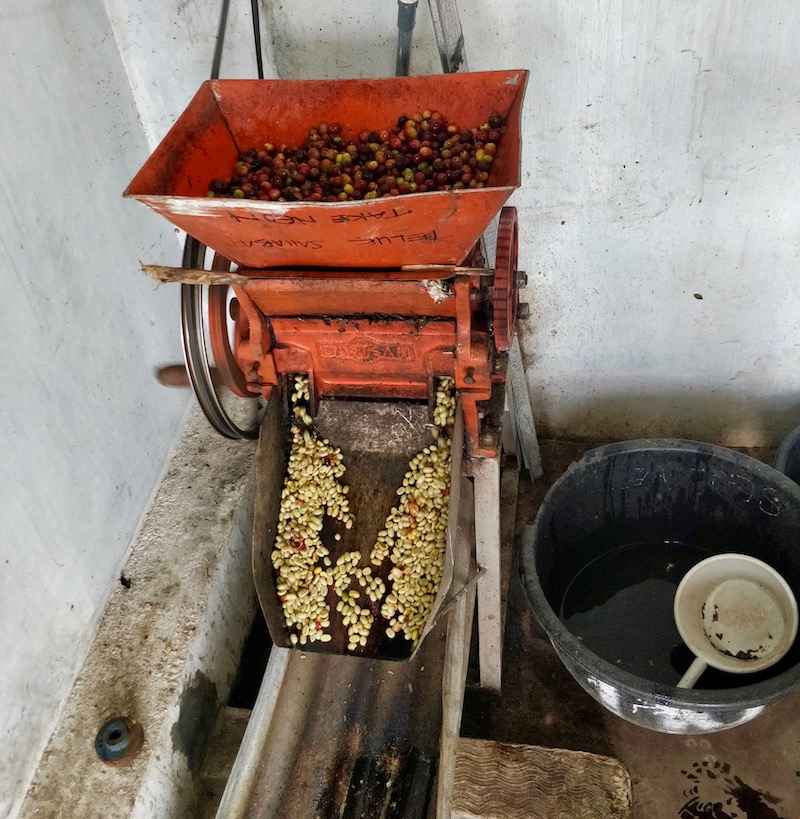
After removing the skin and pulp of the coffee fruit, the parchment beans with sticky mucilage are briefly rinsed and then placed in a tank for a short fermentation; the longer the fermentation time, the heavier the acidity. Some processing stations or estates even skip the fermentation step entirely and directly spread the parchment beans evenly for drying, which both suppresses acidity and increases the viscosity of the mouthfeel.
When the parchment beans reach a semi-dry, semi-wet state, a huller is used to expose the green coffee beans directly for drying. In many coffee processing methods, the parchment layer is removed shortly before the coffee beans are exported. To a certain extent, the parchment layer serves as a protective layer for the green coffee beans, protecting them from external damage.
However, Sumatra's local climate is too humid, and coffee drying takes longer; during this period, if the coffee remains at relatively high moisture, it will attract bacterial infection and cause the coffee beans to spoil. Removing the parchment layer allows sunlight to hit the surface of the green coffee beans directly, so the green coffee beans can dry quickly.
During the process of removing the parchment layer, greater friction occurs between the green coffee beans and between the green coffee beans and the machine, and the excessive heat generated may cause the coffee to age quickly, leading to the special woody and earthy flavors found in Sumatran coffee.
Among the many Mandheling coffees, readers often hear two terms: "Golden Mandheling" and "Lintong Mandheling." Front Street Coffee also has these two coffee beans on its bean shelf.
Many readers have probably heard that the traditional Mandheling producing region should be near Lake Toba in the Lintong region. However, the output of the Aceh region in North Sumatra far exceeds that of the Lintong region. Even so, this does not prevent the Mandheling coffee beans produced in the two regions from bringing the flavor of Sumatran coffee into full play.
Front Street Coffee's daily bean series covers several major coffee-producing countries: Ethiopia, Guatemala, Colombia, Costa Rica, Indonesia, China, and Honduras. The daily bean series mostly uses the washed process, and without the enhancement of fruit skin, pulp, and mucilage, it exposes the most basic flavor of the producing region. The Mandheling coffee beans in Front Street Coffee's daily bean series, as a representative work of Sumatra, Indonesia, use the wet-hulling process, allowing coffee novices to experience Sumatra's traditional flavor at an affordable price.
The other Mandheling coffee bean often mentioned is called "Golden Mandheling," and the word "Golden" reflects the high quality of this coffee bean. Front Street sourced the Golden Mandheling produced by PWN. When producing Golden Mandheling, PWN adopts extremely strict standards: the green coffee bean size is above 18 mesh, and there are fewer than 3 defects per 300 grams of green bean sample. On the basis of meeting the G1 grade, three rounds of manual hand sorting are added to ensure that defective beans are completely removed, thereby extending the cleanliness of the mouthfeel as much as possible and making the sweetness even stronger.
According to Front Street's understanding, there are some Mandheling coffee beans on the market with a lighter roast level, thus showing a juicy, sweet-and-sour sensation. But the traditional Mandheling coffee flavor has a full-bodied mouthfeel because of a darker roast level. In order to present the traditional Mandheling flavor, Front Street uses a medium-dark roast level when roasting Mandheling.
When Front Street Coffee's baristas brew medium-dark roasted coffee beans, in order to present a full-bodied mouthfeel and avoid over-extraction producing bitterness, the brewing parameters are as follows:
Dripper: KONO
Water temperature: 88°C
Dose: 15 grams
Coffee-to-water ratio: 1:15
Grind size: 70% passing rate on a Chinese standard No. 20 sieve
After coffee beans are roasted, there is abundant carbon dioxide gas inside the beans, making it difficult to stably extract better flavor during brewing. Front Street ships coffee beans freshly roasted within 5 days; by the time they arrive, they have passed a 4-to-7-day resting period, but Front Street recommends performing a blooming step during brewing to promote the release of carbon dioxide from the coffee grounds.
First pour 30 grams of hot water for blooming, then pour from the center point in a thin stream and slowly circle to 125 grams; when the water level in the dripper drops to the point where the coffee bed is about to be exposed, continue circling and pouring to 225 grams. The total extraction time is about 2 minutes.
For more coffee bean information, please follow Coffee Workshop (WeChat public account: cafe_style)
For professional coffee knowledge exchange, please add WeChat ID: kaixinguoguo0925
The above content is compiled by CoffeeHunters, a coffee news website.


