







How Are Blue Mountain Coffee Beans Graded and Brewed?
Blue Mountain coffee beans grow on Jamaica in the Caribbean, in the Blue Mountain range of the eastern part of the island. The name comes from the blue glow the mountains take on in sunlight. Volcanic ash soil, abundant sun and rain, and cloud cover over the high plantations create strong growing conditions. Roasting and pour-over extraction carry that classic flavor into the cup.
The Jamaica Coffee Industry Board sets grading standards, and authentic beans traditionally ship in wooden barrels. Price, aroma, and certificate verification are practical ways to check authenticity. Blue Mountain No. 1 is the recognized top grade, and the range's highest peak exceeds 2,000 meters. Local growers often intercrop coffee with bananas and avocados, which fits the crop's need for warmth, moisture, and shade.
Blue Mountain coffee was once expensive due to its scarcity, but today, thanks to brands like Front Street Coffee, it has become part of everyday life. This article starts from the origin environment and historical background of Blue Mountain coffee, outlines the grading standards of the Jamaica Coffee Industry Board and the tradition of wooden barrel packaging, and focuses on the roasting approach and pour-over extraction method for Front Street Blue Mountain No. 1. It also provides practical methods for identifying authenticity, such as price judgment, aroma recognition, and certificate verification, helping coffee enthusiasts make more accurate judgments when purchasing and brewing, and presenting the classic Blue Mountain flavor in full.
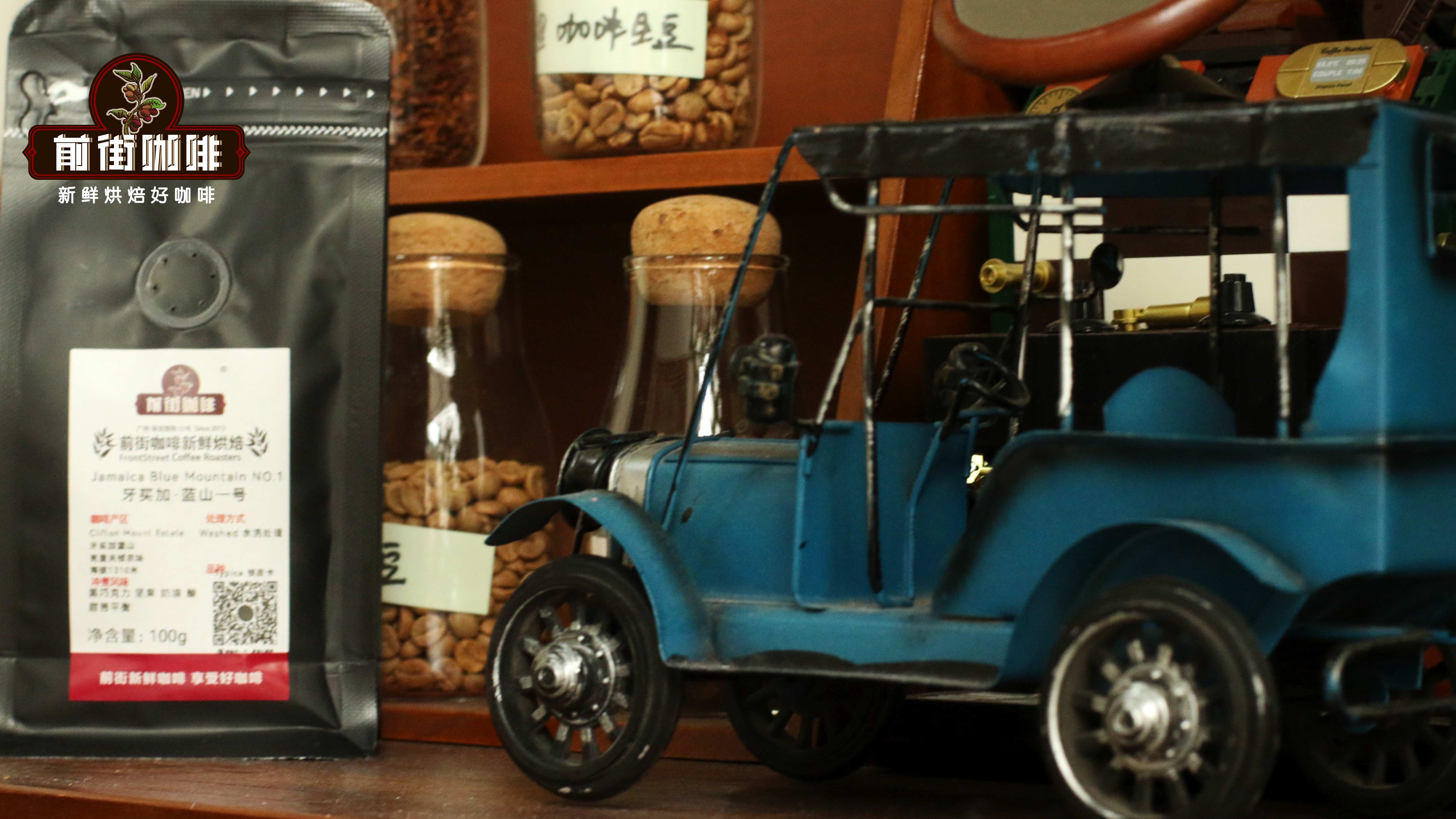
Before Geisha rose to fame, Blue Mountain coffee was considered the crown jewel among the world's top coffees. At that time, enjoying a genuine cup of Blue Mountain in a café would cost at least several hundred yuan, often beyond the reach of ordinary consumers. Today, tasting real Blue Mountain is no longer difficult. The Blue Mountain pour-over coffee produced by Front Street Coffee is priced at 60 yuan, allowing you to enjoy a cup of rich and smooth Blue Mountain; if you buy the coffee beans directly, the 158 yuan/100g specification is quite presentable whether for gifting or personal use.
The Growing Environment of Authentic Blue Mountain Coffee
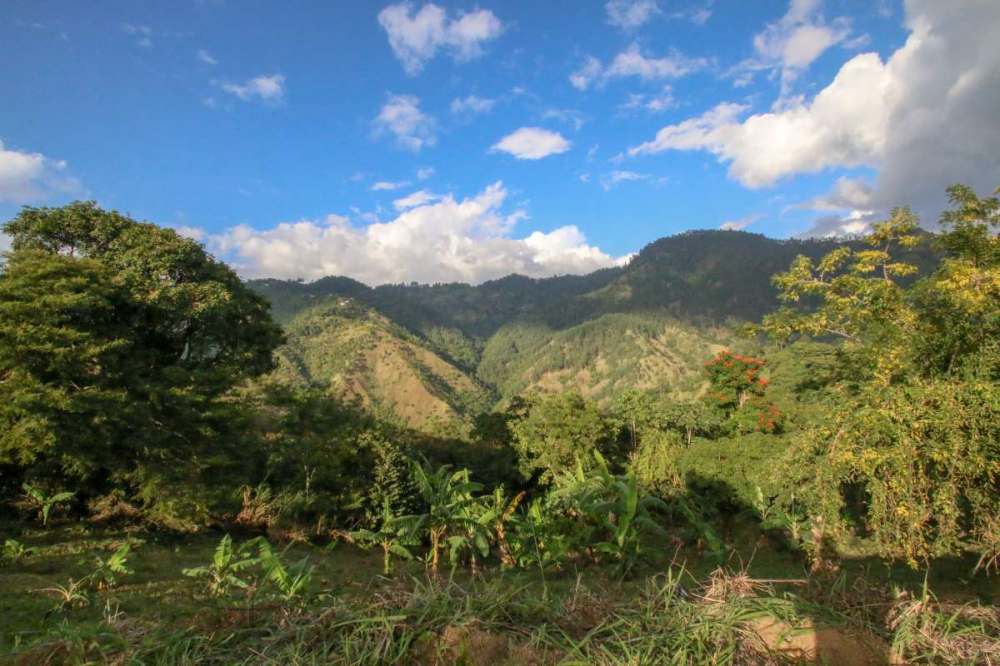
The origin of Blue Mountain coffee is on the island of Jamaica in the Caribbean. The Blue Mountain range in the eastern part of the country is surrounded by sea, and under the sunlight, the mountain takes on a blue glow, which is how the name "Blue Mountain" came about. This area is far from the hustle and bustle of the city, and its highest peak exceeds 2,000 meters, making it a well-known tourist destination locally. The volcanic ash soil is rich in nutrients, with abundant sunshine and rainfall, providing good growing conditions for crops, and local residents often intercrop coffee with bananas and avocados. Coffee is more delicate and demanding than other crops, requiring a warm, humid climate without frost and sufficient nutrient supply, as well as moderate shade. The high peak areas of Blue Mountain are shrouded in clouds and mist year-round, surrounding the plantations and creating extremely ideal conditions for coffee growth.
To ensure the stability of Jamaican coffee quality, the country established the Jamaica Coffee Industry Board (CIB) in 1952, granting it official authority to exercise strict control over coffee produced in the country. In 1953, the CIB designated an area of about 6,000 hectares within the Blue Mountain range, which accounts for only 15% of total Blue Mountain production, and explicitly stipulated that only coffee produced in this area could be called "Jamaica Blue Mountain Coffee," while products from other areas are called "Jamaica High Mountain Coffee" and "Jamaica Prime Coffee" respectively. Because Blue Mountain coffee is so famous, its price is much higher than the latter two.
The cultivation areas of Blue Mountain coffee are distributed across four production regions at elevations between 910 and 1,700 meters (above 1,700 meters is protected forest), namely St. Andrew, St. Mary, St. Thomas, and Portland. The CIB conducts cupping evaluations of coffee produced in the designated areas, which show rich, full-bodied aromas of chocolate and nuts, a round mouthfeel with almost no perceptible bitterness, and a perfect integration of various flavors in the coffee.
It is worth mentioning that in the 1960s, Jamaica was hit by hurricanes nationwide, severely damaging multiple industries, and the coffee industry was no exception. At that time, the Japanese company UCC extended a helping hand to Jamaica and introduced ecological planting techniques to the Blue Mountain production area. In 1972, Jamaica signed a 30-year contract coordination with Japan, promising Japan priority purchasing rights for Blue Mountain coffee in return for the assistance from Japanese companies. During this period, 90% of Blue Mountain coffee went to Japan, with only a small 10% quota allocated to Europe, America, Asia, and other countries and regions, which also explains why Blue Mountain coffee was so expensive in that era.
How Are Authentic Blue Mountain Coffee Grades Classified?
The CIB was the first institution to use scientific and objective methods to assess coffee quality grades, with grading criteria covering multiple dimensions such as green bean size, color, uniformity, defect rate, moisture content, and cupping performance.
Before export, Front Street Blue Mountain coffee beans are sent for inspection and evaluation, and are classified according to size specifications and defect rate after processing into Blue Mountain No. 1, Blue Mountain No. 2, Blue Mountain No. 3, and Blue Mountain Peaberry. Bean size is measured using screens with different hole diameters, and beans that cannot pass through the holes meet the corresponding specification standard. Top-grade Blue Mountain No. 1 green beans must reach 17 mesh or above, with a defect rate below 3%, moisture content of about 13%, and in cupping they display rich coffee aroma, a smooth and balanced mouthfeel, low acidity, and a long-lasting sweet aftertaste.
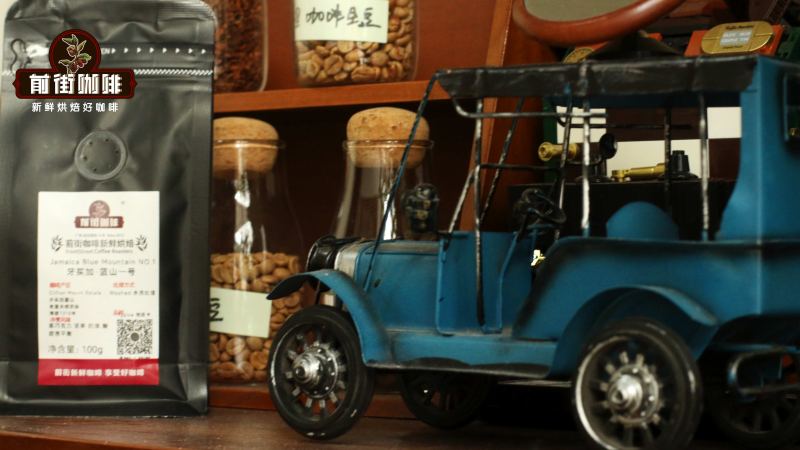
To keep Blue Mountain coffee beans in optimal condition before roasting and prevent moisture from intruding during transport, Jamaicans insist on using handmade wooden barrels to hold Blue Mountain green beans, and the barrel has thus become one of the important symbols of Jamaican Blue Mountain coffee. According to Front Street Coffee, this type of barrel is an imitation of the Bonifieur barrels produced on Guadeloupe in the last century, originally used to hold flour shipped from the UK to Jamaica, and usually printed with trademarks and manufacturer names. The Coffee Industry Board issues certificates for all genuine Jamaican coffee and stamps approval seals at exporters.
Front Street Coffee's roasting approach is to strive to showcase coffee's most classic flavor profile, such as the bright lemony acidity of Yirgacheffe and the rich, caramelized mouthfeel of Indonesian Mandheling; Blue Mountain naturally also aims to highlight the classic Blue Mountain flavor. Front Street Coffee uses a medium-dark roast to fully bring out the coffee's chocolate and nut aromas while retaining soft acidity and sweetness, making the overall mouthfeel more balanced.
How Do You Identify Real vs. Fake Blue Mountain?
Because the production of high-quality Blue Mountain coffee is extremely limited and demand exceeds supply, some merchants exploit loopholes by labeling low-quality blended beans as "Blue Mountain," misleading consumers. To identify authentic Jamaican Blue Mountain coffee, Front Street Coffee has summarized the following points for everyone's reference.
As mentioned above by Front Street Coffee, authentic Blue Mountain coffee comes from specific elevation zones and involves high labor costs at every step, so its price cannot be too low. If the "Blue Mountain beans" you buy cost only a few dozen yuan, they are most likely fake.
In terms of aroma, Front Street Blue Mountain coffee has a rich, dense, and long-lasting aroma of chocolate and roasted hazelnut, which ordinary dark-roasted blends find hard to match. In terms of taste, Front Street Blue Mountain coffee is balanced in acidity, sweetness, bitterness, and aroma, with no single flavor standing out too much, and its body and sweetness are just right.
If the above two points still do not allow you to judge, you can ask the merchant to show Blue Mountain-related certificates and the wooden barrels used to hold Blue Mountain green beans. Jamaica Blue Mountain is the only production region that uses wooden barrels for green beans. Front Street Blue Mountain No. 1 coffee also holds a quality certificate issued by the Jamaica Coffee Board, an authorized sales certificate issued by the Blue Mountain coffee producer, and a certificate of origin for Jamaican Blue Mountain coffee. The relevant documents and handmade wooden barrels are all displayed in Front Street Coffee stores. Front Street Blue Mountain coffee is produced by Clifton Estate and uses the traditional washed processing method, which is also the most common green bean processing method for Blue Mountain.
How Do You Brew Authentic Blue Mountain No. 1 Coffee So It Tastes Good?
Some friends, after purchasing high-grade Front Street Blue Mountain No. 1 coffee beans, are unsure how to extract the classic Blue Mountain flavor. Below, Front Street Coffee demonstrates a Blue Mountain pour-over process based on store serving standards.
When brewing the exquisite Front Street Blue Mountain No. 1 coffee, Front Street Coffee believes freshness is crucial. Roasted coffee beans have an optimal flavor period, and once the aroma peak is missed, it is very difficult to extract the flavor again. The beans shipped by Front Street Coffee are all freshly roasted within 5 days, precisely so everyone can enjoy the fullest flavor period.
Front Street Coffee usually uses the KONO dripper to extract medium-dark roasted coffee beans. The upper part of the KONO dripper is a smooth curved surface that allows the filter paper to fit more closely. Compared with the v60 dripper, its extraction method is mainly immersion-based, which can increase the overall concentration of the coffee and enhance body. In addition to KONO, slower-flow devices such as the Kalita trapezoidal dripper, cake flat-bottom dripper, and flannel are also suitable.
In addition, medium-dark roasted coffee has undergone a certain degree of roasting, so the internal structure of the beans is fluffier than light-roasted coffee and absorbs water better. To avoid over-extraction, Front Street Coffee chooses a grind size with 75% passing through a No. 20 standard sieve, paired with a water temperature of 88°C, and uses Front Street Coffee's usual three-stage pouring.
Pour-over parameters: water temperature 88°C, grind size comparable to coarse sugar (75% passing through a No. 20 standard sieve), 15 grams of coffee beans, coffee-to-water ratio 1:15, three-stage extraction.
In the first stage, gently pour 30 grams of water for blooming, with a blooming time of 30 seconds; in the second stage, pour water until about 125 grams, circling outward evenly and steadily. When the coffee liquid drops to halfway, pour the final stage of water until 225 grams, and wait for all the coffee to finish dripping. The total extraction time is usually about 2 minutes.
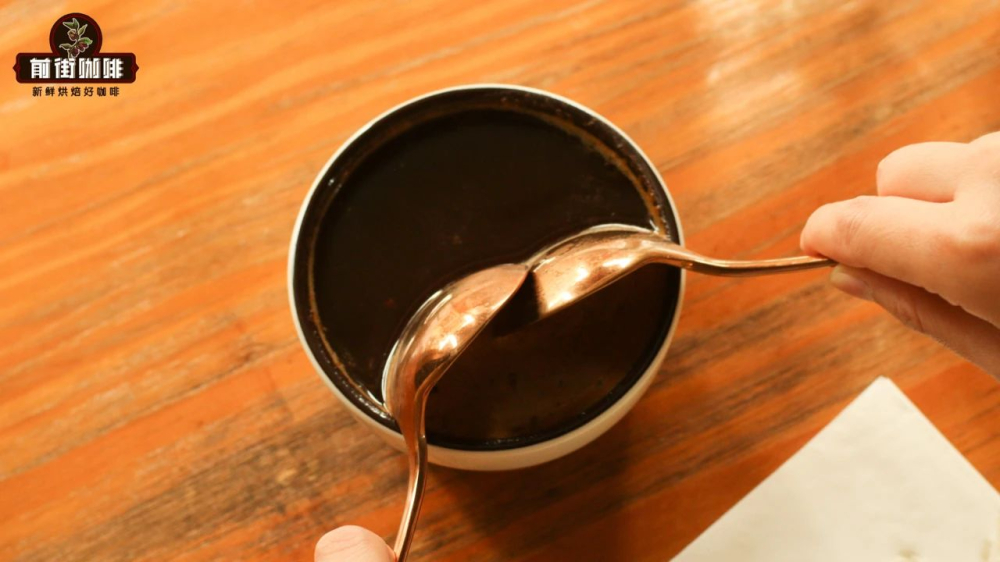
Flavor of Front Street Blue Mountain No. 1 coffee: At high temperature, Blue Mountain No. 1 enters the mouth with a deep chocolate aroma, very full-bodied, with an obvious sweet almond aftertaste. As the temperature drops, roasted hazelnut and creamy, sweet silkiness emerge, mixed with a hint of soft acidity and caramel sweetness, and the aroma lingers in the mouth.
The above content is compiled by CoffeeHunters, a coffee news website.


