







How Is Blue Mountain Coffee Flavor Brought Out?
Blue Mountain coffee is known for a solid, full aroma and a round, balanced taste with mild acidity and little bitterness. The flavor starts in the Blue Mountains of Jamaica, where volcanic soil, cool high-altitude air, and wide day-night temperature swings let cherries ripen slowly and build aromatic compounds. Pour-over and drip bags both suit it.
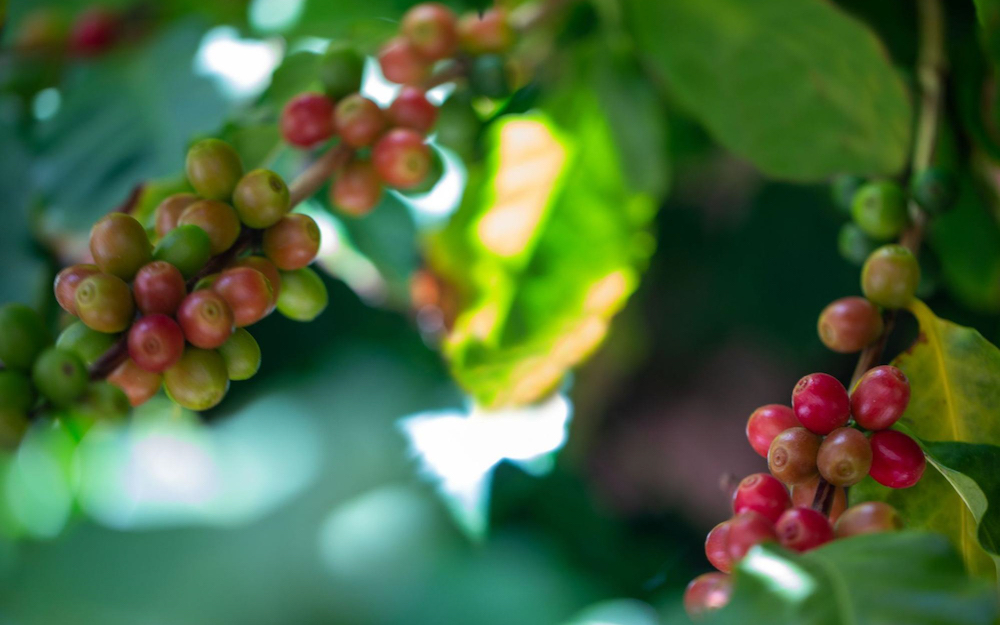
Growing areas sit mainly in the eastern Blue Mountains, and the government reserves land above 1,700 meters, so cultivation is limited. Steep slopes make field work and picking labor-intensive, and hand-picking by experienced workers protects cherry quality. That scarcity and care help explain why it ranks among the famous coffees and why grade matters when buying.
Why has Blue Mountain coffee become one of the most renowned coffees in the world? Where exactly do its full aroma and round, balanced taste come from? In this article, Front Street will take you deep into the origin terroir, grade standards, and washed processing method of Jamaican Blue Mountain coffee, and break down in detail the pour-over parameters and flavor performance of Front Street Blue Mountain No. 1 coffee beans. At the same time, for the brewing method of drip-bag Blue Mountain black coffee, Front Street has also prepared a complete step-by-step demonstration, so that whether you are at home or in the office, you can easily recreate a cup of rich and balanced Blue Mountain flavor.
Jamaican Blue Mountain coffee, with its solid and full aroma and round, harmonious taste, has long ranked among the world's most famous coffees. Today, Front Street will discuss with everyone how a high-quality cup of Jamaican Blue Mountain coffee should be extracted, and what kind of taste it presents after being made into drip-bag Blue Mountain black coffee.
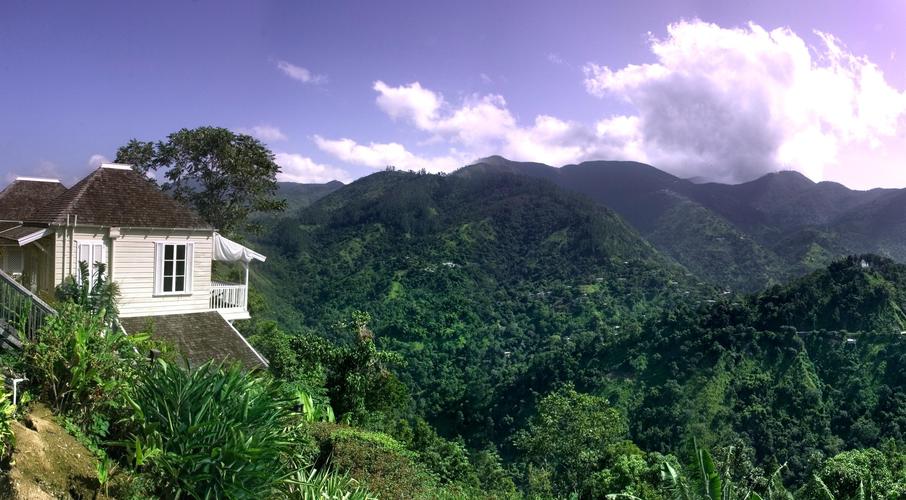
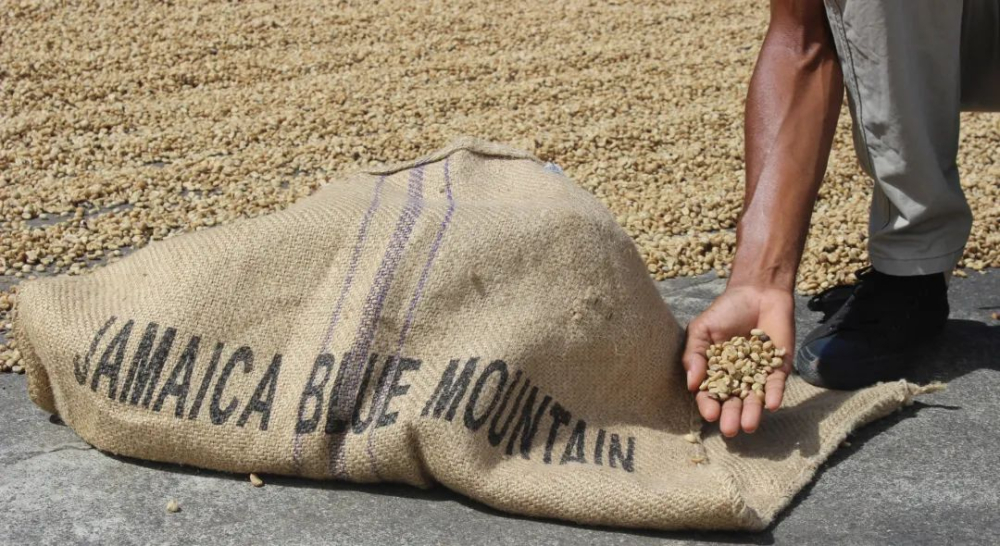
The hometown of authentic Blue Mountain coffee is located in the Blue Mountains of Jamaica
Jamaica's coffee-growing areas are mainly concentrated in the Blue Mountains in the eastern part of the country. This land is embraced by the Caribbean Sea, and when sunlight falls on the mountain body it gives off a captivating blue luster, which is how the Blue Mountains got their name. The Blue Mountains are not only beautiful in scenery and clean in air, but also home to the highest peak in the Caribbean, with an altitude of 2,256 meters, attracting a large number of tourists every year for sightseeing and vacationing.
The Blue Mountains lie in the coffee-growing belt, with fertile volcanic soil, a cool climate, and abundant sunshine and rainfall. The temperature difference formed at high altitude gives coffee cherries enough time to accumulate nutrients and produce richer aromatic components. Local coffee farmers plant coffee trees on steep slopes, which undoubtedly increases the difficulty of field management and harvesting. Without local female workers familiar with the terrain, it would be very difficult to handle the picking work.
The highest grade Jamaican Blue Mountain No. 1 coffee
The Jamaican government has designated the area above 1,700 meters in the Blue Mountains as a nature reserve, so crops can only be planted below 1,700 meters. According to the standards set by the Jamaica Coffee Industry Board, CIB, only Arabica coffee produced above 910 meters is eligible to be called Jamaican Blue Mountain coffee, while coffee produced in other lower-altitude areas is classified as Jamaican High Mountain coffee and Jamaican Prime coffee. The higher the altitude, the greater the difficulty of planting and harvesting, and the rarer the coffee beans produced, so the price naturally rises accordingly.
After the Jamaican Blue Mountain coffee cherries are harvested, they are usually processed by the traditional washed method. First, the coffee cherries are crushed by machine to remove the skin and pulp, then placed in tanks to ferment overnight. After fermentation is complete, the beans are moved into clean water tanks, and by brushing back and forth, using the friction between the beans and the force of the water flow, the coffee beans are washed until smooth and clean. Finally, the parchment beans are spread out to dry for 2 to 3 weeks until the moisture content drops to 12-14%. Because the pulp and mucilage have already been removed before drying, with less interference from excessive fermentation acidity, the aroma of the Blue Mountain beans themselves can be displayed in a more balanced and cleaner way.
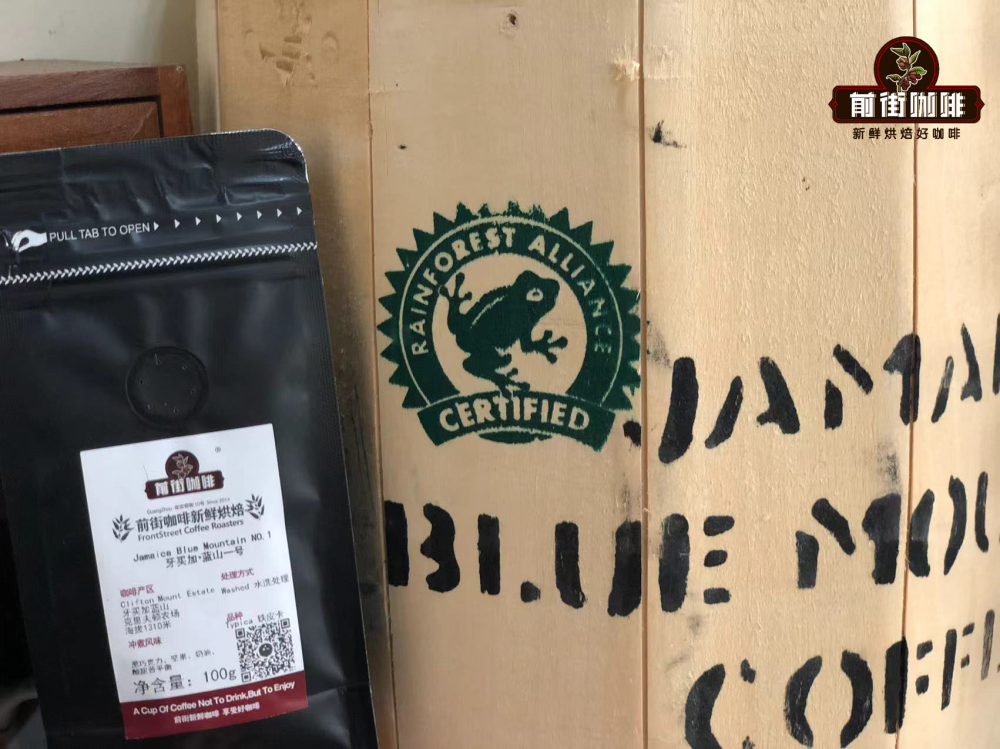
The processed Jamaican Blue Mountain green beans still need to pass multiple layers of quality checks, including defect rate, screen size, and cupping score. The highest-grade Blue Mountain No. 1 coffee beans must reach a screen size of 17 to 18, have a defect bean ratio of no more than 2%, and possess just the right acidity, sweetness, bitterness, body, and aroma. It is not hard to imagine that top coffee beans with such exquisite flavor have extremely limited production. If you want to appreciate the refined flavor of Blue Mountain, Front Street believes you should choose the highest-quality Jamaican Blue Mountain No. 1 coffee. Front Street's Blue Mountain No. 1 coffee beans come from Clifton Estate.
Pour-over Jamaican Blue Mountain No. 1 coffee
Front Street chooses the Kono dripper for brewing, aiming to highlight the mellow and round taste of Blue Mountain No. 1. The ribs of the Kono dripper are less than half the height of the dripper body. This design is precisely intended to allow the filter paper to cling closely to the dripper wall after being wet, thereby limiting airflow, extending the water absorption time of the coffee grounds, and making the extracted coffee more uniform overall and fuller in taste.
In addition, Blue Mountain No. 1 coffee is a medium roast, and the internal structure of the beans is looser than that of light-roasted coffee, so the water absorption effect is better. To avoid over-extraction, Front Street chooses a grind size with a 75% passing rate on a No. 20 standard sieve, controls the water temperature at 88°C, and uses Front Street's commonly used three-stage pouring method.
Coffee grounds: 15 grams. Coffee-to-water ratio: 1:15.
Front Street uses staged extraction, namely the three-stage pouring method: first use 30g of water for blooming, with a blooming time of 30 seconds; in the first stage, pour in a small stream in circles until 125g and stop; when the liquid level drops to the point where the coffee bed is about to be exposed, continue with the second stage of pouring until 225g to finish extraction. The total extraction time, including blooming, is 2 minutes 00 seconds.
Flavor of pour-over Blue Mountain No. 1 coffee: rich aromas of dark chocolate, nuts, and caramel, a creamy and smooth mouthfeel, moderate body, a clean and sweet finish, and an overall very balanced flavor.
Brewing suggestions
If you want to brew the rich aroma of Blue Mountain No. 1 coffee, Front Street believes the first condition is to choose a bag of coffee beans at its optimal flavor period. Once coffee beans miss their optimal flavor period, it is very difficult to reproduce their flavor in the cup. Front Street upholds the concept of "freshly roasted good coffee" and only ships coffee beans freshly roasted within 5 days, striving to ensure that when every customer receives the coffee, it is exactly at its peak flavor stage.
Regarding pour-over coffee, Front Street often receives feedback from some friends saying that the Blue Mountain No. 1 coffee they brew tastes rather bitter. This situation mainly occurs because the extraction yield is too high, and too many bitter macromolecules in the coffee are released. To improve this, Front Street has summarized the following points for everyone to refer to and adjust according to their own brewing conditions.
1. If the grind is too fine, the substance dissolution efficiency is higher, and the extraction time is also prolonged, making the coffee taste bitter and messy. At this time, the grind size needs to be coarser. If you cannot judge whether the grind size is suitable, it is recommended to prepare a Chinese No. 20 standard sieve like Front Street. It is not expensive, but it helps with adjusting grinding parameters.
2. If the water temperature is too high, it will lead to an obvious burnt bitterness. Front Street recommends controlling the water temperature between 86-93°C. For medium-dark roasts like Blue Mountain No. 1 coffee beans, it is recommended to use 87-89°C.
3. If the poured water stream is too strong or the stirring force is too intense, it is easy to release too many substances from the coffee and dissolve more bitter components. Front Street believes that by using suitable brewing parameters and pouring steadily, the aromatic substances in the coffee can also be extracted.
How to brew Blue Mountain drip-bag black coffee?
In fact, if you want to taste the exquisite flavor of Blue Mountain No. 1, in addition to the pour-over method mentioned above by Front Street, Blue Mountain drip bags are also a very good choice. They are not only convenient and quick, but also save time and effort. You only need to prepare a kettle of hot water and a clean cup, and you can brew a rich and delicious cup of Blue Mountain black coffee anytime and anywhere. Below, Front Street will demonstrate the specific steps for everyone.
1. Place the cup well, tear open the drip-bag package, take out the drip bag, tear off the sealing strip, and hang it on the rim of the cup!
2. After the hot water reaches the predetermined temperature range, pour toward the center of the drip bag until the water level reaches half of the drip bag, then wait 10-15 seconds for blooming. (There is not much gas in the coffee grounds inside the drip bag, so the blooming time does not need to be too long.)
3. Pour water for the second time, this time until the drip bag is nine-tenths full. After the water has dripped through, pour for the third time, also until nine-tenths full, and wait for it to finish dripping. Finally, pour hot water for the fourth time, again until nine-tenths full.
4. After dripping is complete, remove the drip bag and enjoy the coffee~ The Front Street Blue Mountain coffee brewed from the drip bag has a relatively soft mouthfeel, with aromas of nuts, cream, walnuts, and caramel, accompanied by a slight almond finish.
The above content is compiled by CoffeeHunters, a coffee news website.


