







Why Does Coffee Grind Level Matter for Espresso Channeling?
Channeling happens when espresso grounds sit unevenly in the portafilter basket. Hot water then follows the path of least resistance, so some grounds are over-extracted and others under-extracted, and the cup tastes sharply sour and burnt at once. Distribution and tamping share one goal: evening out the coffee bed so water passes through it evenly.
Grind, dose weight, pouring, distribution, tamping and extraction each shift the final flavor, which is why no step can be skipped. After a measured dose lands in the basket, redistribute it so the bed is level throughout, then tamp with a vertical arm and even pressure. Even beds leave fewer gaps for water to shortcut through.
To make a good espresso, distributing and tamping the grounds are essential steps you can't avoid. Front Street Coffee has found in daily practice that the core purpose of both steps is to prevent channeling—when the coffee grounds in the portafilter basket are unevenly distributed, hot water will flow along the path of least resistance, causing some grounds to be severely over-extracted and others under-extracted, resulting in a final taste that is both sharply sour and bitterly burnt. This article, based on Front Street's hands-on experience, first explains why channeling occurs, then goes through the correct distribution technique, ideas for improving the way you catch grounds, and the key points of tamping such as keeping your arm vertical and applying even pressure, to help you make a delicious espresso more consistently.
For more specialty coffee knowledge, please follow: Front Street Coffee (Frontsteet Coffee)
Front Street has always believed that producing a qualified espresso involves quite a lot of details behind the scenes—grinding, weighing the dose, pouring the grounds, distributing, tamping, extraction—each step has more or less impact on the final flavor, so no step can be sloppy. Today Front Street will focus on the topic of "distribution" and talk about the tricks of the trade in the production process.
Distribution
Ultimately, distribution and tamping actually share one core goal: avoiding channeling. Water is inherently "lazy"—it drills wherever resistance is lowest. Once the coffee grounds are unevenly distributed in the basket, a large number of tiny "channels" form between the particles, and during extraction hot water preferentially flows along these paths, causing some of the coffee grounds in the puck to be over-extracted while others are severely under-extracted. Reflected in the cup, this means sharp acidity and harsh bitterness appear at the same time, which is really hard to accept.
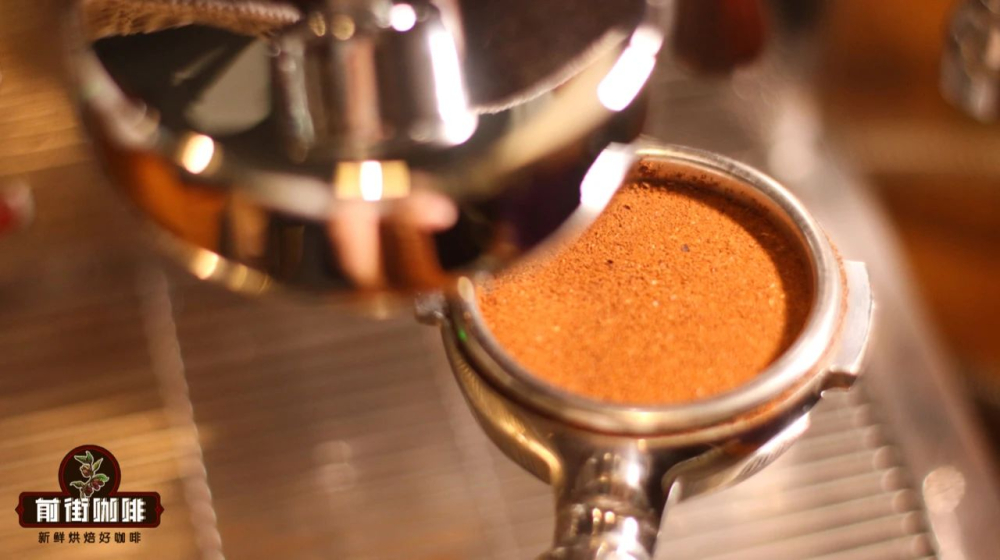
So the first thing to do is "distribution." After a measured dose of coffee grounds falls into the basket, we need to redistribute it so that the bed of grounds is as even as possible throughout the basket. Only then, after tamping, will it be unlikely to leave gaps that let hot water "take a shortcut."
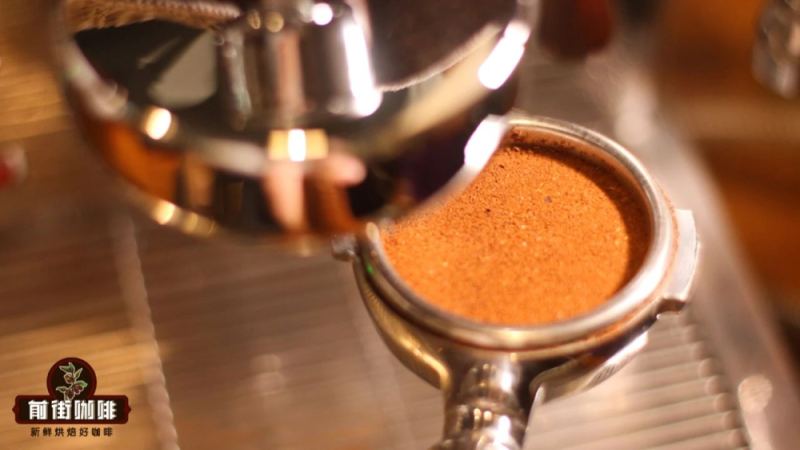
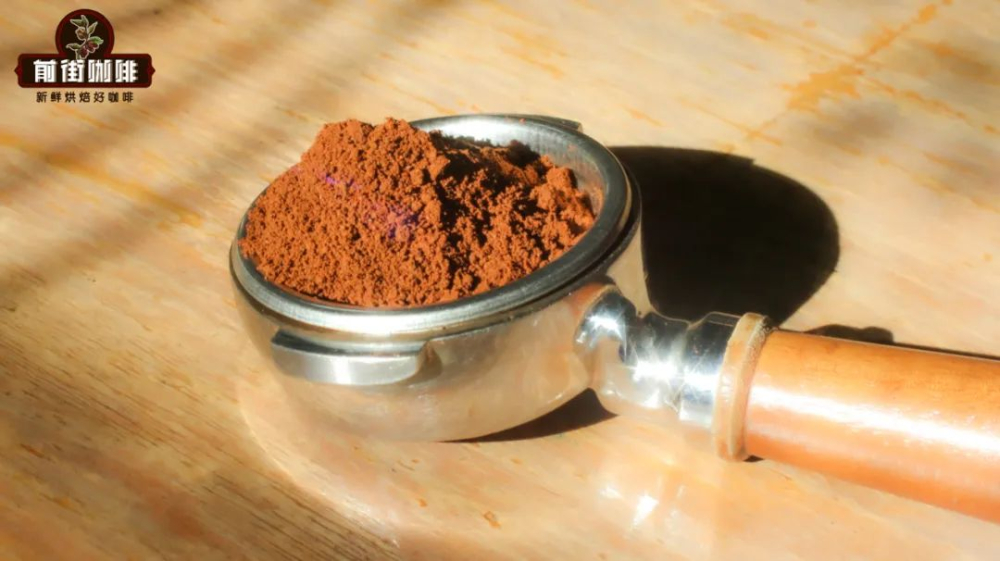
In reality, however, most people are used to catching the grounds from the grinder directly with the portafilter, and as a result the grounds often pile up into a "little hill" in the middle, or are clearly uneven left to right. When either of these happens, Front Street does not recommend going straight to the distribution tool.
Because when the distribution tool is placed down, it itself exerts downward pressure. This force acts first on the pile of grounds in the middle, compacting it, and only after that does the distribution tool begin to spread out the uncompressed grounds on the surface.
As a result, the surface of the puck looks flat, but in fact the grounds are all concentrated in the center, with a severe shortage around the edges. A puck in this state has a very high probability of channeling during extraction—not only are there many gaps, but it also directly affects the extraction result of the espresso.
To emphasize again, water is inert; it will head in the direction that is easy to flow through. Even if we distribute the grounds evenly and tamp them firmly, water still has a preferred channel, and that is the edge of the puck—the ring where the coffee grounds contact the portafilter basket.
On the surface the puck looks pressed so tightly that nothing can get through, but in reality the inner wall of the basket is smooth and flat, and the puck cannot perfectly conform to it. Under pressure as high as 9 bar, water will first travel down along these gaps, then seep into the center to extract the coffee grounds there. This also explains why, when espresso flows out, the stream always converges from the periphery toward the center.
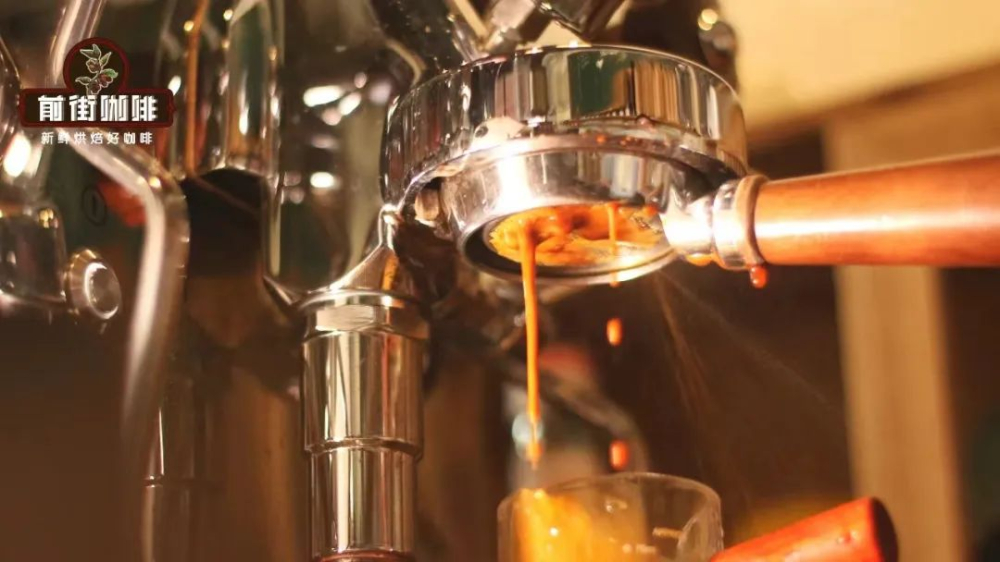
You might try a method: stop the extraction immediately as the espresso just begins to flow, knock out the puck and cut it open to observe its wet and dry condition. You will find that the top, the edges all around, and the bottom are all wet, while only the grounds in the center are still dry. This is the order of espresso extraction—periphery first, interior later. It is precisely because of this that espresso shows such a distinct sense of layers: the coffee grounds themselves are not all uniformly extracted, and the stacking of sour, sweet, and bitter substances in different proportions is what builds up the multi-dimensional flavor layers.
So if the grounds pile up into a little hill in the basket when you catch them, it's best not to go straight at it with the distribution tool. You can first use your finger to scrape the grounds level left and right, then tidy up with the distribution tool. Of course, if time allows, it's best to use a distribution needle, which can make the coffee grounds more evenly distributed and also break up clumps.
In addition, you can start from the step of catching the grounds to reduce the trouble during distribution. For example, instead of catching the grounds directly with the portafilter, switch to using a dosing cup. A dosing cup makes the grounds fall from the side first, then to the middle, greatly simplifying the subsequent distribution. However, for shops with high output, this method is not very friendly—everyone can choose according to their own actual situation.
Tamping
The role of tamping is to strengthen the bonds between the grounds so that the high-impact hot water does not easily scatter the coffee grounds and disrupt the extraction. Compared with distribution, the tamping step is actually much simpler.
We just need to ensure that the downward pressure is even and appropriate. Many friends can't tamp the puck well, and the main reason is incorrect posture (as shown in the picture below), such as the arm not being vertical, or the point of force not being even. This is actually easy to improve—as long as you use your financial superpower to buy—as long as we practice diligently, we can master the true essence of tamping!
The most common tamping technique is: the thumb and index finger each take one side of the tamper, the other three fingers together with the palm wrap around the handle, keep the arm vertical, and then press down.
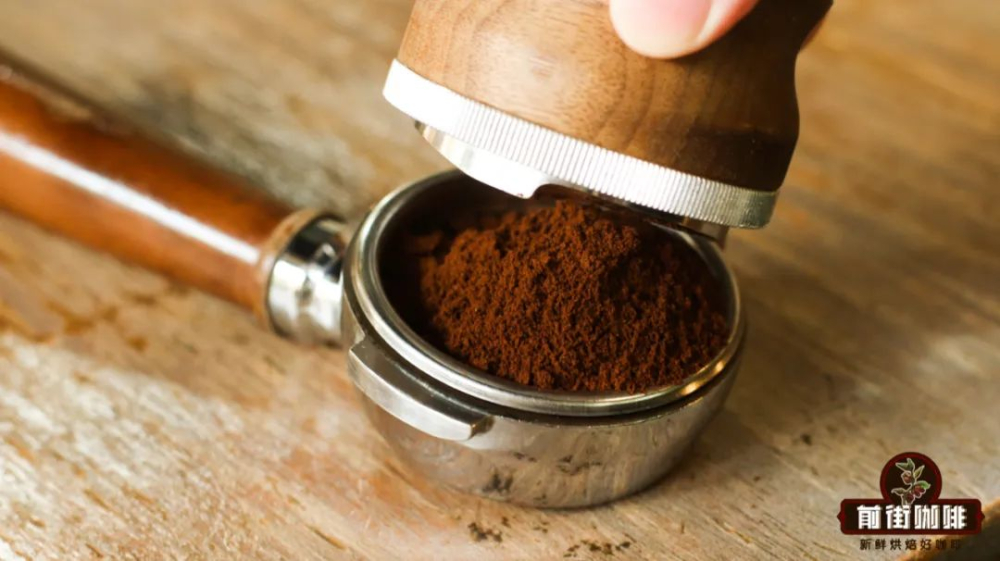
But as Front Street said, this skill requires repeated practice to grasp its true essence. So if you don't want to use your financial superpower, continuous refinement is the best choice. When we can do both distribution and tamping well, making a delicious espresso will be much easier.
The above content is compiled by CoffeeHunters, a coffee news website.


