








What Makes Kenyan Coffee Grading and K72 Processing Distinct?
Kenyan coffee stands out for berry notes, firm fruit acidity, and a juicy body, shaped by phosphate-rich soil and the K72 washed process. K72 is a 72-hour fermentation split into three 24-hour rounds, with fresh water soaking between rounds. Beans then dry on raised steel beds rather than on the ground, which limits harsh off-flavors.
Under the Kenyan coffee classification and grading system, AA denotes the largest screen size, and exporters cup lots to sort quality before sale. The extended fermentation, roughly double the time used in neighboring countries, is tied to the pronounced acidity. Medium-light roasting and a steady pour-over keep the blackberry and citrus character readable in the cup.
Kenyan coffee occupies a unique position in the global specialty coffee scene with its distinct berry flavors, solid fruit acidity, and sweet juicy mouthfeel. The formation of this flavor profile is related both to the phosphate-rich local soil and, more importantly, to the famous K72 washed processing method—a three-stage fermentation lasting a full 72 hours divided into three rounds. This article will provide a detailed analysis of the K72 fermentation process and the Kenyan steel bed drying method, outline the grading system for Kenyan coffee beans and the exporter cupping classification, and share Front Street Coffee's roasting approach and pour-over parameters for AA-grade Kenyan Asaliya, helping readers fully understand the flavor logic of Kenyan coffee from processing to cup.
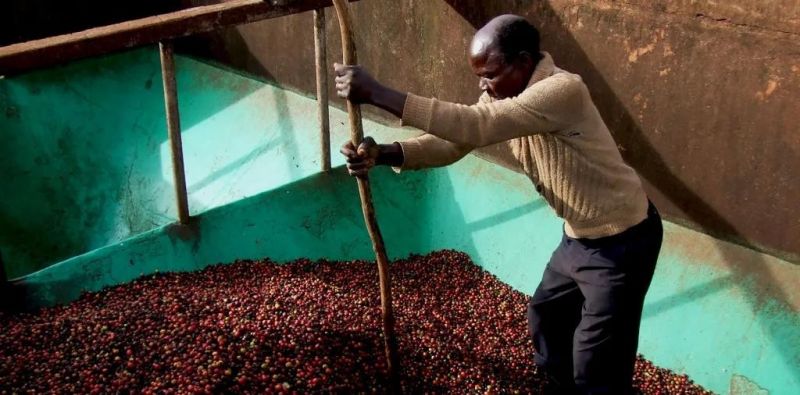
The most unforgettable aspect of Kenyan coffee is its clear and richly layered berry and fruit notes, with powerful fruit acidity paired with a juice-like sweetness that lingers in memory long after drinking. The prominence of its blackberry-like tart aroma stems partly from the natural phosphate content in Kenyan soil and partly from the region's most iconic K72 washed processing method.
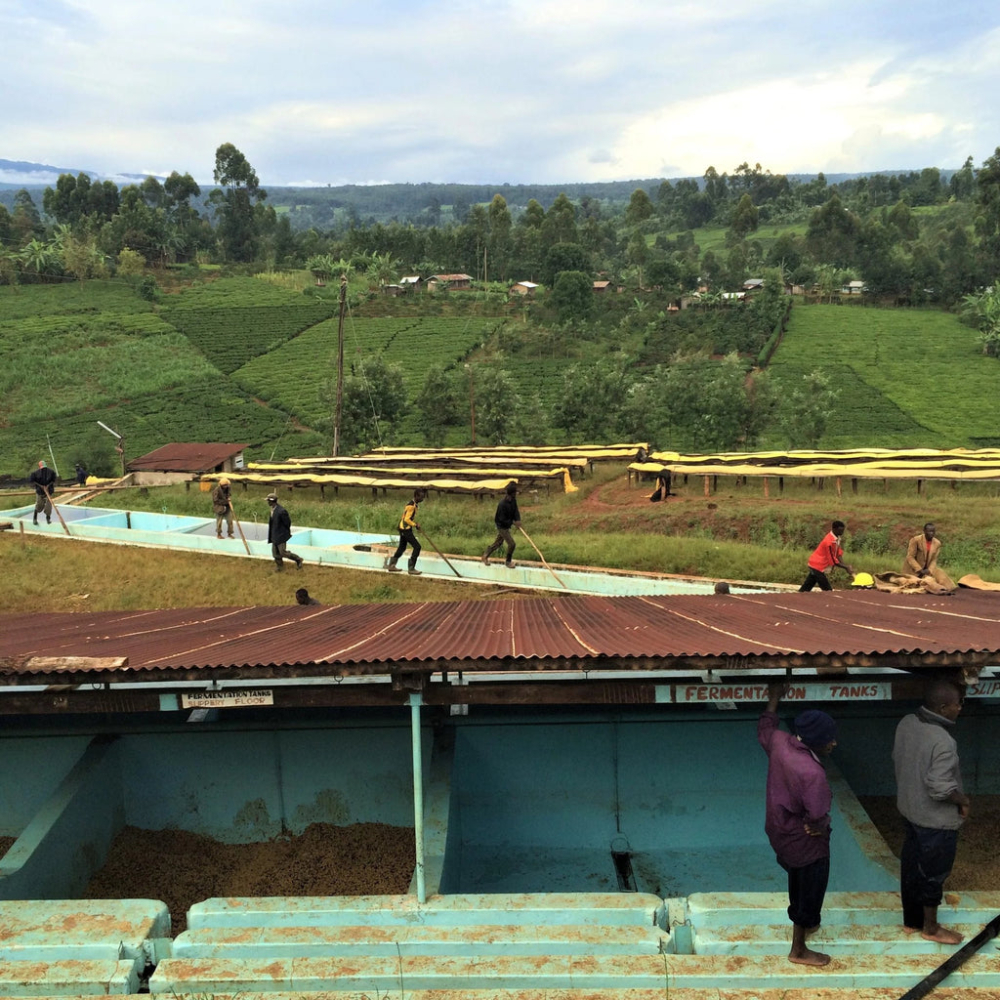
Washed coffee beans typically have brighter acidity because the wet fermentation during processing is a semi-aerobic fermentation, which breaks down sugars in the beans and generates more organic acids, resulting in higher acidity in the cup. Generally, fermentation time does not exceed 36 hours. Kenya, however, is completely different from its neighboring producing countries—its washed fermentation lasts a full 72 hours.
These 72 hours are not a single continuous soak, but are divided into three rounds of 24 hours each. After each round of fermentation, the beans are re-soaked in clean fresh water, and this cycle repeats until the full 72 hours are complete, after which the coffee beans move to the next stage. This is why this unique washing process is named Kenyan-style 72-hour fermentation washing, or K72 for short. The fermentation time being double or even longer than other producing regions is precisely why Kenyan beans have such abundant acidity.
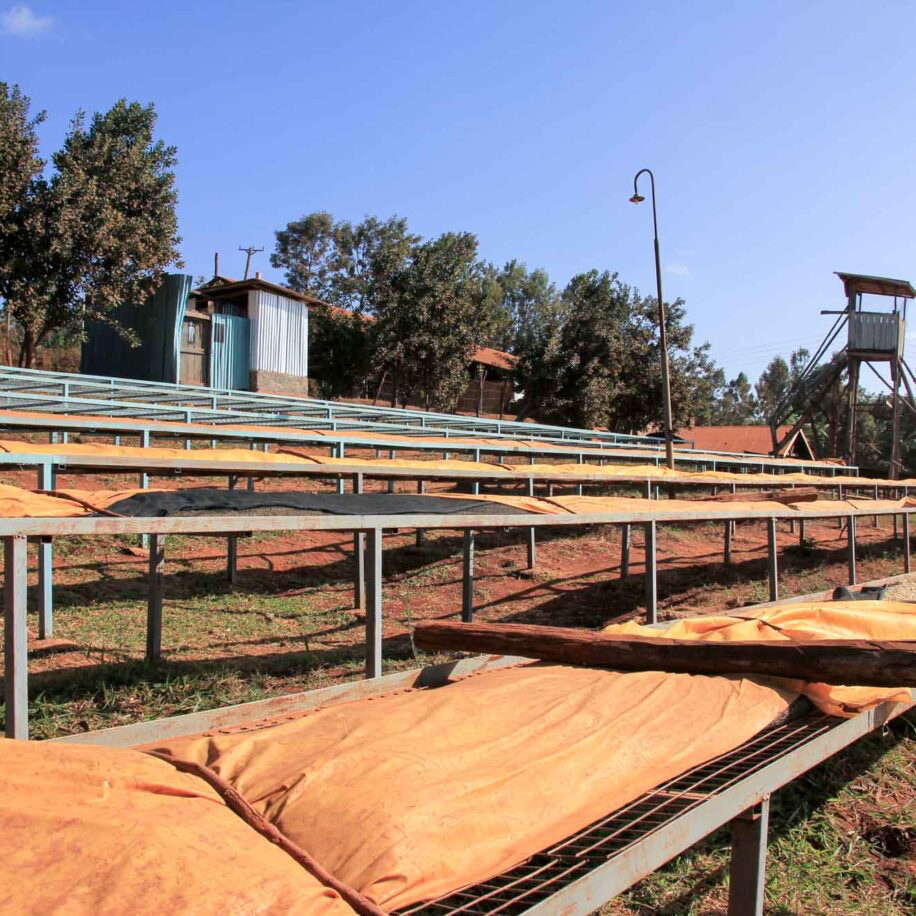
It is also worth noting that the drying step in the processing is equally meticulous. Kenyan coffee farmers do not simply spread the coffee beans on any flat ground to dry, because doing so easily imparts harsh off-flavors to the beans.
Instead, they spread the beans on specially customized steel plates for drying. The steel plates are elevated and suspended at a distance from the ground, so the coffee beans do not easily absorb dust and airborne particles from the ground. The steel plate surface has evenly spaced holes of uniform size, which allow the beans to dry more evenly while maintaining ventilation. By reducing the interference of unstable factors, Kenyan coffee is able to present a cleaner cup profile, and this specially designed steel plate is known in the industry as the "Kenyan steel bed."
Front Street's own-roasted Kenyan Cherry Tomato coffee beans are processed using the K72-hour washed method, selected from premium local SL28 and SL34 varieties, graded at the highest local level, AA. To fully showcase its rich floral and fruity flavors, Front Street uses a medium-light roast, making it convenient to brew by pour-over, cold brew, ice drip, French press, siphon, clever dripper, and many other methods. Friends who want to know what Kenyan coffee actually tastes like should give it a try—just place an order on Front Street's Tmall flagship store or Front Street's Taobao store.
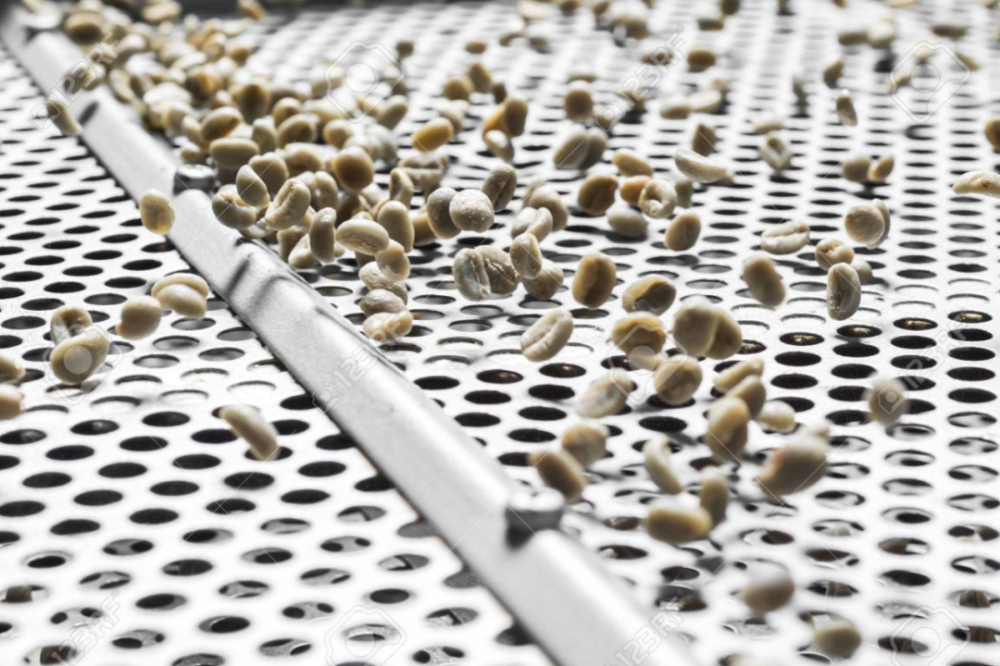
Coffee Bean Grading System (Graded by Size)
AA Plus (AA+): AA grade with exceptionally excellent cup quality (flavor, mouthfeel).
AA Screen Size: 17-18 mesh.
AB Screen Size: 15-16 mesh, accounting for the majority of production.
C Screen Size: smaller than AB.
TT: From AA and AB grade beans—lighter-weight beans blown out by an air separator.
T: From C grade beans—lighter-weight beans blown out by an air separator.
E Elephant Bean: Large mutant beans formed by two beans fused together, also known as elephant ear.
PB Peaberry: Classified by appearance, unrelated to flavor or weight.
For AA and AB grade green beans, exporters additionally reference cupping results for grading (not officially recognized by the Kenyan government, but established by exporters themselves), from highest to lowest: TOP, PLUS (+), FAQ. The Kenyan Asaliya on Front Street Coffee's bean list reaches the TOP flavor grade. However, as mentioned earlier, this is not an officially recognized grading system, and among the Kenyan coffee beans Front Street Coffee sources from multiple producing regions, not every one carries a flavor grade label, so there is no need to overthink this point. Generally, as long as beans reach AA or AB grade, their flavor is already considered to be of premium quality by default.
The Kenyan Asaliya listed by Front Street Coffee comes from AA-grade beans from the Thika producing region. Next, Front Street will discuss how we roast this bean, how we brew it, and what the flavor profile is actually like.
Front Street Coffee Roasting Analysis
When roasting this Kenyan coffee bean, Front Street Coffee chose a medium-light roast, considering the need to highlight its rich fruit acidity and full berry juice mouthfeel.
Front Street Brewing Recommendations
Front Street Coffee, considering that this bean is medium-light roasted, uses a higher water temperature and a faster-flow dripper. The main goal is to extract its bright acidity with high temperature while avoiding over-extraction caused by high heat, so a faster-flow V60 dripper was chosen.
Coffee-to-water ratio: 1:15
Coffee grounds: 15g
Total water: 225ml
Water temperature: 91℃
Grind size: fine sugar coarseness | EK43s setting 10 (80% pass rate on No. 20 standard sieve)
First pour: 30g of water for a 30-second bloom, then pour 95g (electronic scale reads about 125g), finishing in about 1 minute. When the water level drops to 2/3 of the coffee bed, pour the remaining 100g (electronic scale reads about 225g), finishing in about 1 minute 40 seconds. Drip completes at 2'00", remove the dripper, and extraction is complete.
Brewed flavor: Enters with notes of dark plum and cherry tomato; on the palate, the acidity is intense and full-bodied, with prominent mid-palate sweetness and a juicy mouthfeel; the finish has berry aromatics and brown sugar sweetness, along with green tea aroma.
The above content is compiled by CoffeeHunters, a coffee news website.


