







How Did Jamaican Blue Mountain Become a Classic Coffee?
Jamaican Blue Mountain coffee earned its standing through geography and regulation. The Blue Mountains fall inside the coffee-growing belt between 25 degrees north and south, where volcanic ash soil, year-round mist and shade from banana and avocado trees create the growing conditions for coffee. Coffee arrived in 1728, when Governor Sir Nicholas Lawes brought plants from Martinique to St Andrew.
Production expanded in the late eighteenth century, and later the CIB grading system and Japan's right of first refusal helped hold prices high. Clifton Mount Estate's production philosophy and processing, together with medium-dark roasting, shape the pour-over cup that keeps this classic coffee in demand.
Why has Blue Mountain coffee become one of the world's recognized top-tier coffees? What historical and institutional logic lies behind its high price? This article begins with the cultivation origins of Jamaican Blue Mountain coffee, traces its tumultuous industrial development over more than two centuries, explains key milestones such as the CIB grading management system and Japan's right of first refusal, and takes a deep dive into Clifton Mount Estate's production philosophy and processing techniques. At the same time, drawing on Front Street Blue Mountain No. 1 coffee's roasting approach and cupping performance, it shares the pour-over parameters and brewing key points for medium-dark roasted Blue Mountain beans, helping coffee lovers fully understand the flavor code of this classic coffee.
Unfold a world map, and Jamaica, this Caribbean island nation, is not conspicuous in area and is hard to spot at first glance. But it is precisely this small country that produces a globally renowned specialty coffee—Blue Mountain coffee. In exactly what ways are Front Street Blue Mountain coffee beans outstanding? And what factors have allowed it to maintain a high price for so long? Many people, like Front Street, are surely full of questions, so next we will discuss this topic.
The Historical Development of Jamaican Blue Mountain Coffee Cultivation
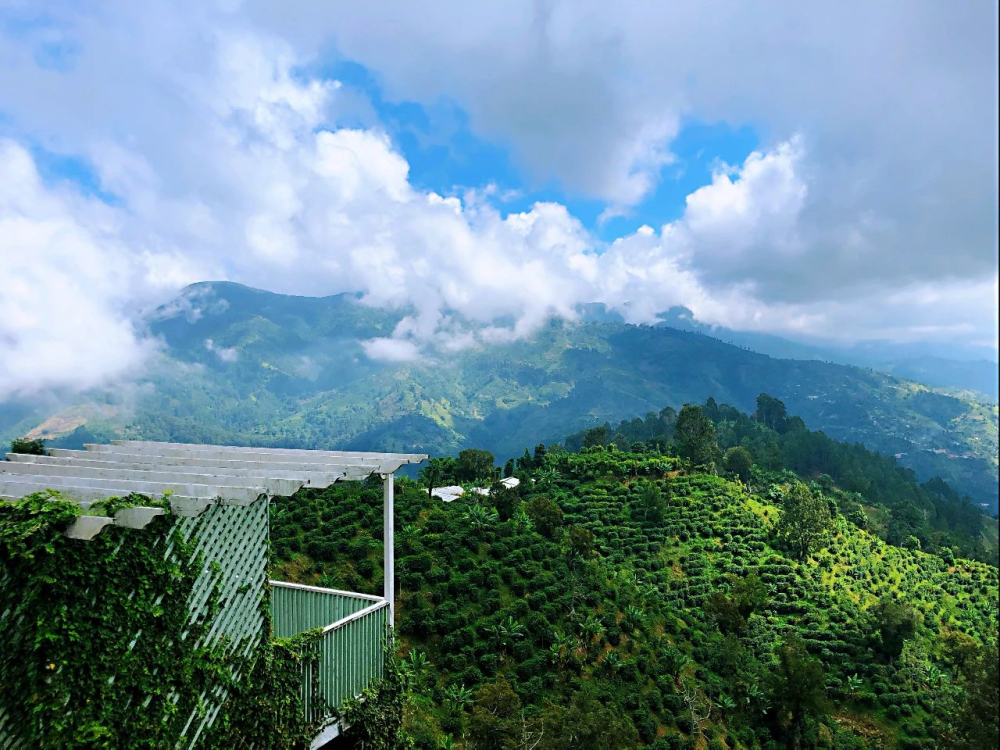
The island of Jamaica is located in the Caribbean Sea, with beautiful natural scenery and clean air. The Blue Mountains in the eastern part of the island happen to fall within the coffee-growing belt between 25° north and south latitude, and the volcanic ash soil formed after volcanic eruptions is rich in nutrients. The towering and rugged mountains create a unique microclimate; mist shrouds the mountains year-round, and water vapor condenses into droplets when it meets cold, providing crops with just the right shade and moisture supply. Locally, coffee trees are often intercropped with banana trees and avocado trees.
Jamaica's coffee cultivation history can be traced back to the early eighteenth century, more than two hundred years ago. In 1728, Governor Sir Nicholas Lawes introduced coffee from Martinique to St Andrew, Jamaica, for trial planting. In the late eighteenth century, the input of a large number of slave laborers caused coffee production to rise rapidly, and the planting area also expanded to the more favorable Blue Mountain zone, reaching a national annual output of 15,000 tons by 1814. However, after slavery was abolished in the early nineteenth century, many farmers turned to planting other crops, Jamaica's coffee production fell sharply, and the entire industry entered decline.
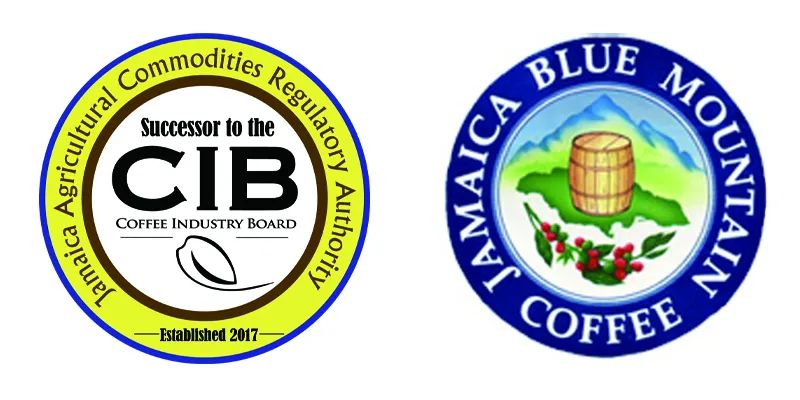
To rectify the coffee industry, the Jamaican government passed legislation in 1891 to improve coffee production and quality and provide professional guidance to growers. In 1944 the government established the Central Coffee Clearing House, and all export batches had to pass the institution's quality appraisal and grading. In 1950, Jamaica formally established The Jamaica Coffee Industry Board, abbreviated CIB, granting it official authority to improve, control and maintain the quality and reputation of Jamaican coffee.
Jamaica's Coffee Industry Regulation Act clearly stipulates that the cultivation area for Blue Mountain coffee beans is limited to the four administrative districts of St.Andrew, St.Thomas, Portland and St.Mary, and only Typica grown in that area at an altitude of 910–1700 meters can be named Jamaica Blue Mountain. According to quality, Blue Mountain coffee is divided from high to low into NO.1, NO.2, NO.3 and PB, among which PB means Peaberry. Strict controls and a grading system made Blue Mountain coffee famous internationally, and in the mid-twentieth century it was even considered one of the world's finest coffees.
It is worth mentioning that in the 1960s Jamaica suffered hurricane disasters, many industries were hit hard, and the coffee industry was no exception. At that time, the Japanese company UCC extended a helping hand to Jamaica and introduced ecological cultivation methods to the Blue Mountain producing area. In 1972 Jamaica signed a 30-year contract agreement with Japan, promising Japan the right of first refusal for Blue Mountain coffee in return for the assistance of Japanese companies. During this period, 90% of Blue Mountain coffee was supplied to the Japanese market, with only a small 10% quota allocated to countries in Europe, America, Asia and elsewhere, which was also an important reason why Blue Mountain coffee prices remained high in that era.
What Is Authentic Blue Mountain Coffee?
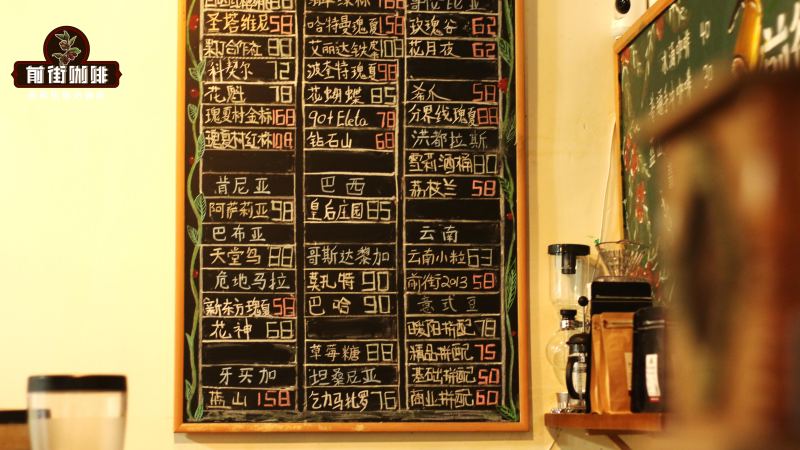
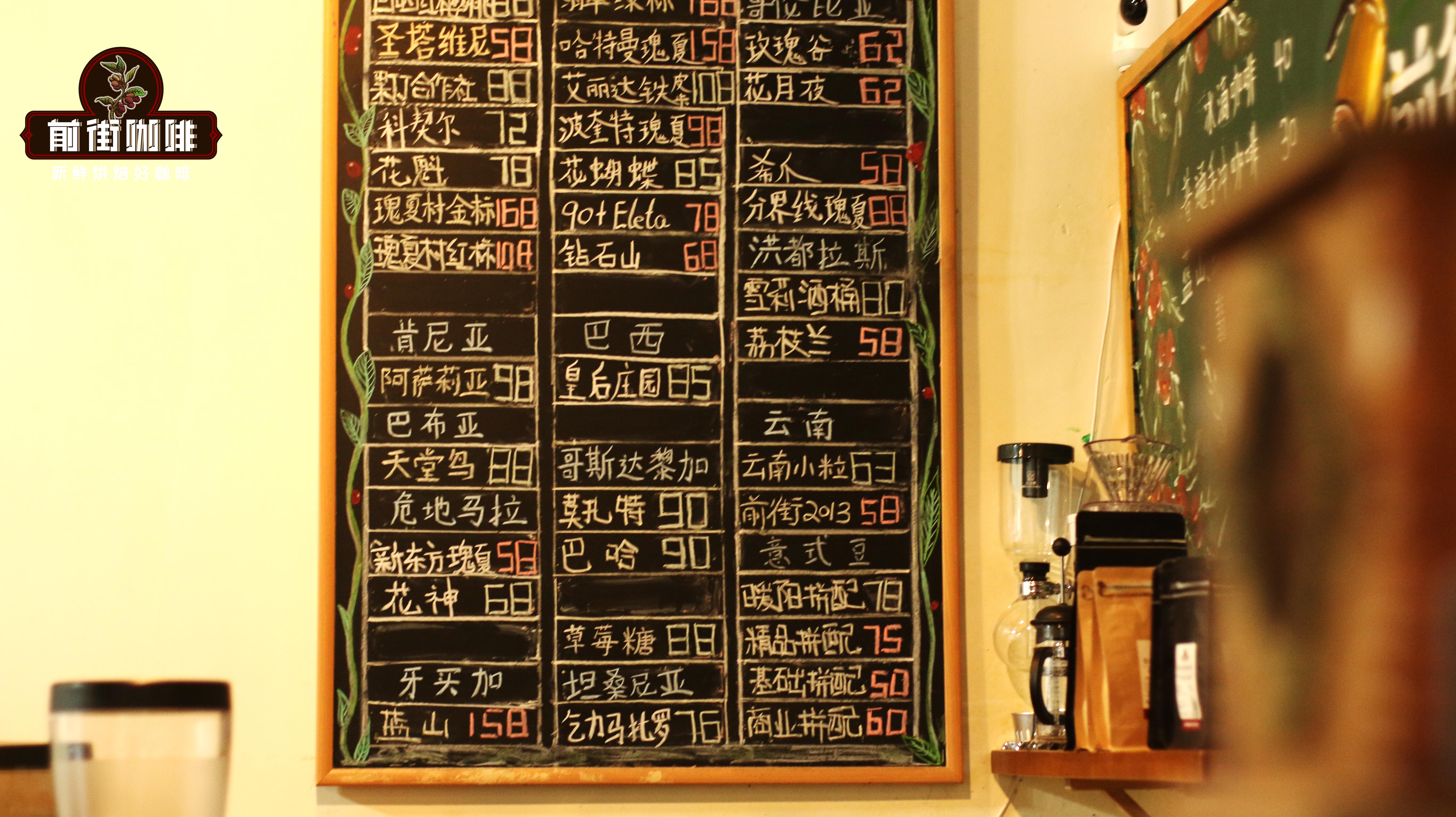
As the agreement with Japan expired, Jamaica allocated more Blue Mountain coffee quotas to other markets, no longer allowing Japan to unilaterally "monopolize" it. In recent years, Blue Mountain coffee entering the Chinese market has also increased, and it can be bought on Front Street's coffee bean list. Front Street's own-roasted Front Street Blue Mountain coffee belongs to the highest grade, Blue Mountain No. 1, and the green beans are produced and packaged by Clifton Mount Estate.
Clifton Mount Estate is the largest estate in the Blue Mountain coffee producing area. It began producing coffee in the mid-eighteenth century and is also the only local estate certified by the Rainforest Alliance (RFA). Clifton Mount Estate traditionally washes freshly picked coffee cherries, and each step of the washing process can effectively remove defective beans, so the flavor presents a cleaner and brighter mouthfeel. After processing, Blue Mountain green beans are graded according to specifications such as size, green bean color, roasting quality, aroma, cupping quality and screen size. The Front Street Blue Mountain No. 1 purchased by Front Street is the highest grade, with a defect rate below 3%, a size above 17 screen, and a moisture content of 10–12.5%. It has uniform color and neat beans, making it a very rare top-grade lot.
In addition, before export, Blue Mountain coffee must be inspected and confirmed by professional cuppers approved by the CIB. The flavor of Front Street Blue Mountain coffee must have just the right acidity, sweetness, bitterness, body and aroma. Blue Mountain coffee beans that complete quality inspection are transported in handcrafted wooden barrels, then sent to roasters around the world. Compared with the coarse cloth sacks commonly used in other producing areas, the advantage of oak barrels is that they can absorb and release internal and external moisture while isolating the coffee aroma from escaping, allowing the coffee beans to maintain a more stable moisture content and thereby making roasting more stable.
The Coffee Story of Clifton Mount Estate
Clifton Mount Estate's Blue Mountain production history can be traced back to the mid-eighteenth century (around 1750), and in 1978 it was taken over by the current owner, the Sharp family. Clifton Mount Estate is located on the scenic Clifton Mount, and its coffee cultivation and green bean processing site is at an average height of 4,300 feet (1310.64 meters). Sufficient altitude, daytime mist, ample sunshine and rainfall, and mineral-rich planting soil provide good growing conditions for coffee trees, while also delaying the ripening time of coffee cherries, giving the fruit ample time to form more aromatic compounds. The coffee grows on rugged slopes, making picking extremely difficult. Every spring during the harvest season, the Sharp family arranges skilled workers to go up the mountain to hand-pick coffee cherries at the appropriate ripeness.
After the Sharp family took over Clifton Mount Estate, they began by transforming the wild and overgrown jungle on the farm, then introduced various processing equipment and invested in building a solar power station, a wastewater treatment plant and a BMCP processing plant. As the only coffee estate with a "Rainforest" mark, every link within the estate adheres to environmental protection concepts. Water used for green bean processing is used for agricultural irrigation, and the removed fruit skins are also fermented into organic fertilizer for flower cultivation.
Clifton Mount Estate places the harvested fresh cherries into a water tank, uses flotation to separate ripe beans from unripe beans, and then sends the ripe coffee cherries into the depulping stage through water flow on a conveyor belt. The coffee beans with mucilage and parchment are then placed in a water tank to ferment; after the mucilage ferments, water flow is used to agitate and remove the residue, and then the clean coffee beans with parchment are dried. After reaching a moisture content of 11–12%, they are sent to the BMCP processing plant to rest for one month. This step is to allow the coffee flavor to fully mature and make the internal structure and water activity more stable.
Flavor Characteristics of Front Street Clifton Mount Estate Blue Mountain No. 1 Coffee
The roasting stage is like the cooking step in preparing food; high-quality ingredients paired with appropriate cooking techniques can elevate the taste of food to the next level. The ultimate purpose of roasting is to obtain a delicious cup of coffee. Front Street's roasting philosophy is to present the most classic flavor profile of the producing area while highlighting the bean's unique style, such as the bright lemony acidity of Front Street Yirgacheffe and the herbal, full-bodied mouthfeel of Front Street Indonesian Mandheling coffee. Front Street Blue Mountain No. 1 coffee naturally also needs to highlight the classic Blue Mountain flavor. Front Street uses a medium-dark roast to present the coffee's chocolate and nutty aromas to the greatest extent while retaining soft acidity and sweetness, making the overall mouthfeel balanced.
After freshly roasting Front Street Blue Mountain coffee beans, Front Street immediately conducted a cupping. The dry aroma had nuts, melon and chocolate; after pouring in hot water, Oolong tea, caramel, honey and dark chocolate were smelled. It tastes of rich dark chocolate, roasted hazelnut, cream and black sugar, with a clean and clear flavor, a full-bodied mouthfeel and a long-lasting aroma. So that everyone can also experience these aromas, the coffee beans shipped by Front Street are guaranteed to be freshly roasted within 5 days, so when you receive them they are just at the best tasting stage. Below, Front Street explains several key factors for pour-over Front Street Blue Mountain coffee based on store serving standards.
Brewing Suggestions for Specialty Blue Mountain Coffee
Front Street usually uses a KONO dripper to extract medium-dark roasted coffee beans. The upper part of the KONO dripper is a smooth curved surface, allowing the filter paper to fit better. Compared with the v60 dripper, KONO's extraction method is mainly immersion-based, which can increase the overall concentration of the coffee and enhance its body. Besides KONO, common slow-flow devices such as the Kalita trapezoidal dripper and cloth filters are also suitable for medium-dark roasted coffee beans such as Front Street Blue Mountain coffee and Front Street Golden Mandheling coffee.
In addition, considering that medium-dark roasted coffee has undergone a certain degree of roasting, the internal structure of the beans is fluffier than light-roasted coffee, so the water absorption effect is better. To avoid over-extraction, Front Street chooses a grind size with a 75% pass rate through a No. 20 standard sieve and a water temperature of 88°C, paired with Front Street's usual three-stage pouring.
Pour-over parameters: 88°C water temperature, coarse granulated sugar grind size (75% pass rate through a No. 20 standard sieve), 15 grams of coffee beans, 1:15 coffee-to-water ratio, three-stage extraction.
In the first stage, gently pour 30 grams of water for blooming, with a blooming time of 30 seconds. In the second stage, pour to about 125 grams of water, circling outward evenly and steadily. Then wait for the coffee liquid to drop; when it has dropped to halfway, pour the final stage of water to 225 grams. After all the coffee has dripped through, the total extraction time is generally about 2 minutes.
Front Street Blue Mountain No. 1 coffee flavor: when hot, Front Street Blue Mountain No. 1 coffee enters the mouth with a dark chocolate aroma, very full-bodied, with an obvious almond sweetness in the finish. As the temperature drops, roasted hazelnut and creamy sweetness become silky, carrying a hint of soft acidity and caramel sweetness, and the aroma lingers in the mouth.
For professional coffee knowledge exchange and more coffee bean information, please follow Coffee Workshop (WeChat public account cafe_style)
For more specialty coffee beans, please add the private WeChat of FrontStreet Coffee, WeChat ID: qjcoffeex
The above content is compiled by CoffeeHunters, a coffee news website.


