







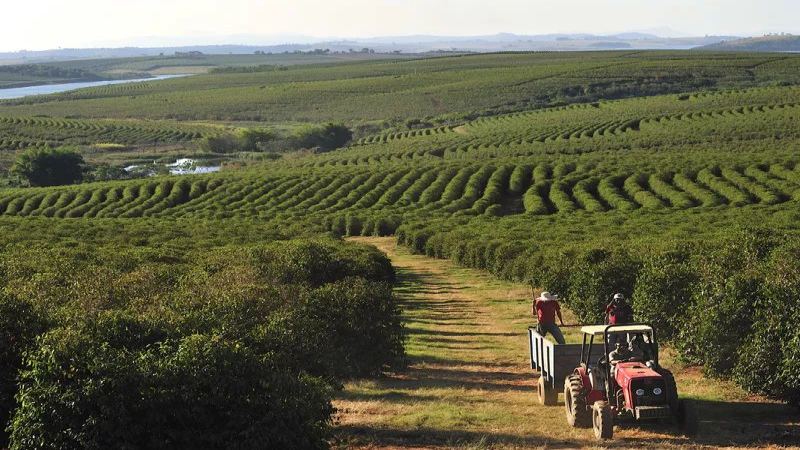
How Does Coffee Production Shape Brazilian Flavor?
Brazil is the dual champion in global coffee production and exports, supplying about one-third of the world's total coffee exports. Its nutty, cocoa-like profile and full body are well known. The three main specialty regions are Sul de Minas, Cerrado, and Mogiana, each with its own terroir differences that show up in the cup.
Coffee arrived in Brazil in 1727, when Francisco de Mello Palheta brought a single seed back from French Guiana. By 1830 coffee had become the country's main export product. Varietal differences matter too: Red Bourbon from Cerrado and yellow bourbon coffee from Queen Farm each show balance and sweetness, and both work well for pour-over and SOE extraction.
Brazil, the dual champion in global coffee production and exports, supplies one-third of the world's total coffee exports, and its nutty, cocoa-like profile and full body have long been deeply ingrained in people's minds. But is Brazilian coffee really just middling in flavor? From the legendary introduction of a single seed in 1727, to the terroir differences among the three major specialty regions of Sul de Minas, Cerrado, and Mogiana, and then to the varietal characteristics of Red Bourbon and Yellow Bourbon, this article takes you through a systematic overview of the complete picture of Brazilian coffee. Front Street Coffee further uses two beans—Cerrado Red Bourbon and Queen Farm Yellow Bourbon—as examples to share pour-over parameters and SOE extraction methods, helping you understand Brazilian coffee's balance and sweetness comprehensively, from origin to cup.
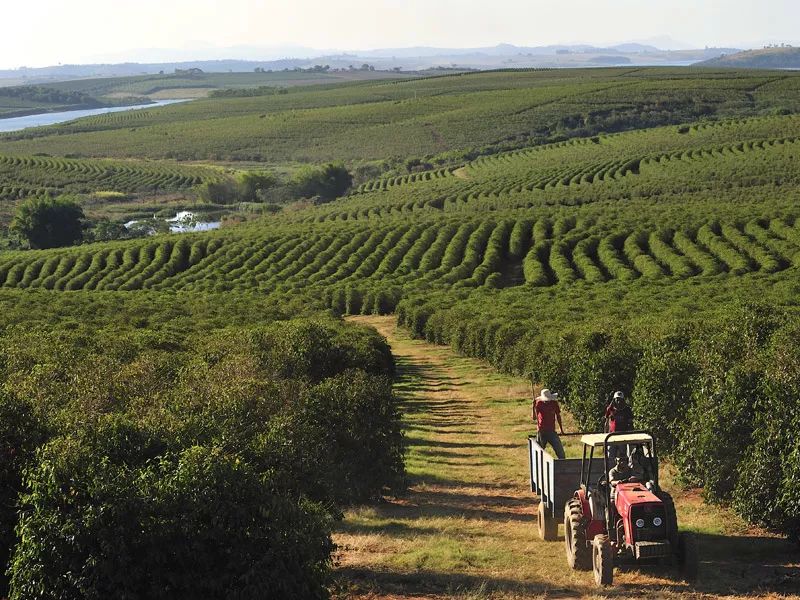
When people mention Brazil, most first think of the kingdom of football, but few know that this country is also the dual champion in global coffee production and exports, with its exports accounting for about one-third of the world's total coffee exports. Brazilian coffee, with its nutty, cocoa-like richness and thick mouthfeel, has won recognition from coffee lovers around the world. In addition, the country's level of mechanized coffee bean processing is quite mature, so many people therefore feel that Brazilian beans have a rather single, steady flavor. However, if you have ever tasted Front Street Queen Farm's output, you would probably revise that impression—the balance and smoothness shown in that cup are enough to make people reunderstand Brazilian coffee.
Now, let us walk together into the legendary story of Brazil, this coffee-producing country.
According to information from FrontStreet Coffee, there was originally no coffee in Brazil. In 1727, a Portuguese sergeant major from Brazil, Francisco de Mello Palheta, was ordered to go to French Guiana. At that time, France strictly controlled coffee bean exports. This sergeant major managed to gain the trust of the governor's wife in the capital of French Guiana, and at the end of the journey successfully obtained a coffee seed and brought it back to Brazil. These seeds quickly took root and multiplied in Brazil, gradually spreading to other states.
By 1830, coffee had already become Brazil's main export product, accounting for 30% of global production, powerfully driving Brazil's economic development, with São Paulo state benefiting especially. In order to transport local coffee out, new railways were specially built, and at that time the coffee produced in that state accounted for half of Brazil's total output. In 1965, during the Cold War, coffee production was severely excessive and prices fell sharply, so Brazil signed the International Coffee Agreement with many countries to restrict exports, only withdrawing from the agreement in 1989, and in 1991 establishing the Brazil Specialty Coffee Association (BSCA).
Brazilian Coffee Regions
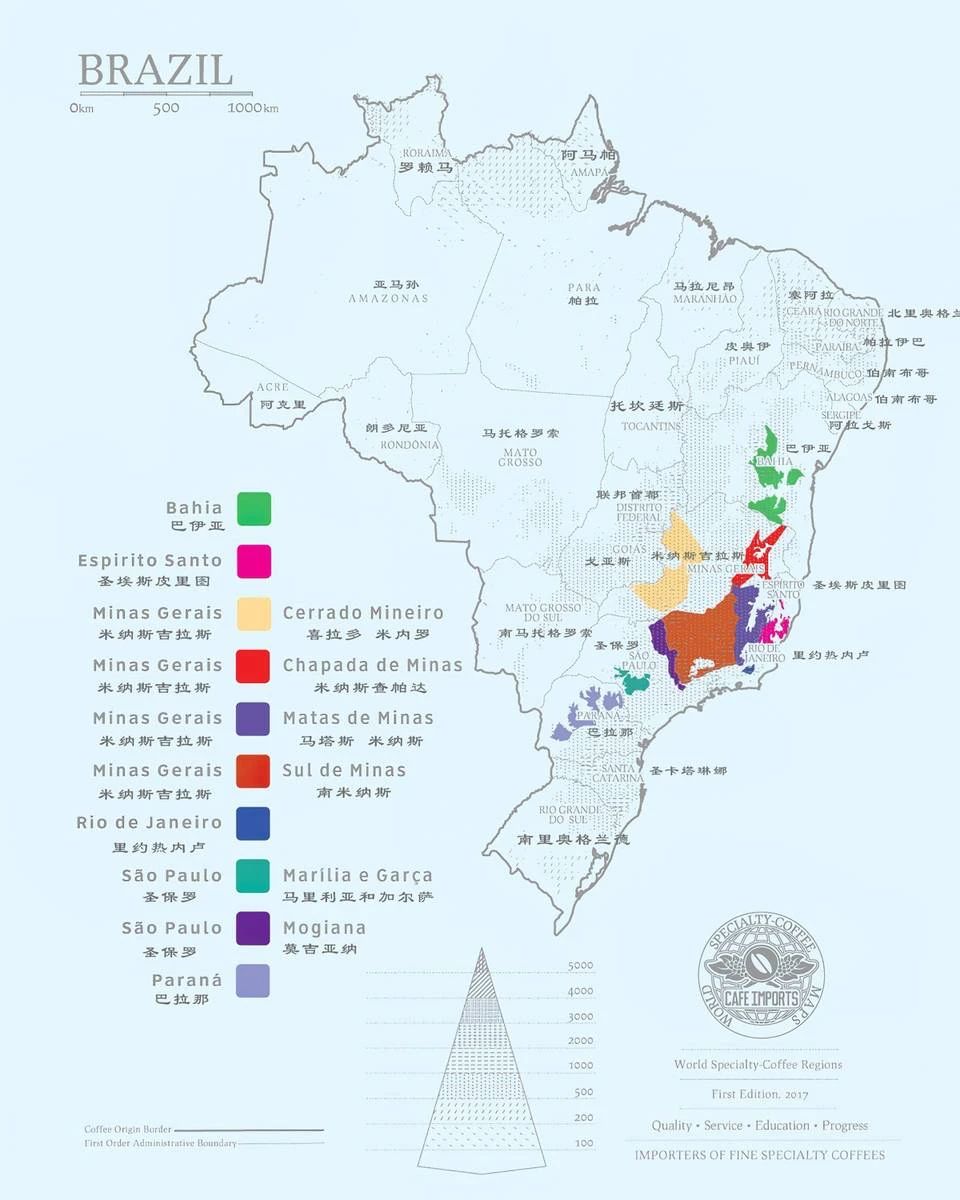
Brazil has 26 states in total, 17 of which produce coffee. Paraná, São Paulo, Minas Gerais, and Espírito Santo together contribute 90% of total production. Among them, the Mogiana region in São Paulo state is especially prominent, while Minas Gerais is famous for the Cerrado and Sul de Minas regions.
Sul de Minas:
Sul de Minas is the main producing region for Brazilian specialty coffee, with an altitude between 700 and 1,400 meters. It has hilly terrain and distinct dry and rainy seasons. The undulating terrain creates some microclimates, making it most suitable for growing Bourbon and Yellow Bourbon with elegant flavors.
Cerrado:
The Cerrado region is located in Brazil's interior and is a savanna accounting for about 22% of the country's land area. Cerrado means "closed place" in Portuguese. The Cerrado coffee-producing region referred to by Front Street is not the entire Cerrado savanna, but rather a specially designated coffee-growing area above 1,000 meters in the central-west of Minas province. With high altitude and fertile soil, it can produce specialty coffee beans of outstanding quality, with a clean sweet taste, high body, and excellent cleanliness.
FrontStreet Coffee: Brazil Cerrado Daily Coffee Beans Region: Sul de Minas Altitude: 1000m Variety: Red Bourbon Processing Method: Semi-washed Flavor: Nuts, Chocolate, Cream, Peanut, Caramel
Mogiana:
On Brazil's vast land, there is an area very close to southern Minas, and that is Mogiana. This land at 900–1,100 meters has uneven terrain and is home to many growing families, some of which continue the management methods of traditional large farms, while others adopt small-scale modern operations. Precisely because of this, green coffee beans from the Mogiana region have outstanding quality and unique taste, and are deeply favored by coffee lovers around the world.
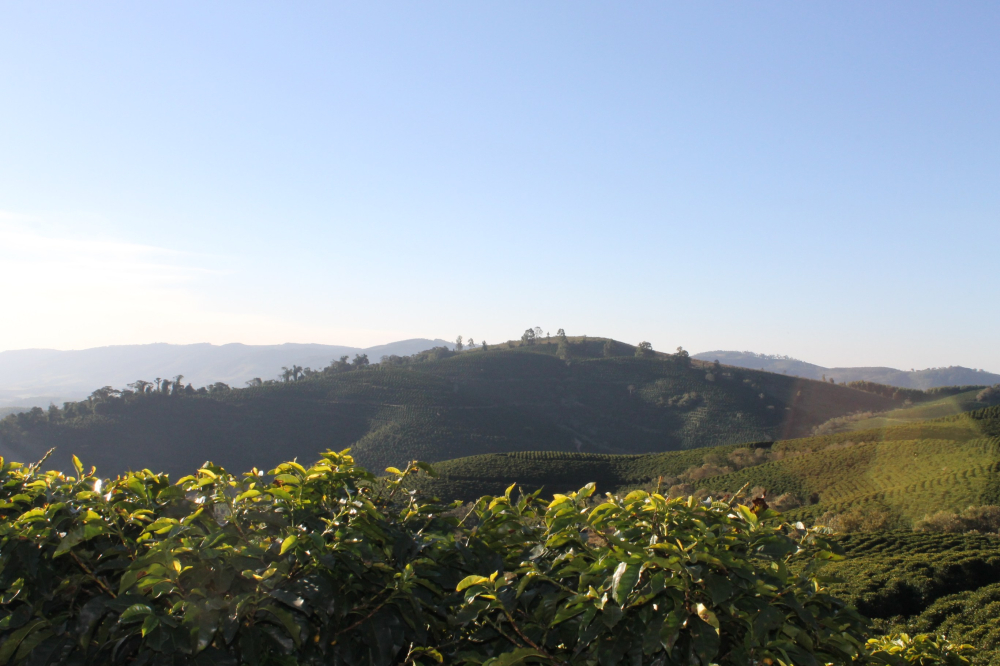
FrontStreet Coffee: Brazil Queen Farm Coffee Beans Region: São Paulo State, Queen Farm Altitude: 1400-1950m Variety: Yellow Bourbon Processing Method: Natural Flavor: Nuts, Cream, Peanut, Fermented Fruit, Cane Sugar
The Brazilian coffee beans currently selected by FrontStreet Coffee are precisely Red Bourbon from the Cerrado region and Yellow Bourbon from Mogiana. So what are the characteristics of these two varieties?
Brazilian Coffee Varieties
Red Bourbon
According to FrontStreet Coffee's understanding, Bourbon is a secondary species produced by a mutation of Typica. When people usually mention the Bourbon coffee variety, everyone by default refers to Red Bourbon, named because its fruit is red when ripe. Its flavor shows a solid mouthfeel, excellent acidity, and an aroma reminiscent of red wine. Red Bourbon is currently the most widely planted variety in Brazil's coffee-producing regions.
FrontStreet Coffee's daily bean Brazilian coffee is the Red Bourbon variety.
Yellow Bourbon
According to FrontStreet Coffee's understanding, Yellow Bourbon is likewise a genetic mutation of Bourbon. At maturity, its fruit is not cherry red but yellow, and it was discovered in 1930. Later, research by the Campinas Agronomic Institute (IAC) found that plants with the dominant XcXc gene pair bear red berries, plants with the recessive xcxc gene pair bear yellow berries, and in very rare cases, plants with one dominant gene and one recessive Xcxc gene bear orange berries. It can be seen that Yellow Bourbon's "yellow" originates from the hereditary selectivity of color. Yellow Bourbon grown at high altitudes contains a large amount of fructose and can present a sweet, juicy flavor. It once swept Brazil's Cup of Excellence competition for two consecutive years, almost taking all top three places, and became popular in the specialty coffee world.
During cupping, Yellow Bourbon coffee usually shows aromas of nuts and chocolate, with moderate and gentle acidity, slight and clean bitterness, and an overall fresh taste that is pleasant, making it one of the coffee flavors many people love.
FrontStreet Coffee's Brazil Queen coffee is the Yellow Bourbon variety.
Because Yellow Bourbon coffee beans at high altitude have greater density and high glucose content, Front Street's roasting approach is to highlight the classic rich aroma of Brazilian coffee while also showcasing Bourbon's own sweetness. After many experiments and cupping comparisons, Front Street's Brazil Queen Farm coffee beans use a medium-dark roast. Next, Front Street will brew these two coffees. If you want to understand the taste of Brazilian coffee, you can refer to Front Street's pour-over approach.
Front Street Brewing Suggestions
In pour-over coffee brewing, Front Street has always believed that the freshness of coffee beans is an extremely important part. The higher the freshness, the more you can feel the rich flavors to the greatest extent. The coffee beans shipped by FrontStreet Coffee are all roasted within 5 days, because the freshness of coffee beans greatly affects the flavor.
Front Street's roasting principle is "freshly roasted good coffee," so that every customer who places an order can receive the freshest coffee beans. The resting period for coffee is generally 4-7 days, so after the ordered coffee beans arrive, it is exactly the time when the flavor performance is at its best. However, from the perspective of understanding coffee, even if the resting period is not enough, you can still try it, because only then can you experience the aroma changes of coffee beans at different stages.
Front Street Parameters for Brewing Brazilian Coffee :
Dripper: KONO
Water Temperature: 88°C
Coffee-to-Water Ratio: 1:15
Grind Size: Medium-fine grind (80% passing rate on China No. 20 standard sieve)
The brewing method uses three-stage extraction. First, use twice the amount of water relative to the coffee grounds for blooming, that is, 30 grams of water for 30 seconds. Then pour in a small stream in circles until 125 grams, pause, and when the water level drops and is about to expose the coffee bed, continue pouring until 225 grams and stop. (Timing starts at the beginning of blooming.) The extraction time is 2 minutes. Try to keep the brewing technique for the two beans as consistent as possible.
Characteristics of Brazilian Coffee Beans Description:
Brazil Queen Farm Coffee Beans: Has obvious flavors of chocolate, nuts, and roasted peanuts, accompanied by faint floral and spice notes. It tastes of caramel sweetness, with a long finish and a lingering sweetness like pu'er tea. The overall mouthfeel is rich and smooth, with balanced flavor.
Brazil Cerrado Coffee Beans: On the palate, you can immediately feel obvious sweetness, along with a faint fresh lemon aroma. After drinking, a rich nutty flavor remains in the mouth, while the finish has an obvious dark chocolate taste. Overall, it feels very round and comfortable.
Can Brazilian coffee beans be made into SOE?
In the tasting of single-origin coffee, in addition to pour-over, SOE, which has become increasingly popular in coffee shops in recent years, has also become one of the extraction methods many people make at home. Regarding the above aromatic Brazilian coffee beans, some customers have asked Front Street whether they can be made into SOE Americano or SOE Latte, and the answer is undoubtedly yes. Below, Front Street uses the equipment available in its stores as a reference, and uses the previously introduced Brazil Queen Farm coffee beans to demonstrate how to make an SOE.
The coffee machine used in Front Street's store is the commercial single-group "Lelit Bianca," which can adjust extraction by changing pressure, with a maximum pressure of up to 11 bar. A home espresso machine only needs to reach 9 bar pressure to satisfy the functions of extraction and milk frothing, and paired with an espresso grinder it is enough.
Front Street uses the capacity of a double basket, with a dose of about 18–20 grams, and uses 20 grams of coffee grounds when producing. Usually the ratio of coffee grounds to coffee liquid is between 1:1.5 and 1:2.5. Front Street's extraction ratio is 1:2, that is, 20 grams of coffee grounds extract 40 grams of coffee liquid. Time is related to the flow rate of the coffee grounds. Generally, a single extraction time is controlled at 20–35 seconds, because within 20 seconds the coffee usually tastes thin, while over 35 seconds it is easy to over-extract and produce a burnt bitter taste. Front Street's espresso is mostly in the range of 28–30 seconds.
Front Street first wipes the basket dry, turns on the grinder, grinds the amount for a double shot of coffee grounds, places it on an electronic scale to add or remove until it reaches 20 grams. Then use a tool to distribute the grounds evenly, tamp the coffee puck firmly, to ensure more stable extraction. Then turn on the extraction switch to release water, wetting the brew head while also washing away the coffee grounds stuck on it. Gently lock the portafilter onto the brew head, and start the extraction. When the electronic scale shows that 40 grams of coffee liquid has been extracted, at about 30 seconds, you can turn off the extraction switch. Pour the coffee liquid into an espresso cup and it is ready to enjoy.
The extracted Brazil Queen Farm SOE can be drunk directly, but the taste will be very intense. Remember to pair it with a glass of water to rinse your mouth. When tasting, you can feel the dense crema and the creamy peanut and chocolate aromas of the coffee liquid below. If you cannot accept espresso's strong bitterness, Front Street suggests that according to your own preference, add ice water or warm water at a 1:4 ratio to make a refreshing, sweet Brazil SOE Americano, or add frothed fresh milk at a 1:6 ratio to soften the mouthfeel, and it becomes a delicious cup of Brazil SOE Latte.
For professional coffee knowledge exchange and more coffee bean information, please follow Coffee Workshop (WeChat public account: cafe_style)
For more specialty coffee beans, please add the private WeChat of FrontStreet Coffee, WeChat ID: qjcoffeex
The above content is compiled by CoffeeHunters, a coffee news website.


