







Which Arabica Bean Should Beginners Choose for Pour-Over?
Pour-over coffee depends on bean choice, gear, and technique, and for beginners the bean matters most. Freshly roasted Arabica beans with clear regional character are easier to brew consistently. Grind them, pour hot water over the coffee bed in a dripper lined with filter paper, and the soluble flavors dissolve out, leaving a clean cup of black coffee.
Seven regional staples work as starting points: Ethiopia, Guatemala, Colombia, Brazil, Costa Rica, Indonesia, and Yunnan. Each shows a distinct flavor profile, so brewing the same recipe across several origins builds recognition. Aim for stable extraction inside the optimal flavor window, which usually falls between four and six weeks after the roast date.
In recent years, the community of domestic coffee enthusiasts has continued to grow, and many people are no longer satisfied with buying ready-made coffee, but instead hope to brew a satisfying cup of black coffee by hand. Pour-over coffee may seem simple, but in reality, from bean selection and equipment preparation to extraction technique, every step affects the final flavor performance. For beginners just getting into pour-over, choosing coffee beans with high cost-effectiveness and strong flavor distinctiveness is especially key. In this article, Front Street will systematically introduce the basic principles of pour-over coffee and the required equipment, and carefully select seven classic regional staple beans, covering Ethiopia, Guatemala, Colombia, Brazil, Costa Rica, Indonesia, and Yunnan, China, to help beginners achieve stable extraction within the optimal flavor period and gradually build an understanding of the flavors of each region.
As coffee gradually becomes a daily beverage for many people, more and more friends are beginning to actively learn about brewing knowledge, hoping to make a cup of pour-over coffee by hand. In this article, Front Street will focus on the theme of pour-over extraction and recommend suitable coffee beans for beginner friends.
What exactly is pour-over coffee?
The roasted coffee beans we buy are the product of green beans undergoing a series of chemical reactions during high-temperature roasting, thereby generating various aromatic compounds. The purpose of brewing is to use water and various utensils to release these flavor components. The pour-over method is to first grind the coffee beans into powder, then pour hot water over the coffee bed, causing the soluble substances in the coffee to be "dissolved" out. Essentially, it uses a dripper together with filter paper or other filtering tools to intercept the coffee grounds and prevent them from mixing into the server below, ultimately obtaining a clean and transparent cup of black coffee.
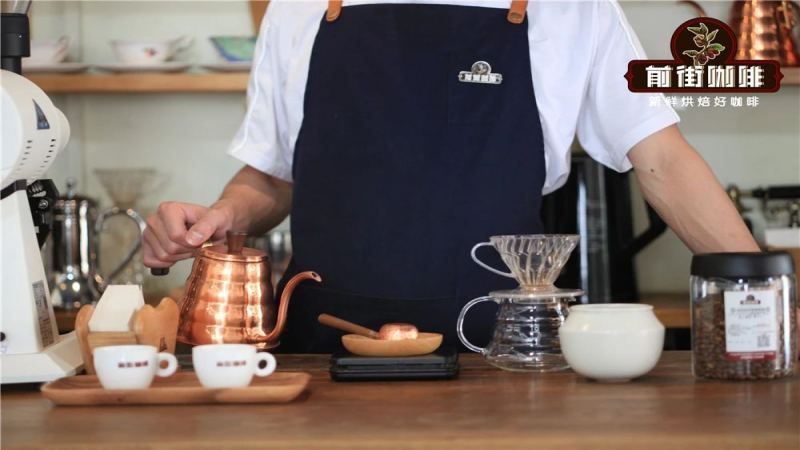
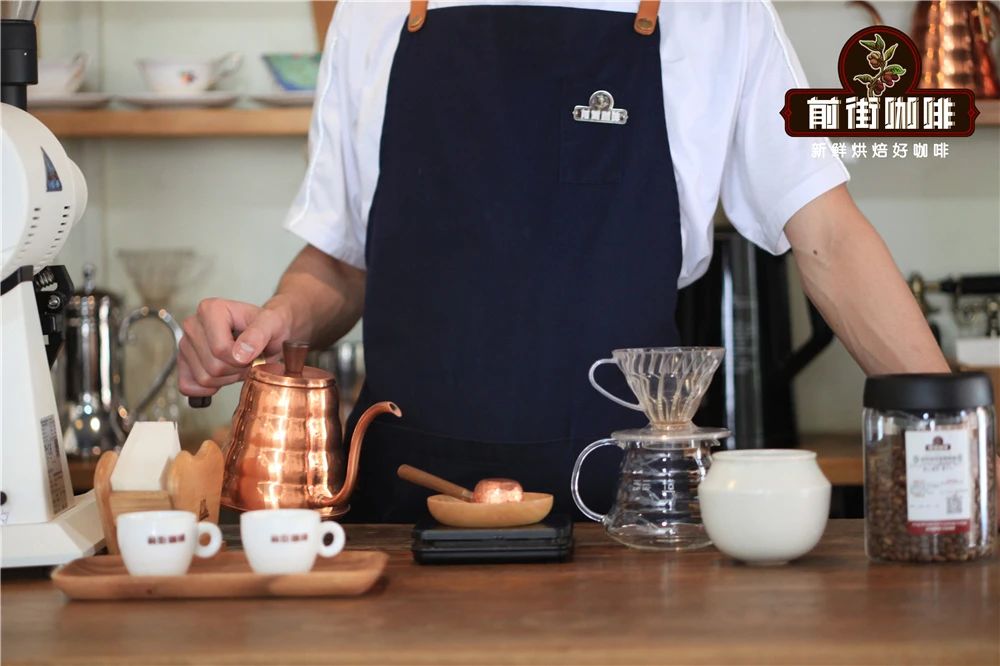
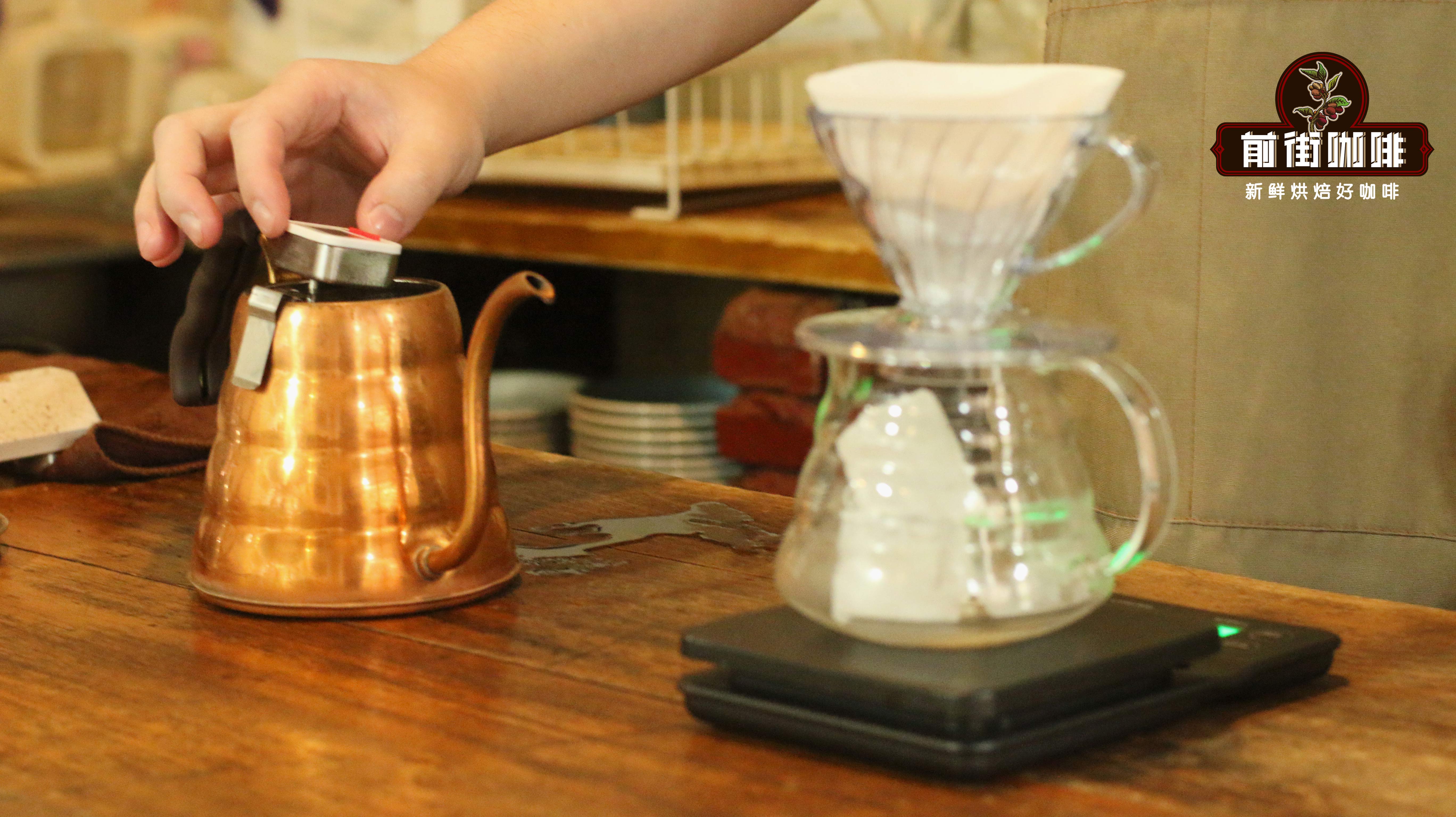
From selecting coffee beans to actual extraction, every step has a varying degree of influence on the flavor of the finished pour-over. Therefore, if you want to brew a qualified cup of pour-over coffee, based on Front Street's brewing experience, in addition to having high-quality coffee beans, Front Street believes that at least the following equipment is needed: a pour-over kettle for pouring water, a dripper and filter paper for intercepting coffee grounds, a server for receiving the coffee liquid, a grinder for grinding coffee beans, an electronic scale for recording water volume and time, and a thermometer for measuring water temperature.
A good cup of coffee naturally cannot do without good raw materials — high-quality coffee beans. Front Street recommends choosing beans that are within their optimal flavor period from the 4th to the 30th day after roasting is completed. This stage is more conducive to stable extraction, and the pour-over flavor is also fuller. To ensure freshness, the coffee beans shipped by Front Street are all freshly roasted within 5 days, and generally arrive within 1 to 3 days, so that when everyone receives them, they are basically still within the optimal flavor period and can immediately begin practicing extraction.
Front Street Pour-Over Specialty Coffee Bean Recommendations
If you have just stepped into the world of pour-over and are worried about ruining expensive, small-quantity beans and causing waste, Front Street recommends starting with Front Street staple beans that stand out for cost-effectiveness. Front Street has carefully selected seven excellent classic coffee regions, covering multiple highly representative origins, varieties, and natural processing methods. So-called staple beans, as the name suggests, are categories that are burden-free for daily drinking, with both price and flavor being approachable. Front Street has selected the "flagship representatives" of each region from among them, making it easy for everyone to identify the basic flavor direction of different regions.
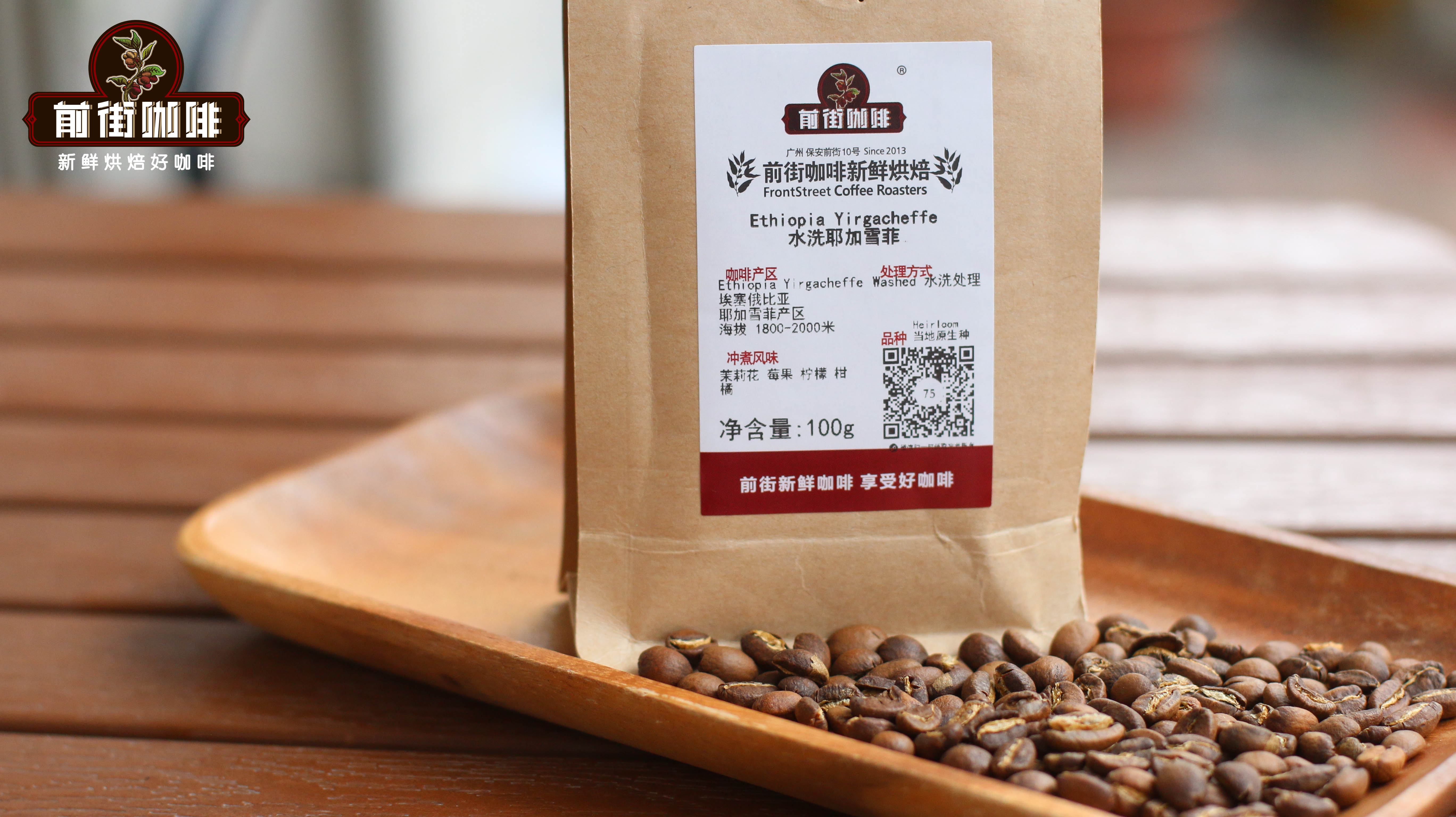
Front Street Ethiopia Washed Yirgacheffe Coffee Beans
When mentioning Yirgacheffe flavor, people usually think of elegant citrus, lemon, and berry notes as well as rich floral aromas, accompanied by a clear tea-like quality. Once you have tasted it, it is hard to forget. To present such delicate flavor and mouthfeel, the coffee's superior growing environment, variety, processing method, as well as the roasting and brewing stages, are all indispensable.
Ethiopia, located on the African continent, is not rich in water resources, so traditionally it has always used the ancient natural sun-drying method to process green beans, that is, placing them directly in the sun to dry. Because the operation was relatively rough, coffee quality was generally not high. It was not until 1972 that Ethiopia, in order to improve coffee bean quality, introduced washed processing technology and equipment from Central and South America. Unlike other regions, Yirgacheffe belongs to a wetland environment and is more suitable for washed processing. The multiple stages of washing can remove defective beans, greatly reduce the defect rate, show higher cleanliness, and also make its aroma clearer and more transparent.
This change greatly amplified Yirgacheffe coffee beans' original citrus-lemon acidity and white floral aroma, and the mouthfeel also became fresher and brighter. The Front Street Washed Yirgacheffe staple beans launched by Front Street use a medium-light roast, retaining more fruit acidity and presenting the classic Yirgacheffe flavor profile, suitable for pour-over, cold brew, French press, and many other brewing methods.
Front Street Guatemala Washed Huehuetenango Coffee Beans
The Huehuetenango highlands are located in Guatemala's western non-volcanic region, which has the driest climate and the highest altitude. This place lies at the active edge of tectonic plate boundaries, and the ever-changing terroir conditions of the mountain basins year-round have created rich and diverse coffee flavors. Similar to the Antigua region, it also has abundant volcanic soil, with altitudes reaching up to 2,000 meters, but thanks to the dry hot winds from Mexico in the northwest, coffee trees can grow normally on the 2,000-meter plateau.
As is well known, every country has its own coffee grading standards. Guatemalan green beans are mainly graded according to altitude. The higher the altitude, the greater the density of the coffee beans, and the higher the green bean grade. The vast majority of coffee from the Huehuetenango region belongs to SHB Strictly Hard Bean, and SHB is precisely the highest grade in Guatemala's green bean classification.
Front Street Guatemala Huehuetenango coffee beans use washed processing, showing the cleaner profile of Guatemalan coffee. Because the fruity aroma is rich and intense, a medium-light roast was chosen for roasting, so that after the coffee is ground, the sweet aroma of citrus and nuts can be smelled.
Front Street Colombia Washed Huila Coffee Beans
The Huila region rose to fame after entering the 21st century, frequently appearing on the award lists of various green bean competitions, and obtained official denomination of origin certification in 2013. The name of the Huila region comes from Huila Department, located in southwestern Colombia on the flank of the Andes, near Huila Volcano. The volcanic ash brought by volcanic eruptions replenishes the soil with fresh nutrients, which is especially beneficial to the growth of coffee trees. Compared with other regions, Huila has year-round rain and suitable temperatures. Such growing conditions allow coffee trees to be planted even at highlands exceeding 2,000 meters, and coffee produced at high altitudes has bright acidity and chocolate aroma.
Huila coffee is mainly produced by smallholders, and local farms are usually within 1.5 hectares. Managers plant shade trees to provide coffee with a better growing environment and quality assurance. Whenever the coffee cherries ripen, Colombians pick the ripest and fullest fruits and carry out post-processing at the freshest stage, ensuring the freshness of the coffee at every step. The washed Front Street Colombia Huila staple beans have both soft acidity and appropriate body and sweetness. Front Street hopes to present the classic Colombian nutty profile while retaining some acidity, so a medium-dark roast was chosen.
Front Street Brazil Pulped Natural Cerrado
Brazil's coffee farms do not have the high altitudes of Africa or other South American origins. The local terrain is mostly flat land only a few hundred meters high, and Brazilian growers pursuing mass production mainly adopt large-scale sun-drying cultivation models. Therefore, the Brazilian coffee fruits produced ripen quickly, lack the rich fruit acidity possessed by high-altitude coffee in flavor, and tend toward a sweet, mellow, and balanced mouthfeel. It is precisely because of this plain and practical characteristic of Brazilian coffee that it is widely used in espresso blends, as it can both bring out the coffee's roasted aroma and make the extracted flavor profile more stable.
Located in the northwest of Minas Gerais, the Cerrado region has a long coffee history and mature cultivation and production experience. Many enterprises have successively established medium-to-large coffee plantations here. At altitudes between 800 and 1,300 meters, with four distinct seasons, humid summers, dry winters, and soil rich in minerals, the coffee produced has a smooth, creamy nuttiness, a balanced mouthfeel, and a very classic Brazilian flavor. Therefore, Front Street also included Front Street Brazil Pulped Natural Red Bourbon coffee from the Cerrado region in Front Street's lineup of staple beans.
Front Street Costa Rica Washed Tarrazu
Costa Rica is located in Central and South America, adjacent to Panama, the place where Geisha became famous. At the same time, it is affected by the ocean currents and monsoons of both the Pacific and Atlantic Oceans, forming an excellent microclimate. Combined with various topographic features, it has become an ideal region for coffee to thrive. Although Costa Rica does not rank near the top in terms of coffee production, multiple volcanoes within its territory bring the country very fertile mineral-rich soil. Excellent drainage allows crops planted here to obtain abundant rainwater and nutrients, and the fruits produced are naturally of higher quality.
Tarrazu is located south of the capital San José and is one of the most valued coffee-growing areas in the country. Tarrazu has high-altitude growing conditions of 1,200 to 1,700 meters. The cool climate and nutrient-rich volcanic ash soil give the coffee diverse acidity and rounded body. Coupled with the development of specialty coffee, everyone has continuously innovated and improved processing techniques, allowing Tarrazu coffee to accumulate a strong reputation in the coffee community.
Front Street Costa Rica staple beans blend two common varieties, Caturra and Catuai, and use natural washed processing. The flavor of Caturra mainly presents fruity notes and berry-like acidity; the flavor of Catuai is more one-dimensional than Caturra, mainly nutty, lacking Caturra's rich layering. The blend of the two varieties makes Tarrazu coffee more balanced and gentle.
Front Street Indonesia Wet-Hulled Lintong Mandheling
Indonesia's local high-temperature and high-humidity environment prompted locals to innovate a "new" processing method suited to local conditions — the wet-hulling method. The earlier steps of wet-hulling are the same as the washed method. Indonesians first remove the pulp from the coffee fruit, then ferment it in water for 3 hours, wash off the mucilage, and dry the parchment coffee green beans for a short time for 2 to 3 days. At a semi-soft, semi-hard state with 20% to 24% moisture content, the parchment is hulled off the beans, and drying continues until the coffee's moisture content drops to 13%, at which point it can be bagged.
Because the hulling machine uses relatively strong friction to tear open the parchment layer tightly attached to the green beans, white or green viscous liquid usually flows out at this stage. After long-term soaking in the mucilage and the influence of the humid environment, the green beans eventually become soft, whitish and swollen, and form a gray-green color. Through the stirring caused by friction, the green beans are also more likely to be crushed or squeezed, especially at both ends, forming small gaps and causing peaberry-like defects. The "naked beans" with the parchment layer removed dry very quickly, and at the same time are directly exposed to the humid environment, where various fungi breed, giving Indonesian coffee its unique woody, spicy, and herbal notes, which is what we call the "Mandheling flavor."
Front Street China Yunnan Baoshan Washed Small-Bean Coffee
In recent years, through the efforts of many people, the quality of Yunnan coffee has continued to improve and has received much affirmation, and there are also many fans of Yunnan coffee domestically. For friends who have never drunk Yunnan coffee, they must be very curious about how it tastes. Front Street Yunnan staple beans come from the Baoshan region, which has a relatively long history of coffee cultivation.
Baoshan's warm frost-free climate throughout the year is very suitable for the growth of small-bean coffee. Especially in the Lujiangba area, the unique dry-hot river valley climate has little annual temperature difference, but a large day-night temperature difference, creating the unique sweetness of Front Street Yunnan Baoshan small-bean coffee. In addition, reasonably low rainfall brings great advantageous conditions for coffee fruit production. Baoshan's greatest climatic feature is relatively low rainfall and higher altitude, so the coffee beans have less pulp but higher sweetness. Therefore, Front Street acquired this Front Street Yunnan Baoshan small-bean coffee as the flagship representative of Yunnan coffee, allowing everyone to taste domestic coffee.
Some merchants use novel flavor-enhancing processing methods to cover up the defective flavors of Yunnan beans themselves, add large amounts of aroma to them, and raise prices. Front Street feels that doing so neither truly preserves the taste of Yunnan coffee nor avoids misleading consumers. In fact, due to limited conditions, the vast majority of Yunnan coffee can only use natural processing methods, namely washed and sun-dried. Here Front Street ultimately chose washed processing and adopted a medium roast to highlight the chocolate and nutty roasted aroma of Yunnan small-bean coffee, while retaining some acidity, presenting nutty, herbal, and brown sugar aromas, melon-and-fruit-like sweetness, and plum-like acidity, with a balanced mouthfeel.
The above content is compiled by CoffeeHunters, a coffee news website.


