







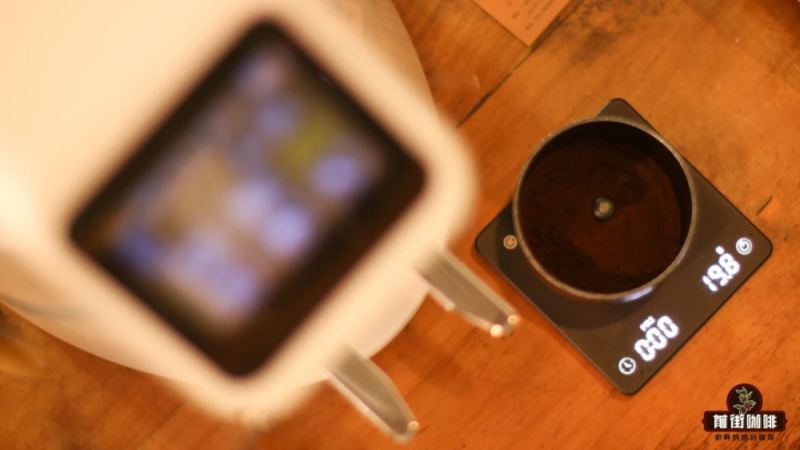
Astringent Coffee and Espresso Grind Size: How Do You Dial In Without a Sieve?
Espresso needs a grind far finer than pour-over or cold brew, close to flour, and the particles cannot be judged by eye. A shift of just 0.1 on the dial changes the result. Too fine and water meets more resistance, causing over-extraction; too coarse and it flows through too fast, causing under-extraction.
With unfamiliar beans, watch the flow rate and taste rather than measuring particle size with a sieve. An astringent, drying finish usually signals over-extraction, so coarsen the grind slightly; a thin, sharply sour shot points to under-extraction, so go finer. Adjust one step at a time and keep the dose and yield steady.
When making espresso, the grind size of the coffee powder is the core variable that determines the quality of the final product. Compared with brewing methods such as pour-over and cold brew, espresso demands a far finer grind than one might imagine—the powder is as fine as flour, and it is hard to judge its uniformity with the naked eye. A deviation of just 0.1 on the dial can lead to a world of difference in taste. This article systematically sorts out the complete approach to adjusting espresso grind—from judging grind size and observing flow rate to applying formulas and fine-tuning flavor—to help coffee lovers quickly lock in the right grind range even when facing unfamiliar beans, and pull balanced, delicious espresso.
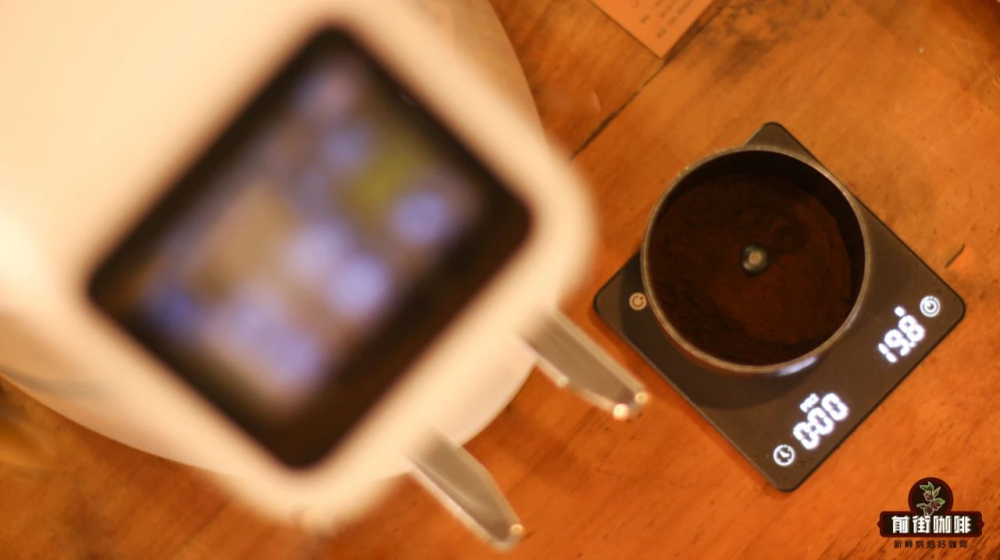
Everyone who makes coffee knows that grind size has a crucial impact on the final taste. Once the grind setting is wrong, or the ground particles vary widely in size, it is very easy to cause under-extraction or over-extraction. Compared with methods like pour-over and cold brew, espresso requires much finer particles, and adjustments must be more precise—only then can the espresso show its ideal flavor.
How fine is espresso grind, really?
When talking about the coarseness of pour-over coffee, Front Street Coffee usually uses the Chinese No. 20 standard sieve as a reference, calibrating by counting the proportion of coffee grounds that can pass through a fixed aperture. But espresso follows a path of pressurized, short-time extraction, where all flavor expressions are magnified many times over—the good aspects are magnified, and the flaws are magnified just as much. So the demands on grind are especially strict. Its powder is finer than fine salt; with the naked eye you simply cannot distinguish the particle size or uniformity, and trying to measure it with a sieve is even more impractical.
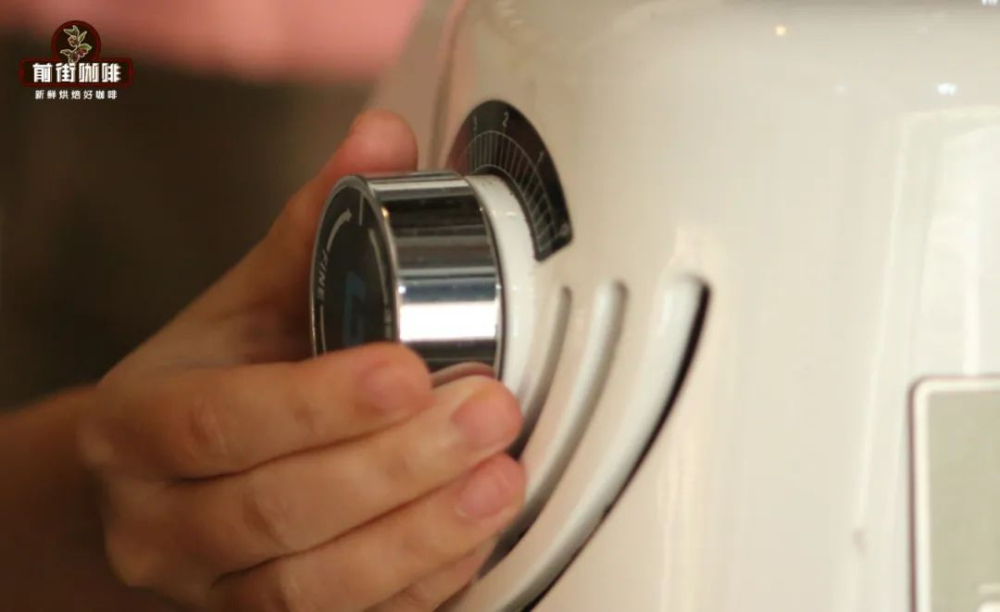
If the grind is slightly too fine, the resistance of water passing through the coffee bed increases, which easily causes over-extraction; conversely, if it is slightly too coarse, water passes through the bed too easily, leading to under-extraction. And the deviation that causes this may be only 0.1 of a mark on the dial. For this reason, we generally keep a close eye on the flow rate and taste of the espresso during brewing, using them to judge the appropriate grind range.
How do you first establish a suitable grind range?
When you get a bag of unfamiliar coffee beans and want to brew them well, the first step is to determine where the grind setting should be. If the grinder is brand new and we do not yet know which setting range is suitable, we can first use a small amount of beans to test-grind at several different settings. When the coffee powder feels as fine as flour—soft to the touch, without any rough, gritty sensation—it is about right.
Next, you can apply the general espresso parameters to extract. Front Street Coffee recommends a coffee-to-liquid ratio of 1:2, meaning 1 gram of coffee powder extracts about 2 grams of coffee liquid, with the time controlled between 20 and 30 seconds. Take a 20-gram capacity portafilter basket as an example: load 20 grams of coffee powder and ultimately get 40 grams of coffee liquid. If it takes less than 20 seconds, the flow rate is too fast; if it takes more than 30 seconds to finish, the flow rate is too slow.
A fast flow rate means the contact time between water and coffee powder is too short, and the taste is often thin or sour—at this point you need to grind finer. Adjusting the setting relies on the feel you build up over time: if you are within 5 seconds of the target time, you can move 0.2 marks each time; if the gap is larger, you might as well be bolder and adjust by 0.5 to 1 mark. Even if it suddenly goes from taking too long to being too short, you can still use that to lock in a rough range and then narrow it down step by step. By the same logic, a flow rate that is too slow means the powder is too fine, water struggles to pass through the coffee bed smoothly, and the coffee easily turns bitter and astringent—at this point you need to adjust toward coarser.
How do you pinpoint the truly suitable grind setting?
The formula application mentioned earlier by Front Street Coffee is only meant to help us quickly define a usable grind range; it does not mean that an espresso extracted with these parameters will necessarily taste good. Ultimately, you still need to judge whether the extraction is on point by combining the characteristics of the beans themselves with the actual taste.
If the espresso tastes noticeably burnt and bitter, but the strength is still moderate, it is most likely that the extraction time was too long and too many bitter compounds were released, so you can grind slightly coarser. If the crema on the surface of the coffee liquid is lighter in color and thin in texture, it may be that too much was extracted in the tail end; in that case you can reduce the liquid weight—that is, extract less—and it is recommended to raise the coffee-to-liquid ratio to between 1:1.5 and 1:1.7. Conversely, when the espresso has rich layers of flavor but a short finish, you can extract a little more coffee liquid and try adjusting the ratio to 1:2.5.
For professional coffee knowledge exchange and more coffee bean information, please follow Coffee Workshop (WeChat public account: cafe_style)
For more specialty coffee beans, please add the private WeChat of Front Street Coffee (FrontStreet Coffee), WeChat ID: qjcoffeex
The above content is compiled by CoffeeHunters, a coffee news website.


