







Coffee Particles and Six Overlooked Espresso Extraction Points
Espresso extraction pushes a large amount of flavor out of the coffee particles in only twenty or thirty seconds, so minor oversights quickly unbalance the shot. Six commonly missed points are dosing into a wet portafilter basket, uneven distribution, repeated tamping, knocking the portafilter, forgetting to flush the group, and delaying the start after locking in the basket.
Each of these shifts the flow rate or the evenness of the puck. Not drying the basket, for example, lets grounds stick and channel, while delayed start time lets the bed settle and heat unevenly. Tamping pressure matters less than a level, consistent tamp: roughly 10 to 15 kilograms applied straight down is enough, so extra force does not fix a poorly distributed dose of coffee particles.
Espresso extraction is extremely brief—in just twenty or thirty seconds, a large amount of flavor compounds is released from the coffee grounds. Because of this, even a small operational oversight can cause the flow rate to spiral out of control and the flavor to become unbalanced. Many enthusiasts follow the same parameters and imitate the same steps, yet their output never reaches the ideal state. The problem often lies in those seemingly insignificant details. In this article, Front Street Coffee systematically reviews six operational points that are easily overlooked but can significantly affect extraction results, including common issues such as not drying the portafilter basket before dosing, uneven distribution, repeated tamping, knocking the portafilter, forgetting to flush water, and delaying the start after locking in the portafilter. It further explains the correct understanding of tamping pressure and the standard technique, helping everyone improve the consistency of their espresso output by paying attention to details.
For more specialty coffee knowledge, please follow the WeChat public account: Front Street Coffee (FrontStreet Coffee)
To produce a qualified cup of espresso, the process itself is not complicated, yet many people often encounter abnormal flow rates after pressing the extraction button, or a flavor that makes them frown. Same beans, same grind setting, dose, time, and ratio—even the technique was replicated one-to-one from a tutorial. Why still can't you make that beautiful Espresso?
Ultimately, success or failure often hides in the details. Espresso is the fastest to produce among freshly ground coffees; the machine needs only a few dozen seconds to extract a large amount of the essence from the coffee grounds. To obtain a satisfying shot of espresso, not only must all parameters be precisely controlled, but the tiny steps in the operation process also deserve serious attention.
In this article, Front Street will sort out those details that seem insignificant but actually gradually change the state of the espresso. You might as well check and see if any of these are pitfalls you have encountered before.
1. Dosing directly into a wet portafilter basket Cleaning the portafilter basket and removing residual coffee grounds after each extraction is a routine practice tacitly understood among baristas. Before the next extraction, the moisture also needs to be wiped away to keep the basket dry.
However, some people, for convenience, rinse the basket and dose directly while it is still wet. The first portion of coffee grounds that falls in comes into contact with the moisture and clumps together. The subsequent distribution and tamping can hardly act effectively on this damp clump. During extraction, the espresso flow rate will fluctuate—now fast, now slow—extremely unstable, and the final quality of the espresso naturally suffers greatly. 2. Rushing to tamp before the coffee bed is evenly distributed
Simply put, the purpose of distribution is to spread the coffee particles flat and evenly within the basket, so that hot water can pass evenly through every coffee particle, thereby keeping the extraction degree as consistent as possible throughout.
Yet some people pick up the tamper and press down before the coffee bed has been leveled, leaving a depression on the surface of the puck. During the actual extraction, this seemingly tiny hollow gives water an opportunity to exploit, easily causing channeling and spritzing. In addition, tamping with a wet tamper will carry away a small amount of coffee grounds, making the puck surface uneven. Front Street suggests that after dosing, first let the loose grounds settle as flat as possible, then tamp. If necessary, you can also gently tap with your hand. 3. Tamping the puck repeatedly
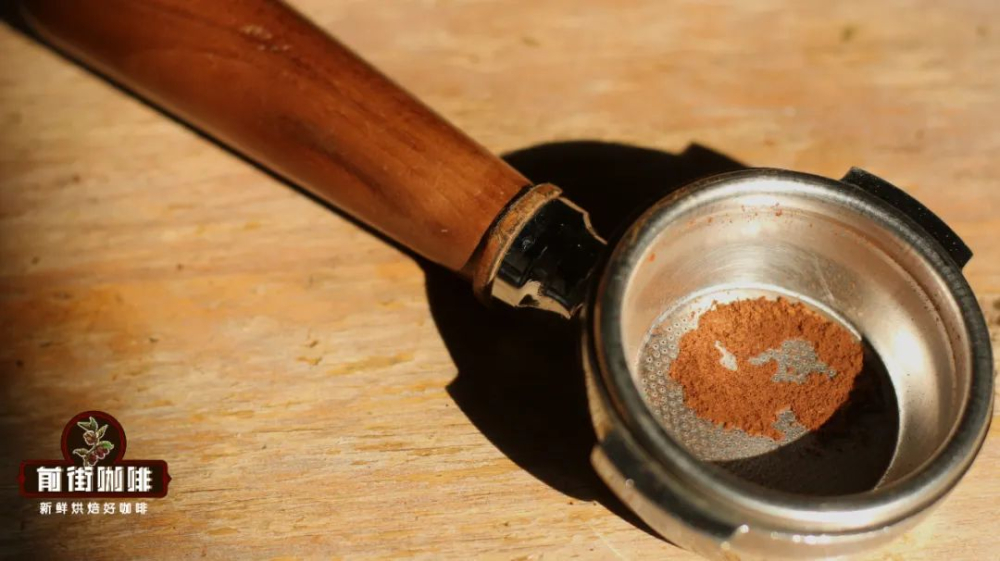
Besides uneven distribution, the operational details during tamping also influence the final extraction performance. Some people, in pursuit of perfect levelness, tamp back and forth repeatedly—having already tamped once, they see one side slightly higher and press again in that direction. After multiple tampings, the surface of the coffee bed looks flat, but the internal density distribution has actually changed, and the probability of channeling during extraction rises significantly.
In fact, the levelness of the puck does not need to be perfect. As long as there is no obvious tilt visible to the naked eye, the impact on extraction is very limited. It is best to complete tamping in one go. If one tamp does not level it, that indicates a problem with your posture or force application point, and you should re-practice the motion. Using a second press to fix the puck will instead cause layering in the internal structure of the coffee bed.
4. Accidental collision of the portafilter before extraction
According to Front Street's observation, these people usually move with excessive force, are especially confident when locking in the portafilter, and push it upward before the angle is aligned, resulting in a collision with the group head. At this point, the previously firmly tamped puck may already be cracked, and the probability of channeling rises greatly. This situation is quite common in home brewing, and some newly initiated baristas are also prone to this mistake.
5. Forgetting to flush water before attaching the portafilter
If there is a long interval between this extraction and the last one, the temperature of the dispersion screen on the group head will be very high. If you do not release some water beforehand to cool it down, the surface of the puck may be scorched after the portafilter is locked in. The espresso extracted this way often carries a distinct burnt bitterness. To avoid interference from residual coffee grounds, Front Street suggests developing the habit of flushing a bit of water before locking in the portafilter.
6. Delaying pressing the extraction button after locking in the portafilter
Some people, after tamping, find there is nowhere to rest the portafilter, so they lock it into the group head early, then go prepare the cup and scale, and only start the extraction button after everything is in place. The coffee obtained this way is likely to carry a burnt, bitter note.
The reason is that the group head is very hot. Once the portafilter is locked in, if no water is dispensed by pressing the button, the puck will continue to be baked at high temperature, releasing burnt and bitter flavors. Therefore, after locking the portafilter tightly, extraction should be started immediately to avoid wasting coffee due to overheating.
Besides the details listed above, Front Street believes it is also necessary to specifically discuss tamping pressure, which is a particular concern for many beginners just getting into espresso.
The core function of tamping is to strengthen the tight connection between coffee particles, preventing hot water from easily washing the coffee bed apart and disrupting extraction. Therefore, we only need to ensure that the downward pressure applied is even and moderate. Many people fail to tamp the puck well, and the root cause often lies in posture (as shown in the figure below), such as the arm not staying vertical, or the force application point being uneven. These problems are not difficult to correct; with diligent practice, you can gradually master the essentials of tamping.
The most common tamping technique is: place your thumb and index finger on either side of the tamper, wrap the remaining three fingers and palm around the handle, keep your arm vertical, and apply force evenly downward.
But as Front Street says, this skill requires repeated practice to truly grasp. Once we can proficiently master the motions of distribution and tamping, making delicious espresso becomes easier.
The above content is compiled by CoffeeHunters, a coffee news website.


