







Is Iced Americano Useful for Weight Loss?
Americano is espresso diluted with water, one member of the broader black coffee family rather than a separate drink. The story traces to World War II, when American soldiers stationed in Italy asked cooks to add water to strong espresso to recreate the coffee they knew at home. Italians named the result Americano, and the habit spread after the war.
Plain americano coffee carries almost no calories, so it fits a weight-loss routine when it replaces sugary drinks, though added syrups or cream change that. Caffeine content depends on the espresso used, so drinking it in the afternoon or evening can disturb sleep. A common suggestion is to stop caffeine about six hours before bed and keep daily intake moderate.
Many people conflate black coffee with Americano, but in reality, Americano is just one member of the black coffee family. Its flavor expression is inseparable from the quality of the espresso, and although it is essentially espresso diluted with water, it has unexpectedly taken the world by storm. In this article, Front Street Coffee (FrontStreet Coffee) will walk you through the origin story of Americano, the brewing principles, recommendations for blend and SOE beans, as well as the extraction parameters and drinking suggestions for iced Americano, helping you figure out whether iced Americano can actually aid weight loss and when is the best time to drink it.
When it comes to black coffee, the first thing that comes to most people's minds is Americano, and quite a few friends even equate the two directly. Strictly speaking, black coffee broadly refers to the large category of coffee with no sugar or milk added, and Americano is merely one type within that category.
Whether an Americano tastes good and what flavor direction it takes depends largely on the performance of the espresso used. Although it has "American" in its name, it is actually the product of espresso diluted with water. Why is diluted coffee still so highly sought after? In this article, Front Street Coffee (FrontStreet Coffee) will chat with you about the unique charm of Americano.
What exactly is Americano?
Although there is no definitive proof, one theory holds that Americano is related to World War II. Back then, American soldiers stationed in Europe wanted to drink coffee, but locally in Italy there was only strong, heavy espresso, and that intensity was hard for the American GIs to accept.
So they asked the cooks to add a large amount of water to the espresso, trying to recreate the taste of the coffee back home. Later, Italians gave this American drinking preference its own name, calling it Americano (the Americans' coffee), and that is the origin of the name "Americano."
After the war ended, these soldiers still missed this way of drinking coffee when they returned home, because it was quick to make and the amount of water could be adjusted to personal taste. So the United States began importing pressure-based espresso machines from Italy. However, after the machines entered the American market, due to their high price and the public's unfamiliarity with espresso at the time, sales were not ideal.
The turning point came after Starbucks introduced Italian espresso machines. It launched a series of espresso-based coffee products, including Americano. Leveraging its own store network, the espresso-based Americano quickly won the favor of a large number of consumers and gradually spread overseas. So many people first heard of Americano through Starbucks.
How is Americano made?
According to the Cambridge Dictionary, Americano refers to: a type of coffee drink made by adding hot water to espresso coffee, that is, adding hot water to espresso is what makes it an Americano. Simply put, espresso diluted with water is Americano.
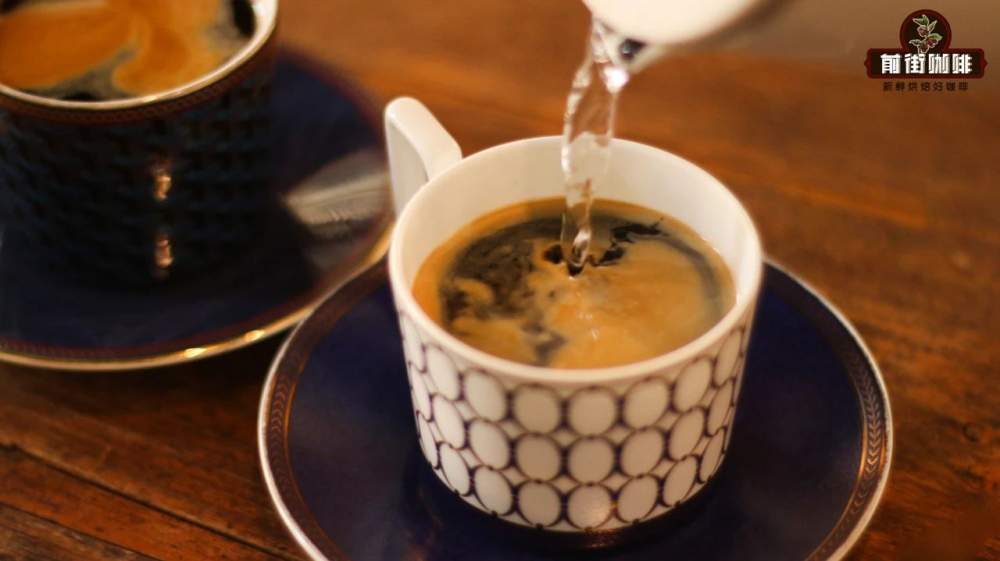
The production process for espresso is: first grind the coffee beans into a very fine powder, then use a pressure extraction coffee machine to let water quickly pass through the coffee powder layer under sealed pressure, extracting the soluble substances to obtain a small amount of extremely concentrated coffee liquid. Finally, add an appropriate amount of hot water or ice water, and it becomes a cup of Americano.
Americano coffee bean recommendations
For making Americano or espresso, Front Street Coffee (FrontStreet Coffee) recommends choosing blend beans specifically designed for espresso. There are three reasons to recommend blend beans: first, the cost is relatively lower; second, the beans used in the blend can complement each other, making the flavor of each cup more balanced and stable; third, most blend beans use a medium-dark or darker roast, so after extraction they are less likely to show sharp acidity or a thin taste.
Espresso blend coffee bean recommendations
"Front Street Coffee (FrontStreet Coffee) - Warm Sun Blend Coffee Beans": Ethiopia natural Red Cherry coffee beans (30%) + Honduras Sherry barrel coffee beans (70%), presenting rich wine aroma, vanilla cream, berry sweetness and acidity, and roasted nut flavors.
"Front Street Coffee (FrontStreet Coffee) - Specialty Blend Coffee Beans": Colombia washed coffee beans (30%) + Brazil semi-natural coffee beans (70%), with flavor notes of nuts, dark chocolate, and caramel.
"Front Street Coffee (FrontStreet Coffee) - Commercial Blend Coffee Beans": Robusta washed coffee beans (10%) + Colombia washed coffee beans (30%) + Brazil semi-natural coffee (60%), showcasing flavors of nuts, cocoa, and caramel.
"Front Street Coffee (FrontStreet Coffee) - The Espresso Moka Pot Coffee Beans Recommended by Many Baristas - Front Street Black Cocoa Blend Coffee Beans": Yunnan washed small-bean coffee (30%) + Brazil semi-natural coffee beans (70%), with soft fruit acidity, caramel, and nut flavors.
SOE single-origin espresso coffee bean recommendations
As specialty coffee culture becomes more and more widespread, some friends also want to use single-origin beans to make Americano. If you choose single-origin coffee beans, Front Street Coffee (FrontStreet Coffee) suggests picking beans with a medium roast level or above and relatively prominent flavors.
Light-roasted beans tend to show sharp acidity under the conditions of extremely fine grinding and pressure extraction. Moreover, light roasting overall has insufficient caramelization, so it will taste thinner than beans roasted at medium or above.
"Front Street - Costa Rica Mozart Coffee Beans," this medium-roasted bean, when extracted as SOE, can show raisin sweetness, a faint floral aroma, and berry-like sweet acidity.
"Front Street - Guatemala Flor del Cafeto Coffee Beans," after medium-roast extraction as SOE, shows soft fruit acidity, dark chocolate richness, and a slight smoky note.
"Front Street - Brazil Queen's Estate Coffee Beans," after medium-dark roast extraction as SOE, presents roasted peanut and roasted nut aromas, along with dark chocolate-like richness and a caramel finish.
Front Street's extraction parameters for making SOE Americano
Coffee beans: Costa Rica · Mozart
Coffee powder dose: 20g
Coffee liquid yield: 40g
Powder-to-liquid ratio: 1:2
Extraction time: 26–32 seconds
Grind setting: Galileo 2.0
The coffee machine used by Front Street has a double-shot basket capacity, requiring 20 grams of coffee powder each time, with an extraction powder-to-liquid ratio of 1:2, meaning 40 grams of coffee liquid is produced within a reasonable time. The extraction duration is related to the flow rate of the coffee powder, and usually a single extraction is controlled between 20 and 35 seconds. Less than 20 seconds and the coffee tends to be thin and weak; more than 35 seconds and it tends to over-extract, bringing a burnt bitterness. Therefore, when Front Street produces it, the espresso time is locked in the 26–32 second range.
Before extraction, first wipe the basket dry, turn on the grinder to grind a double dose of coffee powder, and place it on an electronic scale to weigh and adjust until it is exactly 20 grams. Next, use a distribution tool to level the coffee powder, then use a tamper to press vertically downward with force to compact the puck, ensuring more stable extraction.
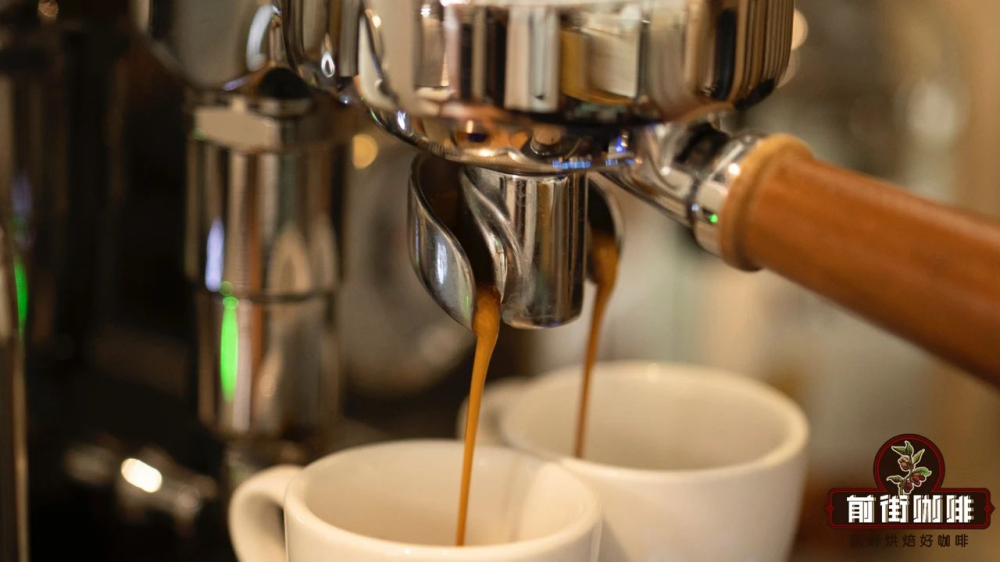
Then turn on the extraction switch and let water run for 1–2 seconds to moisten the brew head and rinse off any coffee grounds stuck to it. Place an electronic scale under the cup that will catch the Espresso and zero it, then place it under the brew head during extraction. Gently lock the portafilter onto the brew head and flip down the extraction switch. Watch the changes in the extracted liquid, and when the electronic scale shows the coffee liquid has reached 40 grams and the time is about 30 seconds, pull the switch down to stop.
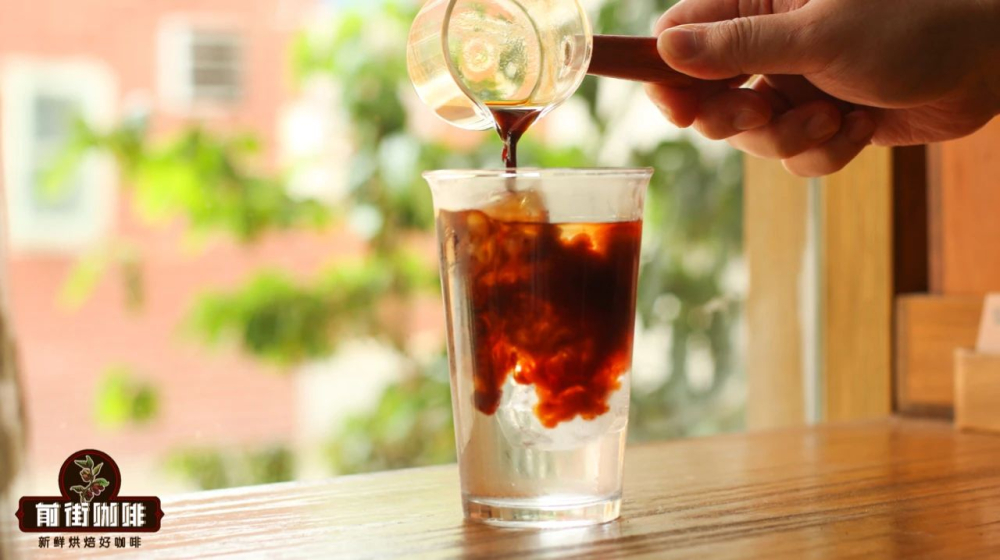
Prepare a cup with a capacity of about 300ml, add 80 grams of ice cubes and 170 grams of room-temperature drinking water, pour the coffee liquid into the ice water, stir evenly, and enjoy.
A Mozart SOE iced Americano like this is very refreshing on the palate, with elegant sweet aromas of raisins, osmanthus, and berries, and almost no bitterness can be felt. As the ice cubes slowly melt and dilute it, the coffee becomes icy and delicious, making it a drink not to be missed in summer.
The above content is compiled by CoffeeHunters, a coffee news website.


