








How Does Yunnan Coffee Fit Into Asia's Coffee Region?
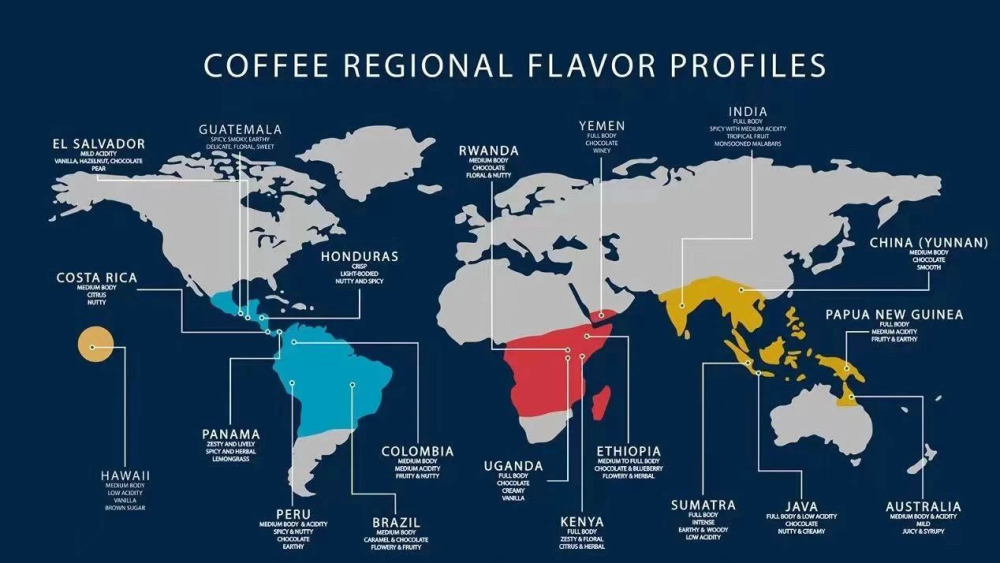
Asia's coffee region, which runs from Yunnan in China through Indonesia to Papua New Guinea, tends to cup with a full body and rounded sweetness rather than the sharp acidity of Africa. Yunnan has been strengthening its position in that region, with cherry picking continuing through the Spring Festival and more than half of producing areas now in the final stage.
The three major coffee regions each lean a different way: Africa toward acidity, Latin America toward nutty and chocolate notes, and Asia toward body and sweetness. Varieties and coffee bean processing, especially washed methods, shape how much of that regional character reaches the cup, which is why cuppers compare washed Yunnan lots against Indonesian Mandheling.
When selecting coffee beans, besides checking the origin information on the packaging, understanding the basic flavor characteristics of the world's three major coffee regions is also an important way to quickly find the taste that suits you. Front Street Coffee's stores focus on single-origin beans, covering more than fifty coffee beans from the three major regions of Africa, Latin America, and Asia. Based on years of cupping experience, the African region is known for its acidity, the Americas mostly present nutty and chocolate notes, while the Asian region is characterized by body and rounded sweetness. This article focuses on the Asian coffee region, from Yunnan, China to Indonesia and Papua New Guinea, sorting out the varieties, processing methods, and flavor characteristics of each producing country, and sharing Front Street's cupping insights on Yunnan washed beans and the Mandheling series, helping coffee lovers build a clearer understanding of the region.
For more specialty coffee knowledge, please follow: Front Street Coffee (Frontsteet Coffee)
When choosing coffee beans, besides reading the origin and processing information on the packaging, Front Street Coffee (FrontStreet Coffee) also suggests that you first understand the basic flavor trends of the world's three major coffee regions, and then filter for coffee beans that suit you based on specific estates.
Front Street Coffee's stores focus on single-origin coffee beans, offering more than 50 kinds of coffee beans from different origins, covering the world's three major coffee regions. The world's three major coffee regions are Africa, Latin America, and Asia. After cupping beans from multiple regions, Front Street Coffee (FrontStreet Coffee) concluded: the African region is mainly characterized by acidity, the Americas lean toward nutty and chocolate notes, while the Asian region is known for its full body and strong, rounded sweetness.
Recently, the Yunnan region's market has continued to strengthen. Cherry picking during the Spring Festival did not stop, and more than half of the producing areas have entered the final stage. Coffee farmers and coffee enterprises are fairly satisfied with the current market, with relatively ample market confidence, and enthusiasm for production and processing has increased compared with before the holiday, with the number of parchment beans and green beans clearly increasing. Yunnan is China's largest coffee-producing region, with a full-bodied flavor and a base of brown sugar and nuts. In this article, Front Street will talk with everyone about the Asian coffee region where Yunnan coffee is located.
What are the Asian coffee-producing regions?
Well-known producing countries in the Asian coffee region include Indonesia, China, Vietnam, India, and Papua New Guinea. This region as a whole presents a full-bodied character, but influenced by terrain, climate, and altitude, the flavor of each producing country differs. Taking the recently popular Yunnan coffee as an example, from being ignored more than a decade ago to now becoming one of the top choices for many green bean merchants and roasters, Front Street Coffee (FrontStreet Coffee) has seen that Yunnan coffee has unlimited potential.
Why is Yunnan, China suitable for growing coffee?
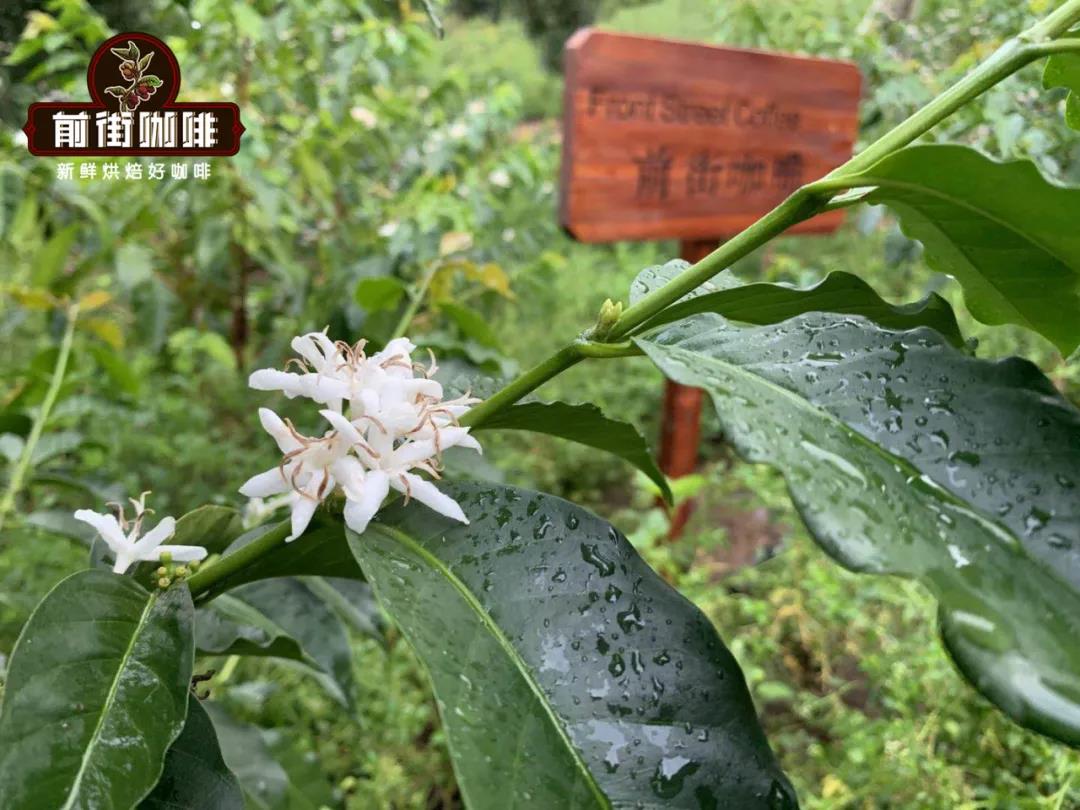
Yunnan is located south of the Tropic of Cancer, in a subtropical mountainous climate zone, with unique plateau red soil that is fertile and loose, and a mild climate, making it especially suitable for growing small-seed coffee. Small-seed refers to Arabica coffee beans; when it was first introduced to China, the name small-seed was chosen to make it easier to promote and remember. The representative coffee bean of small-seed in Yunnan is Catimor.
Yunnan's unique natural conditions have formed the special flavor of Yunnan small-seed coffee: strong but not bitter, aromatic but not harsh, with a slight fruity note. The growing areas are mainly distributed in Lincang, Baoshan, Simao, Xishuangbanna, Dehong, and other prefectures. Baoshan has an average temperature of 21.5°C, with a maximum of 40.4°C, and basically no frost year-round, making it recognized as the best small-seed coffee producing area.
What are Yunnan's coffee varieties?
Front Street has been deeply involved in the coffee industry for eight years, and has also established its own coffee estate in Baoshan, where the main variety planted is Typica. In fact, it was only after countless explorations that Front Street Coffee (FrontStreet Coffee) decided to plant the Typica variety. When reviewing materials on Yunnan coffee, Front Street Coffee (FrontStreet Coffee) found that what Yunnan originally planted was not Catimor, but Typica and Bourbon. Later, because these two varieties had low yields and poor disease resistance, coffee farmers were unwilling to plant them and turned to the higher-yielding, more disease-resistant Catimor.
The Catimor currently planted in Yunnan originated in 1959, when the Portuguese moved the Brazilian Bourbon mutation Caturra to East Timor, where it was crossed with Timor, which has Robusta bloodlines, successfully cultivating Catimor with super strong disease resistance and productivity. Because leaf rust affected coffee-producing countries worldwide, with the assistance of international organizations, producing countries vigorously promoted Catimor to resist leaf rust and increase yields.
Introduction to Yunnan coffee processing methods
Yunnan coffee bean processing methods today are trending toward diversification, with sun-dried, washed, anaerobic, and other methods contending. However, Yunnan's main processing method is still mainly washed. After coffee farmers fully hand-pick the coffee cherries, they process the green beans according to the following steps: screening coffee cherries — removing pulp — fermentation — washing — drying — hulling. Coffee farmers use a pulper to separate most of the pulp from the coffee beans, then put the parchment beans into a clean tank and soak them in water for fermentation to thoroughly remove the remaining mucilage layer. Through washed processing, distinct fruit acidity and a cleaner mouthfeel are presented.
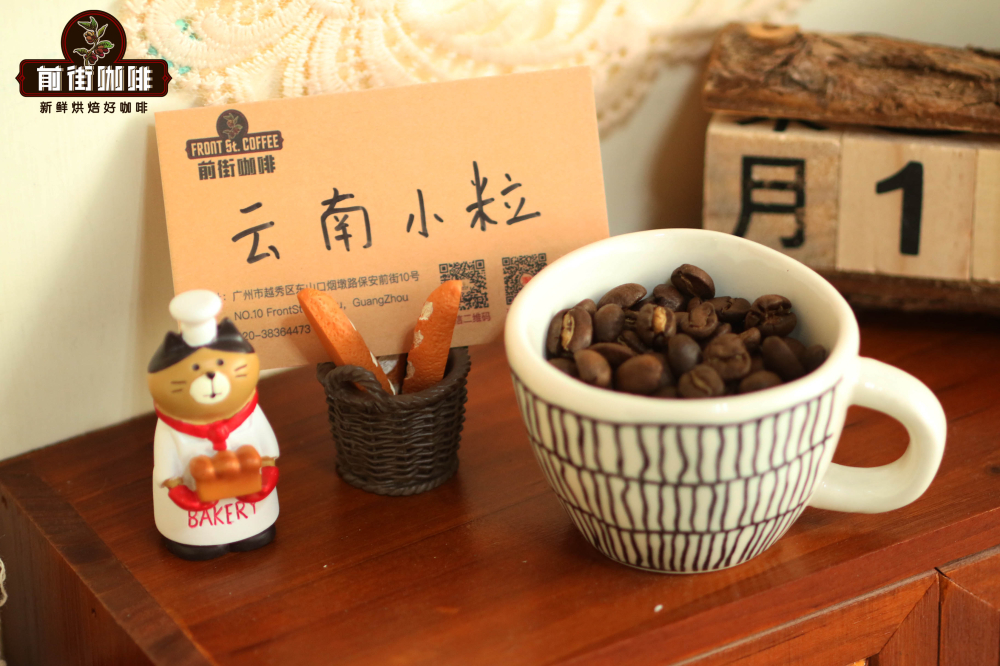
Among the Yunnan coffees offered by Front Street Coffee (FrontStreet Coffee), the washed coffee beans include Yunnan Small Seed Coffee and Huaguoshan Typica Coffee. The reason Front Street Coffee (FrontStreet Coffee) chose these two as representatives of Yunnan washed processing is that after multiple roasts and brews, repeatedly adjusting the roasting curve, and cupping to obtain satisfactory flavors, it decided to offer them.
If you want to try Yunnan coffee, Front Street Coffee (FrontStreet Coffee) suggests starting with the washed processing method, because washed beans have a clean and bright mouthfeel and can very well represent the most basic regional flavor of Yunnan. For example, these two coffee beans from Front Street Coffee (FrontStreet Coffee) have a very original Yunnan regional flavor. From Front Street Coffee's cupping of these two Yunnan beans, the dry aroma is nutty, but when drunk it is more chocolate, nut, and cream flavors, while the brown sugar sweetness is more prominent, and the overall mouthfeel is relatively balanced.
Of course, not all Asian regional flavors are like Yunnan coffee. Next, Front Street Coffee (FrontStreet Coffee) will share with everyone another of Asia's most representative coffee regions — Indonesia.
The coffee characteristics of Indonesia
Indonesia is located in Southeast Asia. In 1696, the Dutch found Indonesia in order to expand their coffee planting bases and first introduced coffee beans to the country's Java Island, where they were planted in large quantities. However, in 1877, leaf rust swept through almost all coffee trees in Indonesia, and Arabica coffee beans were almost completely wiped out, causing heavy losses. Later, Indonesia introduced Robusta coffee beans from Africa, which have strong disease resistance, making up for the economic losses caused by Arabica's weak disease resistance.
Today Indonesia is the world's most important producer of Robusta coffee beans. Robusta is concentrated in southern Sumatra, while Arabica is in northern Sumatra. Although Arabica accounts for only about 10% of Indonesia's total coffee beans, Indonesia's Mandheling is famous worldwide for its unique herbal medicinal flavor.
Types of Indonesian Mandheling coffee beans
The main production area of Mandheling is located around Lake Toba at the northern tip of Sumatra, Indonesia. For example, the Golden Mandheling, Lintong Mandheling, Aged Mandheling, and Tiger Mandheling offered by Front Street all come from this area.
Front Street Coffee (FrontStreet Coffee) believes everyone finds it very difficult to choose when buying Mandheling. What are the differences among so many Mandhelings? Next, Front Street Coffee (FrontStreet Coffee) will briefly introduce the differences among these Mandhelings for everyone's reference when purchasing.
The differences among Front Street Coffee's Mandhelings are: Lintong Mandheling represents the most classic Mandheling flavor, with a strong herbal note; Golden Mandheling is selected-grade PWN (a local Indonesian Mandheling company) Mandheling, with uniform bean size all above 18 mesh, manually sorted more than 4 times, with a clean and bright mouthfeel and excellent body and sweetness; Aged Mandheling uses a different wet-hulling process and is stored for more than three years, giving it a stronger flavor, but it is not easily accepted by most people; there is also Tiger Mandheling, the most aromatic Mandheling, so those who like herbal flavors and aromas can consider this one first.
Front Street Coffee (FrontStreet Coffee) has introduced so many Mandhelings to everyone, and I believe the term you hear most often is wet-hulling, so what is wet-hulling?
Indonesian coffee bean processing method —— Wet-hulling
Because Indonesia has a humid climate and frequent rain, in pursuit of more efficient drying, wet-hulling is mostly used, and Indonesia's most famous processing method is also wet-hulling. Wet-hulling mainly has two stages: removing the skin and pulp of the coffee fruit, then briefly fermenting and drying until the moisture content drops to 12-13%. This rapid processing method causes the coffee beans to be squeezed and develop cracks, which are what we call sheep-hoof beans. This is a characteristic of Mandheling and cannot be called a defect.
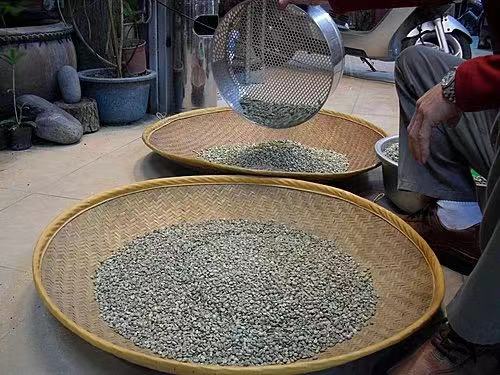
In addition to the conventional wet-hulling method, there is also an aged wet-hulling method. After coffee beans are processed by ordinary wet-hulling, they are sealed and stored in a warehouse for 2-3 years. During this period, the acidity slowly weakens and turns into sugar. Mandheling using this processing method is also called Aged Mandheling.
Next, Front Street Coffee (FrontStreet Coffee) will introduce another country in the Asian coffee region — Papua New Guinea.
Why is Papua New Guinea coffee also called "Little Blue Mountain"?
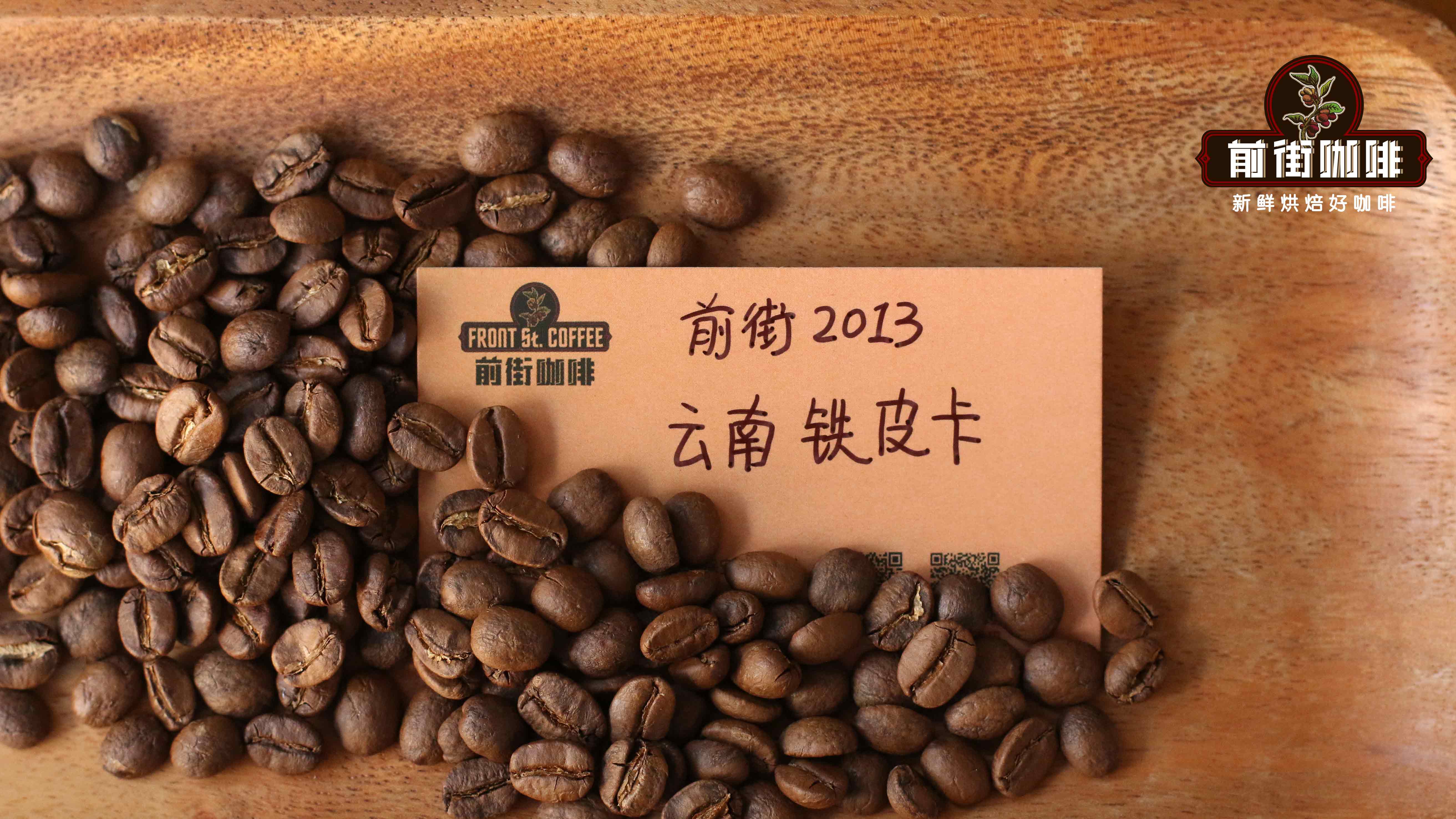
Papua New Guineans regard the bird of paradise as a symbol of freedom and happiness. The Arabica coffee from PNG AA Sigri Estate is named Bird of Paradise coffee, and its flavor is just like its name: specially spicy and rich in sweet and sour notes. Front Street Coffee (FrontStreet Coffee) has also offered a Bird of Paradise coffee bean from Papua. This bean was cultivated in Papua New Guinea after Jamaican Blue Mountain Typica traveled a long way there, and it carries the same root bloodline as Jamaican Blue Mountain, so Front Street Coffee (FrontStreet Coffee) often also calls it Little Blue Mountain coffee bean.
There is another reason Front Street chose to offer Papua New Guinea Bird of Paradise coffee beans: Front Street Coffee (FrontStreet Coffee) hopes every coffee it purchases has its own unique characteristics and does not use beans with the same flavor. The reason Front Street spends a lot of time selecting beans, adjusting roasting curves and parameters, and carrying out many other steps is that a coffee bean can have similarities but must also have its own uniqueness.
Introduction to Bird of Paradise coffee bean processing method
In Papua New Guinea, coffee is a national-level crop, 90% grown by smallholder farmers, supporting one-third of national income. Small estates mostly use the washed processing method for coffee beans, giving a strong taste but no earthy flavor. In addition, a small amount of sun-dried processing is also used, and its flavor has better richness compared with the washed method; large-estate coffee has a relatively clean and delicate mouthfeel.
Washed processing is used. Front Street believes that the coffee flavor of Papua New Guinea differs from Indonesia's stuffy aroma and low, deep notes; instead, it has a bright sweet-and-sour feel, floral and fruity aroma, similar to the flavors of South America.
The above is a brief introduction to the Asian coffee region. If everyone wants to learn more about coffee beans from the Americas and Africa, welcome to follow the Front Street Coffee (FrontStreet Coffee) official account to learn and exchange related coffee knowledge together.
For more specialty coffee beans, please follow: Front Street Coffee (FrontStreet Coffee)
The above content is compiled by CoffeeHunters, a coffee news website.


