








What Is the Right Cafe Latte Milk Coffee Ratio?
An iced latte is espresso plus milk over ice, and the difference between a cafe cup and a home one usually comes down to the beans, the milk, and the ratio. Italian blend beans give the drink a rich nutty, chocolatey tone and a heavier coffee taste, while other beans can push the milk's sweetness and creaminess forward instead.
A deep roast extracts thick, dense crema and works for both americano and latte. When asking is a latte bitter, the answer often lies in the bean choice and the milk-to-coffee balance rather than the method itself. Using a consistent cafe latte milk coffee ratio and the same milk each time makes results repeatable at home.
Latte is a required course for every barista. It seems like it only requires mixing espresso and milk, but recreating a cafe-level drink at home is not easy. Based on Front Street's hands-on experience, this article systematically sorts out several key steps in making iced lattes: how to choose suitable coffee beans and milk, how to determine a reasonable milk-to-coffee ratio, and what easily overlooked details there are during operation. The article also introduces Front Street Classic Italian Blend coffee beans, as well as the specific ratio parameters using Sunflower·Warm Sun Blend and Vitasoy fresh milk, helping enthusiasts steadily make a cup of well-balanced iced latte at home.

Making lattes is almost every barista's basic skill: first extract espresso, then prepare milk, and let the two achieve a harmonious taste balance in the cup. However, quite a few friends have also reported that when making lattes at home, they never manage to produce the same effect as in a cafe, so they came to ask Front Street about some experience in latte coffee making.
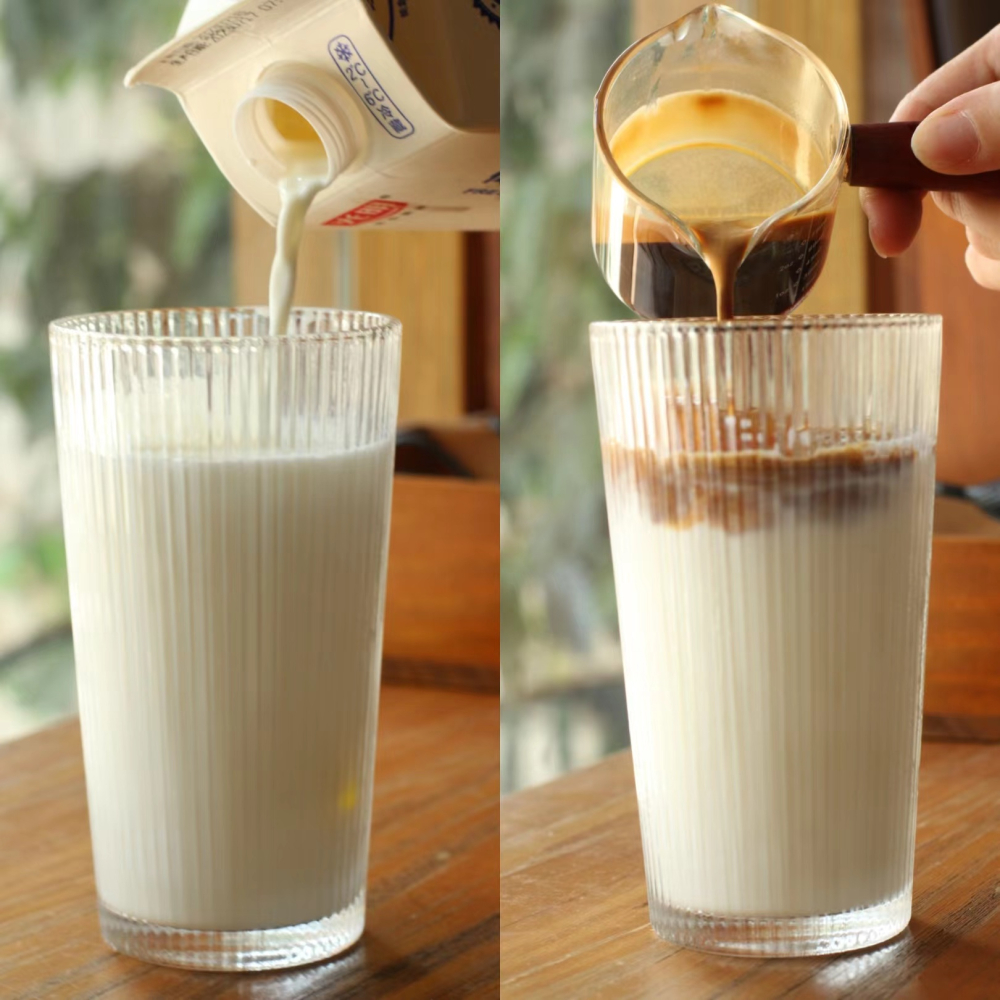
Iced latte looks very straightforward to make, [put ice, pour milk, pour coffee] and it is done, but behind this seemingly effort-saving process, truly making a delicious iced latte still requires a lot of understanding and thought.
First point: choose the right materials
The method for making iced latte is so simple that it appears on almost every coffee bean menu, so why does every shop's iced latte taste a bit different? One of the key reasons lies in the different milk and coffee beans used. The flavor of the coffee beans will very directly influence the overall direction of the iced latte. Most Italian blend beans will give the iced latte a rich nutty, chocolatey tone and a heavier coffee taste, while a small number of beans can bring out the milk's sweetness and creaminess.
For making iced latte, it is recommended to get Front Street Classic Italian Blend coffee. This recipe is composed of beans from three origins: Brazil, Indonesia, and Vietnam. It uses a deep roast, which can maximize the coffee's rich aroma as much as possible, and also makes it easy for everyone to extract thick, dense crema. It is suitable both for americano diluted with water and for latte paired with milk, and can be ordered at Front Street's Taobao store or Front Street Tmall flagship store.
The choice of milk is equally key. For full-fat fresh milk alone, there are more than a dozen common types on the market. Among these milks, some have a stronger milky taste and a thick mouthfeel, while others taste light and are close to watery. The standard for choosing milk is not simply to pursue richness and a prominent milky flavor, but to pick one that pairs harmoniously with coffee. Too heavy a milky taste will suppress part of the coffee's flavor, while milk with an obvious watery feel will make the latte bland.
Second point: the milk-to-coffee ratio should be reasonable
Once suitable coffee beans and milk are chosen, can a delicious iced latte be made? The premise is still that the ratio must be appropriate. Front Street's iced latte uses Sunflower·Warm Sun Blend coffee beans and Vitasoy fresh milk. The ratio of espresso to milk is 1:6, that is, 40 grams of espresso liquid, corresponding to 240 grams of iced milk and 75 grams of ice cubes, finally served in a transparent glass cup with a capacity of about 300 ml.
This ratio is only for everyone's reference, and is not the golden ratio for latte coffee. Front Street arrived at these parameters after adjusting the ratio many times with the above materials, mainly based on real tasting feedback. So when making iced latte, everyone can also adjust the ratio appropriately. More milk will cover the coffee flavor, less milk will make it more bitter, and more ice will dilute it.
Third point: operational details
Just as the method for iced latte [put ice, pour milk, pour coffee] is simple and direct, there are still some small points to pay attention to in actual operation. The most critical is the extraction of espresso. Whether a cup of latte tastes good depends on whether the espresso extraction meets the standard. Common problems that often occur, such as channeling and incorrect extraction time, will naturally also affect the taste of the iced latte.
The process of making iced latte also needs to be fast. Fast here means the time the ice and milk stay in the cup should be as short as possible, and the extracted espresso should be poured into the cup immediately. This is also why a freshly made iced latte can show a gradual layering of milk and coffee. If the ice soaks in the milk for too long, the ice cubes melt, and a water layer will appear at the top, making the whole cup taste weaker. Espresso is even more sensitive. When just extracted, the crema is very rich, and after 30 seconds the crema will noticeably decrease. Espresso lacking crema is also relatively difficult to float on the surface.
For more specialty coffee knowledge, please follow: Front Street Coffee (Frontsteet Coffee)
The above content is compiled by CoffeeHunters, a coffee news website.


