







How do Colombian coffee regions and grading shape flavor?
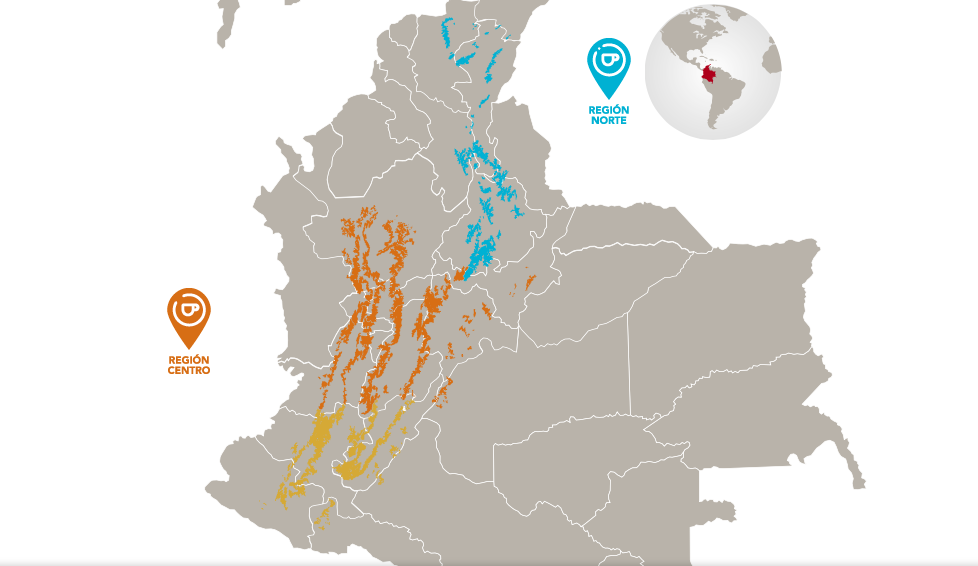
Colombia grows coffee in 20 of its 32 departments, and the crop is divided into three main areas: northern, central, and southern, all clustered along the western Andes. The north grows at lower latitude and higher temperature, so shade trees are common and acidity stays soft. Huila coffee sits in the southern zone, where fruity sweetness and floral aromas are more pronounced.
The country's coffee grading system sorts beans mainly by size rather than flavor, so a large screen size does not by itself indicate better cup quality. Roasters therefore judge Colombian lots by region, variety, and cupping notes instead. Everyday beans such as Huila, Ombligon, and Sidra are typically given a medium roast and brewed as V60 pour-overs in three pours.
Colombia has long been known as the land of "green gold," and its coffee is renowned worldwide for its rich, full-bodied character reminiscent of dark chocolate. With the rise of the fourth wave of specialty coffee, Colombian coffee has revealed a wealth of fruity sweetness and floral aromas, once again capturing the attention of both veteran and new coffee enthusiasts. This article systematically outlines the three major growing regions of Colombia—northern, central, and southern—explains the core logic behind its grading system, which focuses solely on bean size rather than flavor, and provides a detailed introduction to the flavor profiles, medium-roast approach, and V60 three-pour brewing parameters for Front Street Coffee's everyday beans such as Huila, Ombligon, and Sidra, helping readers gain a comprehensive understanding of the diverse allure of this South American coffee-producing nation.
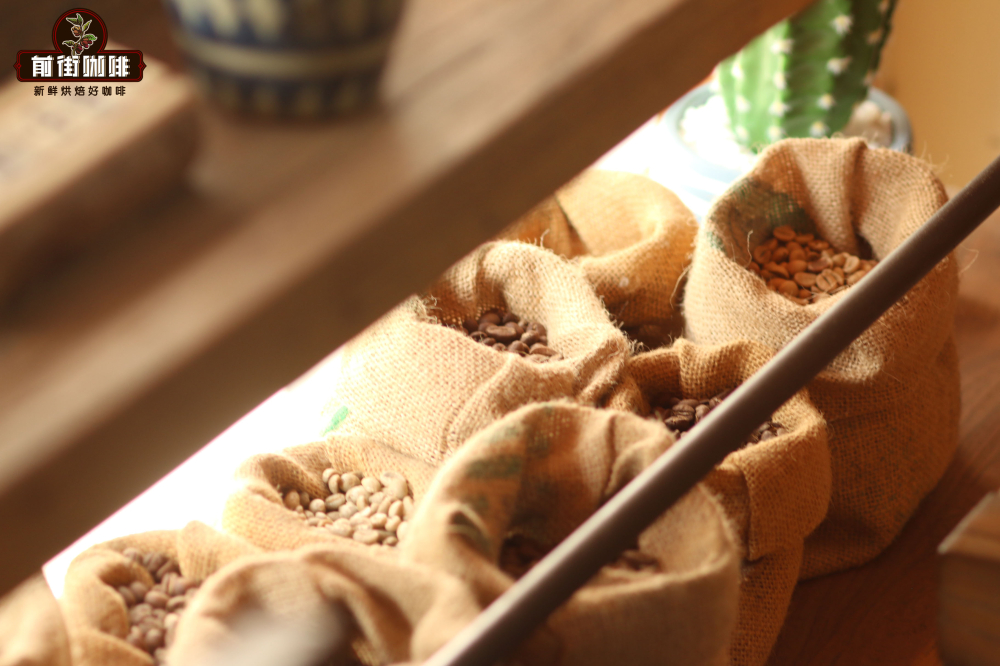
In this passionate South American land of Colombia, coffee is called "green gold." Its rich dark chocolate notes and full body have won the hearts of generation after generation of coffee lovers.
As the fourth wave of specialty coffee sweeps in, Colombian coffee has also taken the stage in a brand-new guise. On Front Street Coffee's bean shelves, several Colombian beans, with their abundant fruity sweetness, have not only earned praise from seasoned coffee connoisseurs but also drawn many newcomers into the world of coffee.
Colombia is located in northwestern South America, and its terrain can be broadly divided into the western mountain ranges, the eastern Orinoco Plains, and the Amazon Plain. The country is administratively divided into as many as 32 departments, 20 of which grow coffee. Because of the complex geography and significant differences in climate and soil conditions, Colombian coffee enjoys a rich and fascinating flavor spectrum. These growing regions are mostly concentrated on both sides of the western Andes Mountains and can be roughly divided into three major areas: northern, central, and southern.
The northern region covers La Guajira, Magdalena, Cesar, and other departments. The growing conditions here are similar to those in Central America, with lower latitude and higher temperatures, making coffee plants more susceptible to direct sunlight, so shade-growing is more commonly adopted in the north. Coffee from this region has soft acidity and relatively high aroma and body.
The central region includes Antioquia, Valle del Cauca, Tolima, Quindío, and other departments. This area is Colombia's largest coffee-producing zone, with densely distributed growing areas, and it is also one of the country's more traditional coffee-growing regions.
The southern region covers Cauca, Huila, Nariño, and other departments. Because it is closer to the equator and most coffee grows in high-altitude mountain areas, the coffee produced here is of even more outstanding quality, with not only bright acidity but also unique floral and fruity aromas. As a result, coffee from the southern region has captured the hearts of many coffee lovers.
Front Street Coffee selects beans from the Huila region as the representative Colombian coffee in its everyday beans series. A washed process is used, so excess sugars in the fruit skin, pulp, and mucilage no longer participate in the final drying process, thereby presenting Huila's most authentic terroir. When roasting this everyday Huila coffee, Front Street Coffee uses a medium-dark roast to highlight the classic dark chocolate flavor and full body. In Front Street's cupping, one tastes rich dark chocolate, pronounced yet rounded citric acidity, and caramel-like sweetness.
Since the turn of the millennium, coffee lovers' pursuit of coffee has no longer been limited to rich chocolate flavor and full body. With continuous improvements in roasting technology, roast levels have gradually become lighter, allowing the abundant fruity sweetness and floral aromas in coffee to be revealed to the public. Gradually, coffee fans' preferences shifted from rich and full-bodied toward today's fruit-bomb-style coffees.
On Front Street Coffee's bean menu board, every classic producing country occupies its own section, and Colombia is no exception. If you prefer floral and fruity coffees, Front Street Colombia Sidra coffee beans and Front Street Colombia Ombligon coffee beans are recommended. Both use a medium roast and display elegant floral and fruity aromas and a gentle fermented quality when brewed, leaving a deep impression and making them favorites among many customers. If you want to experience these flavors, you can place an order directly at Front Street Coffee's Taobao store and Front Street Tmall flagship store.
Colombian Coffee Grading System
Colombian coffee grading focuses on bean size rather than flavor quality. Therefore, when you see the top grade "Supremo," do not assume it must taste good.
It merely indicates that 80% of the beans are 17 screen size or larger and has nothing to do with flavor. So be sure to check which growing region it is from. Specialty regions in the south will indicate the department and place of origin; if none is marked, it is most likely commercial-grade coffee.
How Are Colombian Coffee Beans Roasted?
The Colombian coffee beans currently sold by Front Street Coffee include:
"Front Street Colombia Huila Coffee Beans" Flavor profile: nuts, dark chocolate, caramel, soft fruity acidity
" Front Street Colombia Ombligon Coffee Beans " Flavor profile: berries, blackcurrant, citrus, dried fruit
" Front Street Colombia Sidra Coffee Beans " Flavor profile: grape, passion fruit, apricot, almond, chocolate
In order to preserve the soft acidity and caramelized sweetness of coffee beans from the Colombian growing regions, Front Street Coffee uses a medium roast while extending the time from the yellowing point to before first crack, allowing the beans to develop better sweetness.
To let every friend enjoy the aroma of freshly roasted coffee, Front Street Coffee guarantees that coffee beans are shipped within 5 days after roasting is completed ~!!!
How to Brew Front Street Colombian Coffee Beans?
Front Street Coffee uses a V60 dripper to brew coffee from Colombian growing regions. The 60 conical dripper has relatively large holes, and together with its unique spiral curve ribs, air can be expelled more easily, thereby improving extraction quality.
Water temperature: 90-91°C
Grind size: fine granulated sugar size / Chinese standard No. 20 sieve, 80% passing
Coffee-to-water ratio: 1:15
Coffee dose: 15 grams
Three-pour method: For the first pour, add 30 grams of water and bloom for 30 seconds; then pour 95 grams (the scale should read about 125 grams), finishing in about 1 minute; when the water level drops to 2/3 of the coffee bed, pour the remaining 100 grams (the scale should read about 225 grams), finishing in about 1 minute 40 seconds. At 2'00", dripping is complete; remove the dripper and extraction is finished.
The above content is compiled by CoffeeHunters, a coffee news website.


