







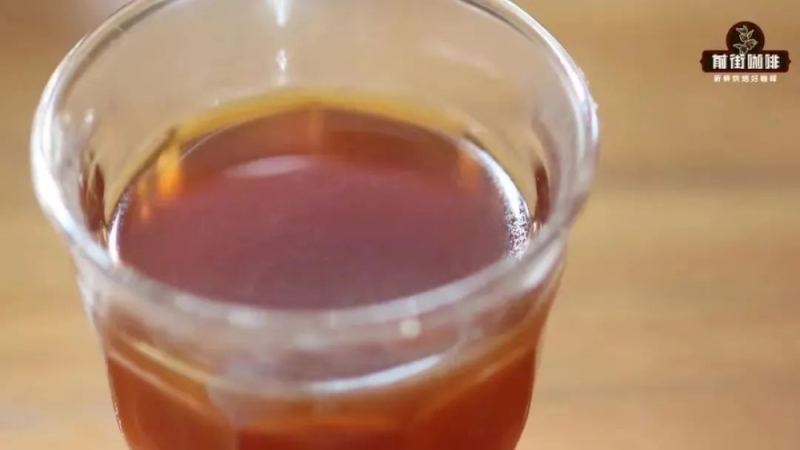
Boiling Coffee Filters: Paper or Flannel?
The filter material decides how much oil and how many solid particles end up in the cup. Paper filters block most oils and grounds, producing a clean, clear cup. Flannel has fiber gaps just wide enough to hold back solids while letting coffee oils through, so the brewed coffee tastes smoother, fuller and richer on the palate.
Flannel filtering traces back to 18th-century Europe, when boiling coffee was common and cloth was the standard way to strain it. Metal mesh filters let oil pass but also leak fine grounds. Flannel still has followers in Japan, though it demands more technique, suits darker roasts better and needs careful washing and storage.
The filter material used in pour-over coffee directly determines the flavor expressed in the cup. Paper filters produce a clean mouthfeel, while flannel preserves the coffee oils, making body and smoothness more prominent. This article starts from a conversation between Front Street Coffee and a customer, and compares in detail the differences between the paper drip method and the flannel drip method in terms of filtration effect, historical origins, brewing techniques, suitable roast levels, and storage and maintenance. Although flannel still has devoted users in regions such as Japan, its limitations for light roasts, learning curve, and hygiene issues cannot be ignored. If you are struggling to decide which filter material to choose, or want to understand the key points of flannel brewing, this article will provide a complete reference.
Recently, a customer, while tasting Mandheling, chatted with Front Street Coffee, saying that this cup of Mandheling tasted too clean, lacking oiliness, and the mouthfeel was not thick enough. This reminded him of the Mandheling he drank in Japan back then, with a glistening layer of oil floating on the surface, and the first sip was very...
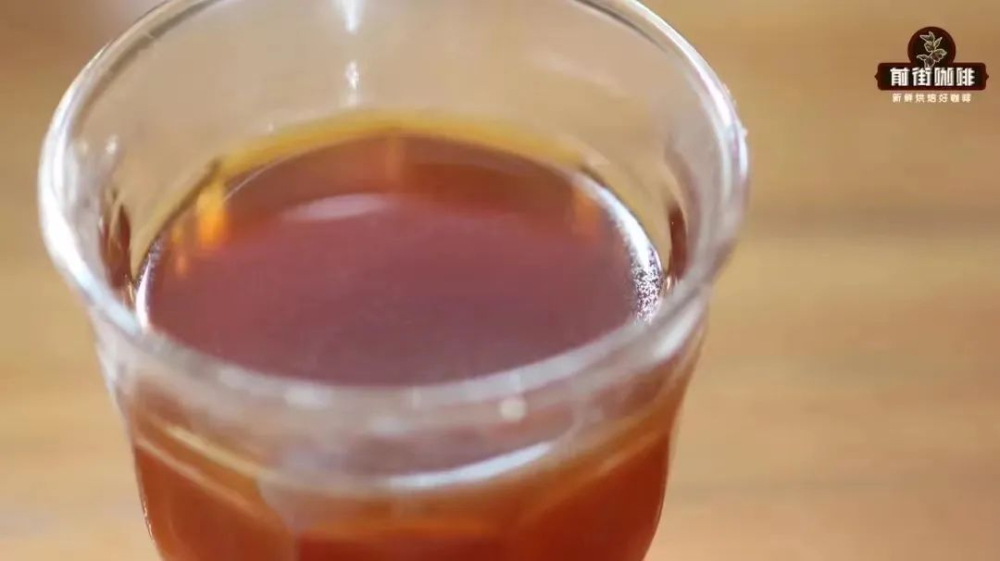
In fact, whether coffee can produce oils has little to do with brewing technique; the key lies in the filter material. At present, pour-over coffee generally uses paper filters, which have extremely strong interception ability and can block solid particles and most of the oils, so the coffee liquid brewed with paper filters is especially clear.
To retain coffee oils, you have to switch to materials with weaker filtration ability, such as flannel or metal mesh filters. The pores of metal mesh filters are relatively large; although oils can pass through, some fine coffee grounds will also leak through, so not many people are willing to use metal mesh filters.
The fiber gaps of flannel, on the other hand, are just right. This fabric has a cotton side and a fleecy side. Its greatest advantage is that it can block all solid grounds while allowing coffee oils to pass through smoothly. Therefore, when brewing with a flannel dripper, the coffee oils can be better retained. This layer of oil makes the coffee appear smoother, fuller, and richer in the mouth.
The practice of filtering coffee with flannel can be traced back to 18th-century Europe. At that time, boiling coffee was popular: coffee grounds and water were put into a pot and heated together, and after boiling, a flannel filter cloth was used to strain out the grounds. Later, as pour-over coffee rose, this method spread to Japan.
The Japanese found that compared with the paper filters of that time, flannel filtered coffee was cleaner, had a richer mouthfeel, and could be washed and reused repeatedly, resulting in a lower cost per cup. Flannel coffee was once popular throughout East Asia, and even today, many coffee shops in Japan still insist on using flannel for their brews.
However, flannel has now been almost completely replaced by paper filters, and very few shops still use flannel to brew coffee. This brings us to flannel's shortcomings.
Flannel is not very suitable for brewing light-roast coffee
Compared with paper filters, flannel has much coarser pores, and its water flow rate is not just a little faster. Moreover, the flannel filter cloth allows water to pass through all around; the higher the water level, the faster the water flows away.
Therefore, people who brew coffee with flannel usually use a full dose of grounds, first wet the coffee grounds with droplets or a thin stream, and then pour only in a thin stream within a small central circle to prevent water from escaping from the sides.
The biggest difference between paper filters and flannel is that paper filters allow water to stay in the coffee bed longer, forming immersion extraction. Flannel, however, has very weak water retention and is a thorough all-the-way percolation extraction.
When brewing dark-roast coffee, using a slow, long extraction can dissolve the coffee's flavors relatively completely, presenting a sweet-bitter, rich, and heavy profile.
But if you use flannel to brew light-roast coffee and still follow the slow, long approach, although the extraction is complete, it will wear away the lively acidity of the light-roast beans, instead producing a heavy, substantial taste similar to black tea or fructose.
If you switch to the same brewing method as with paper filters, even if you slow the flow rate by grinding finer, the final coffee flavor still leans toward a tea-like character, with weak acidity and less than ideal cleanliness.
At a time when light-roast coffee is all the rage, flannel's strengths are hard to bring into play, and instead its weaknesses are exposed.
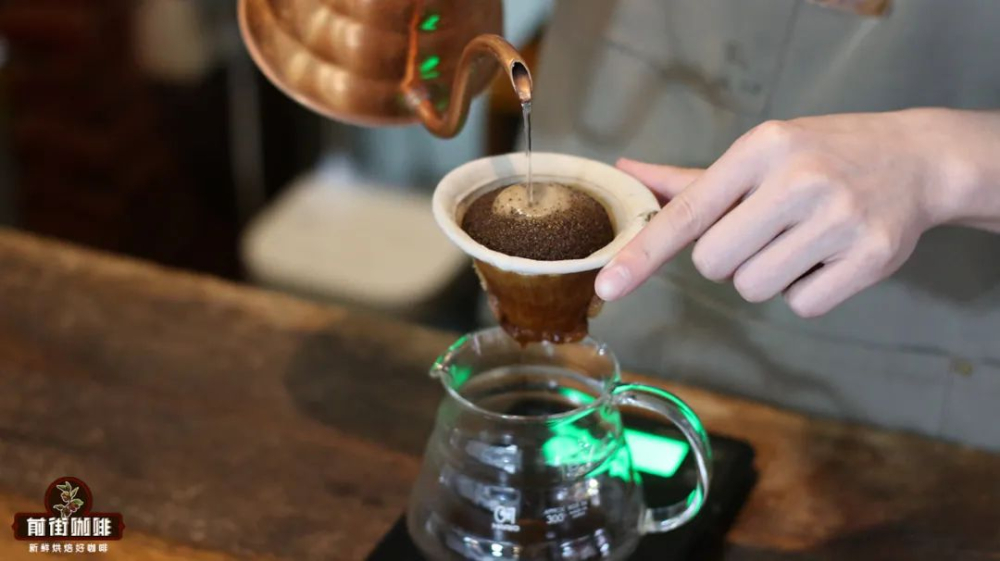
Differences in flannel brewing methods
Following the issue above, flannel differs considerably from the paper filter plus dripper approach in brewing method. To brew well, one usually has to relearn and become familiar with how to handle flannel. Flannel brewing relies heavily on experience and is hard to quantify with data. For baristas today, most of whom start learning through data, this undoubtedly raises the learning cost.
Flannel is difficult to store
Although the unit price of flannel is relatively high, it can be reused if stored properly. However, storing flannel well is quite difficult. First, flannel cannot be dried, because drying it after it has become wet will damage the fiber structure.
Therefore, after using the flannel filter cloth, clean it thoroughly, then soak it in clean water and seal it in refrigeration to prevent bacterial growth.
But as the number of uses increases (usually starting from the third time), the dripper will become stained with coffee, gradually yellowing and darkening in color. As a result, in subsequent uses, it is prone to hygiene and safety issues as well as flavor transfer problems.
The above content is compiled by CoffeeHunters, a coffee news website.


