








What Defines Sidamo Coffee Farms and the Huakui Lot?
Huakui beans come from the Buku Albe processing station in the Hambela sub-region of the Guji zone, within Ethiopia's Sidamo administrative area. They gained attention by winning the sun-dried group at the 2017 TOH competition, and Luckin Coffee's return of a Sidamo Huakui SOE brought the origin back into view. Sidamo coffee farms sit at 1,400 to 2,000 meters, and the cup tends to carry rich fruity aromas.
Sidamo borders Kenya to the south and, together with Yirgacheffe inside its boundaries, forms a core of Ethiopian specialty coffee. Local coffee farms cluster around the Great Rift Valley, and varied soils, microclimates, and native varieties give each town its own profile. Hot pour-over and iced pour-over are the two brewing routes commonly used to show the fruity character.
Luckin Coffee's recent reintroduction of the Sidamo Huakui SOE has once again ignited the coffee community's enthusiasm for Ethiopian origins. What exactly is the charm of Huakui coffee beans? They come from the Buku Albe processing station in the Hambela sub-region of the Guji zone in the Sidamo administrative region, and rose to fame by winning the sun-dried group championship at the 2017 TOH competition. This article will systematically compare the flavor differences between the Sidamo and Yirgacheffe regions, trace the rise of Huakui and its processing methods, and break down in detail two brewing approaches: hot pour-over and iced pour-over. Whether you want to learn about origin knowledge or recreate a cup of fruity Huakui iced coffee at home, you'll find practical references here.
For professional coffee knowledge exchange and more coffee bean information, please follow Coffee Workshop (WeChat public account: cafe_style)
For more specialty coffee beans, please add our private WeChat Front Street Coffee (FrontStreet Coffee), WeChat ID: qjcoffeex
Recently, Luckin Coffee has brought back to market a Huakui coffee bean SOE series from Ethiopia's Sidamo region, winning the favor of many coffee enthusiasts and bringing the Sidamo region into more people's view.
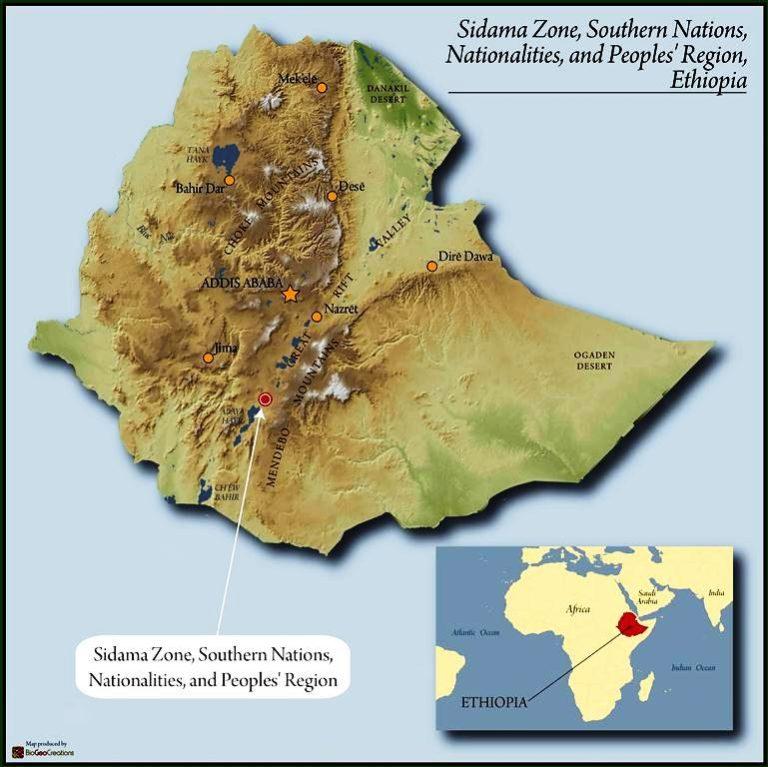
The Sidamo administrative region is located in southern Ethiopia, bordering Kenya to the south. Sidamo and Yirgacheffe within its jurisdiction are considered the two core origins of Ethiopian specialty coffee.
Sidamo coffee is grown at altitudes between 1,400 and 2,000 meters. The local economy is supported by agriculture, with coffee farms mainly distributed around the Great Rift Valley. In recent years, Sidamo has developed strongly and has become a significant coffee export hub.
Sidamo coffee's flavor spectrum is extremely rich. The diverse soil types, microclimatic conditions, and the vast number of native coffee varieties give coffees from different towns distinctly individual flavor profiles. Through cupping comparisons, Front Street Coffee (FrontStreet Coffee) has found that coffee beans from the Sidamo region often carry rich fruity aromas and a rounded mouthfeel, drinking like a glass of freshly squeezed juice.
Although Yirgacheffe geographically belongs to Sidamo, its unique soil composition and moisture content and other natural conditions have given rise to a distinctive aroma and flavor, earning it worldwide fame in the specialty coffee field. After cupping comparisons, Front Street Coffee (FrontStreet Coffee) concludes that coffee beans from the Yirgacheffe region typically present clean citric acidity and a refreshing mouthfeel, reminiscent of a glass of citrus fruit tea.
It is precisely because Yirgacheffe's coffee flavor is so distinctive that the market refers to "Sidamo" and "Yirgacheffe" separately. Yirgacheffe coffee beans earned their reputation through their unique flavor, while Sidamo coffee beans' rise to fame began with the sun-dried coffee beans produced by the Buku Albe processing station in the administrative region—these are what people call Huakui coffee beans.

Huakui coffee beans' rise to fame began at the 2017 East Africa Harvest Season Flavor Competition TOH. The sun-dried coffee beans from the Buku Able processing station won the sun-dried group championship with intense strawberry flavor, creamy smooth mouthfeel, just-right fermentation aroma, and prominent sweetness.
In the same year, the award-winning batch of coffee beans was introduced to the domestic market by a Chinese green bean trader and named "Huakui." Subsequently, Li Jianfei, runner-up in the 2017 World Coffee Brewing Competition China region, used this batch of Huakui coffee beans in competition, defeating many competitors who chose Geisha coffee beans. It was from this year that Huakui coffee beans rose to fame in the domestic coffee community, and the Sidamo region gradually received high attention from the industry.
Most coffee beans from the Sidamo region use the sun-dried processing method. After the coffee cherries are picked, the whole fruit is spread on hemp net wooden racks, and workers take turns manually turning them under the sun to ensure the coffee beans are heated evenly. After sun-drying is complete, Sidamo coffee beans appear yellow-green. It is during the drying process that the sugars from the pulp and mucilage are concentrated, and the coffee beans absorb these sugars, developing richer sweetness and moderate fermentation aroma.
To earn the name "Huakui," coffee beans must simultaneously meet the following conditions: Sidamo administrative region—Guji zone—Hambela sub-region—Buku Albe processing station—sun-dried processing—Ethiopian native species. The Huakui coffee beans currently sold by Front Street Coffee (FrontStreet Coffee) all meet all of the above conditions, so you can purchase with confidence.
Coffee beans are ultimately an agricultural product, and each year's flavor varies with changes in terroir and climate. Huakui coffee beans after 2017 no longer have the same intense strawberry-cream quality as that year, but you can still appreciate the classic Huakui character. According to cupping comparisons by Front Street Coffee (FrontStreet Coffee), the flavor of the new-season Huakui coffee beans presents: passion fruit, strawberry, fermentation aroma, and tea-like notes.
To preserve Huakui coffee's unique fruit character, Front Street Coffee (FrontStreet Coffee) uses a medium-light roast. We recommend using a medium-fine grind (fine sugar coarseness / 80% passing rate through China standard No. 20 sieve), 91°C water temperature, paired with a V60 conical dripper to enhance layering, using 15 grams of coffee grounds and pouring 225 grams of water.
The specific brewing method is as follows: First, bloom with twice the amount of water as the coffee grounds, that is, 30 grams of water for a 30-second bloom. The purpose of blooming is to let the coffee grounds release internal carbon dioxide, making subsequent extraction more stable. Then, pour in a small stream in circles until reaching 125 grams, pause for a split pour, then pour again until 225 grams and stop. After the water in the dripper has finished dripping, remove the dripper. Timing from the start of pouring, the extraction time is 2 minutes 00 seconds. Finally, shake the entire cup of coffee evenly and pour into a cup to enjoy.
Besides the regular hot pour-over, many friends also prefer making Huakui coffee as an iced drink. Below, Front Street will also introduce how to brew a delicious cup of Huakui iced pour-over at home.
Compared to hot pour-over, iced pour-over has an additional key variable: ice cubes. To ensure the finished coffee is strong enough, flavorful enough, and cold enough, you must replace a portion of the hot water with ice cubes. Based on the extraction pattern of pour-over where the front section is strong and the back section is weak, the less water poured, the higher the concentration of the resulting coffee liquid, so that when poured over ice it won't be diluted into something too bland.

However, note that as the hot water poured decreases, the overall extraction time also shortens, typically from 2 minutes to about 1 minute 20 seconds. This means the flavor compounds from the latter stage don't have time to be released, and the entire cup of iced coffee will most likely be under-extracted. In other words, although the concentration meets the mark, the flavor is lacking. Therefore, to balance the release ratio of aromatic compounds, you need to grind finer, which in turn extends the extraction time.
Method: Three-pour
Before pouring, place the ice cubes into the sharing pitcher (adding ice first or later has little effect on flavor), then add 15 grams of coffee grounds. From the center outward in small circles, pour 30 grams of water in a fine stream, and bloom for 30 seconds; for the second pour, use the same method to pour 60 grams of water; when the water in the dripper is about to finish dripping, pour in the remaining 60 grams of hot water. Control the final extraction time between 1 minute 50 seconds and 2 minutes.
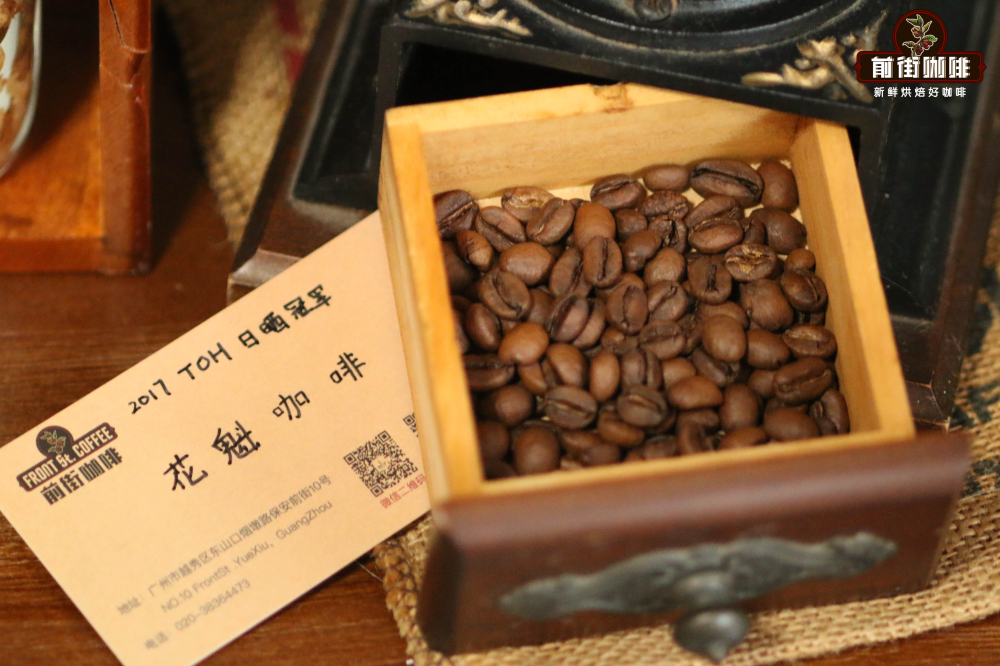
Finally, shake the sharing pitcher to speed up ice melting and also to fully mix and cool the coffee liquid, and it's ready to enjoy. The Huakui 8.0 iced pour-over brewed by Front Street using the above method carries aromas of citrus, blueberry, and cranberry, with clear and bright fruit acidity, and a pleasantly cool entry—very suitable for summer drinking.
The above content is compiled by CoffeeHunters, a coffee news website.


