







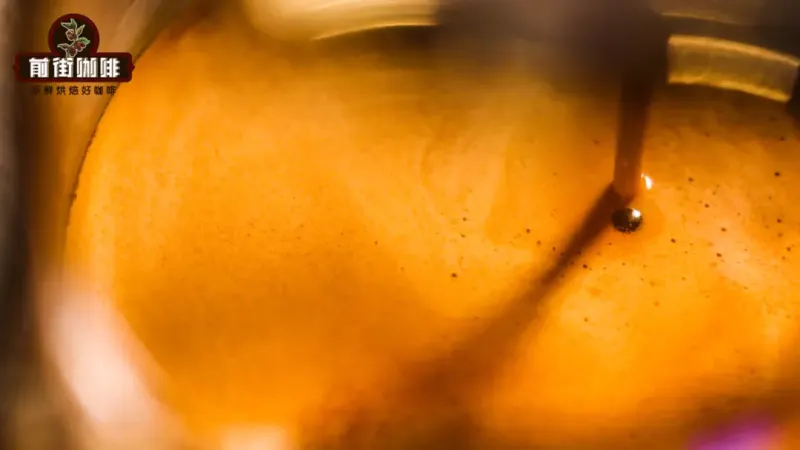
What is coffee crema and how do bubbles form?
Coffee crema is the fine foam of tiny bubbles on top of an espresso, formed when 9 bar of pump pressure pushes water through coffee grounds whose cell walls still hold carbon dioxide trapped during roasting. That supersaturated gas, plus emulsified oils in coffee and suspended particles, creates the layer. Thickness alone does not determine flavor; roast level, extraction time, and water temperature all shape its color and how long it lasts.
During roasting, complex chemical reactions generate large amounts of carbon dioxide. Most escapes while beans rest, but a good share stays locked inside the cell walls. Under pressure the water dissolves this gas, and when the shot hits the cup at normal pressure the gas escapes as countless small bubbles. Gravity and surfactants then make the foam collapse, which is why crema fades quickly.
Coffee crema is the layer of fine foam made up of tiny bubbles on the surface of an espresso, and it is often regarded as an important indicator of extraction quality. But how exactly does crema form? Why does it dissipate? Does its thickness directly determine flavor? This article will systematically analyze the nature of crema from physical and chemical perspectives, explore how 9 bar pressure and a carbon dioxide supersaturated state give rise to countless bubbles, reveal the mechanisms by which gravity and surfactants cause foam collapse, and analyze the effects of roast level, extraction time, water temperature, and other factors on the color and persistence of crema. At the same time, the article will also offer diagnostic approaches for common problems such as thin crema and insufficient aroma, and recommend Front Street Classic Blend coffee beans to help you make espresso with a rich mouthfeel and full flavor.
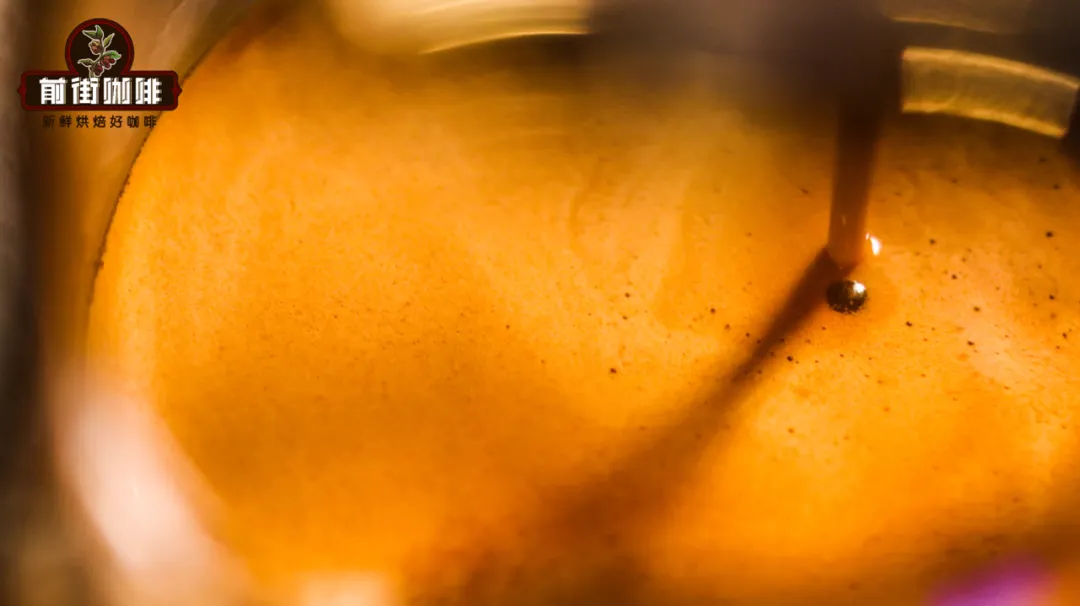
If you want to become a qualified barista, a deep understanding of the nature of crema is greatly beneficial for making an excellent espresso. Today, Front Street Coffee will take a detailed look at crema to help you understand espresso more thoroughly and thereby improve your coffee-making skills.
On the road to pursuing an espresso that is not bitter and has outstanding flavor, poor results are encountered almost every day, and coffee crema is one of the key indicators for measuring its quality. Whether you are drinking it in a cafe or making it at home, an espresso with a thick dark-brown crema is always our ideal goal.
The surface of an espresso is covered by a layer of foam formed by countless tiny bubbles gathering together, which people habitually call "coffee crema," and its surface also displays a unique pattern resembling tiger stripes. Beneath this layer of foam is particulate matter containing emulsified small oil droplets, as well as a solution in which sugars, acids, protein-like substances, and caffeine are dissolved, with bubbles and solid particles suspended in it.
What is coffee crema? Why does crema dissipate?
During roasting, coffee beans undergo a series of complex chemical reactions, generating a large amount of carbon dioxide. Most of this carbon dioxide is naturally released during the storage of roasted beans, but a considerable portion remains trapped inside the cell walls.
The reason 9 bar of pump pressure is critical lies largely in its ability to emulsify the insoluble oils in coffee. In fact, water pressure plays another role as well: it causes water to reach a supersaturated state with carbon dioxide, enhancing water's ability to dissolve carbon dioxide, thereby dissolving several times more carbon dioxide than under normal natural atmospheric pressure. This also explains why hot water passing through the coffee puck produces thousands of tiny bubbles.

There are two main reasons for the dissipation of coffee crema: the crema itself and the action of gravity. After surfactants dissolve in water, gravity pulls the coffee substances in the foam layer downward while also dragging on the substances covering the bubble surfaces, making the bubbles fragile, losing elasticity, and eventually bursting rapidly. How quickly the foam layer disappears mainly depends on the intensity of gravity's effect.
A properly extracted espresso will have surface foam that lasts longer than that of an under-extracted espresso. The reason is that a correctly extracted espresso has a thicker overall structure, which can be verified by the mouthfeel of the espresso.
Reasons for thin crema
The main factor determining the richness of crema is the carbon dioxide content of the coffee beans used during extraction (followed by insoluble oils). The more carbon dioxide the beans contain, the richer the coffee crema will be in the espresso under suitable extraction conditions. Therefore, the thickness of crema cannot directly determine the taste.
The primary factor affecting the carbon dioxide content of beans is the roast level of the coffee beans. The darker the roast, the higher the expansion rate of the beans, and the more carbon dioxide produced during roasting they can contain. In addition, as the roast level deepens, the oils that migrate to the bean surface also increase, which can make the extracted espresso crema more stable and lasting. If you want richer crema, you can choose medium-dark roasted Front Street Rich and Aromatic Espresso Moka Pot Coffee Beans — Front Street Classic Blend coffee beans. The espresso produced has both a rich mouthfeel and flavors of spices, caramel, butter, and dark chocolate.
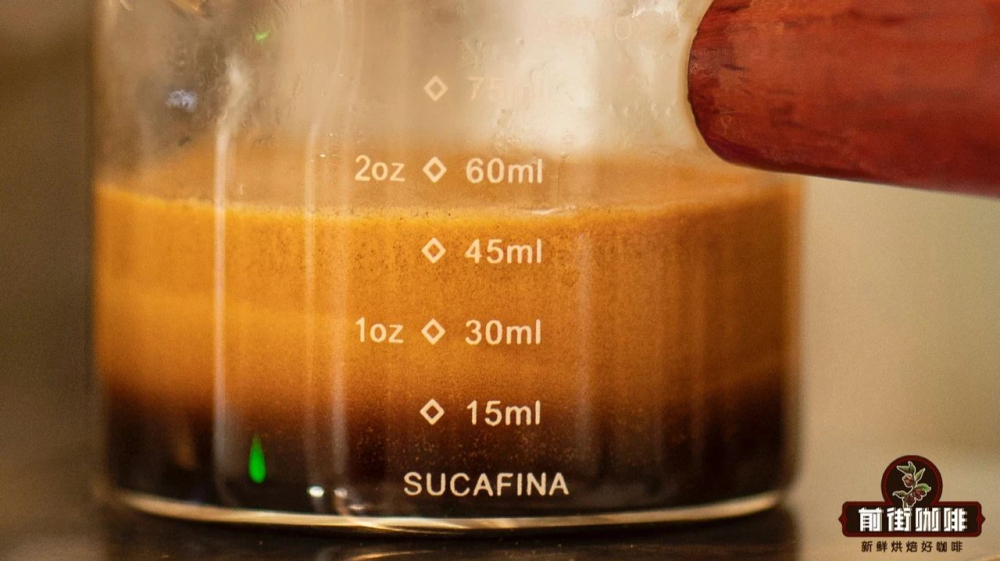
If you find that the espresso you make has particularly little crema and lacks aroma, it indicates that the coffee is under-extracted, and there may be three possible reasons:
1. The coffee machine does not have enough pressure. Standard espresso requires at least 9 bar, while many small home coffee machines fall far short of this pressure, so the extracted espresso has only a few scattered small bubbles;
2. The grind is too coarse. The coffee particles are too large, water passes through too quickly, and the internal gases find it difficult to gather and form crema;
3. The temperature is too low. Extraction efficiency is poor, and coffee crema cannot coalesce into shape.
The color of coffee crema: what can it tell us?
Under normal extraction conditions, crema should appear reddish-brown. So when the crema of an espresso is on the light side, or extremely dark and close to burnt brown, what does that mean? The answer is related to the espresso itself. Since crema is made of bubbles in the espresso that encapsulate carbon dioxide, if the foam layer looks very dark, it can usually also be judged that the color of the espresso liquid itself will likewise be on the dark side.
When making espresso, an espresso with a 15-second extraction time usually has only a very light-colored layer of coffee crema. This is because the extraction is insufficient and the water does not have enough time to dissolve the soluble substances in the coffee, so it also cannot have the viscosity of an espresso made with a 25-second extraction time.
Similarly, espresso extracted at too low a water temperature also shows light-colored crema, because low temperatures make it difficult to extract the soluble substances in coffee. This also confirms from the opposite side that over-extracted espresso will be darker than normally extracted espresso, and a dark burnt-colored outer ring will also appear on the surface of the crema.
The above content is compiled by CoffeeHunters, a coffee news website.


