








How does coffee bean processing change flavor?
Coffee bean processing means removing the skin and mucilage from the coffee cherry to get the inner bean, and it covers three levels: processing methods, brewing or extraction, and industrial instant coffee production. The three traditional methods are washed, natural, and honey, and each leaves the beans with a distinctly different flavor profile.
In washed processing, the skin and pulp are removed first, then the parchment beans ferment in a water tank. Acids produced during fermentation break down the mucilage, and after rinsing and drying the beans keep a clean parchment layer. Cupping shows washed coffees tend to present brighter acidity and a cleaner overall mouthfeel, and the method reflects bean quality most directly. Extraction falls into drip, pressure, and cold brew.
Coffee processing covers three levels: the processing method that extracts coffee beans from the coffee fruit, the brewing method that extracts coffee liquid from the coffee beans, and the industrial process that turns coffee liquid into instant coffee powder. Traditional processing methods include washed, natural, and honey, each giving the coffee beans a completely different flavor profile. Extraction methods fall into three mainstream categories: drip, pressure, and cold brew, corresponding to pour-over coffee, espresso, and cold brew coffee. As for instant coffee, regular instant and freeze-dried coffee also differ noticeably in production process and flavor retention. This article will break down each of these processing stages one by one to help coffee lovers build a complete knowledge framework from seed to cup.

Coffee processing can refer to three different levels: first, the process of extracting coffee beans from the coffee fruit, commonly known as the coffee processing method; second, the process of brewing coffee beans into coffee liquid, also called the coffee extraction method; and third, the industrial production process that converts coffee liquid into instant coffee powder.
What is a coffee bean processing method?
A coffee bean processing method is the process of removing the skin and mucilage of the coffee cherry to obtain the inner pit (that is, the coffee bean). There are three common traditional processing methods: washed processing, natural processing, and honey processing.
Different producing regions, different climate conditions, and different coffee varieties often adopt different processing methods. After being processed by different methods, coffee beans also differ in their flavor expression.
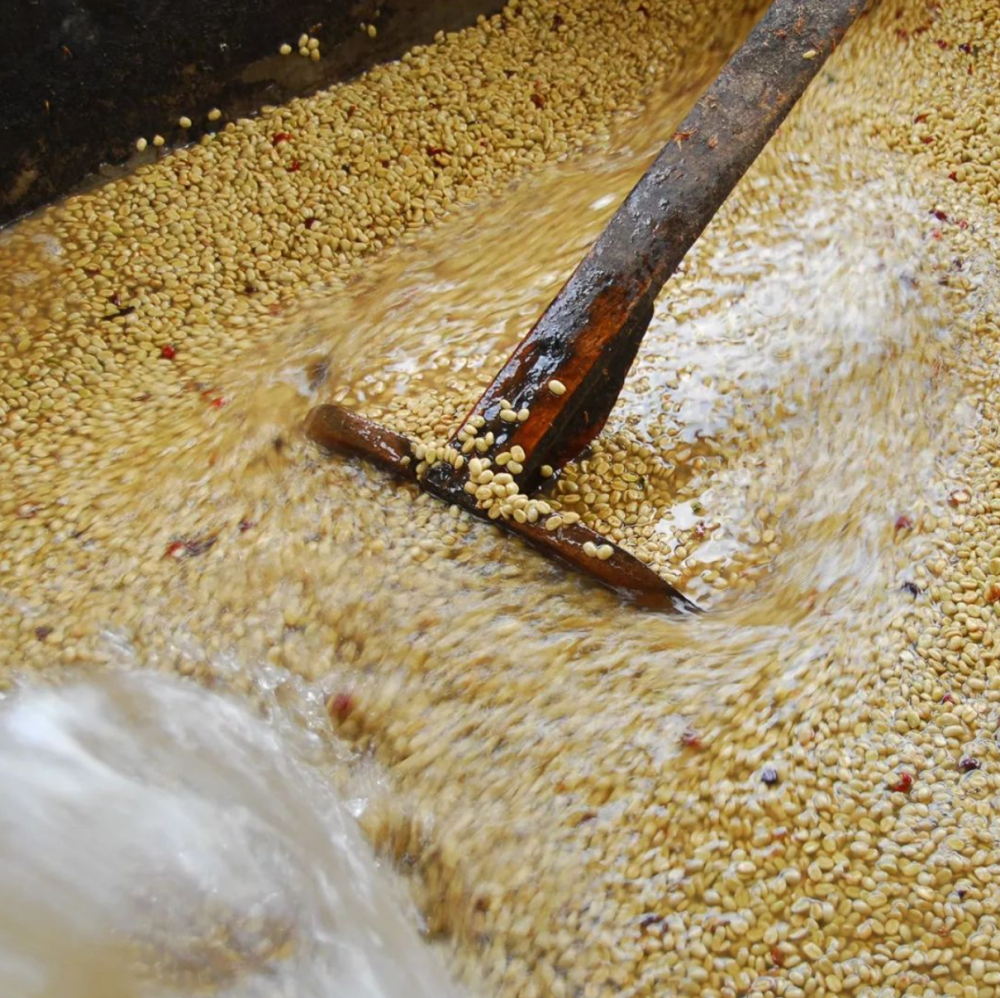
Washed processing involves first removing the skin and pulp of the coffee cherry, then placing the parchment beans in a water tank for fermentation. The acidic substances produced during fermentation can break down the mucilage, and after rinsing with clean water, the coffee beans retain a very clean layer of parchment (that is, the coffee endocarp), after which they are sun-dried.
Through cupping, Front Street Coffee has found that among the three processing methods, washed coffee beans often present a brighter acidity, and the overall mouthfeel is cleaner. Washed processing is also the method that most directly reflects the quality of coffee beans. For this reason, when launching its region-selected "daily staple bean series," Front Street Coffee chooses washed coffee beans whenever possible, so that coffee beans from different regions can more clearly show their own unique regional flavors.
Natural processing is the method of drying the whole coffee cherry directly in the sun. Because the pulp and mucilage are fully retained, the fructose within them ferments during the sun-drying process, and the coffee beans absorb sugar and the flavors produced by fermentation along with it.
Front Street Coffee's cupping results show that when natural processing is done properly, the coffee presents a soft fermented aroma and obvious sweetness, with a smoother and fuller mouthfeel.
Honey processing, by contrast, removes the coffee cherry skin first but retains the pulp and mucilage before sun-drying. The more pulp and mucilage retained, the higher the coffee's sweetness, but the drying process also needs to be more careful, or the coffee beans should be dried in the shade to avoid excessive fermentation of the sugars.
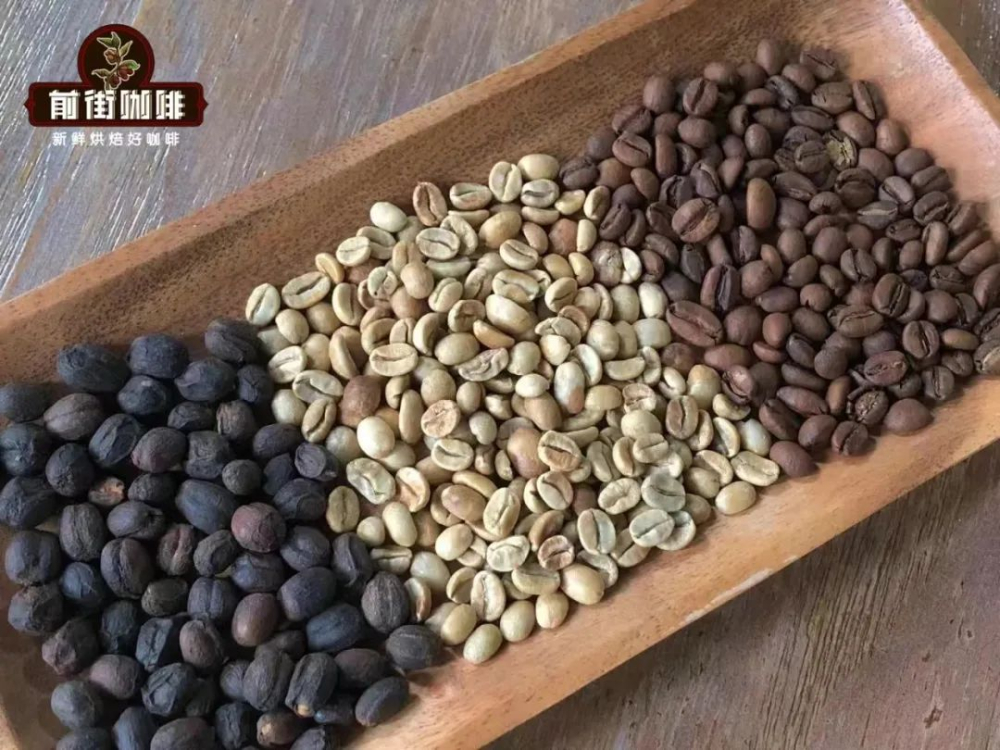
Through cupping, Front Street Coffee has found that properly honey-processed coffee beans show a rich fruity fermented flavor and more prominent sweetness, with a full and lush mouthfeel.
What is a coffee extraction method?
A coffee extraction method is grinding coffee beans into particles of different degrees of fineness (that is, coffee grounds), then using different means to bring water into contact with the coffee grounds so as to extract the soluble substances from the grounds. The current mainstream extraction methods include drip extraction, pressure extraction, and cold brew extraction.
Drip extraction is pour-over coffee, which requires placing a paper filter in a dripper, then using a dedicated pouring kettle to add hot water, causing the coffee grounds on the filter to tumble, so that the soluble flavor substances come into contact with the water and drip through the filter as clean coffee liquid. Front Street Coffee believes that the greatest characteristic of pour-over coffee lies in its cleanliness, balance, and moderate strength.
Pressure extraction is espresso, in which hot water is forced in a short time through a pressurized device to pass quickly through very finely ground coffee, extracting an extremely concentrated coffee liquid. Front Street Coffee believes that the greatest characteristic of espresso lies in its rich and intense body, making it suitable for drinking after being diluted with other ingredients. For example, added to water it becomes Americano, and added to milk it becomes latte.
Cold brew extraction is cold brew coffee, which uses room-temperature or low-temperature water to soak coffee grounds, then places it in the refrigerator to extract. The advantage of low-temperature extraction is that it is less likely to draw out the bitter substances in coffee, so after extraction is complete and the grounds are filtered out with a paper filter or mesh strainer, the coffee has a full, rich, and clean mouthfeel. The drawback is that extraction takes a long time, usually requiring soaking for 12 to 18 hours.
How is instant coffee powder made?
Instant coffee comes in two types: one that needs to be brewed with hot water, and another that can be brewed with cold water, namely freeze-dried coffee.
Instant coffee: a dried coffee extract obtained by evaporating the water from coffee extraction liquid. Instant coffee dissolves quickly in hot water, and it takes up less space and volume during storage and transport, and also keeps longer.
Freeze-dried coffee: instant coffee made by freezing liquid concentrated coffee and removing the ice through sublimation. The production process is relatively complex. Freeze-dried coffee better preserves the coffee's original flavor, and because its interior has a loose, porous structure, it dissolves quickly. It is an instant coffee that is easy to measure, allowing the strength of the brewed beverage to be controlled with ease.
The above content is compiled by CoffeeHunters, a coffee news website.


