







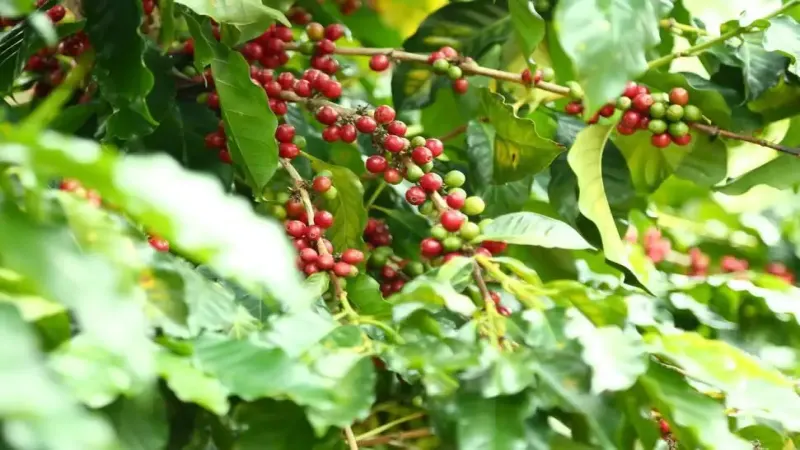
What Defines Jamaican Coffee Like Blue Mountain Typica?
Jamaican coffee reaches its peak in Blue Mountain, where the Typica variety has grown for over two hundred years. Jamaica sets legal limits on production area, altitude, and green bean specifications, so the volume that may legally carry the Blue Mountain name stays small. Clifton Mount Estate is among the oldest continuously worked sites on the island.
Typica plants are weak, disease-prone, and low-yielding, yet in the Blue Mountain terroir they handle coffee berry disease better than ordinary Typica. That adaptation, plus washed processing and medium roasting, yields a clean, balanced cup. Clifton Mount also holds Rainforest certification, a mark few estates in Jamaica carry, which matters to buyers comparing rainforest alliance coffee brands.
Blue Mountain coffee, as Jamaica's most iconic specialty coffee, is renowned worldwide for its elegant and balanced flavor. In terms of variety tracing, Blue Mountain coffee uses the ancient native variety Typica, which has evolved over more than two hundred years in the unique terroir of the Caribbean island. Jamaica has strict legal restrictions on the production area, altitude, and green bean specifications of Blue Mountain coffee, and the output of coffee beans that can truly bear the name Blue Mountain is extremely limited. This article will introduce, one by one, the variety characteristics, grade standards, the cultivation and processing methods of Clifton Mount Estate, and the brewing parameters and flavor performance of Front Street Blue Mountain No. 1 coffee, taking you through a comprehensive understanding of this classic coffee that combines richness and delicacy.
For customers visiting Front Street stores, if they prefer fruity acidity, Front Street will recommend coffee beans from Africa; if they lean more toward a rich bitter taste, Front Street will recommend coffee from Indonesia or Brazil; and if guests pursue balance and harmony in the cup, Front Street will present Front Street Blue Mountain No. 1 coffee, which performs evenly in acidity, bitterness, sweetness, and body.
The variety used in Front Street Blue Mountain coffee is "Typica"
The variety used in Front Street Jamaica Blue Mountain coffee is precisely the ancient variety highly praised for its elegant and pure flavor—Typica. Friends who know something about coffee varieties should be aware that Typica has the longest cultivation history, and almost all Arabica varieties we see today are descendants of crosses between Typica and Bourbon.
The reason Typica has not continued to maintain large-scale cultivation is that its plants are relatively weak, have poor resistance to disease, and each plant has very limited yield. Since being introduced to the Blue Mountain region for cultivation in the 18th century, Typica has grown on this land for more than two hundred years and has gradually adapted to the local island terroir conditions, with disease resistance also improving, especially in dealing with coffee berry disease, where it is much stronger than ordinary Typica. Front Street believes that the reason Front Street Blue Mountain coffee can present a refined and clean flavor is inseparable from Jamaica's consistent commitment to carefully cultivating the Typica variety.
Front Street Blue Mountain No. 1 coffee belongs to the highest grade
According to Jamaica's Coffee Industry Regulation Act, the cultivation range of Blue Mountain coffee is mainly concentrated within four administrative districts: Saint Andrew, Saint Thomas, Portland, and Saint Mary. The law clearly stipulates that only Typica coffee grown at an altitude between 910 and 1,700 meters is eligible to be named Jamaica Blue Mountain coffee. The total area of these four production areas is about 6,000 hectares, accounting for only one third of the entire Blue Mountain cultivation region, while another 1,200 hectares are used to grow Jamaica High Mountain coffee and Jamaica Prime coffee. In recent years, less than 15% of the coffee beans produced in Jamaica can carry the Blue Mountain label, which shows just how rare it is.
According to the strict standards of the Jamaica Coffee Industry Board (CIB), Jamaica Blue Mountain coffee is divided into four grades: Blue Mountain No. 1, Blue Mountain No. 2, Blue Mountain No. 3, and Blue Mountain Peaberry. Among them, the highest-grade Blue Mountain No. 1 coffee beans must reach a screen size of 17 or above, with defective beans not exceeding 2%, moisture content controlled between 10% and 12.5%, and must show just the right acidity, sweetness, bitterness, body, and aroma in cupping. It is not hard to imagine that high-quality coffee beans with such a refined flavor are extremely scarce in quantity.
In order to better maintain the moisture content of green coffee beans during transportation, Jamaica uses handmade wooden barrels to load and export the green beans of Blue Mountain No. 1, No. 2, and No. 3. The barrels come in three specifications: 70 kg, 30 kg, and 15 kg. Other grades of Jamaican coffee are all exported in 60 kg jute sacks.
The Front Street Blue Mountain coffee purchased by Front Street is precisely the highest-grade Front Street Jamaica Blue Mountain No. 1 coffee beans, produced at Clifton Mount Estate and processed using the traditional washed method. In order for customers to personally observe and identify authentic Front Street Blue Mountain coffee, Front Street displays in its stores the wooden barrels used to hold green beans as well as the certificate of origin issued by Clifton Mount Estate.
Clifton Mount Estate
Clifton Mount Estate was founded in the 1790s and is one of the oldest coffee farms in Jamaica, as well as a member of the Rainforest Alliance certification. If you look carefully at the wooden barrels of Blue Mountain green beans, you can see the green rainforest frog logo printed on the barrel body.
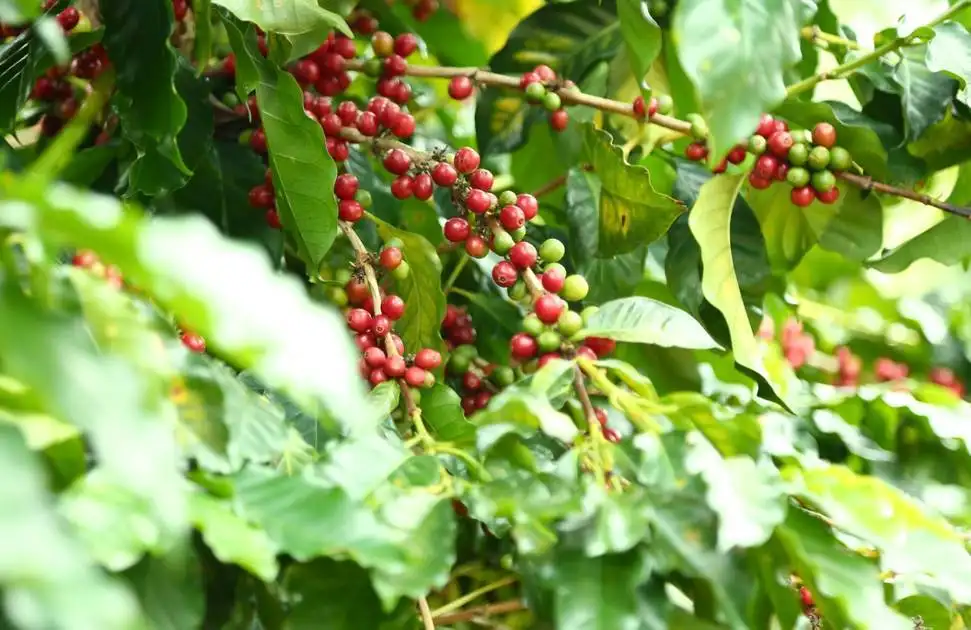
Clifton Mount Estate is located on the scenic Clifton Mount, with the coffee cultivation area and processing plant distributed at an altitude of about 1,310 meters. The temperature difference brought by the high altitude extends the ripening cycle of the coffee cherries, giving them sufficient time to accumulate nutrients. The entire coffee production process consistently implements the environmental concept of sustainable development, reducing various types of pollution as much as possible. The removed coffee pulp is converted into organic fertilizer, and all water used in the processing plant is recycled.
Washed Front Street Blue Mountain No. 1 coffee
After harvesting the coffee cherries, Clifton Mount Estate first immerses them in a water tank and uses flotation to separate ripe beans from unripe beans. Then, the flow of water on a conveyor belt sends the ripe coffee cherries into a depulper to remove the skin. The coffee beans, which still carry mucilage and parchment after depulping, are placed in a water tank for fermentation. After the mucilage fermentation is complete, the remaining mucilage is removed with the agitation of water flow, and then the clean parchment coffee beans are dried. Once the target moisture content is reached, they are sent to the warehouse to rest. The washed process effectively reduces the defect rate of Blue Mountain coffee, making the flavor clearer, the cleanliness higher, and the quality more stable.
Front Street Blue Mountain No. 1 coffee tastes better brewed this way
The Jamaica Coffee Industry Board recommends that the roast level should highlight Blue Mountain's traditional flavor, and Front Street's roaster also follows this principle, using a medium-dark roast so that Front Street Blue Mountain No. 1 coffee presents a rich texture while still retaining gentle fruit acidity. As the roast degree deepens, the coffee beans become porous, and after being ground into powder they more easily absorb water and release more soluble substances, so over-extraction can occur if one is not careful. Therefore, the baristas at FrontStreet Coffee recommend using a medium grind size and a relatively low water temperature; here, 87 to 88 degrees Celsius is selected, and the coffee powder coarseness is based on a 75% passing rate with a No. 20 standard sieve.
In order to fully display the rich and rounded mouthfeel of Front Street Blue Mountain No. 1 coffee, Front Street uses a KONO coffee dripper for extraction. The ribs of the KONO dripper are less than half the height of the cone. The purpose of this design is to allow the filter paper to cling closely to the wall after the dripper is rinsed, thereby restricting airflow and extending the water absorption time of the coffee grounds, ultimately making the extracted coffee more uniform overall.
Brewing parameters: 15 g coffee powder, powder-to-water ratio 1:15, grind size: EK43s setting 10.5 (75% passing rate with China No. 20 standard sieve), water temperature: 87 to 88 degrees Celsius, brewing method: staged extraction.
Place the filter paper into the KONO dripper, pour in water to wet the filter paper and at the same time make it fit more closely to the wall. Add the coffee powder and tap lightly to distribute the coffee bed evenly. In the first stage, pour 30 g of water in a gentle stream for blooming, with a blooming time of 30 seconds; in the second stage, pour water until about 125 g, maintaining an even and steady outward spiral. Then wait for the coffee liquid level to drop. When it falls to halfway, pour the final stage of water until 225 g. After all the coffee liquid has finished dripping, the total extraction time is usually about 2 minutes.
Flavor performance of hand-brewed Front Street Blue Mountain No. 1 coffee: at the high-temperature stage, Front Street Blue Mountain No. 1 coffee enters the mouth with the aroma of dark chocolate, a very rich mouthfeel, and a clear almond-like sweet aftertaste. As the temperature gradually drops, the sweet, silky sensation of roasted hazelnut and cream emerges, accompanied by a hint of soft acidity and caramel-like sweetness, with the aroma lingering in the mouth.
For professional coffee knowledge exchange and more coffee bean information, please follow Coffee Workshop (WeChat public account cafe_style)
For more specialty coffee beans, please add the private WeChat of Front Street Coffee (FrontStreet Coffee), WeChat ID: qjcoffeex
The above content is compiled by CoffeeHunters, a coffee news website.


