







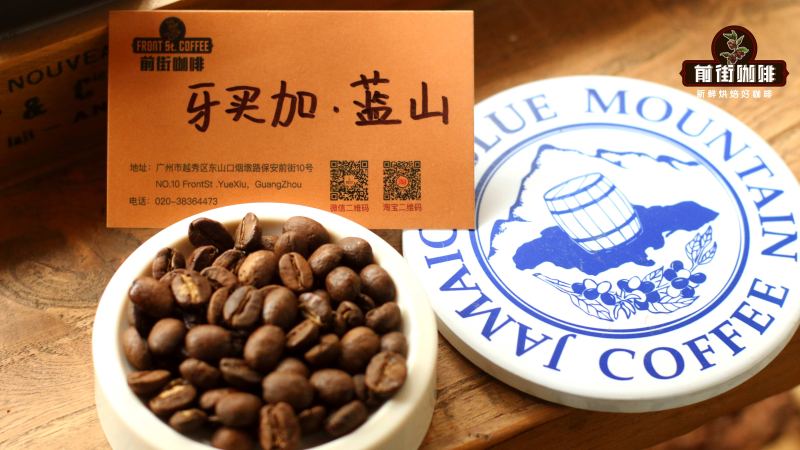
How Does Coffee Brewing Bring Out Blue Mountain No 1?
For Jamaica Blue Mountain No. 1 from Clifton Farm, use 15 grams of coffee at a 1:15 ratio, 88C water, and a medium-coarse grind with a 75 percent pass rate through a No. 20 sieve. Start with a 30-gram pour for a 30-second bloom, circling gently outward from the center, then continue in three pours.
Clifton Farm sits at 1310 meters and uses washed Typica, medium-dark roasted, giving chocolate, nut, and cream notes with balanced acidity, sweetness, and bitterness. The Blue Mountain region covers under 6,000 hectares and carries CIB grading rules, so water quality matters too; avoid tap or hard water, since poor water makes good coffee hard to reach.
Blue Mountain coffee is hailed as the king of coffee, and its balanced flavor and strict grading system have long been the benchmark of the specialty coffee world. This article starts with Front Street's Jamaica Blue Mountain No. 1 coffee beans, detailing the origin background of Clifton Farm, brewing parameters, and the three-pour steps, while systematically sorting out the cultivation history of Jamaican Blue Mountain coffee, the CIB grading standards, and the key role of the washed Typica variety in flavor stability. Whether you want to learn how to taste Blue Mountain coffee or master a reproducible brewing method, you will find practical references in this article.
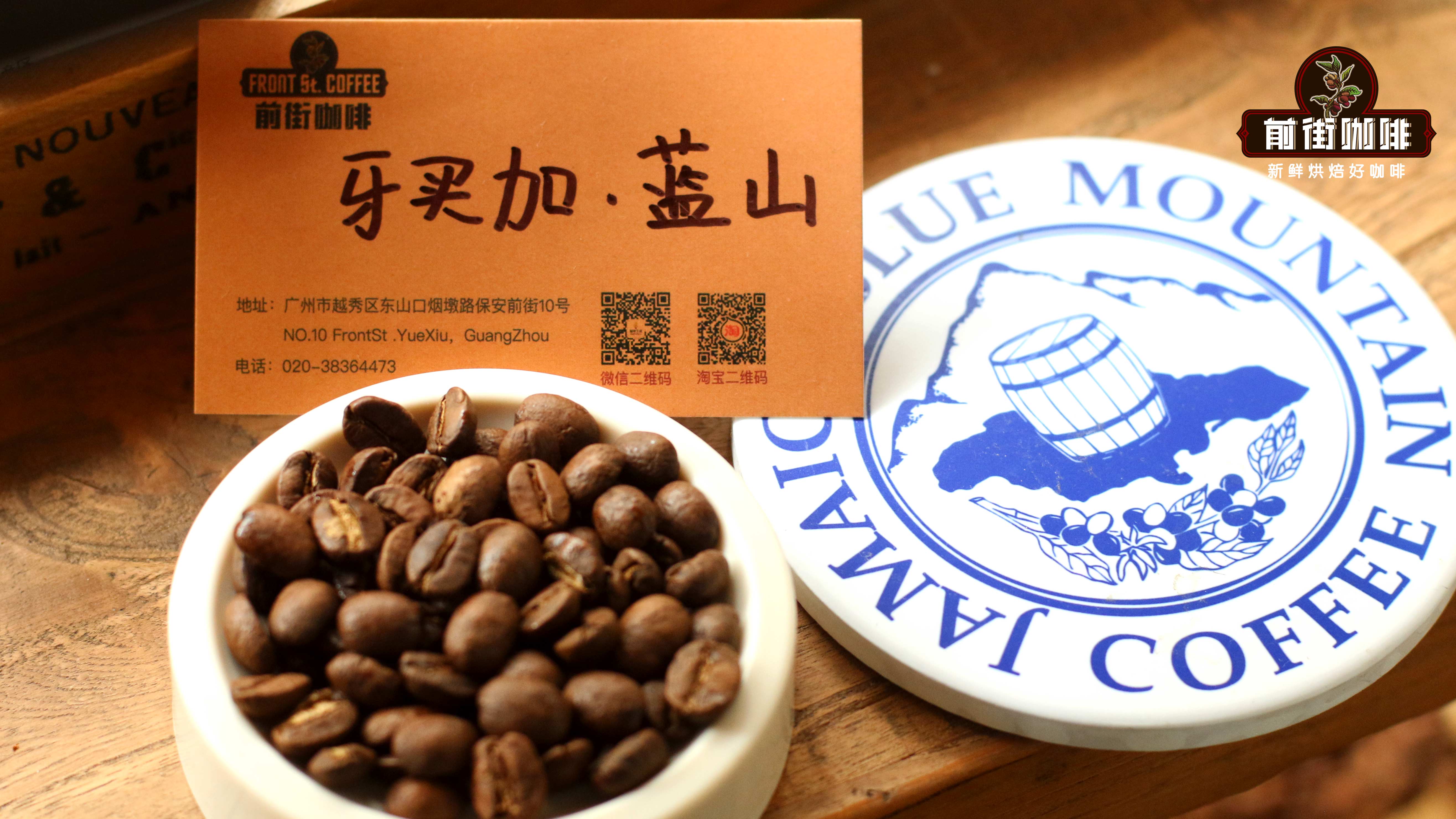
Front Street Jamaica · Blue Mountain No. 1 Coffee Beans
Region: Jamaica Blue Mountain
Estate: Clifton Farm
Altitude: 1310 meters
Processing method: Washed
Variety: Typica
Roast level: Medium-dark roast
Flavor: Chocolate, nuts, cream, with a relatively balanced acidity, sweetness, and bitterness.
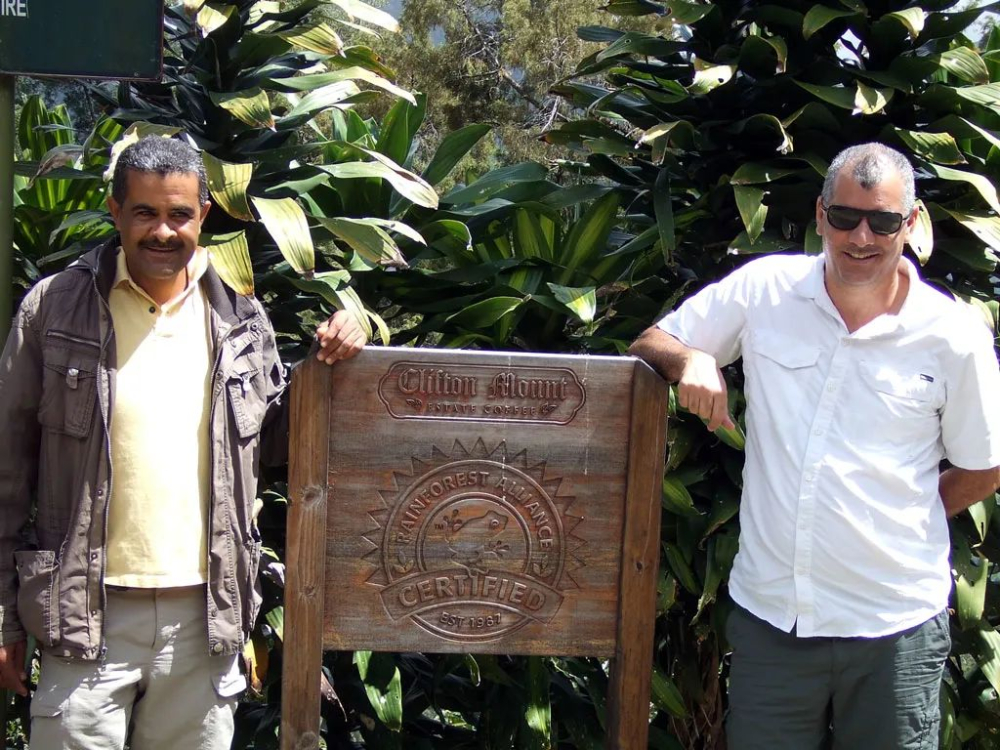
Clifton Mount is one of the oldest coffee-growing sites in Jamaica that is still in continuous operation, and across all of Jamaica, only Clifton Farm holds the "Rainforest" certification mark. The Blue Mountain region covers a total area of no more than 6,000 hectares, a rather limited scale, so not all coffees labeled "Blue Mountain" are actually produced in this region.
Although Clifton Farm is the largest estate in this area, by international standards it still falls into the category of small-scale cultivation. Many local estate owners are merely small landholders whose families have worked this land for two centuries. This region is widely recognized as the world-famous source of high-quality Blue Mountain coffee.
Water recommendations
At Front Street, use fresh, clean water, and be careful not to brew directly with tap water or hard water. When you don't know what to choose, you can simply buy Nongfu Spring. If the water itself is not good, it is very difficult to make delicious coffee.
Brewing parameters: 15 grams of coffee grounds, coffee-to-water ratio of 1:15, water temperature 88°C, grind size: medium-coarse, with a 75% pass rate through a No. 20 standard sieve.
Three-pour steps
When brewing, Front Street first pours 30 grams of water for a 30-second bloom. During the bloom, you can be gentle, circling from the center outward with a small stream of water — this gives the best bloom results.
For the second pour, after the bloom ends, slowly circle from the center outward with a small stream of water until reaching 125 grams.
For the third pour, once the coffee bed drops to the halfway point, pour with a larger stream until reaching 225 grams of water. That is, 15 grams of coffee grounds with 225 grams of water, a ratio of 1:15. After all the coffee liquid in the dripper has flowed into the server, remove the dripper to end the extraction.
The Blue Mountain coffee brewed by Front Street Coffee (FrontStreet Coffee) with these parameters presents a light citrus acidity, overall balance, a smooth mouthfeel, nutty notes in the mid-palate, and a dark chocolate sensation in the finish.
When tasting Blue Mountain coffee, you might start with the aroma, where you will catch notes of nuts and caramel; then take a sip to feel its rich body and the balance among acidity, sweetness, and bitterness; after swallowing, notice the sweet aftertaste in the finish. Next, let us delve into the island nation of Jamaica while savoring the Blue Mountain flavor.
Jamaica's coffee cultivation is concentrated in the eastern Blue Mountains. The name "Blue Mountain" comes from a local wonder: the Caribbean Sea embraces the entire mountain range, and on clear days when the sunlight is intense, the light shines directly onto the sea surface, and the blue radiance of the Caribbean reflects onto the mountains — hence the name Blue Mountain.
The Blue Mountain range happens to lie within what is commonly called the coffee belt. In addition to its elevation, it also has fertile volcanic soil, which is extremely favorable for coffee cultivation and production. At the same time, the microclimate of the Blue Mountains is also an important factor in creating Blue Mountain coffee — the region is overall humid, with frequent fog and rain year-round, and annual rainfall can reach 1,980 millimeters.
Blue Mountain Coffee Cultivation History
Blue Mountain coffee comes from Jamaica. The history of coffee cultivation in Jamaica can be traced back to the 18th century, from 1717 when King Louis XV of France ordered the start of coffee planting in Jamaica, to later when the Governor of Jamaica introduced Arabica varieties from Martinique and promoted them extensively. Coffee as a crop has since taken root in Jamaican soil.
In 1717, King Louis XV of France ordered coffee to be planted in Jamaica. In the mid-1720s, Jamaica's Governor Sir Nicholas Lawes imported Arabica seeds from Martinique and began promoting cultivation in the St. Andrew region. To this day, St. Andrew remains one of the three major producing regions of Jamaican Blue Mountain coffee, the other two being Portland and St. Thomas. Within eight years, Jamaica exported more than 375 tons of pure coffee.
In 1932, coffee production reached its peak, with a harvest of more than 15,000 tons. The Jamaican government established the Jamaica Coffee Industry Board in 1950. This board sets quality standards for Jamaican coffee and supervises the enforcement of those standards to ensure the quality of Jamaican coffee. The board issues a special official seal for Jamaica's exported green coffee and roasted coffee, making it the highest-level national coffee authority in the world.
Currently, there are six marks that can represent the origin of Blue Mountain coffee: the Mavis Bank Central Factory (MBCE), the Blue Mountain Coffee Cooperative Factory (MHCCT), the Portland Blue Mountain Coffee Cooperative Factory (PXXSH), the Coffee Industry Association (Wallenford), the Coffee Industry Association (St. John's Peak), and Jablum (JAS). By 1969, the situation had improved, because production quality was improved using Japanese loans, thereby securing the market. Today, this coffee has reached the point of being fervently beloved.
By 1981, about another 1,500 hectares of land in Jamaica had been cleared for coffee cultivation, and then another 6,000 hectares of coffee land were invested in. In fact, today's Blue Mountain region is a small place with only 6,000 hectares of planted area, and it is impossible for all coffee labeled "Blue Mountain" to be grown there.
Jamaica is also the last country to use wooden barrels for packaging and transporting coffee. Only after passing the series of stringent standards set by the Jamaica Coffee Industry Board (C.I.B.) can coffee obtain the government-issued certificate of guarantee and formally be given the name "Blue Mountain."
Blue Mountain Coffee Flavor
Blue Mountain coffee is so famous — what exactly is so distinctive about its flavor? Its excellent bean quality brings a clean cup performance. In the context of a medium-dark roast, Blue Mountain coffee typically shows a balanced harmony among acidity, sweetness, and bitterness, accompanied by slight nutty and chocolate notes, and the finish after drinking is especially pleasant. It represents the highest coffee quality of an era and is truly the king of coffee.
The flavor of Blue Mountain coffee has always maintained high quality, thanks to years of strictly controlled export standards. Until 20 years ago, the Blue Mountain coffee we passed down by word of mouth was actually a washed Typica variety coffee. Unlike other processing methods, the washed method is the most stable and efficient of the traditional processing methods. After harvesting, coffee cherries are immediately floated, the skin and pulp are removed by machine, and then the pectin layer is removed through fermentation. After the pectin is removed, the moisture content of the coffee beans is greatly reduced, so the sun-drying time needed is shorter and the defect rate is lower.
At the same time, a mature washing process can bring Blue Mountain coffee a cleaner drinking experience and higher acidity. In addition to insisting on the mature washed processing, continued cultivation of the Typica variety is also an important reason for the stable and uniform flavor of Blue Mountain coffee. Typica may be one of the oldest Arabica varieties; its flavor is more refined and delicate than other varieties, but its shortcomings are also prominent — poor resistance to pests and diseases, and low yield. In other American producing countries that pursue yield, Typica would long ago have been replaced by high-yield varieties such as Caturra and Catuai.
Blue Mountain Coffee Types
In terms of the grading system, the entire Blue Mountain range is 2,256 meters high, and above 1,700 meters is a natural ecological reserve where coffee cannot be planted. Under the CIB classification, only coffee between 910 meters and 1,700 meters in altitude can be called "Jamaica Blue Mountain Coffee." Coffee between 460 meters and 910 meters can only be called "Jamaica High Mountain Coffee," and below 460 meters it is called "Jamaica Prime Coffee."
Therefore, Jamaican coffee does not mean it is all Blue Mountain coffee. Even now, only coffee produced from the 6,000 hectares of land in the Blue Mountain range (above 910 meters in altitude) can be called Blue Mountain coffee beans. Coffee from the other roughly two-thirds of the Blue Mountain range coffee-producing areas can only be classified as High Mountain coffee or Prime coffee.
Among them, coffee from Jamaica's Blue Mountain region has three grades: Blue Mountain Coffee, Jamaica High Mountain Supreme Coffee Beans, and Jamaica Prime Coffee Beans. Blue Mountain Coffee and High Mountain Coffee are each further divided into two grades. Ranked by quality from top to bottom, they are: Blue Mountain No. 1, Blue Mountain No. 2, High Mountain No. 1, High Mountain No. 2, and Jamaica Prime Coffee, and the Blue Mountain that Front Street obtained is precisely the highest grade, Blue Mountain No. 1.
The above content is compiled by CoffeeHunters, a coffee news website.


