







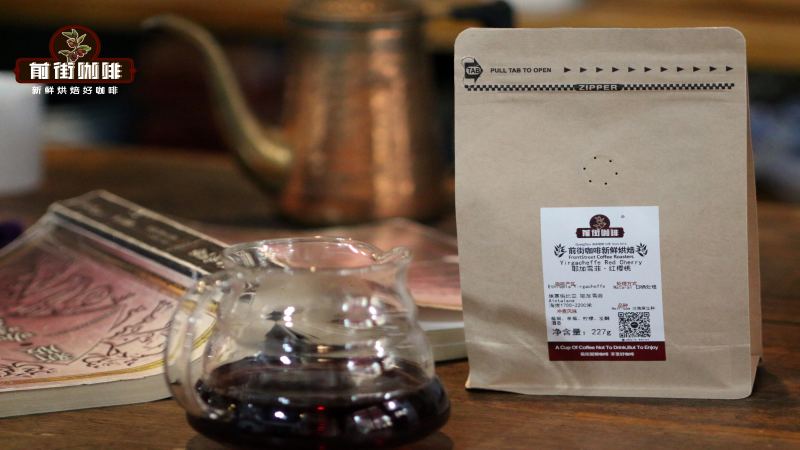
Ethiopian Yirgacheffe Coffee Beans: Origin, Processing, and Pour-Over Guide
Yirgacheffe is a highland region in southern Ethiopia with a microclimate that shapes a floral and fruity cup profile. This article covers the region's origins, the flavor differences between washed and natural processing, and practical guidance for brewing pour-over black coffee. It combines Front Street Coffee's bean selection and extraction experience to give readers a clear reference from bean choice to brewing.
Ethiopia is widely recognized as the birthplace of coffee, and its highlands support native varieties and distinct flavors. Elevation, day-night temperature swings, and varied processing methods create a wide range of profiles. Yirgacheffe, once part of Sidamo, became a separate producing region after washing stations highlighted its white floral and citrus character, earning global attention in specialty coffee.
Yirgacheffe is where many coffee lovers take their first step into the world of specialty coffee. This highland region in southern Ethiopia, with its unique microclimate and processing methods, produces a cup profile reminiscent of floral and fruity tea. This article will systematically cover the origins of the Yirgacheffe region, the flavor directions of the two major processing methods—washed and natural—and, combined with Front Street Coffee's bean lineup and brewing experience, provide readers with a complete reference from bean selection to extraction.
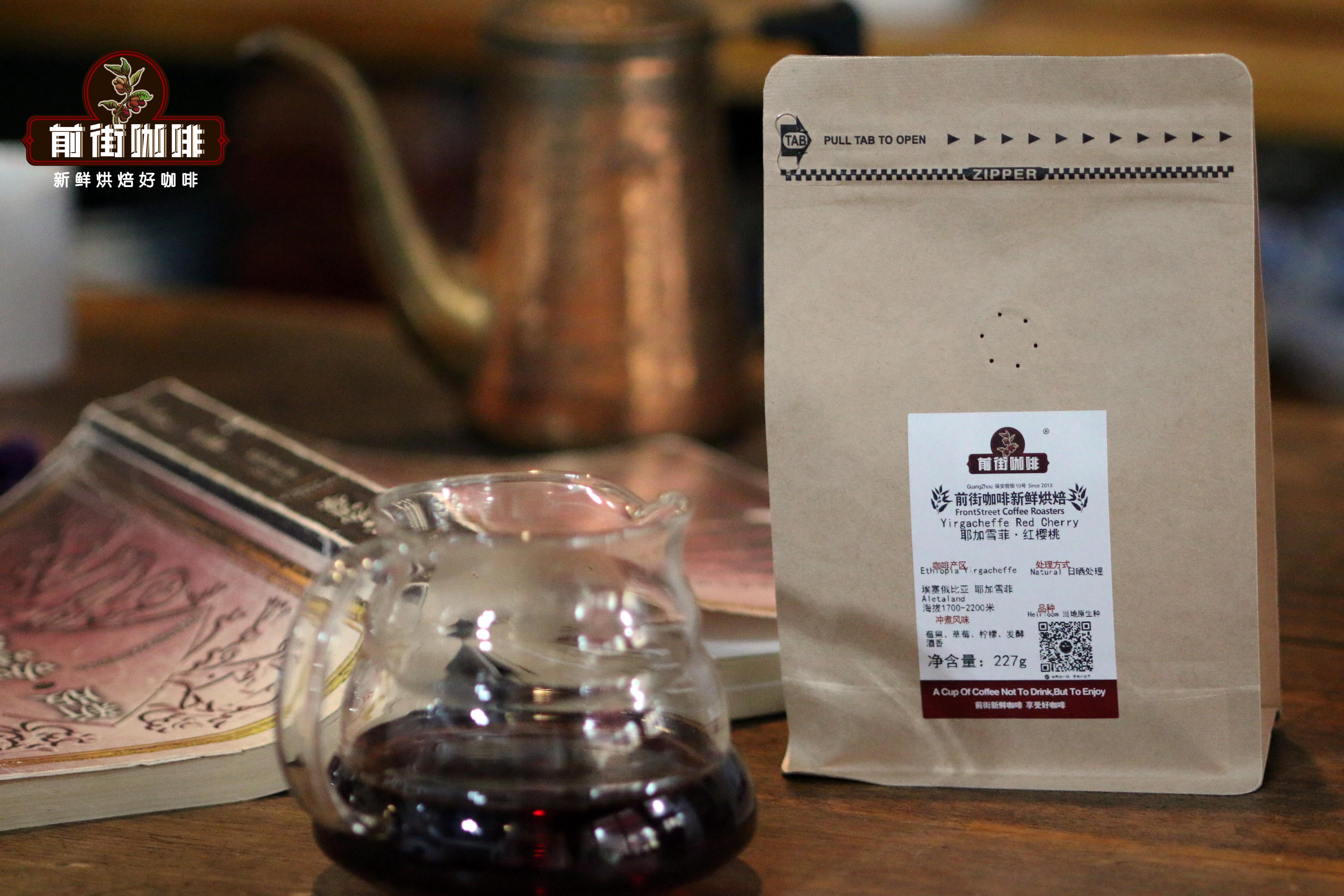
For many people, their first cup of pour-over black coffee started with Ethiopian beans, and Front Street is no exception. When Front Street first tasted its own Front Street Yirgacheffe, that floral-and-fruity-tea character completely shattered the ingrained notion that "coffee must be bitter," and the memory remains vivid to this day.
Where do the flavors of Ethiopian coffee beans come from?
As the world's recognized birthplace of coffee, Ethiopia possesses a vast number of native varieties and outstanding quality. Coffee is not only an important cash crop and export pillar for the country but is also deeply embedded in its historical and cultural fabric, making it arguably the proudest calling card of the Ethiopian people.
Ethiopia's terrain is generally high in elevation, and its vast highland areas create ideal climatic conditions with pronounced day-night temperature differences. Mornings are shrouded in mist as mountain breezes sweep through; afternoons enjoy abundant sunlight; at night, temperatures can drop to the teens in Celsius yet not quite reach freezing—an environment highly favorable for coffee cultivation. The country has numerous producing regions, and differences in soil, microclimate, and post-harvest processing methods give rise to an endless variety of coffee flavors. Among domestic cafés, the three most prominently featured flavor representatives are Front Street Yirgacheffe, Front Street Sidamo, and Front Street Guji, each with its own distinctive aroma that is widely celebrated in coffee circles.
Take the well-known Yirgacheffe as an example. It was originally a small town in southern Ethiopia, formerly under the administration of Sidamo. Later, with the construction of washing stations, the local coffee displayed a distinctive white floral and citrus character, so Yirgacheffe broke away from Sidamo to become an independent producing region and rose to global fame in the coffee world.
The town of Yirgacheffe, located in the Gedeo Zone, happens to sit downstream of the Great Lakes, with springs and waterways crisscrossing the area, providing ample freshwater resources for washing stations. Front Street also noted that in the ancient Ethiopian language, "Yirgacheffe" is composed of two words: Yirga (ይርጋ Yərga), meaning calm or to settle down, and cheffe (ጨፌ Č̣äfe), referring to marshy wetlands—together meaning "let us settle ourselves in this wetland."
The so-called "Yirgacheffe flavor" can be briefly summarized as: a distinctive citrus and lemon-like fruit aroma interwoven with jasmine fragrance, a fresh and bright mouthfeel, well-layered acidity, and a clean cup free of off-flavors. According to ECX contract agreements, in addition to the town of Yirgacheffe itself, coffee produced in areas such as Wenago to the north, Gelena Abaya to the west, and Kochere to the south can also be classified as belonging to the Yirgacheffe flavor region.
As a devotee of floral-and-fruity coffees, Front Street features a number of Front Street Ethiopian coffee beans on its lineup, the most representative of which include Front Street Yirgacheffe Banko Gotiti Cooperative, Front Street Natural Red Cherry, Front Street Sidamo Huakui, and the Front Street washed Yirgacheffe daily-drinker beans regarded as Ethiopia's flagship. Among guests coming to Front Street for coffee, if they want to try a washed fruit profile, the baristas at Front Street Coffee (FrontStreet Coffee) typically recommend Front Street Banko Gotiti Cooperative first; if they prefer a fuller, rounder fruit sweetness, Front Street considers Front Street Natural Red Cherry more suitable; and if they want to experience the fermented aroma of tropical fruit, Front Street will recommend Front Street Huakui coffee beans from the Hambela region of Sidamo.
Thanks to its superior natural conditions, coffee trees can be found almost everywhere in Ethiopia, with every household planting them alongside other crops around their homes. Because individual household yields are limited, harvested coffee cherries are usually sent directly to processing stations in town, and the final product is sold under the name of the processing plant or cooperative—for example, the Banko Gotiti Cooperative is a well-known local production team. This pastoral style of cultivation is the most common model in Ethiopia and provides many Ethiopians with a basic supplementary income.
The Washing Craft of Banko Gotiti Cooperative
The name of Banko Gotiti Cooperative comes from a small village in the Gedeo region and is renowned for producing some of Ethiopia's top coffees. It was originally part of the Worka Woka Cooperative under The Yirgacheffe Coffee Farmers Cooperatives Union (YCFCU), an organization encompassing 26 cooperatives and 45,000 members. Later, with its mature washing techniques, Banko Gotiti became independent in 2012 and grew into a household-name production team.
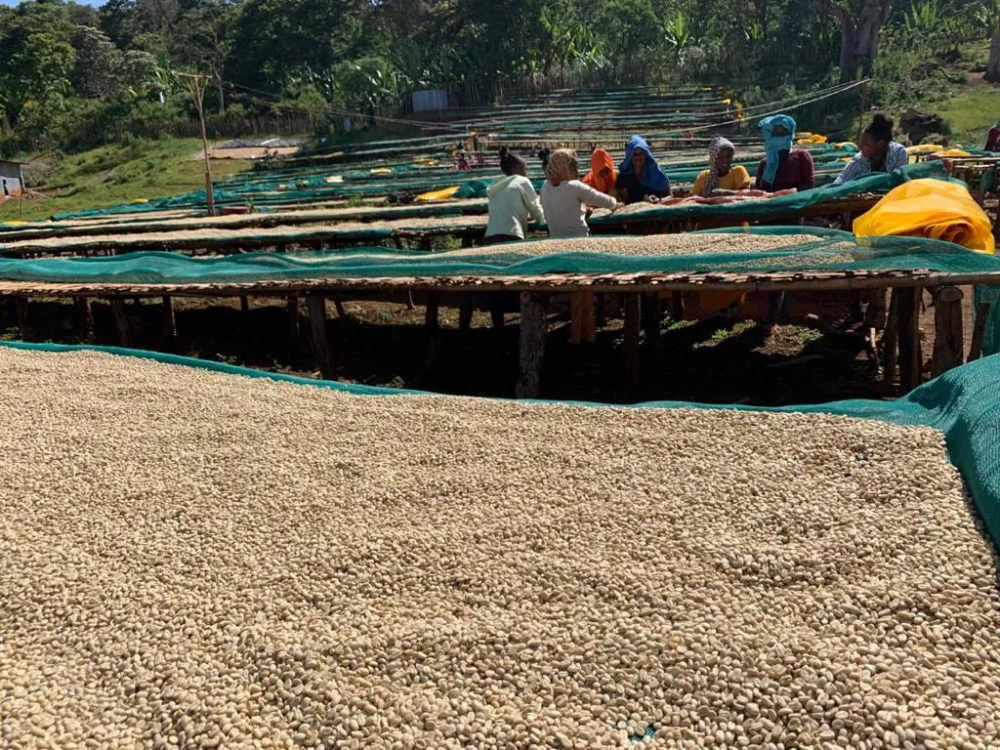
Traditionally, farmers would harvest coffee cherries and spread them directly on patios or the ground, relying on sun exposure to dry them to about 12% moisture content before hulling and bagging. This method easily produced earthy flavors, over-fermentation, and rotten fruit notes, and was extremely time-consuming. To improve the defective flavors caused by sun-drying and to increase efficiency, Ethiopia introduced washed processing technology from Central and South America. Cooperatives would sort, wash, ferment, and remove the skin and mucilage from purchased coffee cherries, then dry them on raised beds. Every step must be handled properly to ensure the quality of the final coffee.
Washed processing freed Yirgacheffe coffee from its previous inconsistency in quality. After roasting, it presents not only a fresh citrus character and elegant white floral notes but also an overall bright and delicate flavor that leaves a deep impression. It is precisely for this reason that Yirgacheffe broke away from the Sidamo producing region to become a renowned name in today's coffee circles.
What flavor characteristics does natural Yirgacheffe have?
Ethiopia's high elevation, low rainfall, and long sunshine hours make it very suitable for sun-drying green coffee beans. The so-called "natural method" involves harvesting ripe coffee cherries and drying them directly in the sun. During the drying process, the sugars and aromas in the fruit pulp are fully preserved and penetrate into the green beans. At the same time, the longer the sun-drying period, the more complete the fermentation.
Because the natural method allows the coffee fruit to dry naturally, with the beans ripening inside the fruit without interference from the external environment, naturally processed coffee beans amplify their own flavors, exhibiting pronounced tropical fruit character, full fermentation, and sweetness. Front Street Coffee's (FrontStreet Coffee) Front Street Sunflower Warm Sun espresso blend incorporates 30% naturally processed Front Street Yirgacheffe Red Cherry coffee beans, carrying a berry-like sweet-and-tart charm.
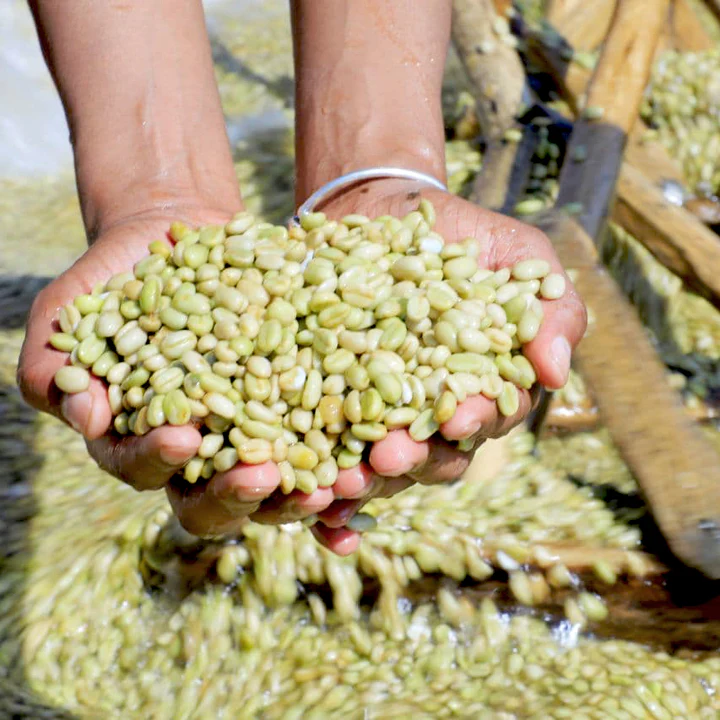
The name Red Cherry coffee originates from the "Red Cherry Project" launched in 2007, led by Trabocca BV, then the largest Dutch coffee bean merchant, aimed at encouraging Ethiopian coffee farmers to produce higher-quality beans. The project focused primarily on high-altitude Ethiopian regions such as Yirgacheffe, improving washed, semi-washed, and natural processing techniques and bringing in professional cuppers. During harvest season, picking volumes were set according to different microclimate zones, and only 100% ripe red coffee cherries could be picked. Proper ripeness combined with more refined processing techniques brought about a qualitative leap in coffee flavor, and farmers received correspondingly higher compensation, creating a win-win situation for both producers and consumers.
Brewing Recommendations for Front Street Yirgacheffe
After roasting, coffee beans need a 4-to-7-day degassing and resting period before entering their optimal tasting phase. As storage time extends, coffee aromas accelerate their loss, and flavor and mouthfeel deteriorate significantly. To ensure everyone drinks coffee in its best condition, Front Street only ships fresh beans within 5 days of roasting, as freshness is more conducive to extracting the superior flavors of Front Street Yirgacheffe.
Front Street Yirgacheffe is light-roasted with a harder bean density, requiring hot water at 92°C to 93°C to bring out its floral and fruity notes. Regarding grind size, Front Street recommends a medium-fine grind (78% passing through a Chinese standard No. 20 sieve). Too coarse and the rich substances cannot be extracted, making the coffee taste thin; too fine and over-extraction at high temperatures easily brings out bitterness. To highlight the rich and alluring aroma of Front Street Yirgacheffe, Front Street uses a V60 dripper for brewing.
Brewing parameters for Front Street Yirgacheffe:
Dripper: V60 Water temperature: 92-93°C Coffee dose: 15g Coffee-to-water ratio: 1:15 Grind size: fine granulated sugar (78% passing through a No. 20 sieve)
For the first pour, add 30g of water for a 30-second bloom, then pour in 95g (electronic scale reads about 125g), completing the pour in about 1 minute. When the water level drops to two-thirds of the coffee bed, pour in the remaining 100g (electronic scale reads about 225g), completing the pour in about 1 minute 35 seconds. Dripping finishes at 2 minutes 10 seconds; remove the dripper and extraction is complete.
For professional coffee knowledge exchange and more coffee bean information, please follow Coffee Workshop (WeChat public account: cafe_style)
For more specialty coffee beans, please add the private WeChat of Front Street Coffee (FrontStreet Coffee), WeChat ID: qjcoffeex
The above content is compiled by CoffeeHunters, a coffee news website.


