







How do you taste and describe coffee step by step?
Tasting coffee goes beyond drinking it. The process engages smell, taste, and touch, starting with dry aroma from freshly ground beans, then wet aroma once the brewed liquid is in the cup, followed by flavor shifts as the coffee cools from hot to room temperature. Each stage reveals different compounds.
Professional cupping, such as the COE format, scores aroma, cleanliness, sweetness, acidity, mouthfeel, flavor, aftertaste, and balance. Learning to describe coffee means separating these dimensions instead of judging a cup only as good or bad. Comparing beans side by side, including distinctive lots like panama geisha coffee, trains the palate and builds a shared vocabulary for what each cup actually delivers.
Drinking coffee and tasting coffee are two different things. True professional tasting requires engaging the senses of smell, taste, and touch, capturing the three-dimensional character of a cup step by step—from dry aroma and wet aroma to the flavor changes at high and low temperatures. This article uses Front Street Coffee's tasting class as a thread to systematically outline the basic process of coffee tasting, and borrows the dimensions of COE cupping to explain one by one how to judge and describe aroma, cleanliness, sweetness, acidity, mouthfeel, flavor, aftertaste, and balance. Whether you are a beginner just getting started or an advanced enthusiast looking to improve your ability to express what you taste, you will find actionable tasting approaches and practical references here.
For more specialty coffee knowledge, please follow the WeChat public account: Front Street Coffee (FrontStreet Coffee)
Drinking coffee and tasting coffee are actually two different paths. When faced with a cup of specialty coffee, many people develop a desire: not only to tell whether it is good or bad, but also to accurately say what exactly makes it good and how different beans differ from one another. Because many readers have given Front Street feedback about their confusion over tasting, Front Street has specially organized the content of one class this time to talk about how to drink, compare, and express with a more professional approach.
How do you taste a cup of coffee?
This question can be divided into two parts: one is how the tasting process should proceed, and the other is from which angles we should approach coffee tasting. Why do we usually say "flavor" rather than "taste"? The reason is not complicated—taste corresponds only to the sensory level of gustation, while coffee tasting is three-dimensional: it includes aroma (smell), taste (gustation), and mouthfeel (touch). So tasting a cup of coffee is by no means as simple as just "drinking it down."
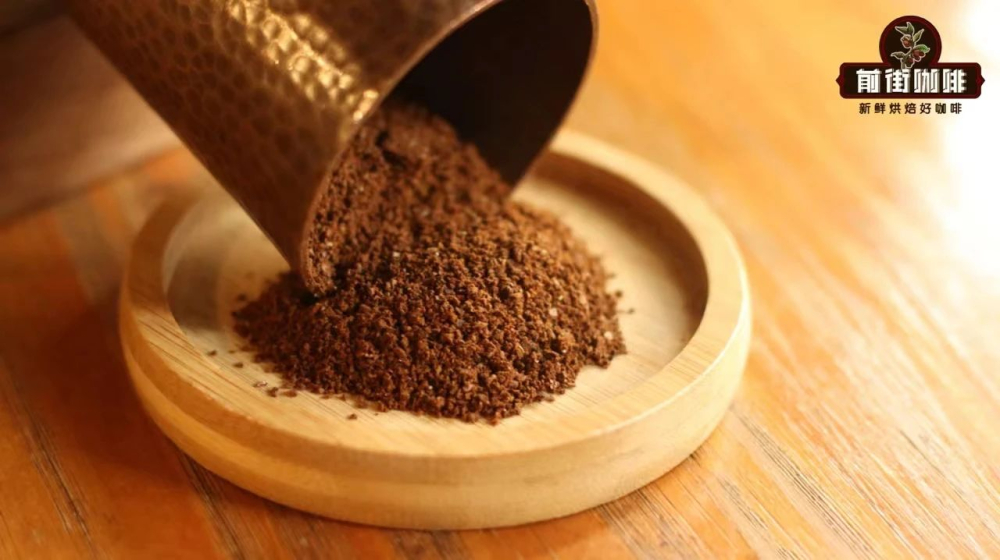
The moment coffee beans are ground into powder, a large number of aromatic substances are released into the air. This is the first step of tasting—smelling the dry aroma. The aroma presented by dry coffee grounds is not the same as the aroma of the brewed coffee liquid. Therefore, after brewing is complete and the coffee liquid is poured into the cup, we need to smell it again; this time it is called the wet aroma.
Only after that do we taste the coffee's flavor and mouthfeel. Some experienced veteran coffee drinkers are used to drinking by slurping, because slurping atomizes the coffee liquid and allows retronasal smell to capture the flavor more clearly. During tasting, a distinction is made between how it performs at high temperature and at low temperature. As the temperature drops, the coffee's flavor—or rather a person's perception of the flavor—also changes. So if you want to fully taste a cup of coffee, spending around ten minutes is quite normal.
How do you describe the flavor of coffee?
It is helpful to borrow the framework of COE cupping. In cupping, the scoring items for coffee can be broken down into aroma, cleanliness, sweetness, acidity, mouthfeel, flavor, aftertaste, and balance.
Aroma
Aroma can be said to be the soul of a cup of coffee. Many people who fall into the coffee rabbit hole were first drawn in by that aroma. Aroma is divided into dry aroma and wet aroma: dry aroma comes from freshly ground coffee powder, while wet aroma comes from the brewed coffee liquid. Some coffee beans have extremely high aroma recognition. For example, Front Street Geisha coffee gives off an elegant white floral fragrance, Front Street Huakui coffee carries berry aromas, Front Street Xizhua coffee presents fermented aromas, and Front Street Golden Mandheling coffee reveals a scent reminiscent of Chinese herbal medicine.
Cleanliness
Cleanliness means that the coffee has no defective or unpleasant flavors. If muddy mustiness, medicinal iodine, onion, rubber, or similar notes appear, it shows that the cup's cleanliness is insufficient.
Sweetness / Sweetness perception
Sweetness refers to the sensation on the palate. If a cup of coffee has good sweetness, its overall score will improve considerably. Many factors affect sweetness, including the growing stage (red cherries), processing method (natural is usually sweeter than washed), the Maillard reaction and caramelization during roasting, and the brewing technique and parameters. Sweetness can also be further divided into types such as fruity sweetness, honey sweetness, and caramel sweetness.
Acidity
Acidity is the sourness we perceive through taste, and it can also be used to describe how much saliva is secreted on both sides of the tongue. Acidity describes not only intensity but also quality. For example, Yirgacheffe is often described as having citrus acidity, while Kenyan coffee shows pronounced berry-like acidity. Of course, acidity also has good and bad forms; spoiled acidity and concentrated acetic acidity are examples of bad acidity.
Mouthfeel
Mouthfeel belongs to the category of touch and is used to describe the coffee's body, that is, its fullness and volume. If a cup of coffee has a rich mouthfeel, its impression score rises considerably. Many people mistakenly think that body is the same as strength, assuming that the stronger the coffee, the higher the body. This is actually not accurate. Strength refers to the amount and proportion of soluble components in the coffee, while the perception of body mainly comes from the oils and fibers in the coffee liquid that do not dissolve in water. This feeling can be compared by analogy to the differences among water, milk, and light cream.
Flavor
Flavor is our overall impression when drinking this coffee; it is the result of combining multiple sensations such as smell and taste. It directly reflects the coffee's taste and is also the direct basis for describing a coffee's characteristics. Describing coffee flavor requires a certain ability to associate: for example, when lemon is mentioned, we think of acidity and the fresh scent of lemon oil; when cocoa is mentioned, we think of richness and bitterness. When some characteristic in the coffee awakens your memory of something, you can connect it. So, if you want to describe coffee flavor accurately, the most important thing is still to drink more and taste more.
Aftertaste
Aftertaste refers to the various flavors and aromas that remain in the mouth after drinking coffee. If good flavors linger for a long time, we can say that this coffee has a long aftertaste. Panama Geisha coffee, for example, shows a light floral and green tea aftertaste after drinking.
Balance
Balance refers to whether the various indicators of the coffee are even. For example, whether it is too acidic, or whether the bitterness is too prominent—these are the bases by which we judge whether a coffee is balanced.
The above content is compiled by CoffeeHunters, a coffee news website.


