







What Are the Right Americano Coffee Proportions?
Start with the espresso itself: the standard brew ratio is 1:2, so a single shot uses about 9g of grounds to yield 18g of liquid, and a double shot uses 18g to yield 36g. That shot is then diluted with hot water to make an Americano. The water amount is a matter of taste, but keeping the espresso ratio consistent is what makes the drink repeatable rather than random.
Dial in by taste rather than by formula alone. If the flow runs too fast, grind finer; if it runs too slow, grind coarser, until extraction time settles in a reasonable range. Whether the finished drink tastes bitter depends mostly on that extraction, not on the water. Front Street Coffee stores use the same variable control, adjusting dose, liquid weight and grind size until the cup is balanced.
The espresso brew ratio is one of the key factors determining flavor expression. The standard ratio is usually 1:2, meaning a single shot uses 9g of grounds to extract 18g of liquid, while a double shot uses 18g of grounds to extract 36g of liquid. However, in actual production, fine-tuning based on taste is still necessary. This article starts from the definition of espresso, providing a detailed analysis of its taste characteristics, proper drinking method, and the adjustment logic of core extraction parameters such as dose, liquid weight, and grind size. At the same time, drawing on the hands-on experience of Front Street Coffee stores, it shares how to quickly dial in a balanced and delicious espresso through flexible variable control.
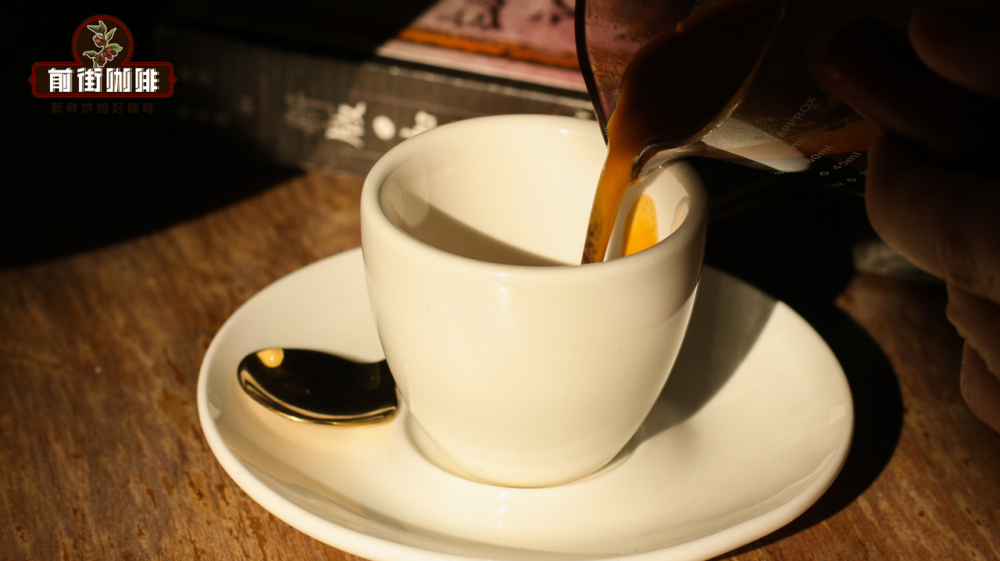
According to industry-standard practice, the espresso brew ratio is typically set at 1:2. That is, a single shot uses 9g of coffee grounds and ultimately yields 18g of coffee liquid; a double shot corresponds to 18g of grounds and 36g of liquid. In actual operation, however, baristas use this baseline ratio and make subtle adjustments based on the flavor performance of that particular extraction. Grind size calibration also uses extraction time as a reference—if the flow is too fast, grind finer; if the flow is too slow, grind coarser, until the extraction time falls within a reasonable range.
From a process standpoint, the steps for making an espresso are not complicated, but to present the best taste and aroma, all parameters must be in harmony. This sense of balance often requires repeated practice and accumulated experience to truly master.
What exactly is espresso?
Espresso refers to the liquid rapidly extracted in a short time by using a fully automatic or semi-automatic espresso machine, under conditions of simultaneous high temperature and high pressure, forcing hot water through a very finely ground bed of coffee at great pressure. It usually has a rich layer of crema, intense aroma, and a substantial, full-bodied mouthfeel.
Espresso's flavor is highly concentrated, and its impact on the palate is quite direct. Therefore, it is the smallest serving in a café's offerings, yet it is also an indispensable foundational product for any store. The iced Americano we are familiar with in daily life, the hot latte with latte art, or the rich and smooth flat white are essentially all made with espresso as the base, then modulated with water, milk, and other ingredients in different proportions.
How to drink espresso
Many stores do not print espresso directly on the menu, but as a hidden option, it still attracts a group of customers who prefer bold flavors to make a special trip to order it. Taking Front Street Coffee as an example, the menu lists only four espresso-based coffees, and espresso is not among them, yet there are still customers who come every few days to drink this "mini coffee."
When espresso is served, a glass of ice water or room-temperature water is usually provided so you can cleanse your palate before tasting. When the coffee is brought to you, you can first take in the aroma released by the top layer of crema and observe how dense the foam is. Then use the small spoon provided to gently stir the coffee liquid so the flavors are distributed more evenly. Next, you can begin drinking—take a small sip first, letting the coffee linger in your mouth for a moment to experience the layers brought by the crema and the coffee liquid together. In between, you can take a sip of clear water to help capture the lingering finish and sweet aftertaste left by the espresso.
Front Street Coffee currently uses its own roasted "Sunflower Warm Sun Blend Coffee Beans," a blend of Yirgacheffe and Honduras. This bean has a distinct fermented wine aroma, accompanied by berry-like acidity. After the temperature drops slightly, vanilla and cream flavors gradually emerge, finishing with a black chocolate-like aftertaste. The overall performance is balanced, with a rich and smooth mouthfeel.
Espresso extraction parameters
Different coffee beans require different brewing parameters. Even for the same bean, variables such as grind size and brew ratio will change at different times of day and under different humidity conditions.
The extraction ratio involves two dimensions: the dose of grounds and the actual weight of coffee liquid obtained. The dose is roughly determined by the capacity of the filter basket. The espresso machine at Front Street Coffee stores is equipped with a 20g-capacity double basket. During production, 20g of grounds is used as the starting point, then adjusted up or down based on the day's espresso condition.
The more water injected, the lower the concentration of the coffee liquid, the flatter the taste, and the harder it is for flavors to concentrate. Therefore, an appropriate brew ratio is crucial. The brew ratio generally falls between 1:1.5 and 1:2.5, with 1:2 being the most common, for example, 20g of grounds extracting 40g of liquid. If it tastes thin with insufficient finish, you can appropriately increase the brew ratio; if there is pronounced bitterness or a heavy astringency, it may be over-extraction, in which case you should reduce the brew ratio and extract less liquid weight.
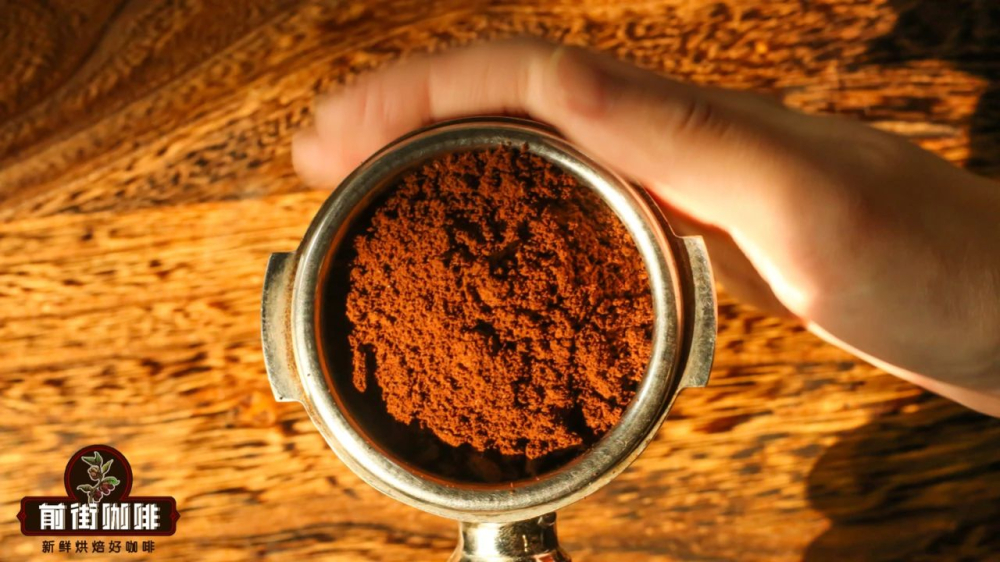
Grind size is directly reflected in the extraction flow rate. If the flow is fast and the time is short, grind the coffee finer; if the flow is slow and the time is long, grind coarser. The grind size needs to fall within an appropriate range—if the particles are too coarse, it is easy to under-extract, and the coffee tastes weak and somewhat sour; if the particles are too fine, it is easy to over-extract, and the taste is bitter. In addition, espresso grinding is far finer than brewing methods such as pour-over, so adjustments should not be too large, otherwise excessive variable changes will make extraction more unstable.
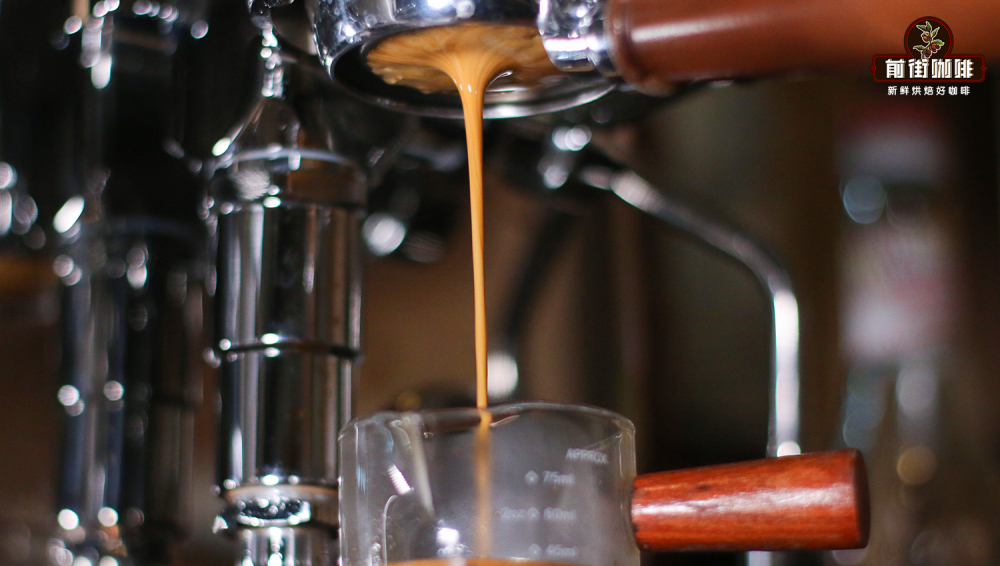
Front Street Coffee's approach is to use 20g of coffee grounds, follow a 1:2 brew ratio, and extract 40g of coffee liquid under 9 bar of pressure, with the time controlled at around 30 seconds. The direction of parameter adjustment is always flexible; as long as you accumulate more experience in the extraction stage, quickly dialing in a delicious espresso is not difficult.
The above content is compiled by CoffeeHunters, a coffee news website.


