







How Do You Identify Authentic Jamaican Coffee Grades?
Jamaican coffee from the Blue Mountains is graded and quality-tested by the CIB, so beans sold worldwide must pass that certification and carry its label. Blue Mountain No. 1 is the top grade. After the Jamaican government established the CIB in 1952, cultivation, production, and sales all fell under clear regulations.
Flavor shifts with temperature: richness and balance at the start, then a lingering finish as the cup cools. Wooden barrel packaging is a tradition tied to the certified trade. Medium-dark roasting supports that balance, and pour-over extraction keeps the sweetness, acidity, and bitterness in proportion.
Blue Mountain coffee is hailed as the finest of coffees, renowned for its rich smoothness, balanced sweetness, acidity, and bitterness, and its long lingering aftertaste. In an era before specialty coffee became widespread, its status was like Rolls-Royce in the automotive world or Rolex in watches, with counterfeits flooding the market and prices extremely high. Nowadays, enjoying authentic Blue Mountain is no longer difficult—Front Street Coffee can provide the highest-grade Jamaica Blue Mountain No. 1 coffee beans. This article focuses on the grading standards of Blue Mountain coffee, the CIB certification system, the tradition of wooden barrel packaging, Front Street Coffee's medium-dark roasting philosophy, and the store's standard pour-over extraction method, explaining in detail how to identify authentic Jamaican Blue Mountain and presenting the flavor changes of Blue Mountain No. 1 from high to low temperatures, helping coffee enthusiasts gain a comprehensive understanding of this legendary coffee.
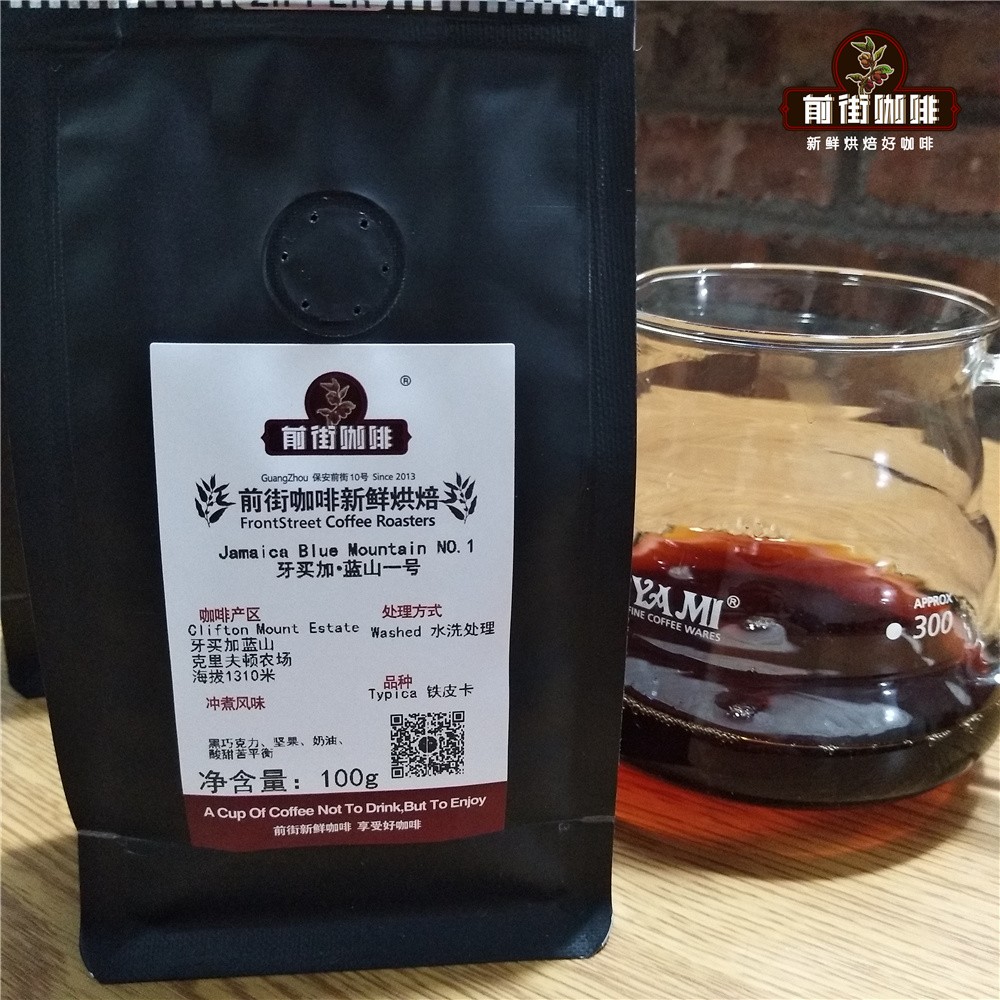
Blue Mountain coffee is hailed as the finest of coffees, with a rich aroma, a smooth and mellow entry, a delicate balance of sweetness, acidity, and bitterness, and a long finish. In an era before the specialty coffee wave arose, its status in the coffee world was comparable to Rolls-Royce among cars or Rolex among wristwatches. Counterfeit Blue Mountain products flooded the market, and prices were staggeringly high. Today, enjoying a genuine cup of Blue Mountain coffee is no longer difficult—at Front Street Coffee, you can taste the highest-grade Jamaican Blue Mountain No. 1 coffee beans.
Everyone surely hopes that the Blue Mountain coffee they buy is authentic, and that the higher the grade, the better, since a higher grade means better flavor performance.
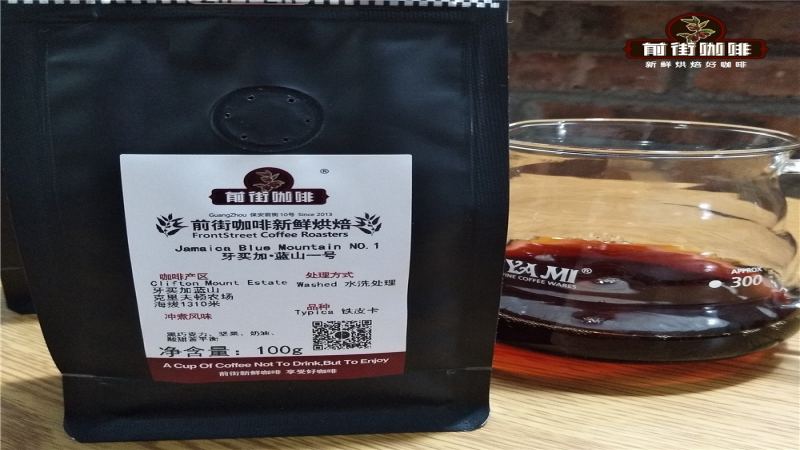
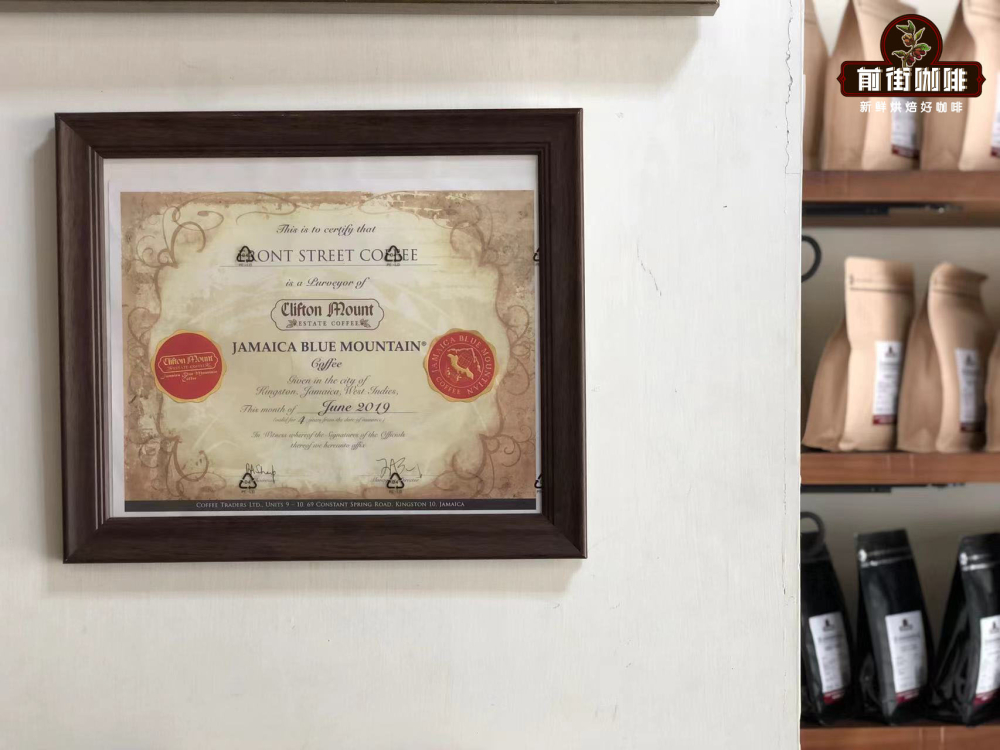
After the Jamaican government established CIB in 1952, the cultivation, production, and sales of Blue Mountain coffee all had clear regulations, which improved Blue Mountain quality and also enhanced production and processing procedures. At the same time, CIB is also responsible for coordinating the circulation of Blue Mountain coffee in the market. Coffee produced in the Blue Mountains is graded and quality-tested by CIB. In other words, Blue Mountain coffee sold around the world must pass CIB certification and bear its label. The Blue Mountain No. 1 coffee obtained by Front Street Coffee is produced by Clifton Estate, certified by CIB for export, and Front Street Coffee also holds a quality certificate issued by the Jamaica Coffee Board, an authorized sales certificate granted by the Blue Mountain coffee producer, and a certificate of origin for Jamaican Blue Mountain coffee.
Compared with other coffee origins, Jamaica was the earliest country to recognize the "taste of place" in coffee. The standards for evaluating the quality of Blue Mountain green beans involve multiple dimensions: bean size, defect rate, color, uniformity, and post-roast cupping performance (covering dry aroma, wet aroma, acidity, flavor, body, cleanliness, etc.). Bean size is measured using screens with different aperture sizes; coffee beans that cannot pass through the holes meet the corresponding size standard. Color evaluation combines visual observation with colorimeter readings, and blue-green represents the highest grade.
Based on the above standards, Blue Mountain coffee is divided into 4 grades, from highest to lowest: NO.1, NO.2, NO.3, and PB, commonly translated in China as Blue Mountain No. 1, Blue Mountain No. 2, Blue Mountain No. 3, and Blue Mountain Peaberry. Top-grade Blue Mountain No. 1 green beans must reach a screen size of 17 or above, with a defect rate below 3%, a moisture content of about 13%, and in cupping they display a rich coffee aroma, a smooth and balanced mouthfeel, low acidity, and a lasting sweet aftertaste.
After quality testing, Blue Mountain coffee beans are transported in containers of different materials according to their different grades. Blue Mountain No. 1, No. 2, and No. 3 are the only coffees in the world exported in wooden barrels, with three specifications: 70 kg, 30 kg, and 15 kg. Other grades of Jamaican coffee are exported in 60 kg burlap sacks. Compared with coarse burlap sacks, the advantage of oak barrels is that they can absorb and release internal and external moisture while blocking the escape of coffee aroma, allowing the beans to maintain a more stable moisture content and making the roasting process more stable. Later, wooden barrels also became one of the symbols for identifying authentic Blue Mountain coffee. In the Front Street Coffee store, wooden barrels used to transport Blue Mountain green beans are on display.
The roasting stage is equivalent to the cooking step in cuisine; high-quality ingredients paired with appropriate cooking techniques can elevate the taste of food to an even higher level. The ultimate purpose of roasting is to obtain a delicious cup of coffee. Front Street Coffee's roasting philosophy is to present the most classic flavor profile of the origin while highlighting the beans' unique style, such as the bright lemony acidity of Yirgacheffe, the herbal mellowness of Indonesian Mandheling coffee, and Blue Mountain naturally must highlight the classic Blue Mountain flavor. Front Street Coffee uses a medium-dark roast to maximize the coffee's chocolate and nut aromas while retaining soft acidity and sweetness, bringing the overall mouthfeel toward balance.
Immediately after fresh roasting, Front Street Coffee cupped the Blue Mountain coffee beans. The dry aroma showed nuts, melon, and chocolate; after pouring in hot water, oolong tea, caramel, honey, and dark chocolate could be smelled. On the palate were rich dark chocolate, roasted hazelnut, cream, and black sugar; the flavor was clean and clear, the body mellow, and the aroma long-lasting. To let more people experience these aromas, all coffee beans shipped by Front Street Coffee are guaranteed to be freshly roasted within 5 days, so when you receive them they are at their best tasting stage. Below, Front Street Coffee explains several key factors in pour-over Blue Mountain coffee based on store serving standards.
Front Street Coffee usually uses the KONO dripper to extract medium-dark roasted coffee beans. The upper part of the KONO dripper is a smooth curved surface, which allows the filter paper to fit better. Compared with the V60 dripper, its extraction method is mainly immersion-style, which can increase the overall concentration of the coffee and enhance body. In addition to KONO, common slow-flow devices such as the Kalita trapezoidal dripper and flannel are also suitable.
In addition, after a certain degree of roasting, the internal structure of medium-dark roasted coffee is fluffier than that of light-roasted coffee, and its water absorption is also better. To avoid over-extraction, Front Street Coffee chooses a grind size with 75% passing through a No. 20 standard sieve, sets the water temperature at 88°C, and uses Front Street Coffee's usual three-stage pouring.
Pour-over parameters: 88°C water temperature, coarse granulated sugar grind size (75% passing through a No. 20 standard sieve), 15 grams of coffee beans, 1:15 coffee-to-water ratio, three-stage extraction.
In the first stage, gently pour 30 grams of water for blooming, with a blooming time of 30 seconds; in the second stage, pour to about 125 grams of water, circling outward evenly and steadily. Then wait for the coffee liquid to drop; when it has dropped by half, pour the final stage of water to 225 grams. After all the coffee has dripped through, the total extraction time is generally about 2 minutes.
Blue Mountain No. 1 coffee flavor: At high temperature, Blue Mountain No. 1 coffee enters with a dark chocolate aroma, very mellow, with an obvious almond sweet aftertaste. As the temperature drops, roasted hazelnut and cream are sweet and silky, carrying a hint of soft acidity and caramel sweetness, and the aroma lingers in the mouth.
For professional coffee knowledge exchange and more coffee bean information, please follow Coffee Workshop (WeChat public account: cafe_style)
For more specialty coffee beans, please add the private WeChat of Front Street Coffee (FrontStreet Coffee), WeChat ID: qjcoffeex
The above content is compiled by CoffeeHunters, a coffee news website.


