







Which espresso coffee beans suit a moka pot without turning bitter?
A moka pot brews a strong, full-bodied coffee liquid at a fraction of the cost of a professional espresso machine. Its extraction pressure is far lower, so the result falls short in viscosity and is not true espresso in the technical sense. Bean choice and grind still decide whether the cup turns out bitter or balanced.
The moka pot dates to 1930s Italy, when an aluminum craftsman returned to Piedmont after more than ten years in France and developed the design. For different taste preferences, blends such as a classic blend, a strawberry candy espresso, or a Brazil Queen's Farm bean each pull differently, so matching the bean to the pot matters more than chasing machine-style pressure.
The moka pot, with its affordable price and rich output, has become the choice for many coffee lovers looking to recreate espresso flavor at home. But the pressure of a moka pot is far lower than that of a professional espresso machine—can the coffee it brews really be called espresso? What beans should you choose to avoid bitterness? Drawing on Front Street Coffee's hands-on experience, this article outlines the moka pot's structure and principles, usage steps, and safety points, and recommends beans such as Front Street Classic Blend, Strawberry Candy Espresso, and Brazil Queen's Farm for different taste preferences, helping you find the right cup for your moka pot.
Coffee is now a popular everyday drink, and most people have had the experience of drinking coffee at a café. The freshly ground coffee in shops is aromatic and tasty, but limited by time and budget, you can't eat out every day. The most practical solution is still to make it yourself at home. Front Street has encountered many customers who, after tasting that special boozy aroma in espresso at the shop, wanted to recreate a similar flavor at home.
Those with a sufficient budget will buy a dedicated espresso machine, while those with a limited budget mostly choose a moka pot. The moka pot is affordable and can brew a strong, full-bodied coffee liquid, which is why many people favor it. People often ask Front Street baristas: what coffee beans go well with a moka pot? How can you use a moka pot to brew a delicious espresso with plenty of crema? However, is what a moka pot brews really espresso?
The moka pot is currently the first choice of equipment for many coffee lovers making espresso. Although its extraction pressure is far below that of a professional espresso machine, and the coffee liquid it produces falls short in viscosity, compared to expensive and space-consuming professional equipment, a moka pot costs only a few hundred yuan for a good-quality set.
It's also not complicated to operate—with a little practice, you can make a cup of espresso yourself. Speaking of which, many people are probably already eager to try. Below, Front Street Coffee will explain how to use a moka pot and a few practical tips.
The history of the moka pot can be traced back to the 1930s. At that time, an aluminum metal craftsman who had lived in France for more than ten years returned to Italy's Piedmont region and opened a workshop to make and sell aluminum household items. One day, Alfonso Bialetti looked at the washing machine at home, had a flash of inspiration, and the moka pot, this coffee brewing tool, was born.
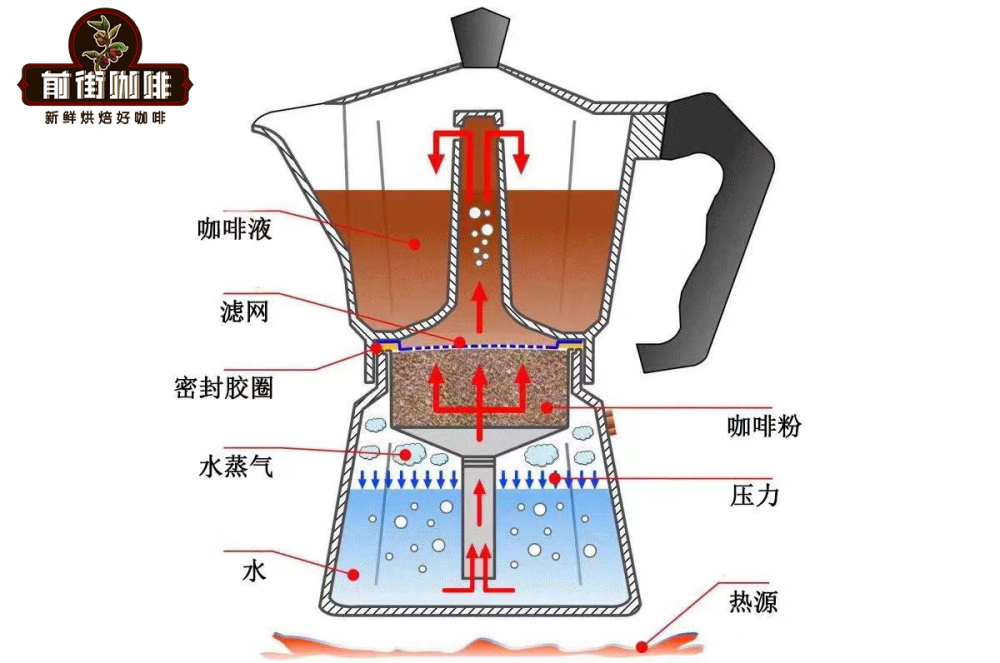
The structure and working principle of the moka pot are remarkably similar to that of the washing machine back then. It is mainly divided into three parts: upper, middle, and lower. The lower chamber holds hot water, the middle is the filter basket that holds the coffee grounds, a metal channel connects the three parts, and the upper chamber receives the extracted coffee liquid.
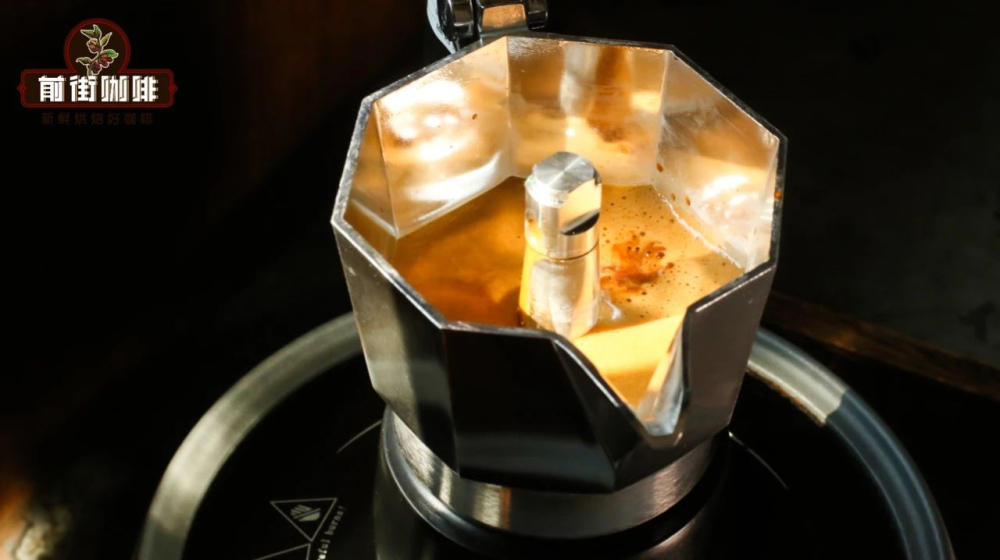
When the lower chamber is heated, the water temperature rises, and more steam is generated in the sealed space. The hot water surges upward along the metal tube in the middle, passes through the fine coffee grounds in the filter basket, and then emerges from the upper chamber like a fountain, leaving the espresso liquid with coffee oils in the upper chamber. This is the extraction process of the moka pot.
Front Street Coffee's steps for making coffee with a moka pot
1. Fill the lower chamber with an appropriate amount of hot water
2. Pour the coffee grounds into the filter basket and spread them evenly
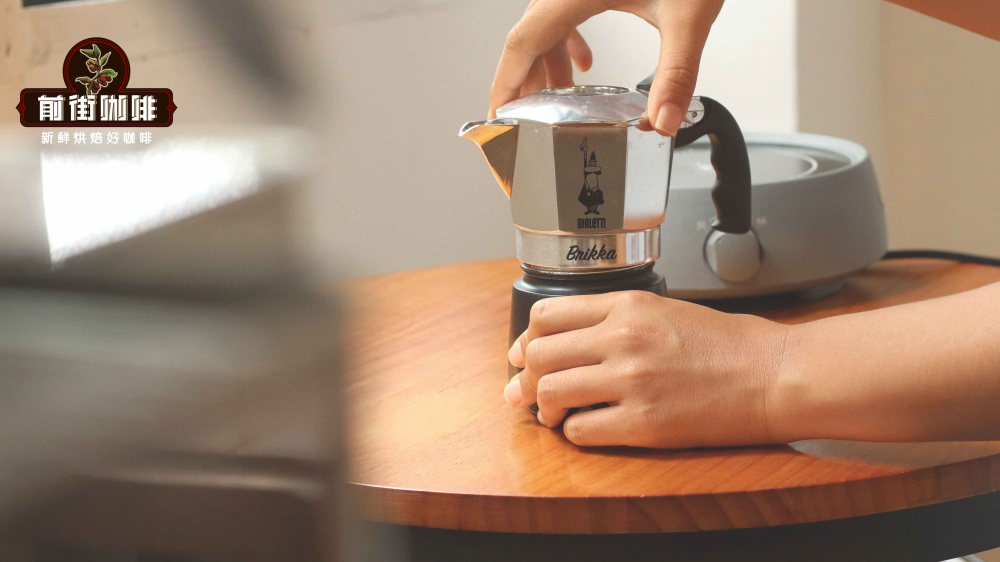
3. Place the filter basket into the lower chamber, and screw the upper chamber and lower chamber tightly together
4. Heat the moka pot
5. When the moka pot makes a "whooshing" sound and coffee liquid starts to emerge, turn off the heat source
The process of brewing coffee with a moka pot involves a pressure-building stage, which means there is a certain degree of danger, and you must always pay attention to safety during operation.
The particle size of coffee grounds is between 0.3mm and 0.55mm, which is hard to judge with the naked eye. You can buy moka pot-specific grounds, or compare with a particle size ruler, or determine the appropriate grind size through repeated testing. When filling the lower chamber with water, note that the water level must not exceed the safety valve; it should be filled to 0.5cm below the safety valve.
If, when brewing coffee with a moka pot, the coffee liquid surges up too quickly, it means the coffee grounds are ground too coarse; if you hear a "whooshing" sound but no coffee liquid emerges for a long time, Front Street recommends immediately cutting off the heat source and taking safety precautions.
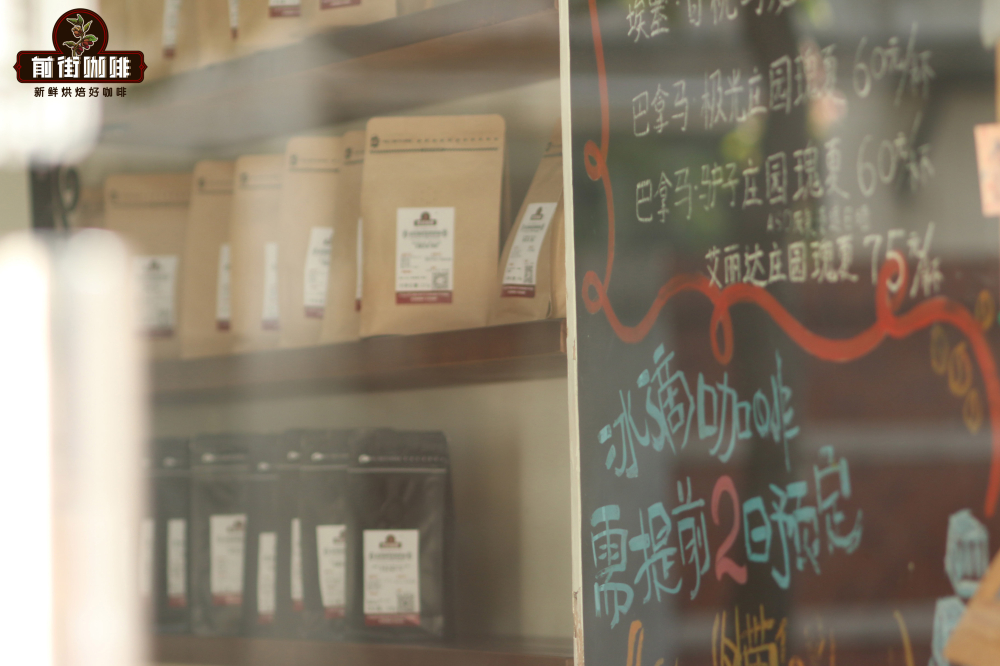
Front Street Coffee's bean shelf holds nearly fifty kinds of coffee beans, and people often stand in front of it, at a loss as to what beans to pair with a moka pot. We all know that espresso is characterized by being thick, smooth, and rich in crema, and moka pot coffee is the same. Therefore, when choosing beans, prioritize espresso blends with stable extraction or medium-dark roasted single-origin coffees. If you like plenty of crema, you can buy Front Street. Front Street Classic Blend; the classic "Mamba Coffee" combination lets you make a rich, aromatic black coffee anytime.
Many friends also say they prefer coffee with rich fruity notes, so we would recommend Front Street Strawberry Candy Espresso coffee beans, which can be ordered directly on Taobao or Tmall stores. This bean is based on two major origins—Front Street Costa Rica Tarrazú, known for its honey processing, and Ethiopia, the birthplace of coffee—with Colombian coffee beans added. The espresso it blends not only is not harsh, but also presents good crema and a creamy texture under espresso machine extraction, while carrying a sweet-and-sour taste reminiscent of strawberry gummies.
If you want to use single-origin coffee beans, you can try Front Street. Brazil Queen's Farm, which is a relatively rare Yellow Bourbon variety. The coffee fruit of the Yellow Bourbon variety has a thicker mucilage layer and is richer in sugars. When using the natural processing method that keeps the whole fruit, more fructose substances can penetrate into the green beans, bringing a preserved-fruit-like sweetness and a fuller body to coffee that originally has strong nutty notes.
Front Street. Brazil Queen's Farm coffee beans
Region: Mogiana, São Paulo State, Brazil
Farm: Queen's Farm
Altitude: 1400m—1950m
Variety: Yellow Bourbon
Processing method: Natural process
People often ask Front Street baristas: can coffee brewed with a moka pot be considered espresso?
Front Street briefly mentioned earlier that professional espresso machines have high extraction pressure and can produce thick, crema-rich espresso. The moka pot, however, has both obvious advantages and disadvantages when brewing coffee. Although it is simple to operate and convenient to use, its extraction pressure is only about 1.5 bar. You should know that the extraction pressure of espresso is usually above 9 bar. In addition, the metal filter screen of the moka pot's filter basket is relatively sparse, which means the grind size required for a moka pot is much coarser than that for an espresso machine.
These factors cause the crema of coffee brewed with a moka pot to be far less rich than that of an espresso machine, and the taste to be thinner than the coffee liquid made by an espresso machine. In other words, coffee brewed with a moka pot cannot be considered espresso; it can only be regarded as a distinctive strong coffee.
The above content is compiled by CoffeeHunters, a coffee news website.


