







What makes Mandheling work in a Mamba blend coffee?
Mamba coffee is a classic blend that combines Indonesian Mandheling with Brazilian beans, pairing Mandheling's dark chocolate and caramel notes and full body with the smooth, mellow character of Brazilian coffee, which is the world's largest in production and often used as a blend base.
In espresso, the recipe hinges on dose, ratio, and time control, and the same blend carries through to milk drinks such as lattes. Mandheling is usually one base component of a blend coffee, so its roast level and quality shape the texture and richness of the finished cup.
Mamba coffee is a classic blend that was all the rage in Taiwan's early coffee shops, combining Indonesian Mandheling with Brazilian coffee beans to leverage the strengths of both for complementary flavors. Mandheling is produced in Indonesia's mineral-rich soil, with beans that are short and oval, dark green in color, and after medium-dark roasting, they exhibit prominent dark chocolate and caramel notes with a full body; Brazilian beans, the world's largest in production, have a smooth taste and are often used as a base in blends to balance the palate. Front Street Coffee's Golden Mandheling and Italian Classic Blend continue this approach. This article will start from the characteristics of Mandheling and Brazilian beans, trace the origin and evolution of the Mamba recipe, and then use Front Street Coffee's shop offerings as an example to detail Espresso's dose, ratio, time control, and key points for making lattes, helping coffee enthusiasts understand the application of this old-school recipe in contemporary Italian-style coffee.
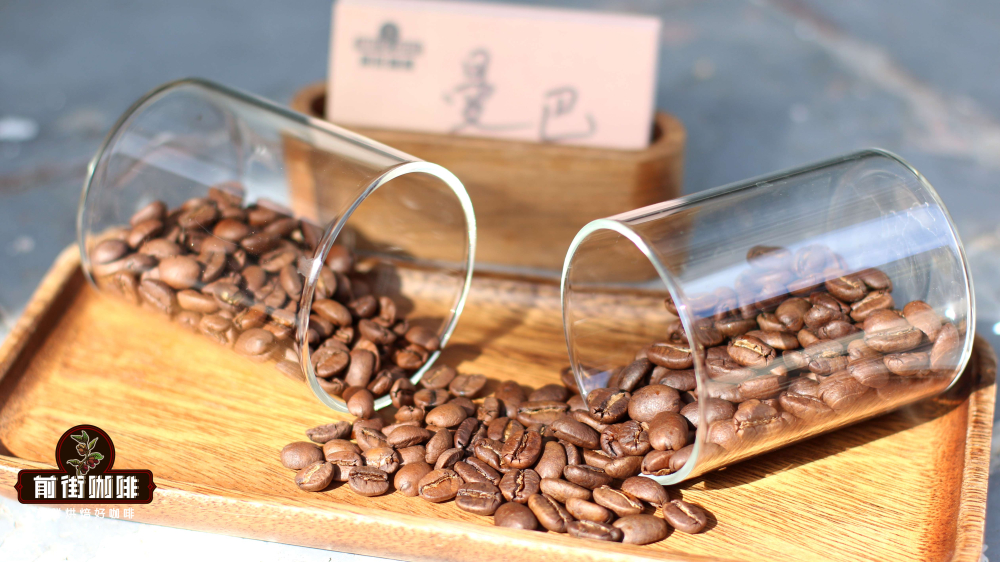
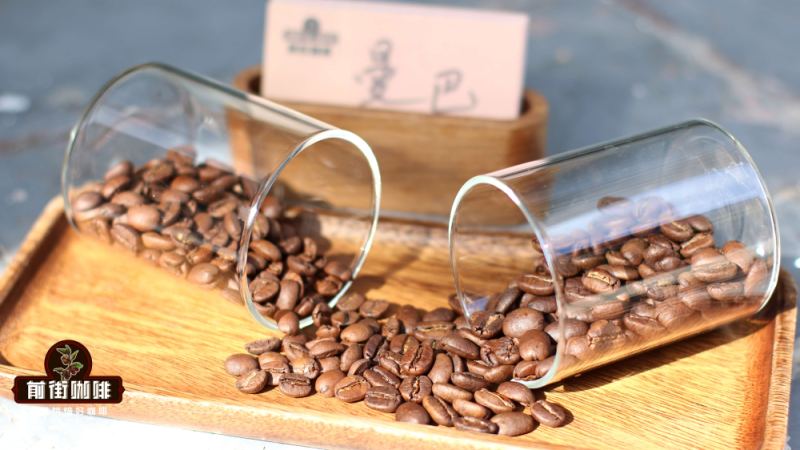
Mandheling coffee beans are produced in Indonesia, where the local soil is rich in various mineral elements, giving the beans a unique aroma. The green beans are short and oval, often dark green in color, with a thick and clear central white line. If a lighter roast is used, the acidity becomes quite prominent, but the flavor appears thin; conversely, after dark roasting, the bitterness is more dominant, but the aromas of spices, pine, and caramel emerge clearly, with high body and a lasting finish, so Front Street Coffee believes it can handle various brewing methods.
In most cases, Mandheling beans are used as one of the base components in blends, influencing the overall quality and flavor direction of Italian-style coffee, and even directly affecting the texture and richness of the final product. When it comes to the high-quality standout among Mandheling, Front Street Coffee's Golden Mandheling has a reputation that is among the best in the industry, with beans that are relatively longer and similar in appearance to each other, but during the roasting and dehydration color change, the beans appear plump, compact, and raised, with lines that combine strength and beauty, and after medium-dark roasting, that special dark chocolate aroma is impressive.
Most coffee enthusiasts have only heard the name Mamba coffee but cannot clearly explain what "Mamba" is blended from or where it comes from. In fact, Mamba is simply a mix of Indonesian Mandheling beans and Brazilian coffee beans, complementing and balancing each other between strength and mildness. In early Taiwanese coffee shops, Mamba blends were very popular, and the easy-to-remember item, along with the high order rate in the elegant seating areas at the time, became a drink in many people's youthful memories. Today it may no longer be trendy, but some still fondly remember this old-school flavor. The more popular approach now is to use dairy products to enrich the coffee's layers, such as caramel macchiato, which is a combination of latte and caramel, rather than relying solely on the coffee beans' own aroma and taste as before.
Brazil's coffee production ranks first in the world, with vast growing regions and considerable variation in quality. Due to harvest seasons and cost considerations, mechanical harvesting is mostly used locally, so the quality is relatively lower, and ripeness is not uniform enough. However, low-cost beans are still in high demand in the market, tasting relatively smooth, and bean merchants use them as a base for strong-flavored beans to balance the overall palate. It is the combination of these factors that makes Brazilian beans the top choice for roasters when developing blend recipes.
Many beginners just getting into Italian-style coffee often ask Front Street Coffee if there are beans recommended for latte art. For this, we prioritize recommending Front Street Coffee's Italian Classic Blend coffee beans, custom-made for coffee machines, which uses medium-dark roasted Indonesian wet-hulled Mandheling and Brazilian semi-washed Cerrado beans, that is, the "Mamba" recipe mentioned at the beginning. Moreover, to give the espresso a denser crema, Front Street Coffee also adds a small amount of washed Robusta, reducing the difficulty of extraction while also making the coffee's caramel aroma fuller.
Many coffee enthusiasts unknowingly accumulate a bunch of equipment at home, and those obsessed with Italian-style coffee even stock up on espresso machines, planning to extract it themselves. Here, Front Street Coffee uses its shop's Italian-style coffee offerings as a reference to briefly explain how to make an Espresso. The coffee machine used in Front Street Coffee's shop is a commercial single-group "Lelit Bianca," which can adjust extraction by changing pressure, with a maximum pressure of 11 bar. A home coffee machine only needs to reach 9 bar pressure to complete extraction and steam milk foam, paired with an Italian-style grinder.
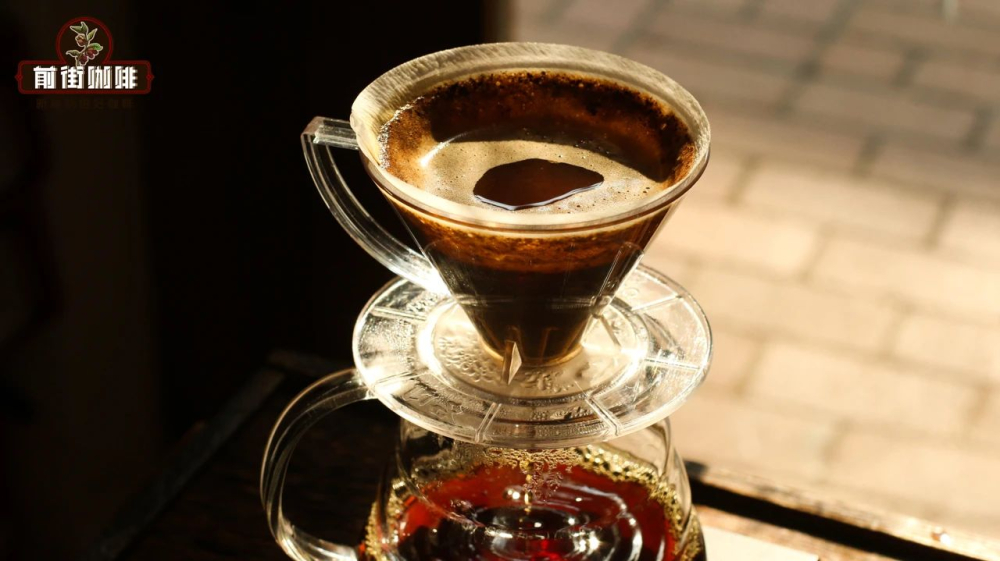
Front Street Coffee uses a double basket, with a dose of roughly 18–20 grams, and takes 20 grams of coffee grounds for output. The ratio of coffee grounds to coffee liquid typically falls between 1:1.5 and 1:2.5, and Front Street Coffee's extraction ratio is 1:2, meaning 20 grams of grounds extract 40 grams of liquid. Time is related to the flow rate of the coffee grounds, and a single extraction duration is generally controlled at 20–35 seconds, because less than 20 seconds often tastes weak, while over 35 seconds tends to over-extract and produce a burnt bitterness. Front Street Coffee's espresso mostly falls in the 28–30 second range.
In operation, Front Street Coffee first wipes the basket dry, turns on the grinder to grind a double dose of coffee grounds, and places it on an electronic scale to adjust until it reaches 20 grams. Then use a tool to distribute the grounds evenly and tamp the puck firmly to ensure more stable extraction. Next, turn on the extraction switch to release water, moistening the brew head while washing away adhering coffee grounds, then gently lock the portafilter onto the brew head and flip the switch to start extraction. When the electronic scale shows the coffee liquid reaches 40 grams and the time is about 30 seconds, the switch can be turned off. Pour the coffee liquid into an Espresso cup and it is ready to enjoy.
The espresso made with Front Street Coffee's Italian Classic Blend coffee beans has a beautiful golden crema, with a visible gradient from dark to light, and before drinking, a strong caramel aroma is detected. Faced with the rich aroma of this type of dark-roasted coffee, Front Street Coffee usually enjoys it in the form of a latte, allowing one to appreciate the exquisite latte art pattern while also experiencing the rich and smooth milk coffee, achieving two benefits at once.
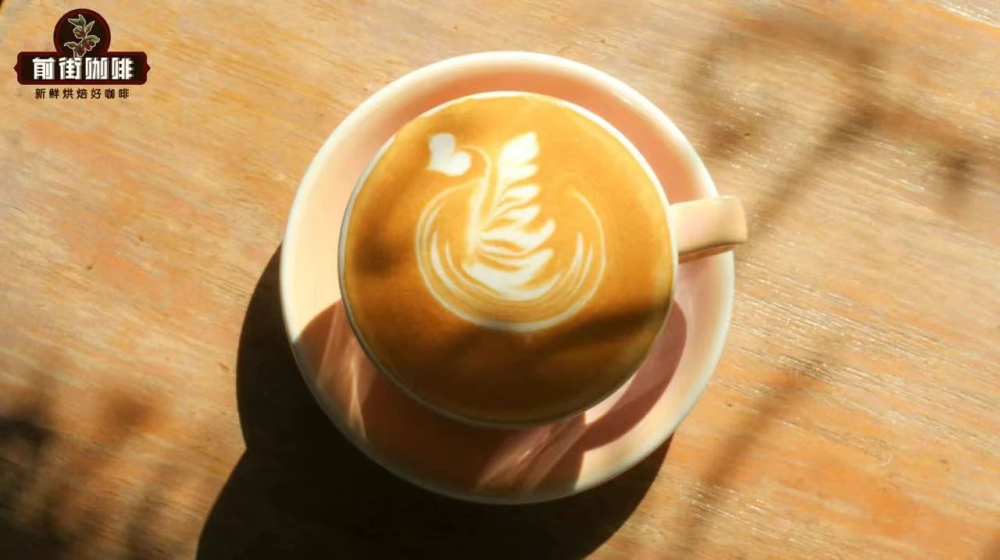
First find a coffee cup with a capacity of about 30ml, pour in a double shot of 40ml espresso, then steam 240ml of fresh milk to a warm and palatable temperature, noting that the milk foam thickness is best controlled at 0.5cm, which makes latte art easier. Finally, blend the two evenly and push out a nice pattern, and the drink is complete.
The hot latte made with Front Street Coffee's Mamba coffee has a rich buttery and caramel aroma on the palate, accompanied by a chocolate-milk-like sweetness and the dense texture from the milk foam, offering rich layers of flavor.
The above content is compiled by CoffeeHunters, a coffee news website.


