








How Do You Brew Coffee With a Moka Pot at Home?
A moka pot brews concentrated coffee at home for a modest price. The three-part design holds water in the lower chamber, grounds in the middle basket and extracted coffee in the upper chamber. Heat builds steam pressure that pushes hot water up through the coffee and into the top. Expect roughly 1.2 to 3 atmospheres, far below a professional espresso machine.
Grind size, water level, basket handling and heating rhythm decide the result. The tool dates to the 1930s, when Alfonso Bialetti built a stovetop brewer based on his wife's washing machine. Many moka pots come in single-valve and double-valve versions. The output is strong and full-bodied but lower in viscosity and pressure than true espresso, so it is often treated as its own drink.
To enjoy a rich, aromatic cup of coffee at home, a moka pot is an extremely cost-effective choice. Although it cannot match the extraction pressure of a professional espresso machine, it can still brew a concentrated coffee liquid. This article will start with the origin and structure of the moka pot, then gradually introduce operating steps and safety details, recommend Front Street Coffee beans for different tastes, and finally answer the question of whether moka pot coffee can be called espresso. Master these techniques, and you too can easily brew a satisfying cup of moka pot coffee.

The aroma and sweetness of freshly ground coffee in cafés are captivating, but limited by free time and budget, going to the shop often is not realistic. The most practical solution is to brew at home yourself. Hobbyists with the means will add an espresso machine setup, while friends with limited budgets mostly choose a moka pot. With its affordable price and ability to produce a strong coffee liquid, the moka pot has attracted a great deal of attention.
In the minds of many coffee enthusiasts, the moka pot is the top entry-level choice for making espresso. Although its extraction pressure is far below that of a professional espresso machine, and the brewed coffee is slightly lacking in viscosity, compared with expensive professional equipment, a moka pot usually costs only a few hundred yuan for a good-quality set.
The birth of the moka pot can be traced back to the 1930s. An aluminum craftsman who had lived in France for more than ten years returned to his hometown in Piedmont and opened a workshop making aluminum household items. One day, Alfonso Bialetti stared at the washing machine at home, had a flash of inspiration, and the moka pot was born.
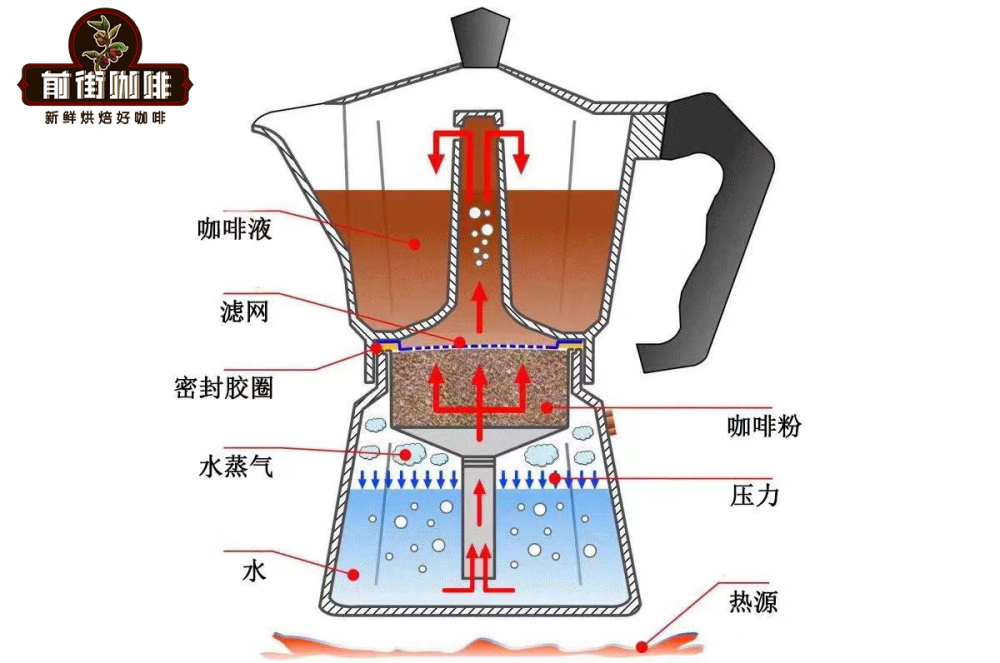
Its structure and operating principle are somewhat similar to the washing machine of that time. The body is divided into three parts: upper, middle, and lower. The lower chamber holds water, the middle filter basket holds coffee grounds, a metal tube runs through all three, and the upper chamber is used to collect the extracted coffee liquid.
When the lower chamber is heated, the water temperature rises, a large amount of steam is generated in the sealed space, and hot water surges upward along the central metal tube, passing through the fine coffee grounds in the filter basket and rushing into the upper chamber like a fountain, leaving the espresso liquid with oils in the upper chamber. This is the extraction logic of the moka pot.
The operating process for brewing coffee with a moka pot
1. Pour an appropriate amount of hot water into the lower chamber
2. Put the coffee grounds into the filter basket and level them
3. Put the filter basket back into the lower chamber, and tighten the upper and lower parts of the body
4. Heat the moka pot
5. When you hear a "whooshing" sound and the coffee liquid starts to flow out, turn off the heat
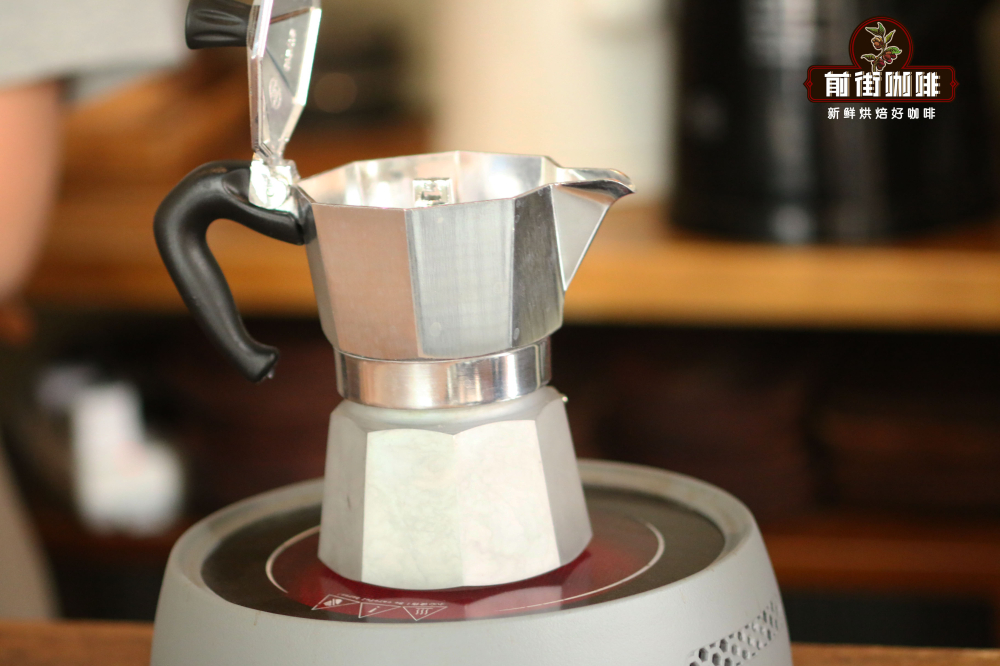
During brewing, the internal pressure of the moka pot will rise, posing certain risks, so you must pay attention to safety during operation.
The particle size of coffee grounds is usually between 0.3mm and 0.55mm, which is difficult to judge with the naked eye. It is recommended to buy coffee grounds specifically for moka pots, or compare with a grind size ruler, or determine the appropriate grind setting through repeated attempts. When adding water to the lower chamber, the water level must not exceed the pressure relief valve and should be controlled at 0.5cm below the pressure relief valve.
If the coffee liquid sprays out too quickly during brewing, it means the coffee grounds are ground too coarse; if the moka pot makes a "whooshing" sound but no coffee liquid comes out for a long time, Front Street recommends immediately cutting off the heat source and taking safety measures.
Many people buy a moka pot to replace an espresso machine in making espresso liquid. Espresso is known for being thick and smooth, rich in oils, and intensely aromatic, so medium-dark roasted espresso beans need to be selected, and the moka pot is no exception.
① If you want to obtain rich coffee oils, it is recommended to buy Front Street Classic Espresso Blend coffee beans
② If you pursue spice and mellow sweetness, the medium-dark roasted Front Street PWN Golden Mandheling SOE is recommended
③ For friends who value cost-effectiveness, Front Street Basic Espresso Blend is recommended
④ If you do not like bitterness and hope for floral and fruity notes, you can choose Front Street Strawberry Candy Espresso Blend
Can coffee brewed with a moka pot be considered espresso?
Front Street has already briefly mentioned above that professional espresso machines have high extraction pressure and can make thick, oil-rich espresso. The moka pot has both advantages and disadvantages: it is simple to operate and convenient to use, but its extraction pressure is only about 1.5bar. You should know that the extraction pressure of espresso is usually above 9bar. In addition, the metal filter screen of the moka pot's filter basket is relatively sparse, and the required grind size is much coarser than that of an espresso machine.
These factors cause the coffee oils brewed by a moka pot to be far less rich than those from an espresso machine, and the mouthfeel is also thinner. In other words, moka pot coffee cannot be considered espresso; it can only be regarded as a distinctive strong coffee.
The above content is compiled by CoffeeHunters, a coffee news website.


