







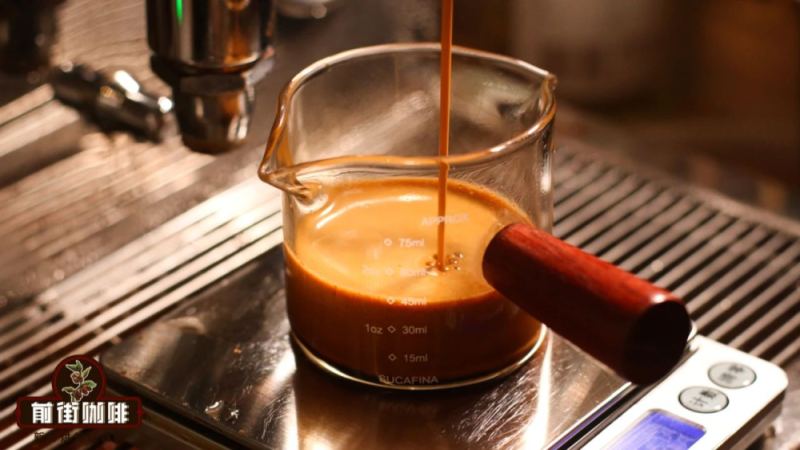
How Do Oils in Coffee Affect Crema on Espresso?
Crema forms because oils in coffee trap carbon dioxide released during extraction, so a thin or missing layer usually points to a specific fault. The five common causes are stale beans, a light roast level, under-extraction, variety differences, and insufficient pressure from the coffee machine. Each one can be checked and corrected in order.
A normal espresso shows golden-brown crema covering roughly one-third of the volume, clinging to the cup wall and swirling like cream. Beans are typically used within about five days of roasting, since older coffee has already lost much of the carbon dioxide and oil that build foam. Coarse grinding, low water temperature, and weak pump pressure all reduce extraction as well.
The golden-brown crema on the surface of espresso is often regarded as the soul of Italian coffee, but many enthusiasts encounter thin or even completely absent crema when extracting. Starting from Front Street Coffee's practical experience, this article systematically sorts out the five key factors affecting crema formation—coffee bean freshness, roast level, extraction degree, variety differences, and coffee machine pressure—and provides judgment methods and adjustment suggestions one by one for common problems such as overly light roasting, stale beans, insufficient machine pressure, coarse grinding, and low water temperature. Whether you use a home machine or commercial equipment, you can find troubleshooting directions from it, allowing espresso to restore its proper rich crema and creamy texture.
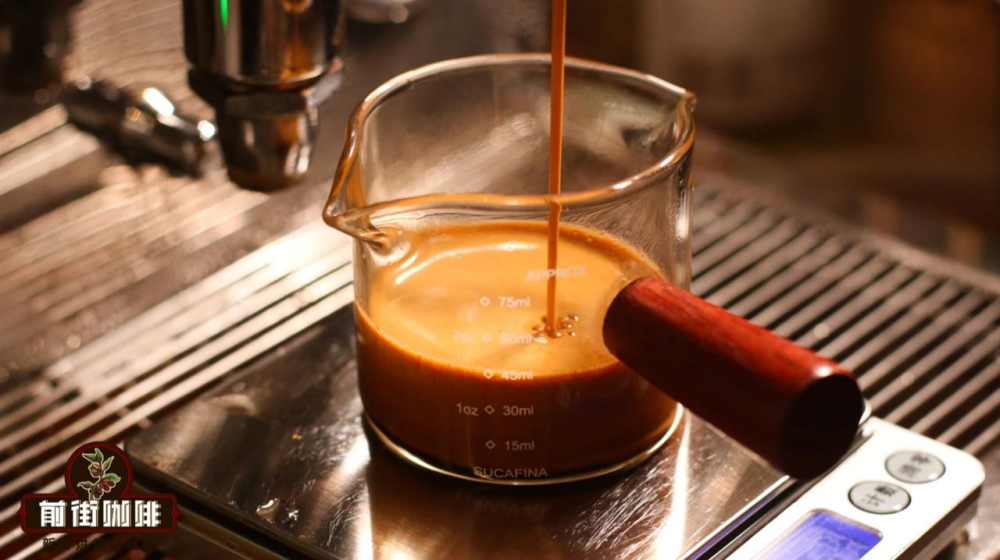
Many coffee enthusiasts have consulted Front Street about doubts regarding espresso extraction, and among them, the most frequently reported type of situation is that no golden-brown crema can be seen on the surface of the espresso, or the crema layer is very thin. For espresso, that layer of golden-brown coffee crema can be called the soul, so Front Street decided to sort out exactly which factors can cause the lack of crema during extraction.
A normally extracted cup of espresso should have golden-brown crema covering the dark coffee liquid, accounting for about one-third of the total volume, showing a creamy texture when gently swirled, and with very obvious clinging to the cup wall.
Normal espresso state
If the extracted coffee has no crema at all, it means something in a certain step has gone wrong. It may be a problem with the coffee beans themselves, a problem with the machine, or a problem with parameter settings or operating technique.
What factors affect crema?
a. Freshness of the coffee beans
The principle of crema formation is that the oils in coffee wrap around carbon dioxide, so by observing the amount of crema, one can also judge in reverse whether the coffee beans are fresh—the richer the crema, the fresher the beans. For this reason, the coffee beans sent out by Front Street are all controlled to within 5 days after roasting.
b. Roast level of the coffee beans
Similarly, under the premise of consistent freshness, if there is more crema, it can also be inferred that this bean has a deeper roast level.
c. Extraction degree of the coffee beans
The darker the crema color, the more soluble substances from the coffee have entered the coffee liquid.
d. Coffee bean variety
Different coffee varieties exhibit different characteristics, which also affects the amount of crema produced. It is currently known that Robusta produces more crema than Arabica, so for Front Street Coffee's commercial blend, the roaster specially added about one-tenth Robusta beans in order to obtain a richer crema.
e. Pressure of the coffee machine
The reason an espresso machine can extract a rich golden-brown crema mainly relies on 9 bar of extraction pressure. The greater the pressure, the richer the crema.
Front Street has sorted out several possible causes for everyone to compare and reference.
① The coffee beans are roasted too light.
Coffee beans sold on the market are usually divided into two categories: those for pour-over drip brewing and those for espresso machines. The former is mainly single-origin beans, roasted lighter; the latter is mainly blend (recipe) beans, and there are also SOEs mainly made from single-origin beans, generally roasted darker.
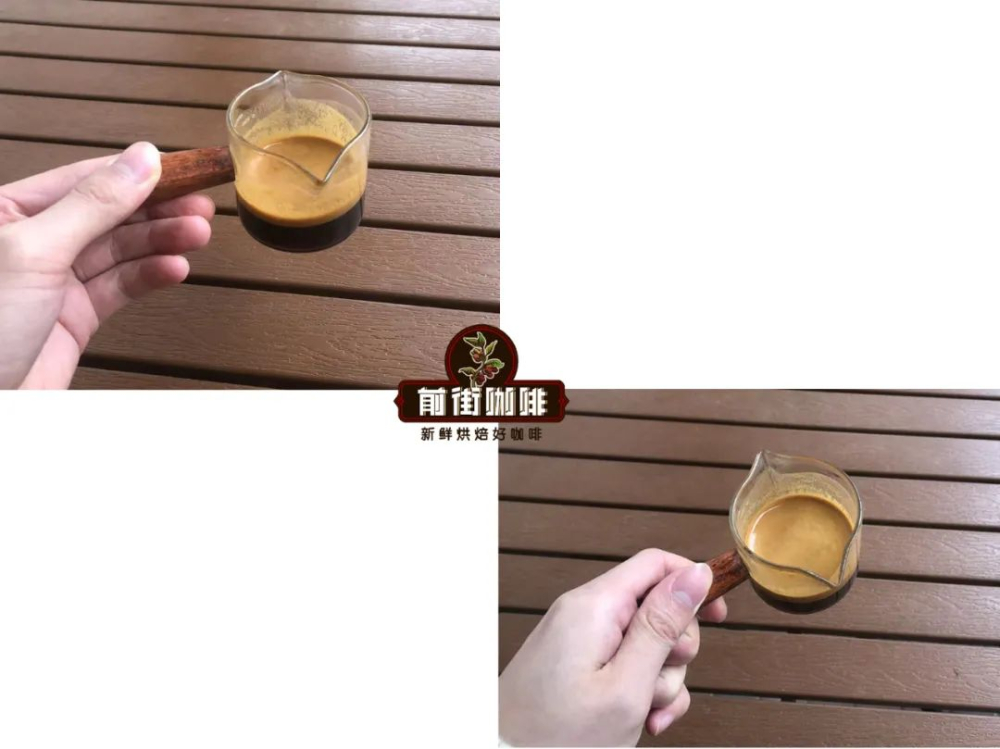
Crema effect of light-roasted coffee: relatively thin, with a lighter yellow-white color
Generally speaking, the darker the roast, the richer the crema performance. If you use single-origin beans intended for pour-over to make espresso, the crema will be on the thin side, so when purchasing, be sure to check the intended use clearly before buying.
② The coffee beans are no longer fresh.
If the espresso extraction state looks normal, then it is most likely that the coffee beans are not fresh. Espresso machines are actually quite picky about beans. Beans that are too fresh produce unstable crema during espresso extraction, with large bubbles that dissipate quickly; while stale beans produce no crema at all.
Espresso extracted from stale coffee beans has scarce crema
Generally speaking, the resting period for espresso beans is about 7 to 10 days, meaning that only from the seventh day after the roast date does the extraction state gradually stabilize. The optimal flavor period for espresso beans is about 60 days. After two months, there is basically no aroma or flavor to speak of, and the amount of crema also drops significantly. (The above is only for normal storage conditions; Front Street has not yet tested nitrogen storage.)
③ The pressure of the coffee machine itself is insufficient.
This problem is relatively common in home coffee machines. The reason we can extract thick crema is that the coffee machine's 9 bar pressure presses the essence out of the coffee puck. However, some small espresso machines do not have stable 9 bar extraction pressure, so naturally they cannot press out thick crema.
④ The coffee grind is too coarse.
In this case, the crema will likewise not be rich. It is simple to judge: during extraction, the coffee liquid flows extremely fast, accompanied by spouting from channeling, the crema color is light and thin, and the espresso tastes weak. You can use 20 seconds as a reference standard. If twice the coffee liquid relative to the dose is extracted within 20 seconds, it is very likely that the grind is too coarse.
The extraction process is a mess
⑤ The water temperature is too low.
Nowadays many new-style coffee machines are equipped with a manual water temperature adjustment function. The water temperature for extracting espresso is generally around 93°C. If the temperature is too low, it may also cause crema to fail to appear.
In addition, a more common situation on home coffee machines is that it may take 10 minutes or even longer from turning the machine on to completing heating. If espresso is extracted before heating is complete, it is very likely that there will be no crema due to insufficient water temperature, and the coffee will also taste rather sharply sour.
The above content is compiled by CoffeeHunters, a coffee news website.


