







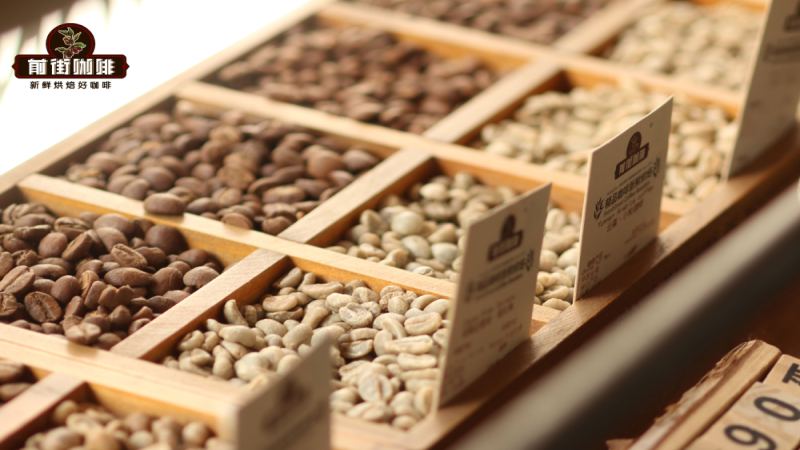
What does the Colombian coffee grading system actually measure?
Colombia's green coffee grading system sorts exported beans by screen size, defect count and color. Most export lots carry the Excelso mark, which covers UGQ, EP and Supremo. To qualify, a 500-gram sample must sit above 14 screen, with no more than 5 percent falling between 12 and 14 screen, and more than half the beans larger than 15 screen.
Grades are tied to price and often hint at flavor. Supremo beans from Huila, grown on steep Andean slopes, tend toward balanced sweetness and mild acidity, which suits pour-over brewing at medium grind. Defect scoring, bean uniformity and the absence of insect damage all feed into whether a lot earns the Excelso export label.
The grading of green coffee beans not only affects trading prices but also, to a certain extent, reflects flavor tendencies, so each producing country establishes its own grading rules based on its own circumstances. This article will focus on Colombia's green bean grading system, with emphasis on interpreting the meaning of the Excelso export grade, the defect scoring method, and the specific standards based on screen size classification, and will introduce the differences among the three common export grades: UGQ, EP, and Supremo. At the same time, Front Street will also share the taste characteristics and brewing suggestions for Supremo-grade coffee beans from Colombia's Huila region, helping coffee enthusiasts extend from grading knowledge to actual drinking experience.
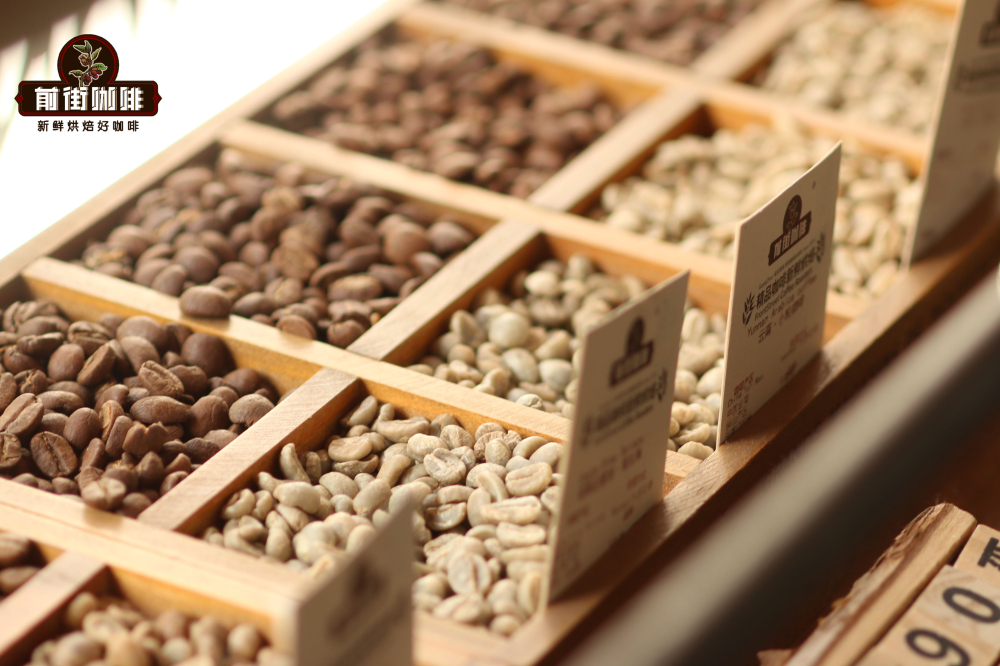
The grading of coffee beans is not only tied to price but can also often reflect differences in flavor, so each coffee-producing country establishes different green bean grading standards based on its own conditions... Today Front Street will guide everyone through understanding Colombia's green coffee bean grading system.
What is the Excelso grade?
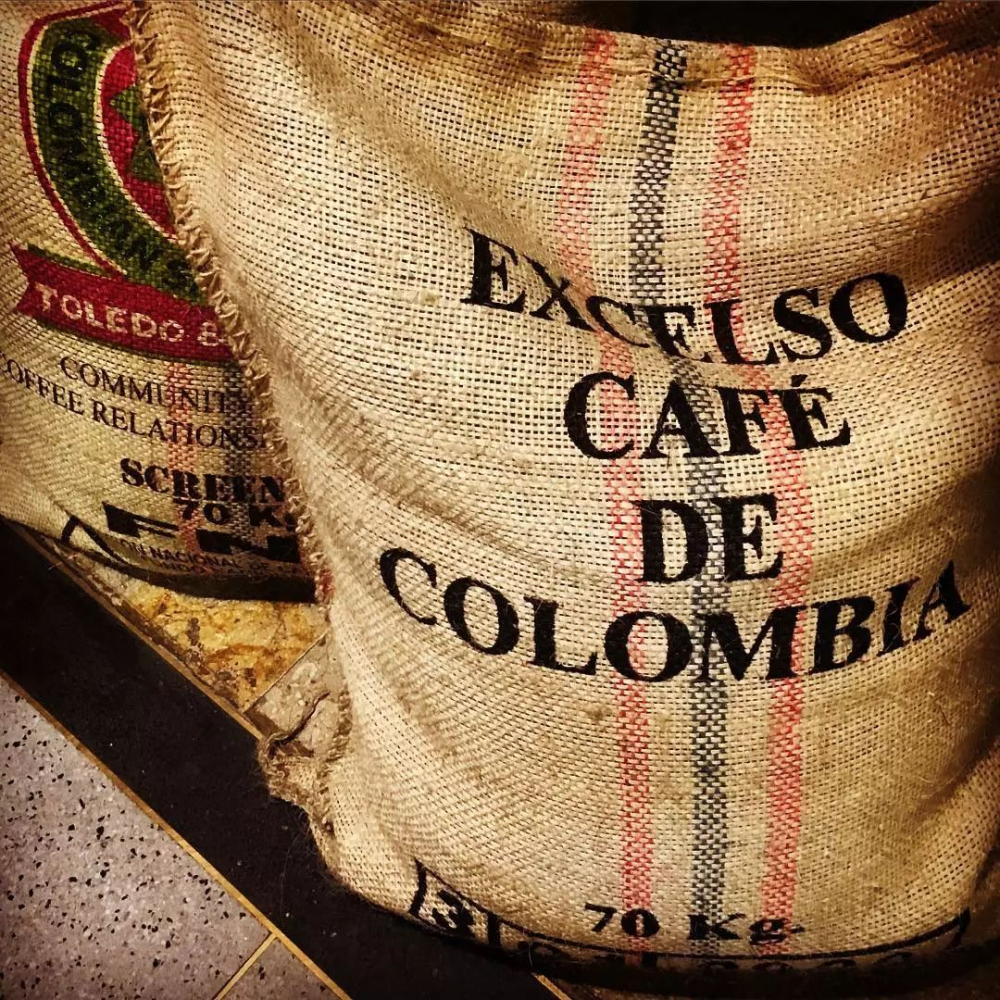
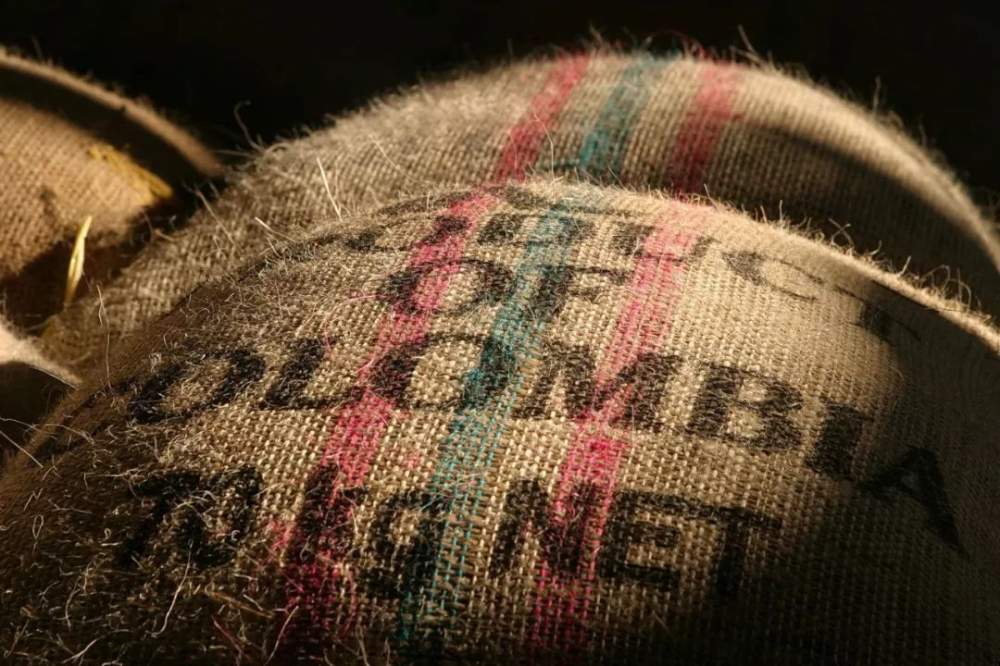
If we carefully examine the burlap sacks of green coffee beans shipped from Colombia to China, we will find that the sacks generally bear the words "Excelso-Café de Colombia." Regardless of the screen size of a given batch of green beans, as long as they meet Colombia's export standards, the "Excelso" mark will appear on the packaging sacks, with the three most common being UGQ, EP, and Supremo.
In other words, the vast majority of Colombian green coffee beans currently exported around the world will carry the Excelso grade mark on their sacks. UGQ belongs to the Excelso grade, EP belongs to the Excelso grade, and Supremo likewise belongs to the Excelso grade. Excelso is the most widely implemented export standard grade promoted by the Colombian Coffee Growers Federation (FNC), and it also represents the highest quality grade for Colombian green bean exports.
To qualify for the Excelso grade, green coffee beans need to meet the following conditions: taking 500 grams of green beans, the particle size must be above 14 screen, while no more than 5% of the green beans may fall between 12 and 14 screen, and overall more than 50% of the green beans must be larger than 15 screen. In addition, they must be free of insect damage, uniform in color, free of off-odors, and clean in flavor. The moisture content must not exceed 12.5%, and the cumulative defect deduction must not exceed 24 points.
Defect Classification Standards
The National Coffee Committee of Colombia has strict regulations on this, and green bean defects are divided into two types (see the figure below), with defect levels assessed through a scoring method. For example, Supremo 12*60 (5%), Colombia's largest export volume grade, means: in a 500-gram green bean sample, a maximum of 12 primary defect beans and a maximum of 60 secondary defect beans are allowed.
Screen Size Classification Standards
Although green bean particle size is not the core indicator determining coffee quality and flavor, many producing regions believe that plump, uniform, and large beans mean the coffee fruit reached a fully ripe state, can develop higher-quality aroma types, and are also more conducive to even heating during roasting, thereby forming a consistent flavor performance.
Colombian green coffee beans are graded according to screen size, usually using fixed-size screens, with different specifications corresponding to different aperture sizes. For example, when the screen aperture is 17 screen, beans larger than that size cannot pass through the screen, so the larger the screen number, the larger the beans retained on the mesh surface. At present, the three grades most frequently exported by the FNC are: Excelso UGQ 12*60 (1.5%), Excelso EP 12*60 (10%), and Excelso Supremo 12*60 (5%).
Excelso UGQ 12*60 (1.5%): UGQ is the abbreviation of Usual Good Quality. The green bean particle size is above 14 screen, with 1.5% of green beans allowed to fall between 12 and 14 screen, but they must be larger than 12 screen, and more than 50% must be larger than 15 screen.
Excelso EP 12*60 (10%): EP is the abbreviation of European Preparation. The green bean particle size is above 15 screen, with 10% of green beans allowed to be smaller than 15 screen, but they must be larger than 14 screen.
Excelso Supremo 12*60 (5%): The green bean particle size is above 17 screen, with 5% of green beans allowed to be smaller than 17 screen, but they must be larger than 14 screen.
In addition, Colombia also has a grade called Extra for beans above 16 screen, a grade called Premium for beans above 18 screen that are larger than Supremo, and Minama for green beans almost entirely uniform at 15 screen, and so on. Colombia also has coffee beans that do not reach the Excelso export grade, locally called "Product of Colombia," which are usually used to produce commercial-grade instant coffee.
In Colombia, every farmer reports a number and enters green bean information so that traceability of green beans can be carried out later. The naming of Colombian exported green coffee beans usually follows the format of country + producing region + grade + other information. For example, the green bean name of Front Street's Huila daily drinker bean is Colombia Huila Supremo SC17/18 FNC.
Taste Characteristics of Colombian Supremo-Grade Huila Coffee Beans
Front Street's daily bean list includes a total of 5 Colombian coffees, each with its own characteristics. If you are just starting to explore coffee, Front Street recommends beginning with the washed Huila daily drinker bean offered by Front Street. Front Street's daily drinker bean series covers multiple classic coffee-producing regions and common varieties, making it convenient for everyone to understand the flavor orientation of different producing regions, then determine their own preferred direction, and continue to explore further.
Colombia's producing regions are rich in freshwater resources, and most coffees use the washed processing method. Family-based farms are usually equipped with dedicated green bean processing machines (Ecomill or Eco-Pulper). After the harvested coffee cherries are poured into the machine, not only can the skin and pulp be removed, but most of the mucilage can also be removed with only a very small amount of water. The parchment beans with a small amount of remaining mucilage enter a small tank or container—possibly a tiled tank—and are left overnight to ferment, allowing the residual mucilage to loosen, then rinsed clean with fresh water the next day, and finally spread out in the sun to dry to the target moisture content. The washed process greatly reduces the defect rate of coffee beans, preserves the beans' own flavor, and presents higher cleanliness.
In order to showcase Colombia's classic rich, mellow notes of nuts and chocolate, Front Street uses a medium-dark roast. A deeper roast degree makes the coffee beans more porous, and the coffee grounds also have stronger water absorption. To avoid over-extraction, Front Street chooses a medium grind size and medium water temperature, and pairs them with a KONO dripper for brewing.
Brewing parameters: KONO dripper, 90°C water temperature, grind size with 75% passing a No. 20 standard sieve, 1:15 coffee-to-water ratio, 15 grams of coffee, three-stage extraction
Pour the coffee grounds into the KONO dripper, first wet the coffee bed with twice the amount of water as the coffee grounds, and after a dome forms, let it bloom for 30 seconds. Then pour in a slow stream in circles from the inside out, and when it reaches 125 grams, pause in stages. Wait until the coffee bed drops to half the height of the dripper, then continue pouring the third stage with the same fine stream until 225 grams, until all the coffee liquid has finished filtering. Remove the dripper; the whole process takes about 2 minutes.
This Colombian Huila daily drinker bean has obvious roasted aromas of chocolate, nuts, and caramel on the palate, with a smooth and sweet taste, moderate body, and good cleanliness. After the temperature drops, a pleasant soft acidity can be felt.
The above content is compiled by CoffeeHunters, a coffee news website.


