







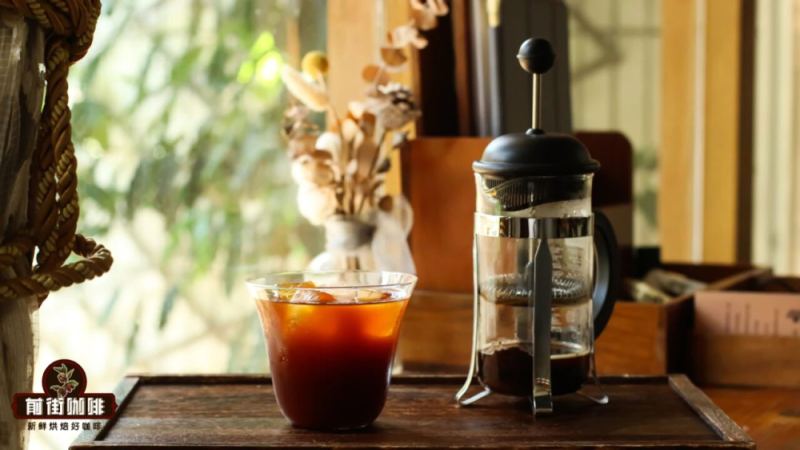
How Do You Make Coffee With a French Press?
A French press brews by full immersion, a method close to cupping that releases the oils, aromas and flavor compounds in coffee for a smooth, sweet, full-bodied cup. Use single-origin beans or beans with pronounced fruity acidity, roasted to a medium or medium-dark level. Medium-dark beans bring out aroma and mouthfeel, while light roasts are not recommended.
On the coffee powder preparation side, grind size, coffee-to-water ratio and water temperature all shape the result. Balanced everyday beans with dark chocolate and fruit notes suit the press well, including Brazil, Colombia Huila, Indonesia Mandelhing and Costa Rica Tarrazu. Light-roasted Ethiopian beans such as Yirgacheffe show better in a pour-over, so they are worth leaving to that method.
The French press is arguably one of the easiest coffee brewing tools to master, simple to operate yet without sacrificing any flavor expression. It extracts through full immersion, considered the brewing method closest to cupping, capable of fully releasing the oils, aromas, and various flavor compounds in coffee, presenting a smooth, sweet, and full-bodied taste, especially suitable as breakfast coffee. This article will systematically explain how to make an excellent French press coffee using Front Street Coffee beans, from bean selection, grind size, coffee-to-water ratio, water temperature control to specific operating steps, while also explaining which types of beans are more suitable for this brewing method and which are not recommended.
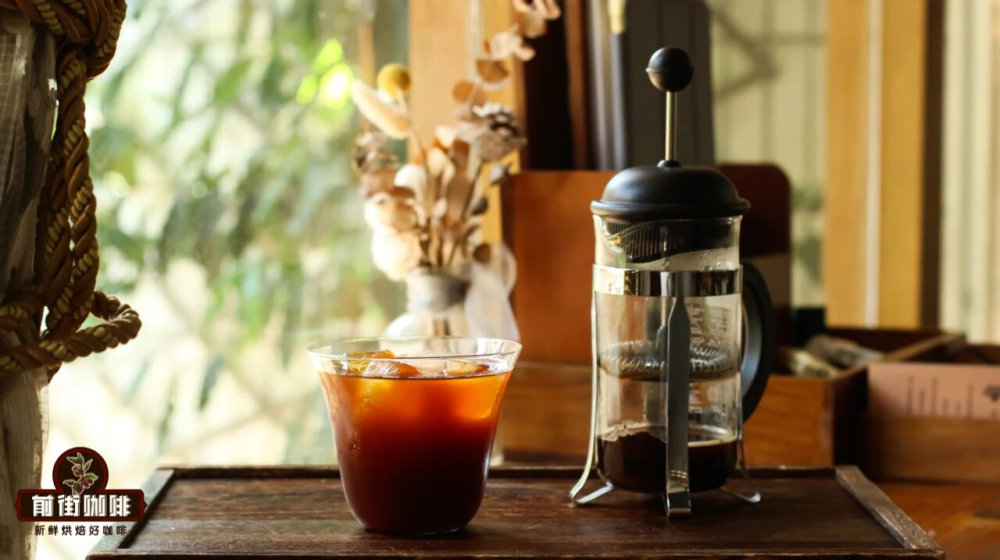
The French press operates as effortlessly as a "lazy person's coffee gadget," but its convenience doesn't come at the cost of sacrificing the complete flavor of a good cup of coffee.
In fact, the French press extraction method is closest to the results of cupping, fully bringing out the oils, aromas, flavors and other taste elements in coffee. The smooth, sweet, rich taste makes it an excellent breakfast coffee choice.
When brewing with a French press, single-origin coffee beans or beans with pronounced fruity acidity are more suitable for bean selection, and medium to dark roast levels are appropriate. Front Street Coffee recommends using coffee beans with better balance. For example, in Front Street Coffee's bean list, the everyday beans Brazil coffee beans, Colombia Huila coffee beans, as well as Indonesia's Mandheling coffee beans, Costa Rica Tarrazu coffee beans — these coffee beans mentioned by Front Street have balanced flavors with dark chocolate and fruity notes. Because the French press uses immersion extraction, it can express the oils, aromas, and rich coffee sensation in coffee, while dark-roasted coffee beans easily bring out the aroma and body of coffee, so these medium-dark roasted beans from Front Street Coffee are very suitable for French press preparation. Coffee made with a French press — dark roast possesses better aroma and a more intense mouthfeel.
As for light-roasted coffee beans, Front Street does not recommend using them in a French press. Ethiopian coffee beans are generally suited to light roasting. For example, Front Street's Yirgacheffe — Red Cherry coffee, when brewed with pour-over, easily highlights lemon, floral, and fruity flavor notes, but if brewed with a French press immersion, the resulting taste is relatively one-dimensional and muted.
Let's see how Front Street makes an excellent cup of coffee with a French press. Front Street's Brazil Queen, Mandheling, and Colombia Huila all have taste profiles suitable for the French press. Let's use this Colombia Huila coffee bean for a brewing demonstration.
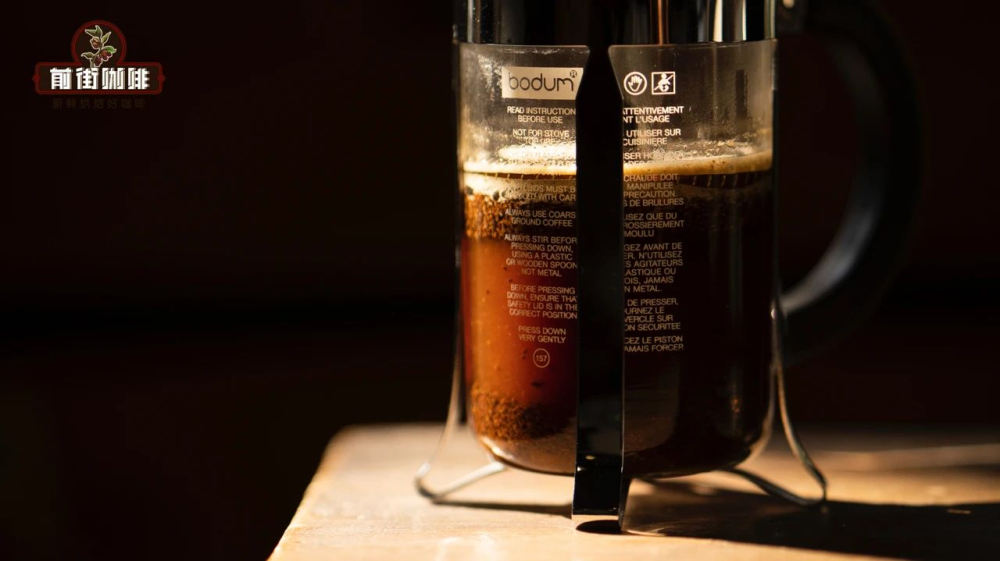
Front Street Coffee's own-roasted coffee beans — use well-rested Huila coffee beans and grind to a grind size suitable for the French press: medium-coarse, coarser than pour-over coffee grounds. Front Street recommends a standard sieve pass rate of 70%~75%. If the powder is too fine, coffee grounds will escape through the mesh holes, and the coffee will become cloudy.
You can start by trying a 1:10 coffee-to-water ratio. For 2 servings, that's 20g of coffee beans with approximately 200g of water. The final ratio depends on your taste. For example, Front Street Coffee's drip bag coffee powder amount is 10 grams per small packet — like the seasonal Brazil drip bag and Mandheling drip bag coffee. Using these pre-ground drip bag packets to make French press coffee is also particularly convenient. Front Street recommends a coffee-to-water ratio of 1:16, 15 grams of coffee powder with 240 grams of water.
Front Street recommends preparing an electronic scale. Even though French presses come with markings and measuring scoops, an electronic scale is still recommended, because coffee beans change density due to factors such as growing altitude and roasting method, and each bean's mass and weight differ. Additionally, if you make a particularly delicious cup of coffee and want to replicate that taste, you must record the ratio. Conversely, if you make a terrible cup of coffee, based on the data you'll also know how to make adjustments.
At Front Street, use fresh, clean C'estbon mineral water (soft water). Don't extract with water that's too hard, and don't use unfiltered water. If the water itself is poor, it's hard to make delicious coffee.
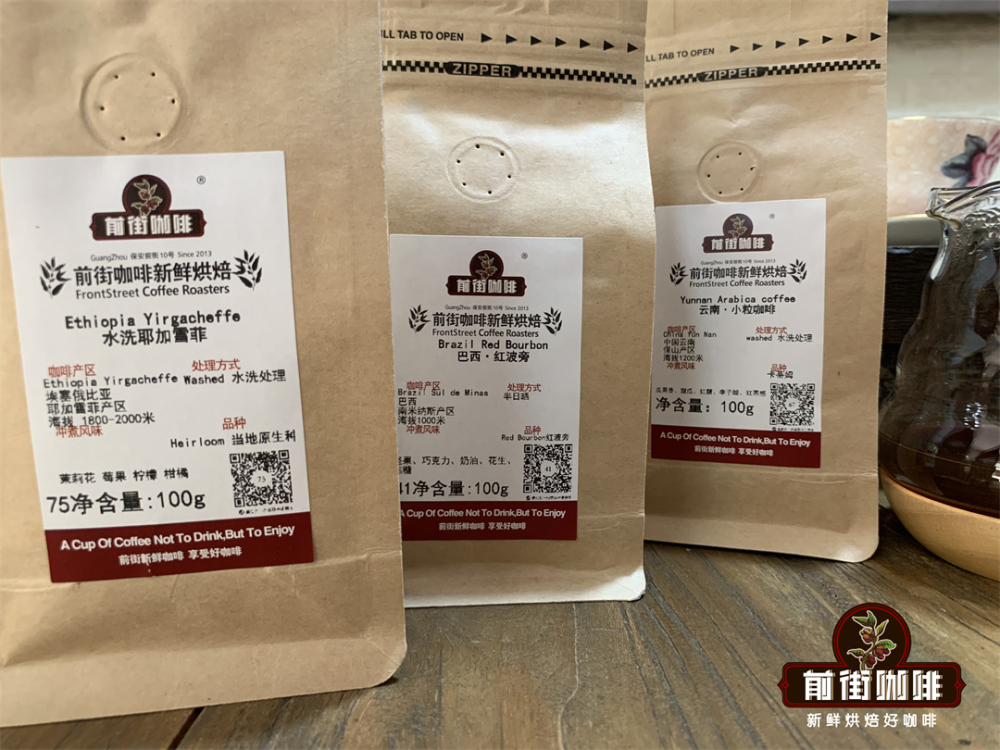
Front Street Coffee brewing steps:
Grind the coffee beans, then pour them into the French press. Ignore what many people say about grind size — don't grind too coarse, just a medium grind will do.
Boil the water. The recommended water temperature is 93°C. Then pour in the appropriate amount of water. We used 15g of coffee powder and poured in 240g of hot water. Stir with a spoon to let the coffee powder and water fully blend.
Put the lid on the French press with the filter mesh resting at the highest position, then let it sit for 4 minutes.
Before pressing down the filter mesh, you can open the lid and use a spoon to scoop out the foam and small fragments floating on top, then press the filter mesh all the way down.
Once brewing is complete, immediately pour it out into another insulated container! Don't delay, because the coffee grounds are still steeping in there. Then pour into a cup and enjoy slowly.
The French press is the simplest, most convenient, and most eco-friendly brewing method. The coffee it produces is stronger, more flavorful, and more layered than a fully automatic drip coffee machine. Moreover, it requires no electricity, no heating, no filter paper, and is easy to clean. You can drink it together with the coffee oils. It's most suitable for office workers who are busy with work yet want to steal a moment of leisure. Come and try it yourself!
The above content is compiled by CoffeeHunters, a coffee news website.


