







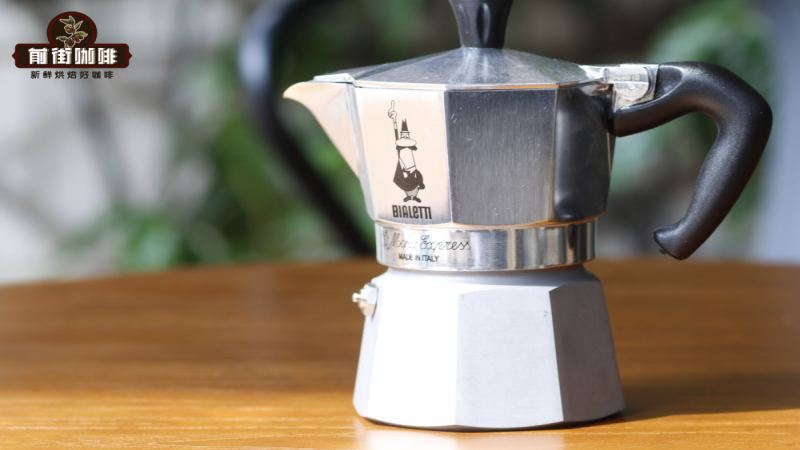
How full should the moka pot basket be, and how fine should the grind be?
Fill the filter basket level with medium-dark roasted grounds and do not tamp them down; wipe off any excess so the rim seals cleanly. Grind finer than drip but coarser than espresso. Fill the base with water to just below the safety valve, then assemble and heat. The three-layer design pushes steam pressure up through the coffee for a strong, full-bodied cup.
The bialetti moka pot set the template. Alfonso Bialetti invented the first device that genuinely improved home coffee in 1933, giving it the octagonal shape still used today. Before that, Italians drank far weaker coffee at home than in cafes. The same add-water, distribute-grounds, heat, and turn-off sequence still works on any moka pot today.
The moka pot, as an iconic piece of Italian home coffee equipment, has become the top choice for many people to brew strong coffee with its classic octagonal shape and simple operation. But how full should the filter basket be? How should the grind size be controlled? This article starts with the story of the birth of the Bialetti moka pot, reviews the legend of its industrial design that has remained unchanged for a century, and then takes a deeper look at the moka pot's three-layer structure and pressure extraction principle. It then combines Front Street Coffee's practical experience to recommend medium-dark roasted beans suitable for the moka pot, and includes a complete set of steps from adding water, distributing the grounds, to heating and turning off the heat, helping you steadily brew a cup of moka pot coffee at home with rich oils and a full-bodied taste.
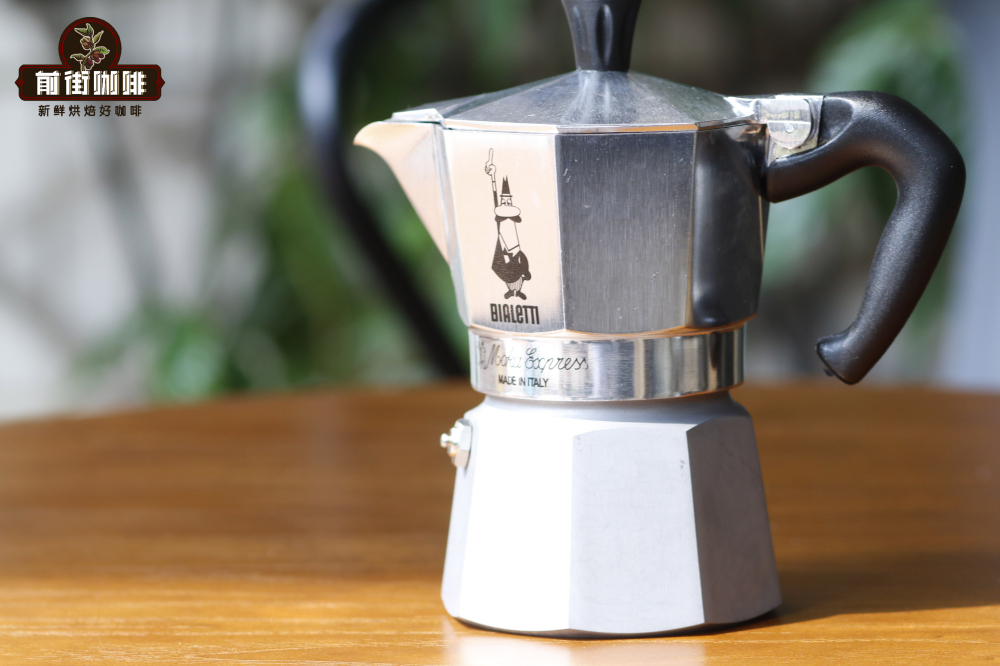
Bialetti is the most prominent brand in the world of moka pots, and it still uses that highly recognizable classic octagonal shape today. If you have visited a Front Street store, you should remember the octagonal pot on the display shelf—it is precisely the classic moka pot produced by Bialetti.
The Birth of the Bialetti Moka Pot
The earliest method of brewing coffee was to boil coffee grounds directly with water over a fire and then filter it for drinking. Starting in the 19th century, some people began trying to use steam to brew coffee, hoping to brew a strong cup of coffee in an extremely short time. In the early 20th century, the Industrial Revolution began to take hold around the world, and Italians created an espresso machine whose shape and momentum were like a steam locomotive boiler. Its dazzling metal shell had brass fittings, and when brewing coffee it was full of sound and light effects. The steam locomotive itself was an epoch-making product that allowed people to travel quickly from one place to another, and when applied to coffee brewing it did not disappoint either. Modernity and coffee flavor were perfectly combined, and cafes were like magnets attracting Italian men, giving them a ready excuse to leave home at any time.
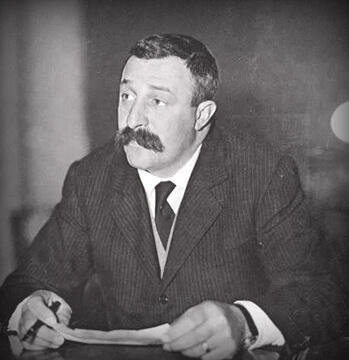
Compared with the coffee in cafes, the coffee women drank at home was far inferior. This situation did not completely change until Alfonso Bialetti invented the first device that thoroughly improved home coffee in 1933. And this coffee device is the moka pot we are familiar with today. Even more impressive is that this moka pot has never changed in any way since Bialetti first designed it. Whether in material, design, or even appearance, what we see today is exactly the same as the first moka pot born in 1933. Its unique shape even ranked alongside the 1946 Vespa scooter and the 1957 Fiat 500 in a vote for the most influential designs in 20th-century Italy.
The clever Bialetti created the moka pot so that people could brew cafe-quality coffee at home, but this octagonal moka pot truly flourished only after his son Renato inherited the mantle.
After World War II, Renato returned to Italy from Germany and restarted the machinery and equipment his father had packed away during the war. Coupled with his skillful use of marketing through billboards, newspapers, radio, and even large three-dimensional product sculptures outside exhibition halls, the output of the Moka Express moka pot expanded from 10,000 units per year in his father's time to 1,000 units per day, and even set an astronomical global sales record of 300 million units from 1950 to the end of the 20th century!
Times are changing, and the materials of moka pots have evolved from aluminum into all kinds of varieties, but for the Moka Express moka pot produced by Bialetti, aside from some parts being mass-produced using industrial technology, the lower chamber used to hold water at the bottom still insists on being handcrafted as it has been since its founding in 1933. This is also why its interior surface looks very much like a handmade product. Genuine moka pots produced by the original Italian Bialetti factory all have a cartoon image on the body of a mustachioed man with his finger pointing upward, as if he is speaking to order a cup of coffee. This is a Bialetti moka pot logo image created by Renato based on his father's likeness. Now, in addition to appearing in 90% of Italian households, it has also firmly secured a place in the hearts of coffee lovers around the world.
The Coffee Brewing Principle of the Moka Pot
The moka pot is mainly divided into three structures: the bottom layer holds water, the middle layer holds coffee grounds, and the top layer holds the coffee. First, fill the bottom layer with water and the middle layer with coffee grounds, then assemble the three parts together. Next, heat is used to create pressure, causing the water to be drawn upward through the metal tube in the middle, extracting the coffee grounds in the middle layer, and finally the coffee liquid bursts into the top layer.
How to Use a Moka Pot to Brew Coffee
Previously, many friends kept asking Front Street how to use a moka pot to brew coffee, so here Front Street will give a unified reply.
First, you need to choose the right coffee beans and the corresponding grind size. Because the moka pot uses pressure extraction, it is suitable for coffee beans with a medium to dark roast level. First, it can extract oils, making the coffee's aroma richer. Second, medium-dark roasted coffee beans have more caramelized substances, which fit better with the tone of strong coffee, and making moka pot Americano or moka pot latte will not make them taste too weak.
If you like a full-bodied taste plus a roasted aroma, you can buy Front Street. Golden Mandheling. It is a dark roast, and the coffee extracted with a moka pot is rich and smooth, giving off chocolate and nutty flavors, with low acidity and a heavy body as its main characteristics.
If you like the feeling of floral and fruity aromas with a bit of acidity, then you might try Front Street. Strawberry Candy espresso blend. This is a blend based on two major origins: Front Street Costa Rica Tarrazu, known for its honey processing, and Ethiopia, the birthplace of coffee. On this basis, with the addition of the Colombia Huila region, the moka pot espresso it produces is not only not harsh, but also has good oils and a velvety texture, while also having a sweet-and-sour taste like strawberry gummy candy.
Grind size is also very important for the moka pot. If it is too fine, there is a high chance the coffee liquid will not come up, and it will also increase the pressure in the lower chamber. If pressure is not released effectively, there is a danger of explosion. So if the water is already boiling but the coffee liquid has not come up for a long time, you should turn off the heat source in time. Too coarse is also no good, because the resistance is too low, the coffee liquid will burst out, and there is a risk of splashing and burns. Front Street recommends a grind size of EK-43s #3-3.5 (fine salt texture).
Specific Steps
1. Pour hot water into the lower chamber up to 0.5 cm below the pressure release valve. Choosing hot water can better shorten the coffee brewing time.
2. Pour the ground coffee into the filter basket, tap it left and right a little so the coffee grounds settle naturally downward. And level the surface of the coffee bed. The purpose of doing this is to make the distribution of space between the coffee particles even. Not tamping is to prevent the resistance of the coffee bed from becoming too great.
3. Put the filter basket into the lower chamber, and tighten the upper chamber and lower chamber together. Place it on an electric ceramic stove, turn on the power, and begin heating.

4. When the moka pot rises to a certain temperature, when the moka pot makes an obvious "woooo" sound, set the electric ceramic stove to low heat and open the lid of the upper chamber. The coffee liquid and oils begin to flow out.
5. When half of the coffee liquid has come out into the upper chamber, turn off the electric ceramic stove. And move the moka pot to the table. The residual heat and pressure of the moka pot will "push" the remaining coffee liquid into the upper chamber.
The above content is compiled by CoffeeHunters, a coffee news website.


